Two cloud shots in the morning.

Living near the coast was a bit disappointing the last days when it came to making photos. Snow in the inland – for example 15 cm in Malå on Sunday? We got just twenty snow flakes on Monday morning melting directly on the wet ground. Polar lights last night? Yes, in many places of Norway, in Abisko, even in Kusfors which is just 70 km away. But we in Skelleftehamn had overcast sky the whole night probably due to the near Baltic Sea.

Therefore I neither got photos of fresh snow-covered landscapes nor of any polar lights this week. I have to wait, you, too.

But when it comes to clouds I have to admit that they can look quite nice in the morning. The following two photos showing the island Gåsören I made at the Lotsstation today.

Autumnal kayak tour

Today morning weather was calm with a grey sky, but later it brightened up a bit and I decided to take a kayak trip. Summer kayaking with just a life vest over your t-shirt are definitely past for this year, since both air and water where chilly. It always takes a bit of time before I finally sit in the kayak: Emptying the kayak from this weeks rain fall, dressing, fixing map and compass as well as the camera and finally dragging the boat into the water.

Minutes later I paddled round the northwest point of the island Storgrundet which lies off the coast of Skelleftehamn. The birches on the island where almost completely leafless, only the rowan trees still wear their many-coloured leaves and bright red berries.

On the outer side of Storgrundet the sea was a bit wavy and I tried to make pictures of the waves flooding the bow of my kayak. But I wasn’t lucky because when bigger waves came I felt safer with the paddle in both hands.  I landed on the small island Brottören, hardly more than a flat pile of stones, some birches, rowan trees and a shallow pond. On one of the bigger rocks I found a twig with rowan berries and I wondered if a human or a bird laid it onto this stone.

I continued in calmer sea between Brottören and Storgrundet where I had a nice view on the Island Norrskär with many coloured trees. Alas the sun hid behind clouds again.

Since weather was a bit dull I didn’t continue to other island but returned to the tiny sandy beach where my kayak has been laying since summer. The sharp tracks of the keel where the only tracks I left today.

Protected against wind and waterTo protected against wind and weather and – much more important – I use a dry suit. I bought it second hand, it is too big and not at all breathable. This could be a problem on longer tours since you start sweeting and getting means getting cold. The head was protected by a balaclava – there may be prettier things – because on the open sea it’s always a bit windy and chilly. And even if I love cold and even rough weather, I don’t like to freeze.

On my wish list: A neoprene balaclava – much better when it gets wet, and a better dry suit for kayaking, but those are extremely expensive and cost up to 1000 Euros.

Étude – making photos at the rocky shore

There’s nice autumn weather with blue sky and there’s today, a windy day with a clouded sky, but at least no rain. I took a tour to the rocky shore at Långhällan, one of my favourite places nearby. My plan was to practise. The musical pieces that provide you with practising material are called étude. That’s why I’ll call it “étude” when I practise photography.

Todays topic: Long time exposure which filters at daylight to blur the waves. I’ll show you the unedited snapshots of two motifs at the coast. That’s how it looks like, if you just do “click”.

Ok, that’s the motifs. They show some kind of chaos, because the windy weather created quite big waves (at least for the bottenviken – the most northern part of the Baltic Sea) and it’s hard to distinguish between the waves and the rocks. There’re several way to improve the photos. One: Wait for better weather. Two: Work with filters.

In the following images I used the Big Stopper, a filter that takes away 99.9% of the incoming light and forces you to exposure 1000 times longer than usual. Instead of 1/20 of a second for example you would expose 50 seconds, long enough to blur all the moving objects as the waves, but to keep the sharpness of the stable objects as the rocks. Additionally I used a graduated filter to avoid overexposure of the sky. And that’s the first motif with the filters, edited in Lightroom.

The long exposure transforms the waves in some kind of a foggy layer, making the photo look like flying over cloudy mountains. I’m not so happy with the shot. Waves are too high blurring bigger parts of the rocks and the sky is quite dull making the photo almost looking like black-white.

By way of comparison a photo of the same motif I made last year which I prefer instead of the todays shot:

The next photo I like much better. The rocks are looking rougher and the tuft of grass is a nice eye catcher giving the photo both a focus and a story. It will be the first image of my series “one”.

What do you need beside of the filters to make these photos: First of all a stable tripod, it’s a must. A remote release is quite handy to avoid shaky images. And last not least, warm and water proof clothes. I had chest waders to get to the big rock through knee deep water and to kneel without getting wet.

Some vocabularies for my German readers:

exposure – Belichtung
expose – belichten
blur – weichzeichnen, verwackeln, verwischen
tripod – Stativ
remote release – Fernauslöser
chest waders – Wathose

Last not least, just another photo from today, perhaps my favourite:

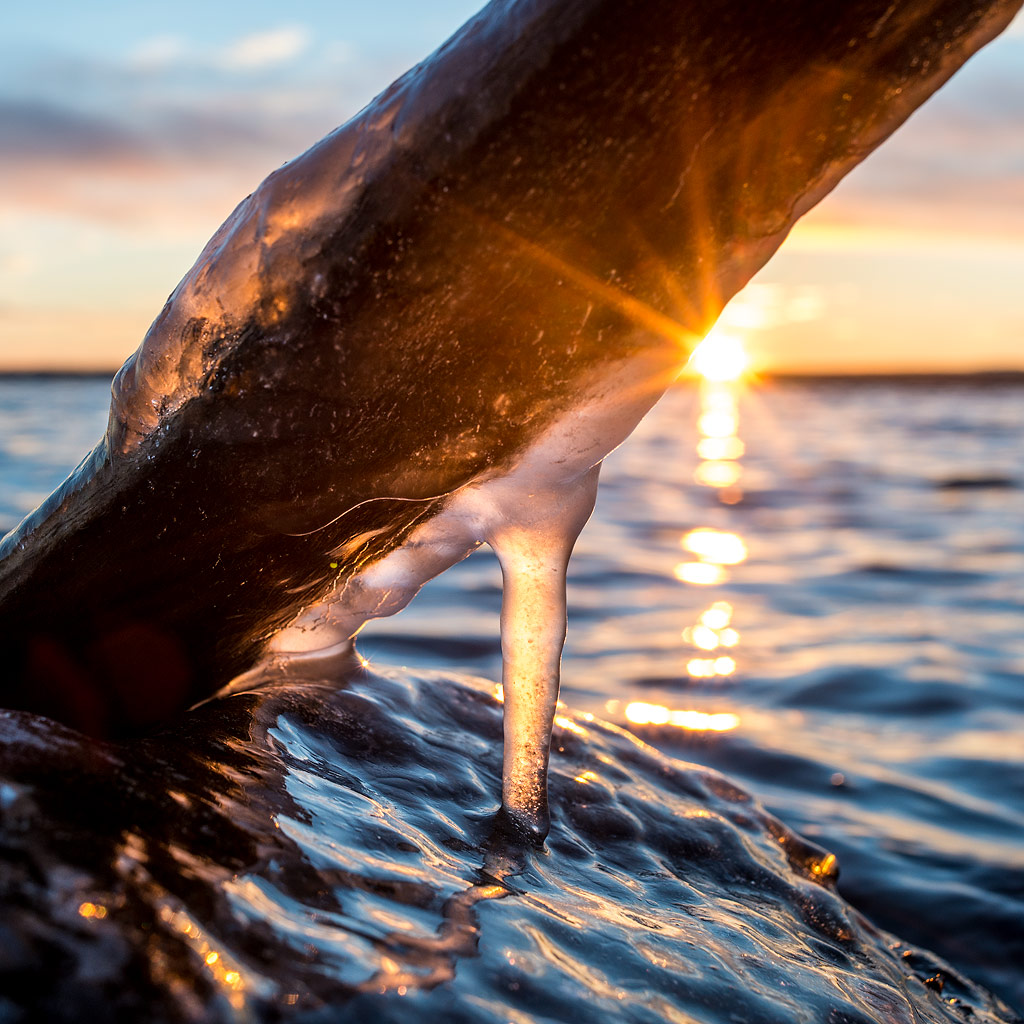
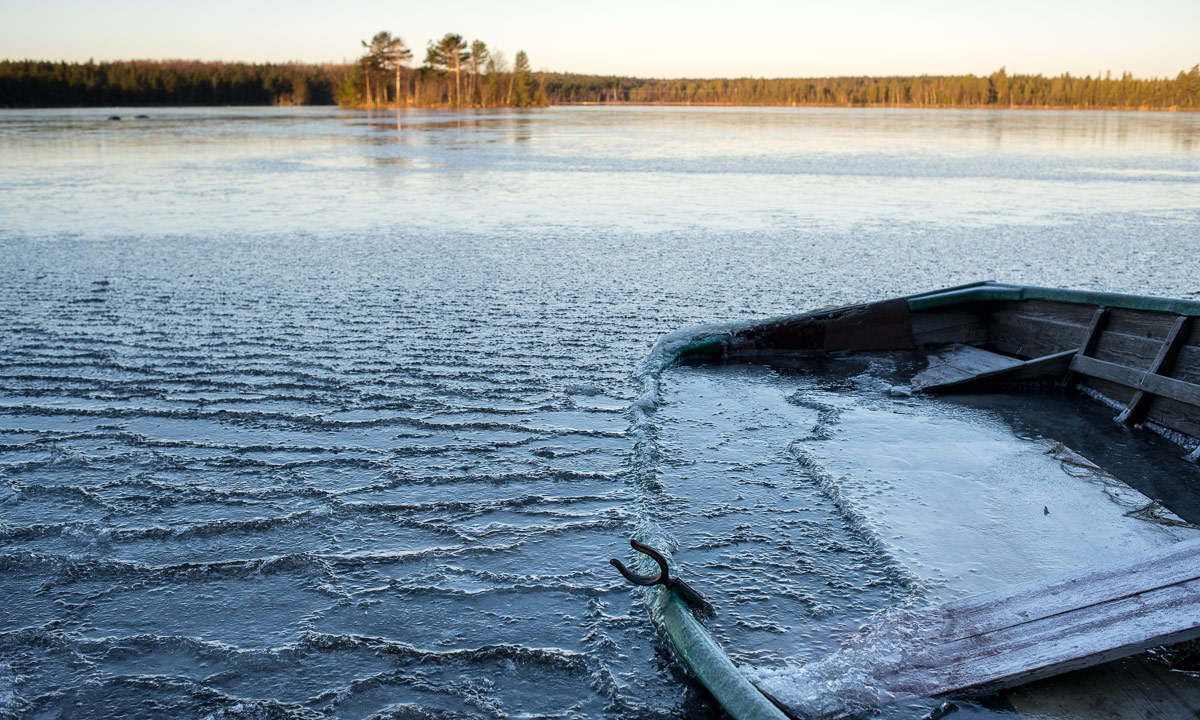
Two early shots at the seaside

When I wake up earlier than necessary I have two choices. Either to stay in bed, turn on the other side and continue sleeping, or to get out of bed and – if weather is fine – make some photos. Today I chose the latter of the two and drove to the “lotsstation”, the nearest of my favourite places which is just two and a half kilometres away, and waited for the sun rise.

Two shots of this morning, the 1st day in October: