Furuögrund

Today Annika and I took the road E4 to Byske to visit Byske Havsbad, one of the largest sandy beaches nearby. But I was curious about the other side of the river Byskeälven and took another departure. That’s how we came to Furuögrund, which is a small coastal village north from Skelleftehamn. 39 kilometres by car; 20 kilometres if you can fly. Outside of Furuögrund there’s a peninsula with a small boat harbour and a café (that unfortunately won’t open before next weekend). The peninsula is surrounded by two bays – one with a sandy beach (and still some old leftover ice).

On the northeastern side there’s an old dock for timber, build in 1874 together with the sawmill. The dock has or had three different names: Massahusdockan, Norrdockan or “Nööl-dockan”. As you can see on the images, there’s hardly anything left beside of a mikado-like stack of old timber.

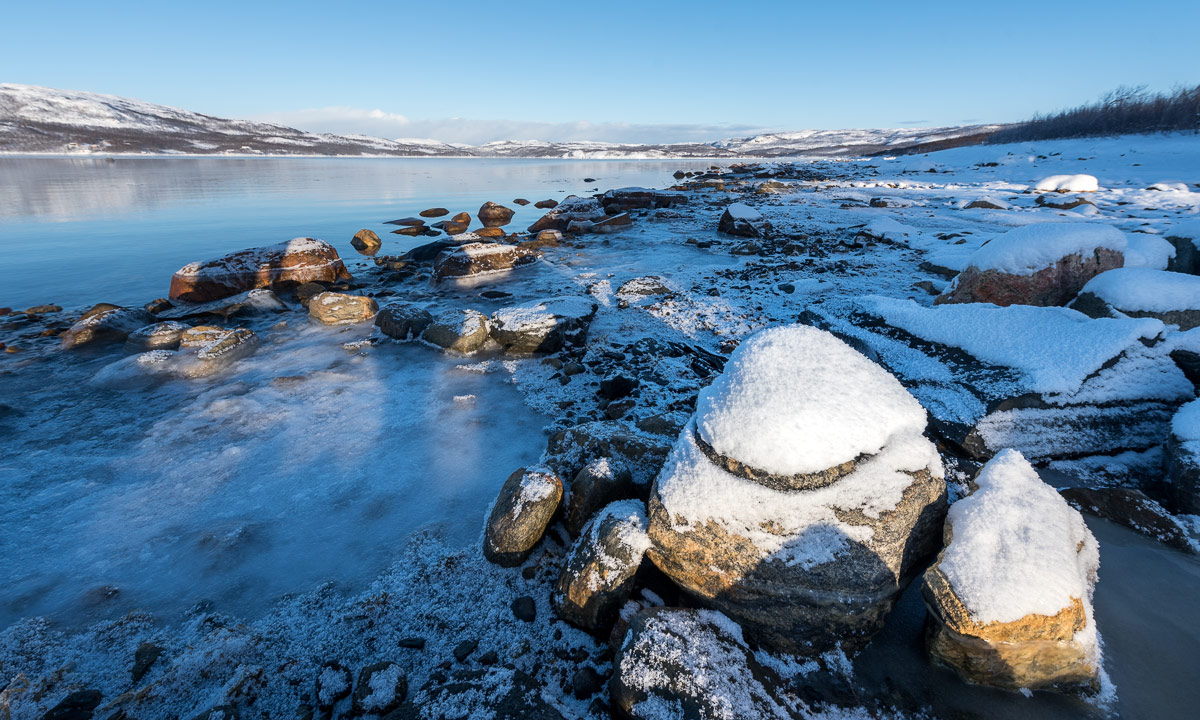
After strolling along the shore we took the car again and turned into a small side road to Svartnäsudden. I just had to stop when I saw the smooth granit rocks with the clear water puddle. In front of the rocks there was some boggy ground, partly covered with ice, surrounded by pine trees. And behind that a beautiful view over the blue Baltic Sea – that’s Coastal Northern Sweden in spring in a pocket.


Cold, clear and crisp

It’s mid-April and the civil twilight already starts round 4 o’clock. A quite stupid time to wake up, but it happened to me today. Normally I would roll over in my bed and continue sleeping, but the sky was so incredibly clear, that I just had to stand up and take the car to the coast.

As clear the sky was, as cold was the air: -8 °C. Time for gloves and down parka again. East from the peninsula Näsgrundet the Baltic Sea was still open – just as on Monday, when I opened the kayak season.

West from Näsgrundet however, the frost has frozen together the drifting ice floes and put a thin layer of fresh sea ice on the bay Kallholmsfjärden.

Now I have to get some more sleep, it’s still quite early.

Ice floes at Strömbäck-Kont

Most of the Baltic Sea at Umeå’s latitudes is free of ice, only some shallow parts and sheltered bays are still covered with an old yet thick layer of ice.

At Strömbäck-Kont – a nature reserve 20 km south from Umeå – the Baltic Sea was open, too, but ice floes still floated near the shore at Flakaskär and the small boat harbour Simphamn.

Torneträsk and Port of Narvik

On thursday – three days ago – Annika and I drove to Abisko to enjoy some winter days in the Swedish mountains. Skelleftehamn is in Northern Sweden, Abisko is in Northern Sweden, but it’s still 570 km to go by car.

Yesterday I stood up quite early, because the sun was shining and I wanted to go onto the lake Torneträsk (one of Sweden’s biggest lakes – 70 km long) to make some photos. The whole lake is covered by a thick layer of ice and a thin layer of snow.

In the front you can see stacked up ice that builds along the fissures in the sheet of ice, in the background you can see Lapporten – the landmark of the region.

After a while fog came down and when you looked against the sun you only could see vague shades and pale colours. It looked more like standing in a sandy desert, not on the icy surface of the Torneträsk.

Some hours later: Annika and I had planned to do a ski tour near the Swedish-Norwegian border. We packed the car with our skis, cameras and hot tea and set off. It’s 38 km to the border. Behind that border – on the Norwegian side – there’re a lot of cottages and since it’s Easter and probably every single Norwegian is in his cottage there were a lot of parked cars, too.

We looked for a parking place as well. The most parking places were stuffed with cars and were furthermore only for private use. I continued driving and we looked for a public parking place. Well, we found one but the surrounded mountains were too steep for skiing. We stopped anyway to check our position on the map. After that we helped some Norwegians to dig out their car that was completely stuck in the packed snow – on the very same parking place! There’s a reason, that most of the locals have all-terrain vehicles or at least cars with all-wheel drive.

My Saab doesn’t have such and from now on I was even more cautious in choosing a potential place to park. To make a long story short: We didn’t found a single parking place that was (a) available, (b) public, and (c) not too snowy. That’s why we changed plans and continued to Narvik, which is 46 km behind the border.

There’re (at least) three signs for leaving the mountain plateau and approaching Narvik:

  • The road is narrower
  • The road has much more curves and bends
  • It gets much warmer. (down to -9 °C in Sweden, +5 °C near Narvik)

Soon we saw the first fjord, the Rombaken:

We continued to Narvik that seemed to be completely closed due to the Easter Saturday. Therefore we headed to the Port of Narvik and looked around there. Most ports I know are locked and fenced off. Not in Narvik. Here it’s possible to walk around, enter the piers and have a closer look to the ships. And we were completely alone.

Narvik is a huge contrast compared to Abisko! Even if I prefer landscape and nature to towns, I like this place.

But anyway we drove back to the wintry mountains of Swedish Lapland quite soon and round an hour later we arrived again at our fine and cozy room at Abisko Cabin.

Wintry Scandinavia in a nutshell (without the skiing).

The last kayak tour?

The evening I came home from my trip to Pajala I didn’t drive home directly but made a small detour to the pilot station. As expected the ice floes that I saw two days before already froze together and built a solid layer of ice. I took my flashlight and checked a more exposed place. To my surprise I could see open water and tiny waves rolling ashore. The whole water surface was steaming of sea smoke. I was quite keen to make a last kayak tour before even this part of the sea freezes over.

The next day: I was really tired and scrapped the plan of an early morning kayak tour. But at least I wanted to have a look. I took the car to the same place, got out, went to the shore and looked amazed and flabbergasted. Where was the water? That’s what it looked like:

The whole sea was ice covered. Not only near the shore but almost the whole way to the island Gåsören! Did I dream the evening before or is it possible, that such a large area freezes over in a single night? It was still -26 °C so who knows?

I told my story to the sjöfartsverket on Facebook and asked, if such could happen. They answered that it’s possible that larger areas freeze over in a single night. I guess it will take some time until I’ll canoe again on the Baltic Sea.

Umiak I

It started like many kayak trips: I put out to sea at the tiny beach Storgrundet without any plans at all. Unlike yesterdays weather forecast it was a nice and sunny day, although not very warm. Since the sea was calm I paddeled along the seaward sides of the islands Storgrundet and Brottören, crossed the Bredskärsviken to the islands Norrskär and Bredskär, continued at the east side of Flottgrundet and headed to Gåsören, probably my favourite island nearby. Some photos:

But much more fascinating than nature, birds and islands was the moment when I looked at the horizon and saw the faint but large silhouette of a big ship. The blurred outline looked more like a fata morgana than a real object. But I wasn’t the only one watching the ship. Two tugboats came from the port to bring the ship into port.

T., whom I met on the Island Gåsören knew the ship. It’s Umiak I, an ice breaker, that can break 1.5 meter ice and still going 6 knots (ca. 11 km/h). Impressing! I do like summer, but I really adore winter and started dreaming of travelling with the Umiak I in winter and cutting through solid ice.

Later today I made a better image of the ship in port.

It’s at least so famous, that it has its own Wikipedia page! I looked at Shorelink as well, to get some more information:

  • Cargo: 9257 tons copper concentrate
  • Coming from: Edwards Cove via Brunsbuttel

Of course I had to look up Edwards Cove, too. Never heard the name before. If the internet is right, Edwards Cove is a harbour west-northwest from Nain in Labrador, Arctic Canada. If the ship would go back the same way, I guess I would ask for a lift.

Links:

A first day in Kirkenes

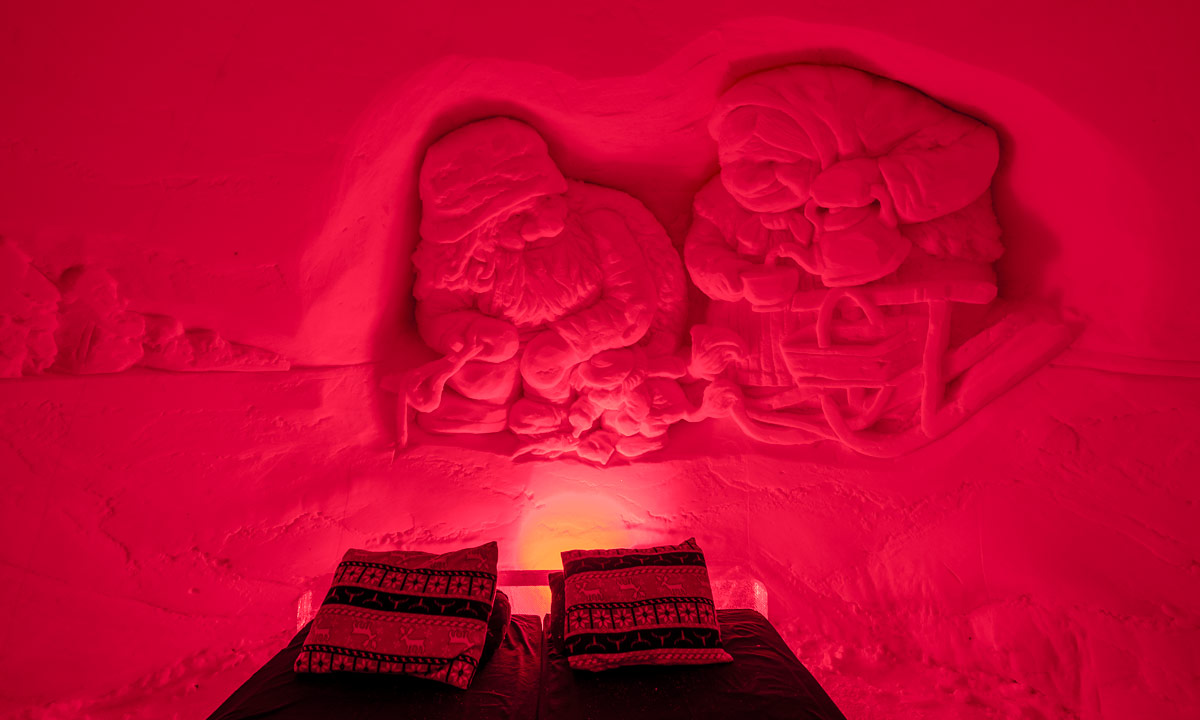
What a beautiful morning! -6 °C and blue sky. I was accommodated near the Kirkenes Snow Hotel where my friend I’m staying with works. I had a look into the Snow Hotel first, It has an impressive lobby with tables and a bar and round about 20 rooms where tourists can stay over night.

After looking around I drove into the centre of Kirkenes and had a walk at the port. First I discovered the commercial fishing part: Big piles of traps for the big King crabs and fisher boats lettered with latin and cyrillic letters. But not far away you could see the touristic part: The Hurtigruten ship Kong Harald that landed nearby.

I walked at the shore a bit and tried to make photos of the big ice floes that lay ashore but clouds had approached and the light was a bit dull. So I took the car and took the road E105 to Му́рманск (Murmansk). No, I didn’t plan to travel to Russia but I wanted at least to see the Russian border. It’s not far away and soon I parked my car just in front of the border.

I’m child of the cold war. It was great to see, that there is a normal border now (even if you need a visa for travelling to Russia) and that you are allowed to take pictures. On the other side this border seemed to be more the “end of the world” to me than the North Cape. On the right-hand side there is the lake that is marked with orange warning signs. This is part of the Norwegian–Russian border that crosses this lake. You shouldn’t set foot on the lake, but at least I went to the shore to take a picture of the Russian custom.

Maybe I will cross this border one day and take the car or the bus to Murmansk, who knows …

It already started snowing on the way to the Russian border but on the way back the snow fall intensified. It was still easy to follow the road but hills that very a bit farer away where hardly visible.

Back at the snow hotel it was still snowing a lot and quite windy but warm as well: +1 to +2 degrees. Some of the 140 huskies were still out on tour while the rest of the dogs could take it easy.

The forecast for the next day promised sunny weather. We’ll see …


Hammerfest and Honningsvåg

Day 49

Quite early I left Alta yesterday and continued the E6 in direction Kirkenes. To the left I could see the Altafjorden but soon the street turned right and went a bit up. Half of the Finnmark is above the tree line and so are parts of the E6. But it’s still amazing that you leave the coastal area with green pine trees and wet snow and after a bit of driving up you are in an area with snow covered mountains and just some downy birches here and there.

But after a while the road went down again and I turned left to visit Hammerfest. I made a short stop in Kvalsund before I drove over the bridge onto the island Kvaløya where Hammerfest is situated at the western coast.

I know the name Hammerfest for ages, I guess it was mentioned in my children’s encyclopedia. As many other towns in Norway Hammerfest is a modern town, since it was destroyed almost completely in WW2. For me the name sounds quite German, both “Hammer” and “fest” are German words as well. When I had a look in the tourist information I thought, that Hammerfest is a German town, because all people talked German. But that’s probably only because the Hurtigruten was just in town and many tourists that make a cruise with one of these ships come from German speaking countries.

After a shorter strolling through town I continued the road to Forsøl in the north of Kvaløya. Again the road went through treeless, snow covered hills and mountains. But the rocks at the coast showed moss and other creeping plants due to the mild coastal climate.

I returned and planned to continue my journey to Honningsvåg, one of the northernmost towns in Europe. Driving back was not easy in the beginning because the streets where wet and it was hard to see something against the low standing sun, even with sun glasses and flapped down sun shields. But soon the road changed direction and driving became easier. Now I continued the E6 a bit and turned left into the E69 (that’s where I made the pictures of the Purple Sandpipers) that leads to the town Honningsvåg and to the Nordkapp. It started to dawn and even to snow a bit.

After a while it was dark. I could see grey snow, dark rocks and the dark sea. After a while I couldn’t see anything anymore, just the reflecting tape round the plastic marks and the tunnels. Meanwhile we had +3 °C and it rained. (I guess, it can be alike in summer …) Already from distance I could see the lights of Honningsvåg. The last tunnel went beneath the sea and came out again on the island Magerøya. Some minutes later I was in Honningsvåg.

Now I had three wishes: Food, internet and a room. It took a while to find the only open restaurant, a pizzeria. Check! There I was allowed to use the private WiFi to get internet. Thank you, guys! Check! And there, with the help of Annika who was online I found a room in a hostel. Expensive but hey, we’re in Norway. Check!

Now, the morning after, I will have breakfast and then I will pretend to be a real tourist and visit the Nordkapp, the northern most point in Europe you can reach by car.