Sunnanvik at dawn

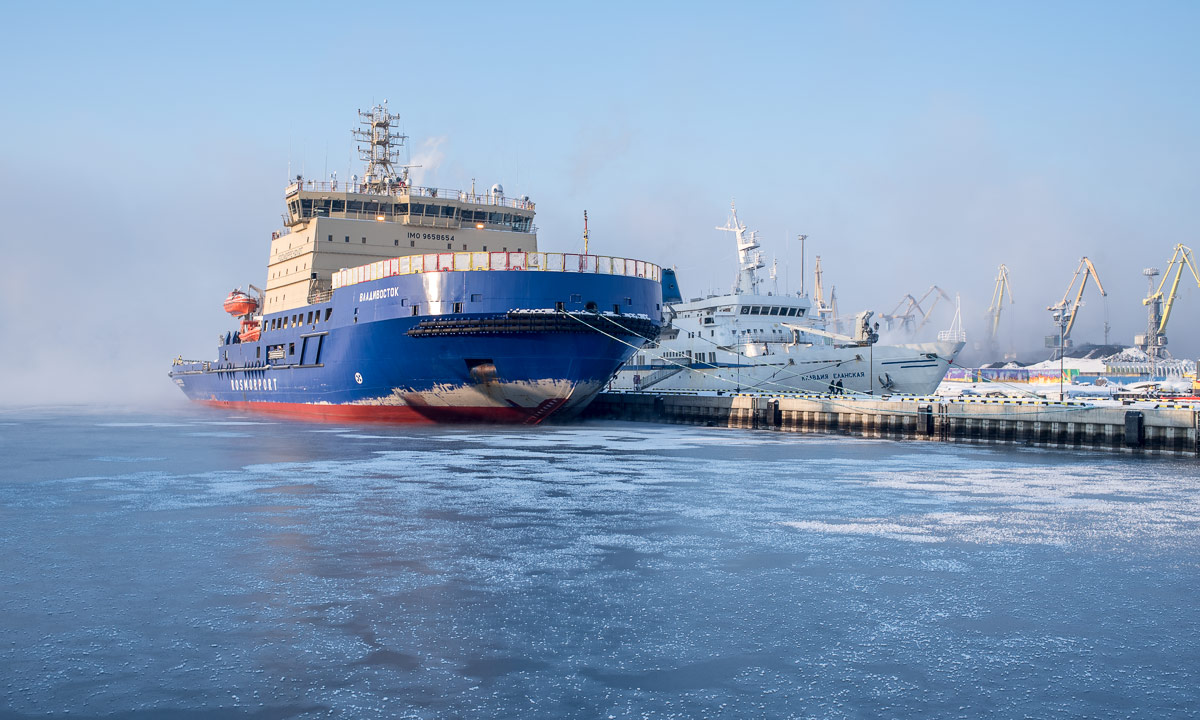
Last night when I returned home from town I saw the small ice breaker Baus at the pier of the cement factory. When I went out this morning – it was -17 °C outside – Baus already had left. Instead the Cement Carrier Sunnanvik had come and was anchored at the pier, its strong spotlight illuminating parts of the ice covered bay.

In the background you see the copper smelter Boliden Rönnskär. So Skelleftehamn is not only nature as my blog sometimes seem to indicate, but industry, too. Sometimes you can get afraid when you see big cargo boats coming in filled with many thousand tons of sulfuric acid. On the other side this industry creates jobs for a lot of people and last not leasts heats my house with district heating. Two sides of a coin …

Late autumn paddling

It’s so nice to kayak on a sunny summer day, wearing just shorts and t-shirt, feeling the warm breeze, taking a bath and having dinner on a warm sunlit rock by the sea.

I wonder, why I hardly do that! This summer I paddled exactly twice – once in May, once in June. Now it’s November!

When I saw the thin layer of ice at Storgrundet this morning I was kind of alarmed – the days of paddling this year are numbered.

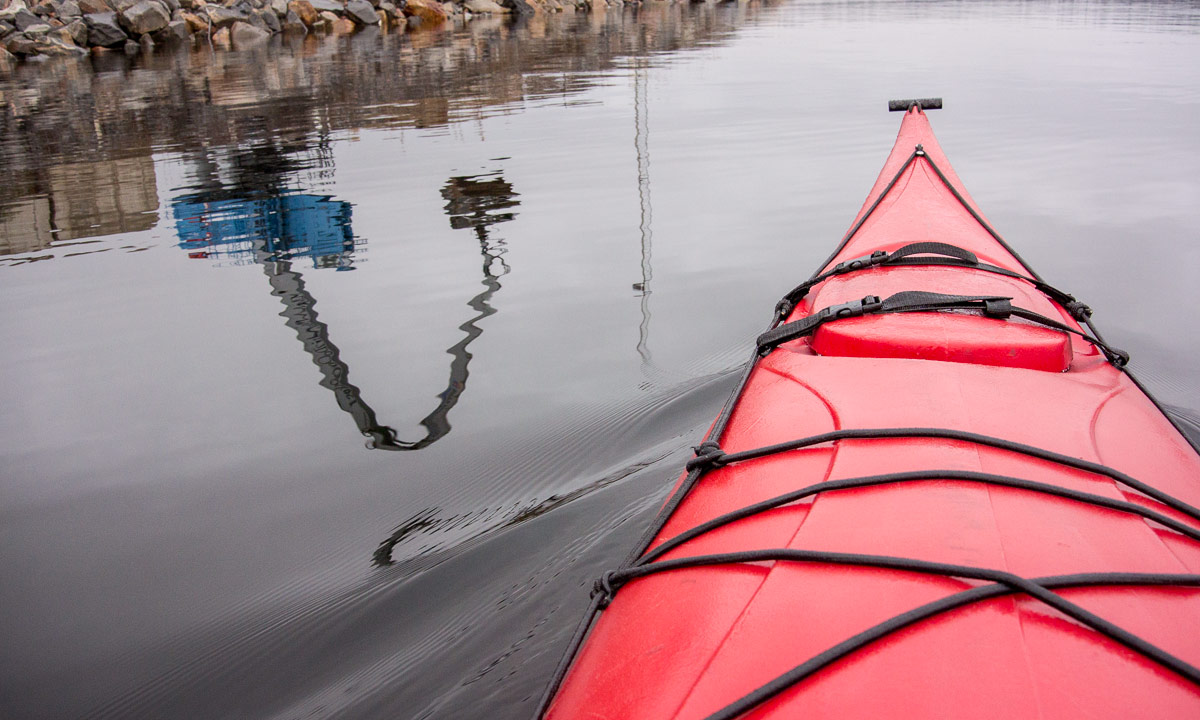
I fought a while with my weaker self but finally it was me who won. I put on my drysuit, neoprene boots, hood and gloves, took my little waterproof camera and fetched my kayak from the garage. The weather was still a bit sunny and temperature round -4 °C. (According to the weather forecast it should have been cloudy for hours, temperatures above zero and rain on its way. But well, the Swedish weather forecasts are hardly reliable.)

It took less than ten minutes till I reached the small bay Killingörviken where I launched my kayak. Within this short time period clouds have been approached from the sea covering half the sky.

The first 70 meters were hard work. Even when the ice is only 7 mm thick it’s not easy to paddle through because you have to break the ice not only with the kayak itself but with the paddle as well to be able to push forward. But soon I reached open water, crossed the street and reached the larger bay Kallholmsfjärden, home of the port Skellefteå Hamn. At the rear the sky was still blue but in front of me dark clouds approached and soon it started to snow …

No! Wrong! It didn’t snow. Snow stayed home and sent his asshole cousin: Freezing rain. (Rain indeed, sometimes the weather forecast is right.)

I thought back to the time, where I had lived in Essen. In that time I used to say “winter is coming, the rain is getting colder”. And so it felt today. It was chilly, wet, grey, twilit and dull. A typical autumn day in Essen. Or winter day. Or … . But I get off the point …

Anyway when I crossed all the bridges that traverse the channel Kejsar Ludvigs kanal, my mind wandered back again. Here it even looked like Essen.

But there are differences. First of all I never paddled in Essen and then Skelleftehamn is a coastal town which means that you reach the sea in less than no time:

Near the coast there was another layer of ice and again I had to cut through. My plan was to paddle round the peninsula Kallholmen, meaning that I would have to cross the sheltered bay Kurjoviken. Would I manage it or would the ice shield be too thick to be easily crossed? Well, I’ll see …

I paddled along the southern side of Kallholmen. There was hardly any wind and hardly any waves. Time to stop photoing and just enjoying the motion. Kurjoviken however came nearer and when I went round the west tip my misgivings became true. The whole bay was iced.

I gave it a try and started paddling through ice a third time this day. Already after ten meters the ice was 10 mm thick and I knew that I had 500 meters more to go. I decided to give up my original plan and returned. Backwards since it’s hardly possible to turn in ice.

It was still grey and quite dark, but it stopped raining and there was a a silver lining on the horizon.

It started to rain again. The raindrops were so tiny that I hardly could see the drops impacting the water surface. The surrounding looked hazy and mysterious and it was hard to guess distance and size of other objects.

“Is there a man standing on a rock amidst the sea? Or is it just a rock? Did it move or not? It moved! Is it a bird? I’m not sure. Yes, it’s a seabird, perhaps a cormorant. And the four dark spots ahead? Is it small rocks? Or big rocks? Or seals? Or trees far away in the haze?” Probably it was trees, that spot was further away than excepted.

Finally I reached “Ice Shield II” were I used the ice-free channel that I created an hour before. A second time I paddled along Kejsar Ludvigs kanal and reached the harbour.

A second time I crossed the bay, reached “Ice Shield I” and soon went ashore.

Well, let’s say I tried to go ashore. It was easy to leave the kayak but hard to go up the shallow slope, since the cold rain had instantly become ice on the still frozen ground and it was extremely slippery. Did you ever tried to drag a trolley with a kayak behind on freshly frozen streets? With neopren shoes made for water, not for ice? One patch on the street was so slippery that I really felt stuck. I could not move in any direction but finally I made it and some time later I arrived home.

My plan for 2018: Much more kayaking. In sun or rain, night or day – doesn’t matter as long as it’s save.


Ships and boats in Skelleftehamn

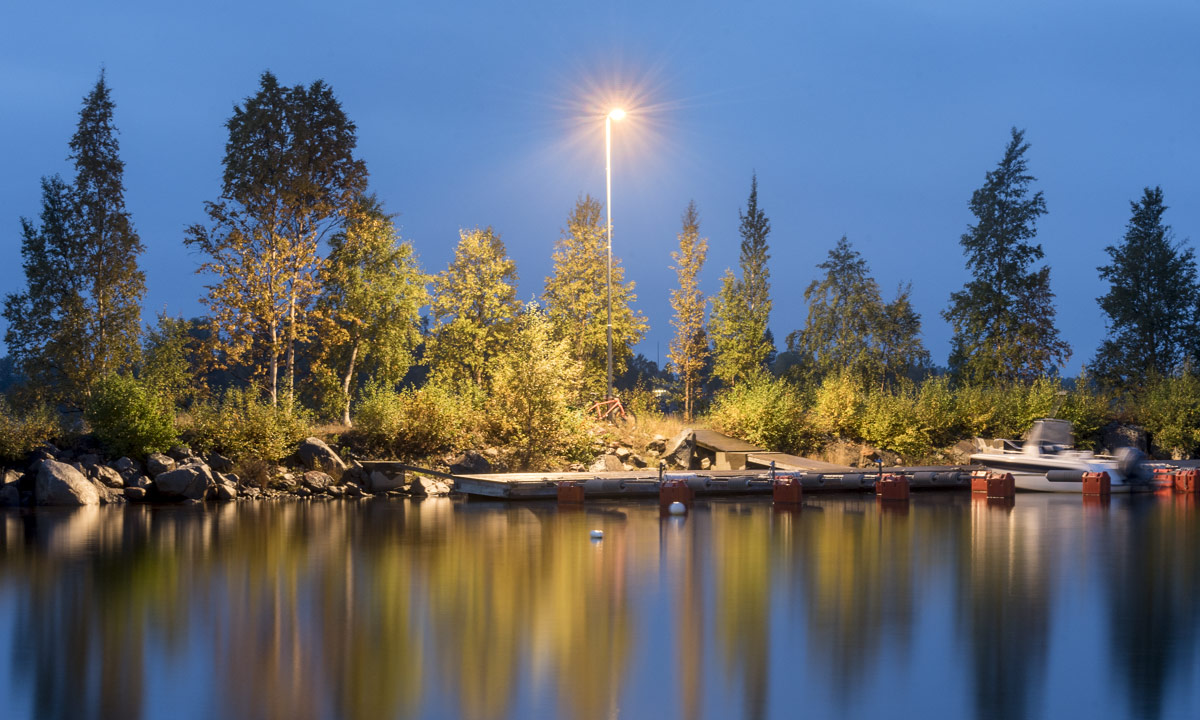
Today I planned to make some autumnal pictures in the early evening. I took the car to the small boat harbour tjuvkistan in Skelleftehamn. It felt like ages ago that I had been there. On the way there I saw a ship anchored in the commercial port. I stopped and to my surprise it was a ship from my hometown: The “Seabass” from Bremen. Of course I had to take a picture:

I went on to tjuvkistan and took some photos with trees (and boat navigation lights) reflecting in the sea. Still many boats lay in the small harbour or were on the way from or to the islands, but soon most boat people will set their boats on land before the weather gets too cold.

Hopefully I will have some other opportunities to make more pictures as long the leaves have not fallen down.


Rainy Tromsø impressions

This article is part of the series “2017-07: Tromsø”.

Two weeks ago: I’m in Tromsø, it’s quite early in the morning and I cannot sleep any longer. Time to ignore the grey rainy weather, take the camera with the 35mm lens and go out for an hour to make some photos of Tromsø when the weather isn’t so nice, but neither bad.

Two days on the Hurtigruten

This article is part of the series “2017-02: Northern Norway”.

On Wednesday we left Kirkenes and started our journey to the next destination: Stokmarknes on the Vesterålen where we planned to visit good friends of mine.

KirkenesStokmarknes would be 1000 km by car and take at least 14 hours, if you take the faster way through Finland and Sweden. Anyway there’s an alternative: The Hurtigruten express route, which connects many coastal towns, among others Kirkenes and Stokmarknes. That’s why we took the Hurtigruten ship instead of driving for at least two days. In Vardø we entered the vessel Trollfjord and 16:45 we started our two day long tour.

The first night we went to bed quite early and I only took some pictures in Berlevåg. Since the ship already was moving again I decided to make a longer exposure with the camera on a tripod. That’s Berlevåg by night seen from the Hurtigruten:

We missed Mehamn, Kjøllefjord, Honningsvåg. The first place with a landing stage I saw was Havøysund, were we anchored from 7:45 to 8:00. Shortly after we met the Lofoten, the oldest and smallest ship of the Hurtigruten fleet today. It was tiny compared to the much bigger Trollfjord (which is tiny compared to modern cruise ships).

I tried to be as much outside as possible. It was cold and quite windy, not only because of the airflow, but the gusty wind, too. First I thought, that I would be extremely overdressed in my Canada Goose expedition parka, but soon I found it quite comfortable to wear it in the chilly weather.

In Hammerfest we left the Hurtigruten, looked round in town and bought food. In Øksfjord it started to get dark and the black-white mountain ranges became blue.

… and blurred if you wanted to …

… and it got darker …

Then it started to snow. Sometimes the snowfall was quite heavy especially with the wind and I was even more glad about my warm parka.

In Tromsø we arrived at 23:35 and I made some night shots of this favourite town of me.

We could have left the ship for a visit of Tromsø but we preferred sleeping. We’ll probably visit Tromsø this summer.

The next morning came and the last day aboard began. Good for me, because even if I was glad to slip the car ride it’s not my world to be on a large ship looking at the landscape rolling by. Last night snow fall has brought much snow on the top deck. I never waded through snow drifts on a ship before.

At the same time the Trollfjord anchored in Harstad, a town on the island Hinnøya.

On our way to the next destination Risøyhamn it got extremely windy, the stabilised ship started to roll and to pitch and heavy snow showers appeared, reducing the view to some hundred metres.

Suddenly the wind calmed down, the snow showers were left behind and for the first time of the whole cruise patches of blue sky and finally the sun came out. We approached Sortland, the last stop before our destination Stokmarknes where I gazed at the beautiful mountains of the Lofoten archipelago in the south.

I generally dislike the last 30 minutes of transportation, if it’s by train or by plane. I just want to arrive, and so it was on the Hurtigruten. Impatiently I waited in the inside of the Trollfjorden for its arrival in Stokmarknes, then another fifteen minutes for the allowance to enter the car deck and another ten until I was allowed to drive the car onto the very same car elevator which I used to enter the ship almost 46 hours ago.

I could write a lot more about the Hurtigruten and its passengers, but that’s another story. Short résumé: I love those ships for transportation, but cruising is not my cup of tea. (Anyway, the outside jacuzzi on the top deck is really great!)

4×4 winter impressions of Kirkenes

This article is part of the series “2017-02: Northern Norway”.

Kirkenes – the harbour

While Annika and our friends in Kirkenes enjoyed their breakfast in the Hotel Thon I took a short promenade along the Johan Knudtzens gata to take some pictures. Already the view from the hotel terrace over the fjord is quite impressive and shows the beauties of the arctic nature while the harbour shows the more practical sides of living here: fishing, both commercially and just for fun.

A hike onto the top of the Lyngberget

After the breakfast we took the car to Jakobsnes and a bit further to take a promenade up the mountain Lyngberget, which lies on the other side of the Bøkfjorden. Here you can have a wide view over the whole town of Kirkenes – at least as long it doesn’t snow, as it did on our way back. I just love these wintry landscapes where you have views over fjell and fjord, but the wind was quite chilly and soon we looked like the participants of an arctic expedition.

The Huskies of the Kirkenes Snowhotel

Today we played tourists and visited the Kirkenes Snowhotel, which is just some hundred metres away. The Snowhotel has 180 Huskies including the seniors plus 30 puppies. The huskies are like we humans – some are working, some are resting, some are curious and some are shy. But they are all very kind and friendly.

Inside the Kirkenes Snowhotel

I slept in tents, in igloos and outside in wintertime. I even slept in the Kirkenes Snowhotel two years ago. This time Annika and I enjoy sleeping in the inside of our friends house (Thank you for your great hospitality, Christine and Ørjan) but gave the Snowhotel a visit. And it was worth it – especially the lounge with it carved ice blocks is very impressive.

Tomorrow we’ll leave this fine place, take the car to Vardø in the North (yes, that’s still possible!) and take the Hurtigruten from there to our next destination.

Crossing and not crossing borders

This article is part of the series “2017-02: Northern Norway”.

Hardly believable that Annika and I started our holiday trip just three days ago when we looked at the arctic landscape today.

On Tuesday we started in Skelleftehamn, Sweden and crossed the first border to Köngäs, Finland. 481 km.

On Friday we continued in Köngäs, Finland and crossed the second border to Kirkenes, Norge, where we’re visiting Christine and Ørjan. Another 387 km.

Yesterday on Saturday we took it easy and relaxed after the two day road trip.

Last night I got sick. (That’s another story but the reason, why we cancelled our ski tour today.) Instead of that we took a short road trip to the Russian border, a border that we cannot cross without a valid visa.

The only border checkpoint between Norway and Russia is at the E105, the road to Murmansk. This checkpoint is only 10 km away from Kirkenes. I’ve been there two years ago.

In Elvenes there’s another small road to Skafferhullet. This place lies at the Russian border, too. There’s no checkpoint, the small road just ends and a fence with some signs marks the border to Russia and warns of crossing it. Here I really had the impression, that the world – as known to me – had come to its end and another kind of secret part of our planet begins right after that wire mesh fence.

Only wild animals can cross borders without any harm. They don’t share my memories of the inner German border, they don’t know anything about the cold war, they don’t have to care borders at all. Lucky them!

Perhaps I’ll witness the day, when the border to Russia is as open as many inner European borders today. Who knows …?

Just before the border checkpoint on the E105 there’s the road 886 to Grense Jakobselv – another place located at the Russian border. Most of the road is closed in winter time, but the first part is open. And this way is quite beautiful. We followed it until the barrier, where only snowmobiles are able to continue. There we took the minor road to Lanabukt located at the Jarfjorden.

Some photos:

What a great day with fantastic winter weather and temperatures round -17 °C. On the way back we stopped at the petrol station to buy me salted sticks and a Coke because unlike in Sweden super markets are closed in Norway on Sundays.

A cruise from Skelleftehamn to Bjuröklubb

It doesn’t happen often, that you can make boat trips from Skelleftehamn, were I use to live. Only one week once a year the Laponia Rederi from Luleå comes down to Skelleftehamn for some cruises. Last Saturday Annika and I took the opportunity to attend a five hour cruise to Bjuröklubb, where I’ve been quite a lot, but never by ship. When we arrived in good time before 11 o’clock people already started entering the small ship.

We boarded, too and thereby lowered the average age some years. I sniffed around the boat and got the permission to enter the bridge for some photos.

Five minutes before schedule the ship put out to sea, cruising along the industrial peninsula Rönnskär.

While Annika and I were standing on the top deck looking at the sea, the islands, the sky and the waves, all other people stayed inside and started focussing on the main topic: the lunch buffet. Anyway I have to admit, that especially the salmon was extremely delicious, and the bread as well.

I once thought about making a kayak trip to Bjuröklubb, an exposed peninsula and the easternmost point of the county Västerbotten. It would take me some days, since for one thing I’m slow and for another thing I would follow the coastline and never dare to take the much shorter direct route long away from the mainland. The ship, however was fast and took the “directissima”. Therefore it took only 90 minutes to cruise there.

At the small harbour we all went ashore and the ship continued to a larger harbour nearby where it waited for us. We got a guided tour and went up to the lighthouse where we left the croud for a good reason: Just that day was the International Lighthouse and Lightship Weekend, the only day where the lighthouse – which is still in use – is open for visitors. I went up, waiting for the other visitors – max 4 at the same time – to leave and made some photos. Not only the cut glass mirror construction was incredible but the colourful reflections of the sunlight, too.

Since we already left the group we took a hike to the other harbour, where we entered the ship again. Why it took us more than half an hour to walk for just some hundred meters? Well, there were blueberries, there were raspberries … and we picked and ate a lot of them.

The crew untied all the ropes connecting the ship to the land. I’m sure they are nautical terms for those ropes, you are free to post their proper names in the comments. Then the ship started, fetched the other passengers at the other small harbour and headed back to Skelleftehamn. Annika and I sat on the upper deck and enjoyed sun, clouds, wind, and waves as well as the view on the islands Skötgrönnan and Gåsören.

Ninety minutes later we arrived again in Skelleftehamn, where we came off the ship, while one of the crew played farewell music on the accordion.

Conclusion: A relaxed cruise and the opportunity to play tourist in my adopted homeland for one day.

Noctilucent clouds

19 days ago it was dark enough to see the first star. Since then it got a bit darker each night and tonight – which is a clear night – you can see the first constellations as for example Cassiopeia.

It would be dark enough for the first polar lights of the season but there aren’t any this night. Anyway I spotted something even better in my opinion since it is not often that you can see it so lucid as tonight: Noctilucent clouds, which are clouds so high up in the sky that they are illuminated by the sun the whole night through. Cirrus clouds, the highest “normal” clouds exist in altitudes of round 4 – 12 km, noctilucent clouds however occur in altitudes round 50 km! And I think there are really beautiful.

Translation:

EnglishGermanSwedish
Noctilucent cloudsLeuchtende NachtwolkenNattlysande moln

Second kayak tour 2016

What a contrast to the first kayak tour six weeks ago: Last time dry suit, today t-shirt. Last time between ice floes, today birches with fresh leaves. Last time Baltic Sea, today the river Skellefteälven.

I put my kayak onto the new two-wheeled dolly (the old one broke down) and dragged it to the small bay Killingörviken, where I started my today’s tour. First I paddled along the harbour, then I turned right into the channel Kejsar Ludvigs Kanal. It always reminds me a bit of the “Ruhrgebiet” in Western Germany, where I lived for eleven years. After the last tunnel waited the Sörfjärden.

There I left harbour and industry behind and considered, where to go. The tour into the Nördfjärden wan, since it was windier than expected and I didn’t want to cross the Sörfjärden. So I paddeled upstream.

After a while the peninsula Örviken to my left ended. That’s where the Nördfjärden starts. I knew the first part and paddled to one of the rotten wooden piers. Luckily I realised that there were also under water parts – there were almost everywhere. I slowed down to avoid a collision with one of the big rusty underwater-nails. Finally I came to one of the four old platforms that probably formed an old pier, too – many, many years ago.

Now it was not far to the small island Gustavsgrönnan, where I made a short break. The whole shore is wet and covered with reeds, that lay flat on the ground.

I continued my tour by surrounding the island and paddled to the islands Stensgrönnan and Björnsholmen. To these islands you can drive by car and I was curious, if there would be a bridge or a tunnel to allow me continuing my trip.

First try Stensgrönnan: No chance! A solid dam connects the island to the main land.

Second try Björnsholmen: A small chance … . This island is connected to Stensgrönnan by bridge, but it looked really low. I didn’t believe I could manage to squeeze me underneath it until the end, but it worked. I had to bend my upper body onto the kayak and drag myself forward slowly by hand.

(Reminder to myself: This tour works only when water level is ±0. 20 cm more water and I wouldn’t fit under the bridge. 20 cm less and paddling could be hard due to the shallow water round the islands.)

Now I paddled downstream, which was not as much help as expected since the wind increased and came right from the front. But soon the bridge of the Sundgrundsleden was in view, the tiny cabins ashore and the dry dock with the read ship that I already saw on the way there.

I was a bit exhausted when I turned left to enter the bay Kurjoviken on the other side of Kallholmen. Now I was almost home, I just have to take the tiny tunnel “Lappstrupen” and I’m …

… well, that didn’t work. Due to roadworks this tunnel was completely blocked. Can I traverse the tunnel anyway? No. Do I want to walk and get the jetty? Neither. So I returned to the open water again and had another two kilometres against the wind until I entered the Kejsar Ludvigs Kanal again.

Now I headed back to my starting point. Another kilometer to go and I was onshore again. Phew – the last part was exhausting!

Today’s tour: Round 19 km total. (3.2 km extra because of the blocked tunnel Lappstrupen.)