Back to Sweden

This article is part of the series “2016-09: Jämtland and Norway”.

20. September

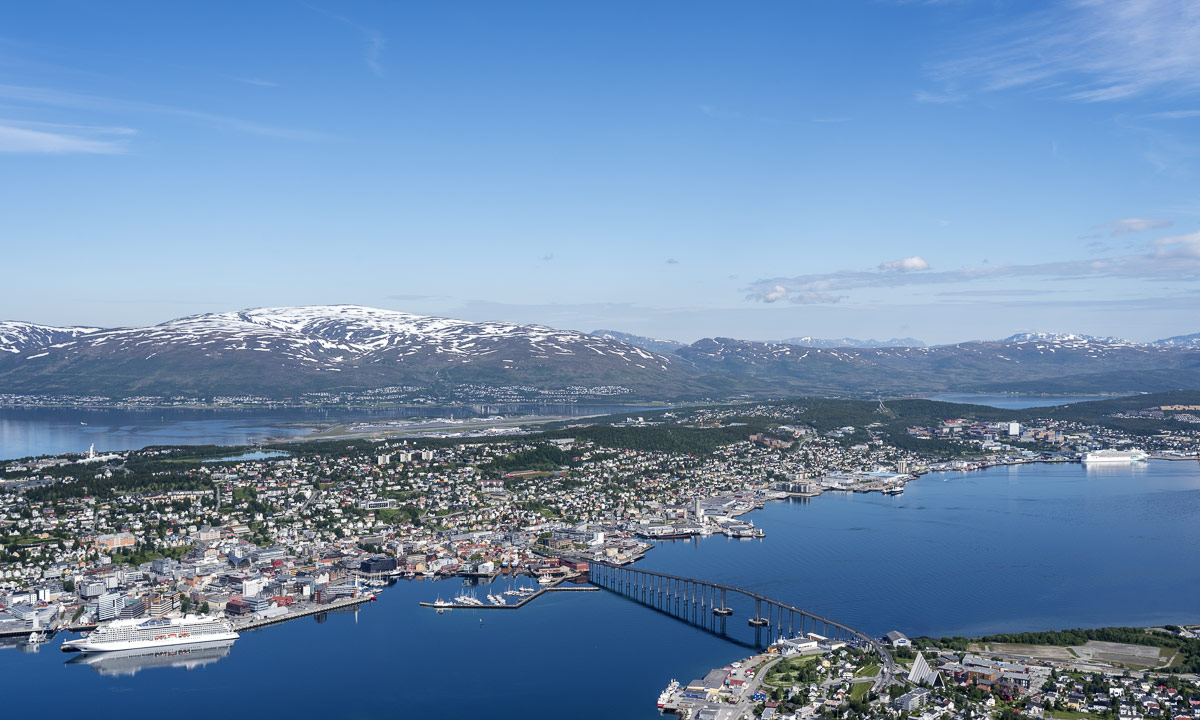
The day after our walk to and through the Torghatten we took a breakfast in our fantastic cottage Feriehus ved Lille Torgvatnet we hired for two days. After that we tidied a bit, packed our baggage into the car and continued the tour.

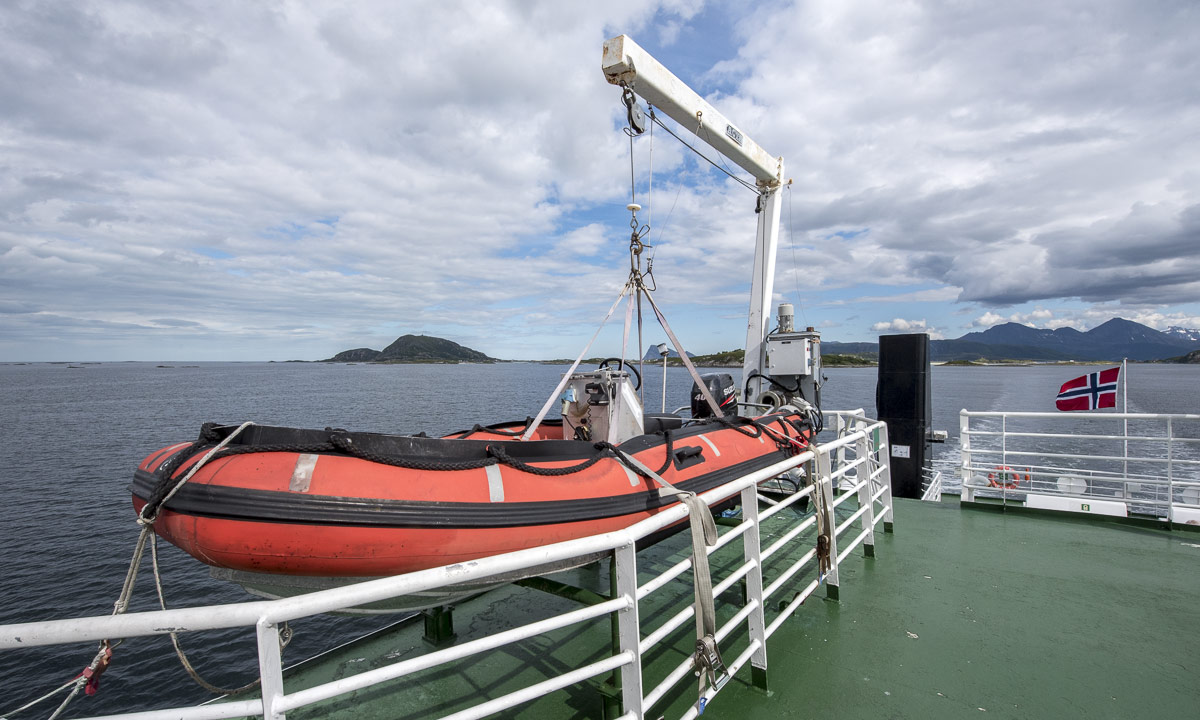
We took the 17 to the north to Horn, where we took the ferry to Andalsvågen. We drove 17 km to Forvik, where we took another Ferry to Tjøtta including some intermediate stations.

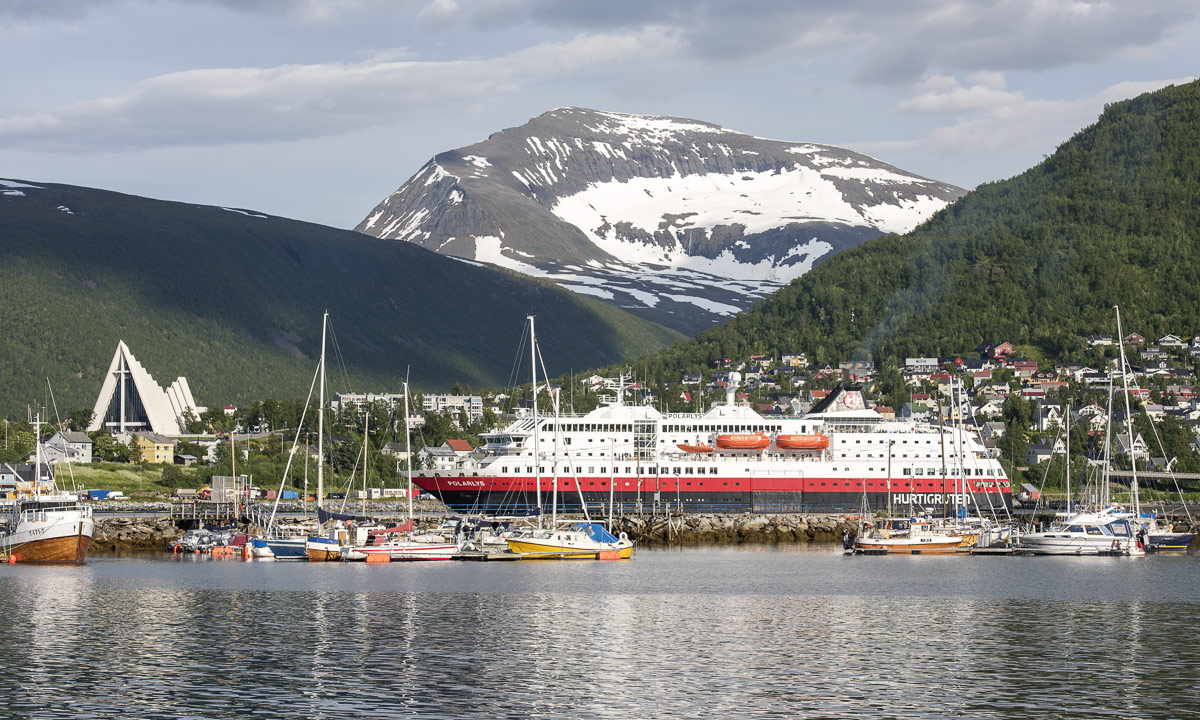
Have a look at the 2nd photo above: „Tricky stopover in Stokka“. You see the car with the trailer? Look closer. Did you realise, that the taillights are on? The car isn’t leaving the ferry, it’s entering it. Backwards! All cars in Stokka had to embark the ferry backwards – whether that car with the trailer or the camping van. I never expected that you have to enter a ferry like this. The next port we experienced an even bigger oddity: The car with the trailer even left the ferry backwards. Really strange!

We continued on the 17 – now without any ferries – but left the road near Leira to continue to Mo I Rana. From that town it’s just another 40 km to the Swedish border.

Annika and I enjoyed the incredible autumnal colours of the trees on our way back and I looked for a place to make some last photos of the tour. 2.8 km behind the border I found it:

After looking at these stunning and extreme colours we continued to Tärnaby, where we stayed over night. The next day we drove back to Umeå, where we arrived in the afternoon.


757.5 – from Mosvik to Skelleftehamn by car

Last week I’ve been in Mosvik (Norway) to visit friends. Yesterday I drove back home, not directly but with a detour via Nordli and Røyrvik (Norway) and Stekenjokk, (Sweden).

According to google maps the direct way is 671 km, taking 8 h 38 min. With the detour it is only 67 km, but 1 h 46 min longer. That says a lot about the small and steep gravel roads near the Swedish–Norwegian border …

For me the journey didn’t take 10.5 hours, but more than 15. For one thing I don’t drive fast, especially in Norway and for another thing I took many smaller rests for taking pictures as well as a lunch and a dinner break. I left at 9 o’clock; at quarter past midnight I finally was home again. Total distance by car: 757.5 km.

See my travelogue of the journey by clicking the first image and navigating through the images. Swipe on touch devices and click or use arrow keys on other computers.

By the way: After nineteen articles without any photo with snow, this is the first article showing at least some patches of snow again.

Farewell, winter

Yesterday it started to rain.

Today it rained, rained and it rained. It poured down the whole time and didn’t stop for a single second.

Probably it’s time to say farewell to winter.

I’m looking forward to spring, but I’ve started to miss winter already.

Thaw

When it’s more than 10 °C in mars for two days a lot of snow thaws and transforms normal streets into a proving ground for jeeps. Soft slush, sheer ice, deep tracks and huge puddles cover the streets and crossings and I wait for the day where I’ll get stuck twenty metres from home.

On the other side the scenery can look almost nice, at least when you lower your camera as much as possible:

Hunting the cold – day #1

This article is part of the series “2016-01: Hunting the cold”.

Two days ago it looked like that it could by quite cold in Northern Sweden yesterday and today. I checked several places and their weather forecasts and Pajala with a forecasted temperature of -40.4 °C won. That’s good news, since Pajala is only 350 km away. Nikkaluokta for example is one of the coldest places in Sweden, is 537 km away and it will take more than 6 hours to travel to (when conditions are good).

Yesterday – 6 Jan, 2016 – I packed kamera, very warm clothes and all you need for ski tours into my Saab and started the trip. In Skelleftehamn it was -17 °C, but already 20 km away the temperature dropped to -20 °C.

I made a stop in Jävre. I’ve passed this place several times and every time I planned a future stop. Well, future was yesterday. Jävre -23.3 °C.

I continued the trip and the temperature continued dropping. Round half past ten I could see the sun – it was bright red (the camera couldn’t catch this) and because of the higher latitude it was even lower above the horizon. -27 °C.

Now I continued driving to avoid arriving too late. Right after Svartbyn (E10) the thermometer dropped below -30 °C the first time. Round 40 km later I turned right. Here temperatures dropped below -33 °C. Near Pentäsjärvi – 25 km before Pajala – it got even colder: -36.9 °C. I probably experienced colder temperatures, but never saw such low numbers on a thermometer.

I found a quite low-priced room in the Hotell Smedjan but I continued driving around looking for nice (and cold!) places.

One of the most fascinating things in my opinion is the light in wintertime. Twilight may last hours or even the whole short morning, day, and evening and there are always soft pink colours in the sky. Just beautiful, but cold to take pictures of if you don’t have warm clothes. But when I have one thing, it’s cold weather equipment.

I looked for the airport, which is a bit out of town and quite tiny. It was closed. It’s the first airport I saw with an own parking place for reindeers. Good to know!

On my way back to Pajala I found a side road that headed to a small national park. I parked the car and walked the 700 meters to the cabin and the grill place in darkness. Of course it wasn’t pitch black, the snow and some thin clouds reflected the light of the city, giving enough light to see and walk. (The selfie is made with the iPhone which can take two photos until it will shut down because of the cold.

On the way back it was even colder: -38.8 °C. Now I got really hungry, drove back to the hotel and walked to the pizza restaurant. (Pizza and burger bars rule the Scandinavian north). Pajala by night:

Then I went home. I was glad that I have all I need for such a trip: A camera, food and a warm winter parka.

After a while I considered if I could catch the -40 °C now. It was warmer than expected, but let’s give it a try.

This time I took the road to Käymäjärvi (the name proofs, that Finland is not far away). Yes, here it was quite cold – below -39 °C. Between a swamp and the lake I stopped, since these low lands can be cold traps. I didn’t get lower temperatures but a view on the village and northern light (quite strong until I was ready to take pictures …)

On the way back to the main road I got my new personal cold record: -39.6 °C (sorry, no -40 °C)! When it’s really cold in Northern Sweden people take pictures of thermometers and show them in the internet. I will join this tradition. Voilà:

>>> read about day 2 of the journey >>>

Räven raskar över isen

“Räven raskar över isen”, which means “The fox rushes over the ice”  is a popular Swedish folksong which is performed as a singing game at midsummer.

Today I was out quite early, because the weather was still nice: -6 °C and not completely cloudy. And while I took some more images of the ice outside of Storgrundet, wondering when the ice will bear my weight I saw a fox crossing the ice and rushing from one island to the other. I immediately remembered the song.

(The photo itself is a cropped image, the fox was too far away for my 70-200 mm telephoto lens. By the way: the clouds were of an incredibly intense red – even more than the photos)

Soon more clouds came in and it started to get warmer. In the afternoon it started to rain transforming the cold roads into slippery, wet ice tracks. I would deeply recommend to wear broddar – spikes for your shoes when weather is like this.

Winter journey in a nutshell

It snowed in Skelleftehamn tonight. It’s hardly a secret, that I love winter, snow and coldness. In Skelleftehamn however it would be too warm, because the Baltic Sea is near.

Therefore I decided yesterday to take a day off today, take camera and car and travel towards winter. In the inland the climate is colder and hopefully there would be more snow. I started at 6:45 in darkness. The first part was no fun to drive. Road salt is used on the big road to Skellefteå and the road further west. With temperatures slightly below zero you always have a film of muddy saltwater on your windscreen while the wipers still are partly frozen and will not work properly. That in combination with approaching cars with bright lights makes it hard to see and much concentration is needed.

That instantly got better when I left the big road 95 (that would bring me to Bodø in Norway) right after Jörn. The smaller roads are covered with ice and hard snow – much easier to drive and the windscreen stays clear. And it looks much more like winter than a wet road. And while in Skelleftehamn even the duck pond is open, here the lakes and some small streams are ice and snow covered.

I continued the road and drove to Storklinten, a small ski hill. Well, it wasn’t so interesting yet with only round about 10 cm snow, but the lake nearby – Lill-Klintträsket – was really nice. It started snowing and the tree covered hills farther away seemed to vanish into a white nothing.

The way to Storklinten is a dead-end road and I had to return. I continued the larger road to Myrheden looking for motives. And I found one. The small river Ålsån:

I was glad I had my chest waders with me, so I could come quite near to the motive. And there were a lot of motives this day. For example reindeers. The first small flock was extremely shy and cautious. It didn’t dare to pass my car and left the road starring at me suspiciously from behind the small trees. You can see that they digged for food in the snow, the noses are snow covered and one of the reindeers even had a twig hanging in its antlers.

Further on the road: Town signs with funny looking names (there was even a village called Hej, which is Swedish for hello), more snow covered roads and trees and two extremely well educated reindeers going beside the road in single file.

I’m looking for motive especially, where there are crash barriers beside of the road – there the street will probably cross a river or a creek. Some of them are open, many broader ones with less current are already covered with ice. And on one of them – far away – I could see a reddish animal and some dark spots. A fox? Birds? I looked for the next parking opportunity – sometimes a real challenge – and walked back.

I was right: There was a fox. And some kind of skeleton, perhaps a roe deer or a reindeer. And some crows. And an eagle! It doesn’t happen often, that I see eagles nearby where I live. I made some photos with my tele lens. Zooming in I could even see some magpies hopping around hoping for a snack. The scene was much too far away to get good pictures, but anyway, I want to show you this one:

After a while I started to get hungry. My car too; the red R-lamp has been glowing for a while. Anyway, the town Arvidsjaur, todays destination, was not so far away anymore. As people in former days first fed their horses before eating themselves I first tanked my car with E95, then myself with beef, mashed potato, mushroom sauce and salad. Then I looked around in the city which I think is really nice. Especially in winter with snow – round 20 cm today.

Even if the “real winter” is not here yet the days are already quite short: Sunset in Arvidsjaur was a quarter past two! At three o’clock I started to use the car’s full beam, half an hour later it was quite dark. Time to head home. I couldn’t see any motives any longer and I navigated to the main road. Now driving became exhausting again for a while since it started to snow quite heavily. And if you use full beam while snowing you just see a tunnel of snow flakes swooshing towards you. It’s a big like old televisions science fiction series, when the spaceships activated their warp-drives. And as in space there is no up or down. The second photo may give you a faint idea.

Luckily the snow shower ended soon and the rest of the trip was just about coming home.

400 km and 500 meters – 11 hours 30 minutes – a straining but great one day trip winterwards.

Back again in Skelleftehamn: Snow is gone, it’s pitch black and it’s raining cats and dogs.

On the way to Å

This article is part of the series “2015-07: Lofoten and Vesterålen”.

Day one

Å is not only the last letter of the Norwegian alphabet, it’s the name of some places, too. The probably most known  is Å i Lofoten, the southmost village of the Lofoten islands.

Delle, a German friend of mine and I started the tour last Saturday. The only plan was to take the car, drive to Bodø and take a ferry to the Lofoten islands, the same day or the other day.

The weather in Skelleftehamn was fine but in Arjeplog, where we made a lunch break it started to rain. We continued our trip to Bodø over the mountains. They were wrapped in clouds and were still partly covered with snow.

17:30 we arrived in Bodø, just in time to get the ferry to Moskenes on the Lofoten. Normally I love to be outside all the time when I’m on a ship but this time the sky was so grey that you hardly could see anything. The Lofoten with its more than 1200 meter high mountains came in sight just some minutes before we arrived.

We left the ferry with Delle’s car and drove the 5 km to Å, where it rained so much, that we decided not to put up our tent but to sleep in the car. I put on my rain cloth and made a short evening walk but soon returned to the car. The only pictures I made that evening were the fish heads on the wooden racks drying in the salty wind.

A first day in Kirkenes

What a beautiful morning! -6 °C and blue sky. I was accommodated near the Kirkenes Snow Hotel where my friend I’m staying with works. I had a look into the Snow Hotel first, It has an impressive lobby with tables and a bar and round about 20 rooms where tourists can stay over night.

After looking around I drove into the centre of Kirkenes and had a walk at the port. First I discovered the commercial fishing part: Big piles of traps for the big King crabs and fisher boats lettered with latin and cyrillic letters. But not far away you could see the touristic part: The Hurtigruten ship Kong Harald that landed nearby.

I walked at the shore a bit and tried to make photos of the big ice floes that lay ashore but clouds had approached and the light was a bit dull. So I took the car and took the road E105 to Му́рманск (Murmansk). No, I didn’t plan to travel to Russia but I wanted at least to see the Russian border. It’s not far away and soon I parked my car just in front of the border.

I’m child of the cold war. It was great to see, that there is a normal border now (even if you need a visa for travelling to Russia) and that you are allowed to take pictures. On the other side this border seemed to be more the “end of the world” to me than the North Cape. On the right-hand side there is the lake that is marked with orange warning signs. This is part of the Norwegian–Russian border that crosses this lake. You shouldn’t set foot on the lake, but at least I went to the shore to take a picture of the Russian custom.

Maybe I will cross this border one day and take the car or the bus to Murmansk, who knows …

It already started snowing on the way to the Russian border but on the way back the snow fall intensified. It was still easy to follow the road but hills that very a bit farer away where hardly visible.

Back at the snow hotel it was still snowing a lot and quite windy but warm as well: +1 to +2 degrees. Some of the 140 huskies were still out on tour while the rest of the dogs could take it easy.

The forecast for the next day promised sunny weather. We’ll see …


Finally: The North Cape

Day 50

To be honest: I never planned to visit the Nordkapp (The North Cape), but when I was in Alta I continued to Hammerfest and after that I travelled to Honningsvåg and from that place it’s only 29 kilometres. So I visited the North Cape yesterday.

The first part is a normal road showing some beautiful views. I also completed 5000 km on this road.

If you go to the North Cape in winter by bus or your own car, you have to drive the last part in convoy. Convoys are starting at 11 and 12 o’clock.

When I came to the convoy place I was an hour too early. Time to try to make a rest on a wooden bench (it was degrees above zero again), but the wood was too wet to stay.

11 o’clock we started. The snow plough came first, then two minibusses, then me and two other cars. The street seemed to be alike as the first part: Snow and mud, partly frozen and some steep passages. The weather changed every single minute and I looked into a rainbow while following the other cars.

When we arrived I parked my car, almost jumped into the building to get an entrance ticket and ran to the famous landmark to make a photo with the rainbow without any other tourists. Even although the rainbow started to vanish I was lucky and I got my pictures. Only my own shadow was unavoidable.

But more than of the landmark I was fascinated by the weather. You could see single rain showers wandering over the sea like extraterrestrial animals and I never saw the weather change so fast and so often than yesterday at the North Cape.

I wandered round and made some photos, both inside and outside. I saw fog and approaching and I saw the many tourists, that came in big busses with the second convoy. I had a look into the tiny chapel in the basement and I ate a waffle with Norwegian cheese, jam and whipped cream.

And of course I made a selfie.

I took the convoy back at 1 o’clock (the earlier one) and I was alone. But so I had time to take the car on another road and drive to Gjesvær, a little fishing village in the northwest part of the island Magerøya. I had to stop again, the light on the far mountains was just breathtaking and the photo is just a poor copy of reality.

There’s apparently no tourism in Gjesvær under the winter but I could see several fishing boats going out and coming in.

After a short strolling I returned back over the fjell until I was at my hostel in Honningsvåg again.

The North Cape – is it worth a visit?

Even if I’m usually not attract by touristic attractions I do like the place somehow.

Yes, it’s neither the northernmost point of mainland Europe (that’s Cape Nordkinn near Mehamn), nor even the northernmost point of the island Magerøya (that’s Knivskjellodden), but it’s a symbol! A symbol for being at the north peak of Europe and as long as you travel by car it is the northermost place you will reach.

I wouldn’t travel far just to reach the North Cape but when you are nearby I think it is worth both the travel and the entrance fee of NOK 255. If you have your own car, take the first convoy and you will get a chance of taking pictures without a zillion other tourists, at least as long it’s not too foggy.

For me this is kind of a peak of my journey Nordkalotten 2015 and now I’ll travel southward again. Probably Karasjok today and Kirkenes tomorrow. What I will do after this depends on the weather. If winter still is much too warm as most of the time I might return to my house in Skelleftehamn and take it easy for two weeks before I drive to Finnland again the last free week. But we’ll see. No plans yet …