Fjell and fjäll

Fjell/fjäll is the word for mountain or mountains. Fjell is Norwegian, fjäll is Swedish. As similar the words are as different the fjell/fjäll can be.

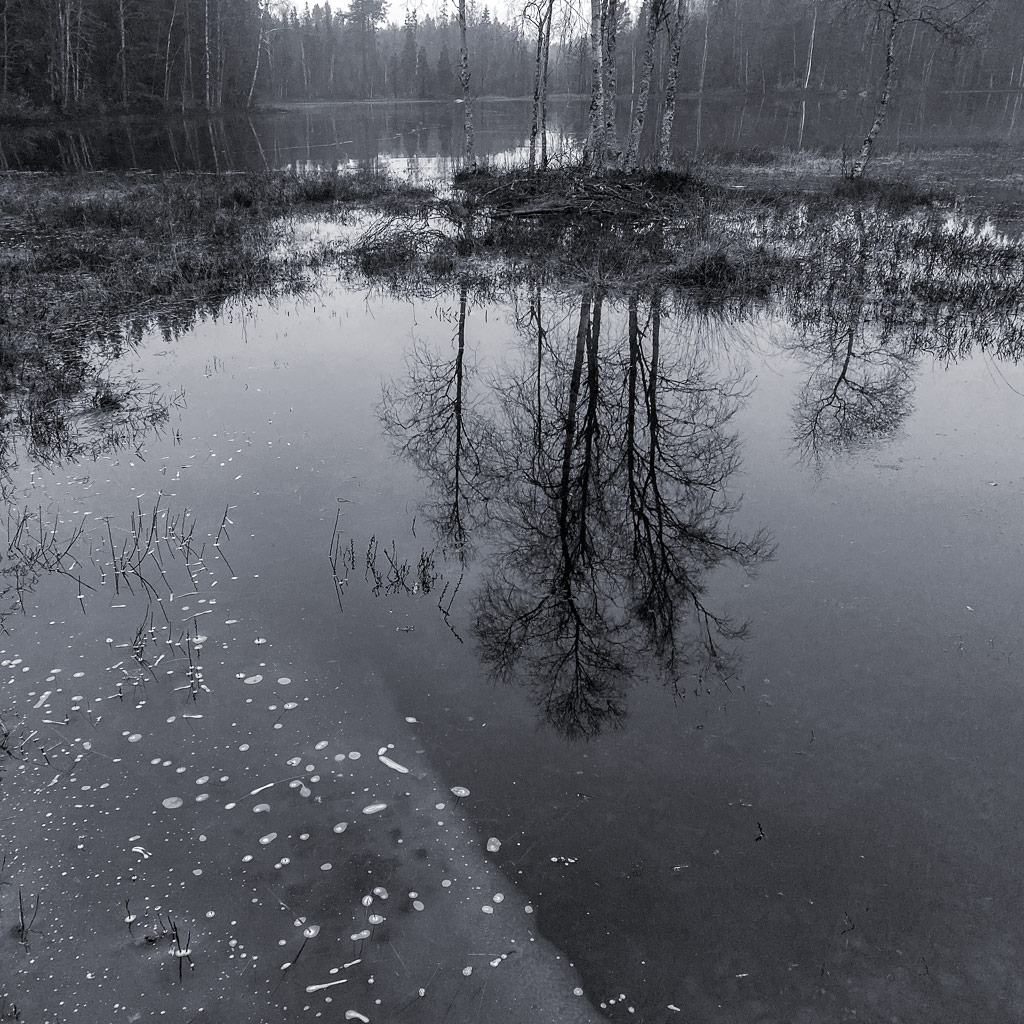
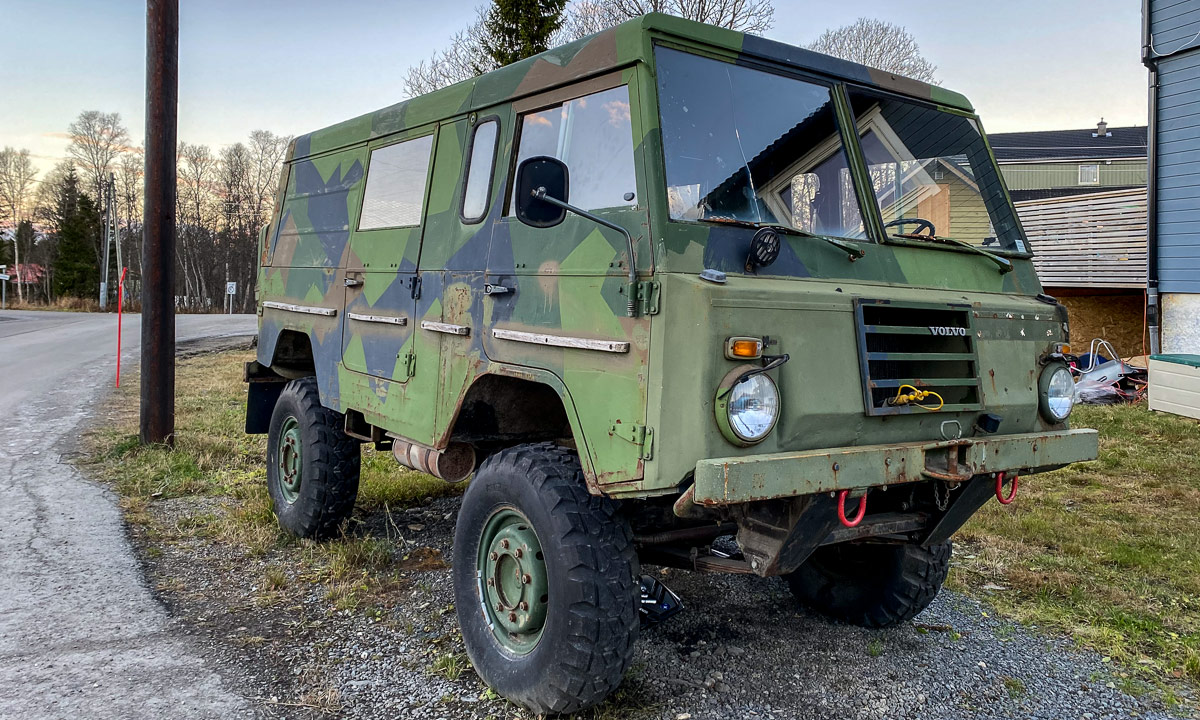
When Annika and I started our way back home from Tromsø yesterday we could experience the inaccessible steep mountains in Norway with the dark grey summits hanging in the evenly dark clouds as well as the colourful autumnal mountain plateaus between Abisko and Kiruna.

Moving things to Tromsø

As some of you may know I’ll work for the Norsk Polarinstitutt in Tromsø from the 1 October. I’m looking forward to this extremely interesting job and the town Tromsø is outstanding. The downside is that Annika and I won’t see each other very often, because the distance it too far to visit each other for a normal weekend. Hopefully I’m allowed to work from home in Obbola/Umeå sometimes.

Last Saturday I packed around 250 different things that I may need here – from my big computer monitor to my digital piano and warm winter boots. When I packed everything into my Subaru on Sunday morning I realised that I even had spare room for my ergonomic office stool and my warmest winter parka. Nice!

On Sunday at 10 o’clock Annika and I started our tour to Tromsø. The day before our home region Västerbotten was put on the red list by Norway again, which means that we had to be in quarantine while being in Norway. Bad luck! Therefore we didn’t make our stopover in the Norwegian Narvik as considered before but already in Kiruna in Sweden.

The next day we were stopped by the police at the border. The police informed us about the quarantine rules and wanted to know our place to stay. Since I had a lease contract for my room in Tromsø with me we were allowed to cross the border. At 16 o’clock we arrived in front of the house where I have a room in a shared flat. My room is quite tiny but there is place in the living room and kitchen as well. The flat is in the 2nd floor (3rd floor for Americans) and you can see the steep and partly snow covered mountains of the island Kvaløya and the mainland. It’s even possible to watch the Hurtigruten ship passing by but I didn’t see it yet.
Yesterday we made a car trip to Sommarøya, a peninsula with some beautiful beaches. We bathed in the Norwegian Sea. At 11 °C water temperature it was warmer than excepted. In contrary to the Bothnian Bay – the northernmost part of the Baltic Sea – the Norwegian Sea won’t freeze in the winter because of the Gulf Stream. So I can winter bath the whole winter without chopping ice if I want to.

Two images of yesterday:

Today we will make another day trip, tomorrow we’ll start to head home to Sweden again.

And the quarantine? Well – we shall stay home, but we are allowed to buy food and to be in nature as long we are able to keep distance to others. So the restrictions were quite lax. Mostly it’s the museums and the public transport (including the cable car Fjellheisen) that we have to avoid.

P.S.: Now all things have more or less found a place in the flat and I can enter my room shown on the 3rd photo above.


Different ways of kayaking

Since Annika doesn’t have a kayak yet I use to paddle alone. Mostly it’s short tours as for example the day before yesterday. I paddled to the beach Bredviks havsbad to join the yoga group at 8:30. To my surprise it’s shorter to paddle than to take the bicycle or car and so I was 20 minutes early.

After yoga I took a small tour – first north and then along the coast of Obbola.

Then I took an early lunch at the boat harbour since I didn’t had any breakfast. The kiosk there has not only hamburgers but tasty dishes as hummus or ćevapčići and Annika and I eat there quite often. After lunch I slowly paddled home. Slowly, because (a) being stuffed with food, (b) being lazy and (c) the increasing wind from the front.

Yesterday afternoon Annika and I got guests. Corry and Mark from Germany have written on Facebook about the difficulty of finding good tenting places at Västerbottens coast. They have been on a long kayak tour that they started in Haparanda four weeks ago. A common friend commented on the post asking us whether we wouldn’t have a nice meadow for tenting in our garden. Well, we have, and we even have our own little guest house, that Mark and Corry gladly accepted after they had arrived here yesterday afternoon. Last weekend Svitlanda and Ebbe (almost) came by sailing yacht, now we got our first guests that landed by sea directly at our house. It’s fun to live by the sea!

We had a nice evening together with outdoor cooking over open fire and inspiring conversations yesterday. This morning Corry and Mark continued their sea kayak tour. I had the honour to join them a bit.

At 8:15 we started by setting in the kayaks and paddling south. Since they have inflatable kayaks they have to be more careful of rocks and shallows. So we paddled further away from the coast than I use to do. I got some technique tipps about paddling more effortlessly and I really enjoyed the company.

Anyhow I decided to say farewell after an hour. Mark and Corry started crossing more open water and I wouldn’t dare to return the same route alone. Thanks a lot, Corry and Mark for nice company!

While the adventurers headed for the horizon I circled the island Tarv and slowly headed back. To my amazement the whole tour took only 2½ hours; I’ve miscalculated.

Now I know, that there are many destinations to be discovered by kayak and that they are not far away. It’s fun to live by the sea!

Splendid Sunday sailing

It was last winter that Annika and I met Svitlana and Ebbe first. They were the wardens of the Gåsen mountain cabin in the mountains of Jämtland where we went on a ski tour. When they heard that Annika lived in Umeå they told us of their sailing trips and that they know the boat harbour in Obbola near Umeå.

Five months later. Annika and I have been living together in our freshly bought house in Obbola for three months. We already knew, that Svitlana and Ebbe have been sailing north for some weeks and last Saturday they arrived in the boat harbour Bredvik, just 3½ km away. We could even see their sailing yacht passing by from our house.

We hadn’t any time on Saturday but on Sunday we invited them for breakfast. At the same time, they invited us on a sailing tour which we eagerly accepted. The weather forecast was so-so but in the beginning the sun was shining. As soon Svitlana had motored the yacht out of the harbour Ebbe set the sails and gently we sailed southwards and soon passed our house. I had seen the house from sea before while paddling but it was the first time Annika could see if from this perspective. (And again we agreed in living in an extraordinary beautiful place.)

Then we turned left and sailed a large triangle on the open sea. As a matter of fact it was Svitlana and Ebbe who sailed. We did nothing beside of enjoying.

Already two and a half hours later we arrived at the harbour again but sailing with Svitlana and Ebbe was so fun that it felt like a complete holiday.

Already the day before we had learned a new Swedish verb: att bryggsegla. Literally translated to “to jetty-sail” it means to enjoy being on the moored yacht in the harbour. And we did enjoy both food and company.

Большое спасибо Svitlana, tack så mycket Ebbe for a wonderful day! We’ll meet again!

Photos in the rain

This morning it drizzled and rained and the summer colours seem to have vanished. So I took it a step further and started to take black and white photos today. I was not the only one outside in this weather. Two professional fishermen cruised in the mouth of the river Umeälven in their open boat followed by a flock of seagulls.

This is the beginning of a “rainy weather” black and white series. Let’s see how often I’ll go out and take photos in rain or storm.

And you? Do you like to take photos in bad weather or do you prefer the sun?


A kayak course by the Umeå Kanotklubb

It’s the second week of Annika’s (and my) holiday and we are registered for a three-day paddle course which is carried out by the local association Umeå Kanotklubb. Two days we’ll be on the lake Nydalasjön in Umeå to learn the basic technique, the last day we’ll do a tour on the Baltic Sea starting in Holmsund. I’ve been paddling for almost ten years now but never learned any technique, so I was eager to join the course. Annika has paddled only a few times before and was interested in testing paddling before buying a kayak herself.

The first day. While the others sit in very short and agile whitewater kayaks, Annika and I have chosen sea kayaks, which are longer but much less agile. The others have it easier to make turns and bents, we have it easier to paddle straight ahead and are faster, too. In the beginning we learn the basic paddle strokes forward and backward. Part two is to capsize intentionally just to learn the feeling. Do we get wet? No – we are already completely soaked by the heavy rain, that is chattering down from black clouds above us.

The second day – same location as the first one. It’s not about learning something new but more about repeating and deepening the first day’s learnings. We do a short tour to the bridge Kinabron – hardly more than 700 metres away and then we train capsizing again.

Annika and I try kamraträddning – a rescue technique. We test on our own because the instructors are more into whitewater kayaking where you use completely different rescue techniques. While Annika succeeds in rescuing me I do a mistake and her kayak is flooded almost up to the rim within seconds. We do not have a pump with us but luckily we are only ten metres away from shore and can walk the kayak ashore.

Day three – for us the highlight because we want to make kayak tours on the sea and that’s what we do today. Using sea kayaks is quite different from using whitewater kayaks and so we have an additional instructor that tells us everything we need to join today’s tour. After the instruction we carry the boats into the water and start a tour to the island Lill-Haddingen which is 3–4 km away. There we make of course a fika – a break for eating, drinking, resting. The conditions are good. Hardly any waves, hardly any wind. It would have been a really easy tour for Annika and me if we hadn’t chosen a tandem kayak. It is quite challenging to steer together and to always paddle synchronously to avoid our paddle blades colliding. It is fun to test the tandem kayak but we prefer the single ones. After paddling back almost the whole way we are shown kamraträddning – the rescue technique Annika and I tried the day before but we do not train it by ourselves. It has become later than expected when we finish our tour but especially the third day was a fantastic experience. Thank you, Umeå Kanotklubb for the course! We come again when you offer a rescue course.


My new work: Overingeniør @ Norsk Polarinstitutt

Today I got the confirmation: From 1 October I will work as a senior engineer at the Norwegian Polar Institute in Tromsø.

The story began on 14 March when I found a job offer “Utviklere, web/dataforvaltning” (developers, web/data management) at the Norwegian Polar Institute in the world wide web. It was just two days before closing date and I hurried to write an application for the job. The idea of working as a software developer with research data in the field of polar research was too tempting.

The whole process took a long time because of the restrictions due to corona, but on 29 April I was invited to a short video conference with the head of department and one of the developers. In the end of May I solved two programming exercises and on the 4th of June I had my job interview. I would have loved to travel to Tromsø for the interview but because of corona this was impossible and we took another video interview.

I was quite proud that I had come so long in the whole process – a former jazz pianist and web developer, although with 18 years of professional experience within software development. The following week I got a message that I had been accepted for the job. Today I got the formal confirmation in form of an offer that I gladly accepted.

So today I pronounce that I am feeling honoured to be able to work for the “Norsk Polarinstitutt”, the Norwegian Polar Institute in Tromsø. A new area of work begins.

There’s a lot of more to tell, but not tonight. The blog will continue.


What is a Muurikka?

What’s a Muurikka?

A Muurikka is a Finnish frying pan for use over open fire. It‘s fun and easy to use and the prepared food is very tasty. Annika and I suppose, that the taste is so good because of the “Muurikka spices” (other people would call it soot).

Today we got a Muurikka from two couples of friends as a housewarming gift. We tested it immediately. It was such a great experience sitting on a bench by the fireplace eating the fried vegetables with rice under the blue sky of a warm summer evening. Even the mosquitoes seemed to respect that and stayed away.

Thank you, J. and M., C. and M. for the present. Another good argument to visit us more frequently. And yes – of course – all other friends are warmly welcome, too!