Winter sea

-13 °C, clouds and wind – that was the weather this morning in Skelleftehamn.

I drove to the peninsula Näsgrundet which is quite exposed to the elements. Despite of the cold temperatures of the last days the sea is still open.

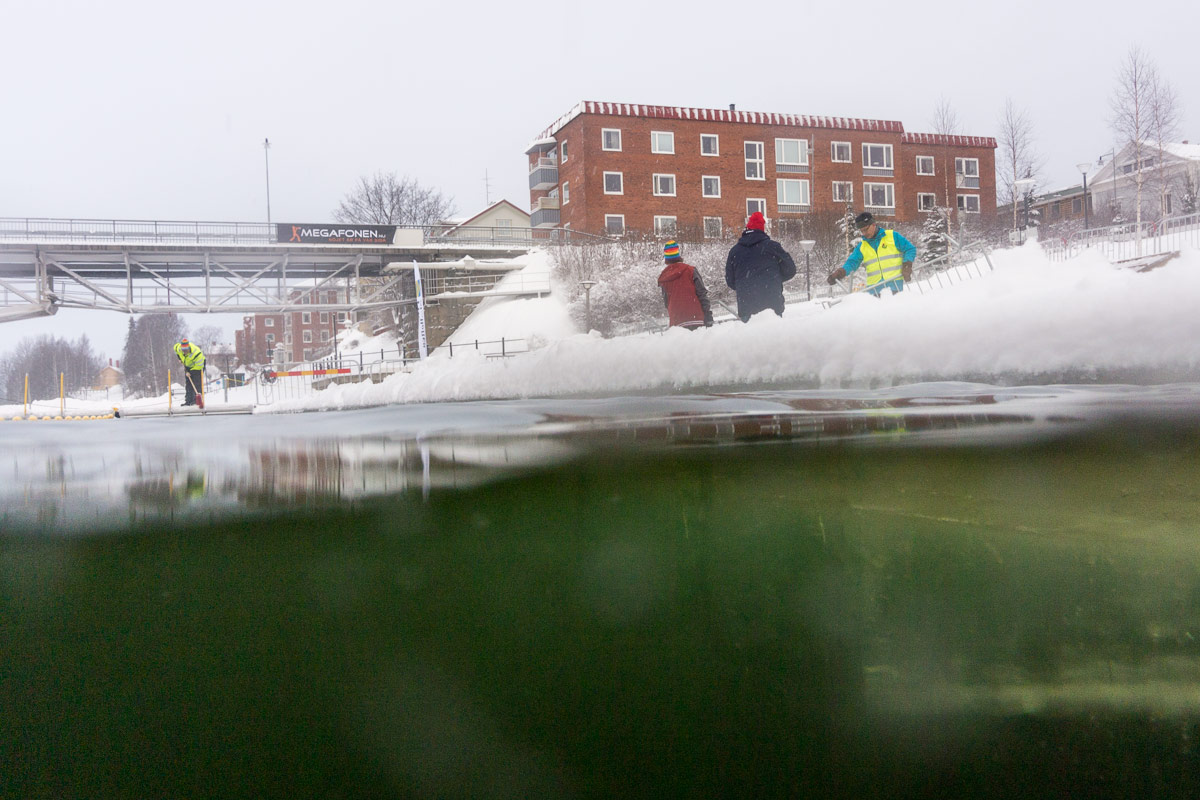
Beside of the dam, that connects Näsgrundet to the mainland, the water is smoother. It was still open yesterday, but covered with ice floes today. The floes raise and sag with the incoming waves, there are not frozen together yet.

A bit further, where I took the first image, the waves spray sea foam ashore and the rocky shore is covered with a thick layer of ice. Last year I took photos of the icicles, but this year the ice wall isn’t big enough yet.

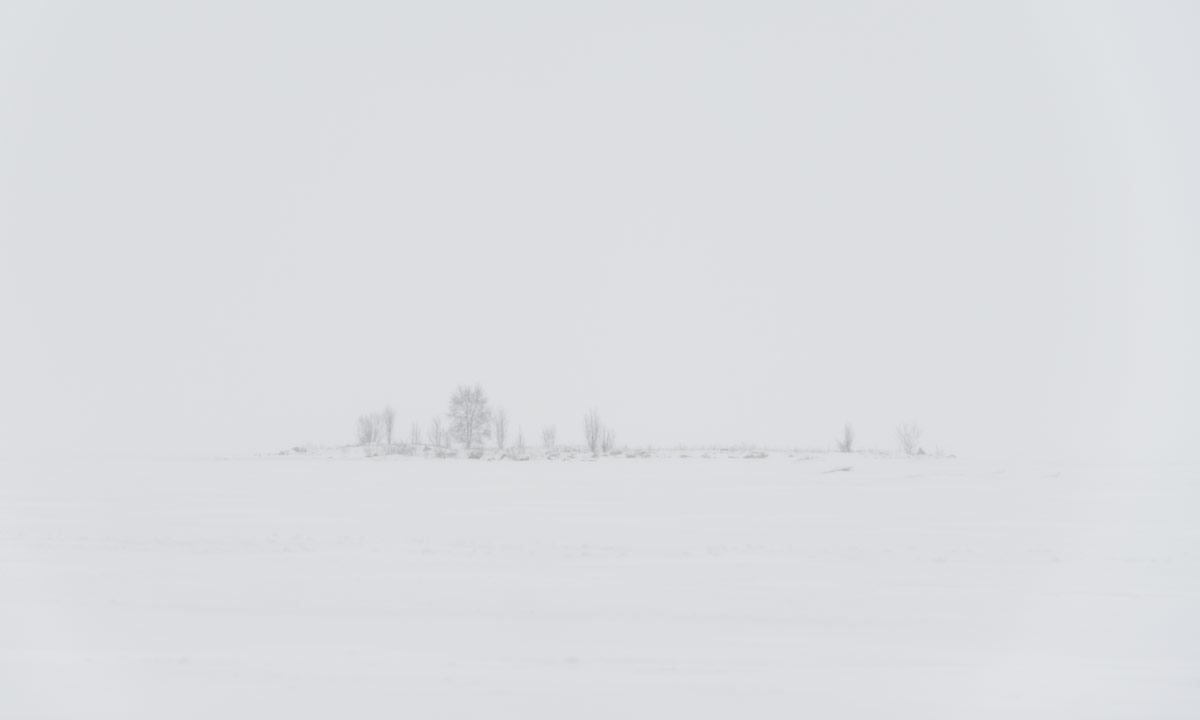
You see the fog-like smoke above the sea water? That’s not the drifting snow, it’s sea smoke (a.k.a. frost smoke or steam fog). When it gets colder the vaporising water in the air will directly freeze to ice dust, forming this sea smoke.

I guess, larger parts of the coastal Baltic Sea will be frozen over in some days. You can see already the first thin and transparent ice crystals on the surface.

Lake-effect or not?

Postscript (5 January 0:00):
No, it’s no lake effect, just ordinary snowfall. More snow to come, but probably not much.


Skelleftehamn has a quite exposed location when it comes to snow. I experienced it several times, that quite huge amount fell it a short time.

The so called lake-effect snow occurs, when the Baltic sea is still open and winds blow onshore. Mostly it is very local and interestingly enough it is mostly ignored completely by the smhi, the Swedish weather service.

Today it started snowing round 13:00 and snow fall increased. Some neighbours have already started ploughing and on the road lie round about 15 new snow from today, mostly from the last hours.

In January 2014 came 70 to 80 snow within two days, December 2012 fell 83 cm snow within 24 hours. Even last winter came a lot of snow straight, but I wasn’t home.

I’m curious how much snow we will have tomorrow morning and when it will stop snowing. And finally it’s cold enough for the snow to stay with forecasted temperatures between -14 and -23 °C.

For certain I can make my first ski tour this winter, perhaps to Storgrundet, the nearest island.

Being honoured by winter

Perhaps the biggest change 2016 is that I quit my job and started my own company. As I wrote yesterday, today is the first day of my “new life”.

The main reason for the change was my increasing interest in photography during the last years. I didn’t make any specific plans yet, but one of the main focuses will be on winter photography. Snow and ice. That’s why I really felt honoured by the winter weather today. It felt like winter congratulating me to my decision:

Temperatures dropped from -8 °C to -13 °C, still dropping, it was quite windy and it snowed quite a lot, still snowing.

That’s how it looked like at the beach in Storgrundet:

I hope, a lot of snow will fall the next days, I’m longing for the first ski tour in Skelleftehamn and I guess, the kayak season is over.


South from Umeå I – Norrmjöle

Normally I head north, but not today. Annika and I were at the beach near Norrmjöle – 30 km south from Umeå, 150 km south from Skelleftehamn. The sea is still open beside of some pancake ice near the sandy beach.

Pancake ice occurs when a layer of solid ice is broken by wind and waves. The ice floes rotate and the edges are crushed by the other floes. That’s why this ice floes are always round and circular. Parts of the pancake ice on the photo was washed ashore (or left there by the flood).

Many rocks and stones near the shore were covered with a layer of ice – the nearer to the sea the thicker the ice. Sometimes the whole rocky beach was coated with ice and we had to go around to avoid slipping.

When I took the car back to Skelleftehamn it started to snow. First it was hard to drive since the snowless streets are so dark and the falling snow itself so bright. It’s like travelling faster than light through a cloud of stars. Fortunately the streets were covered with a thin fresh layer of snow after a time. That made the driving much easier.

Today we got 5 cm new snow in Skelleftehamn and it became colder. Looks like winter is coming next week with snow and temperatures down to -20 °C. I hope that it’s not too windy, that I can make a last trip by kayak before the sea freezes over.


A short trip to Arvidsjaur – Dessert

This article is part of the series “2015-12: Short trip to Arvidsjaur”.

Monday afternoon at our cabin near Arvidsjaur: -22 °C. How cold will it get the night. Well, not so cold, since the sky overclouded and it got gradually warmer. The next morning the thermometer showed mere -11 °C. The sky was overcast and the diffuse light seemed hardly able to light up the scenery.

Annika and I took a small snowshoe walk on the lake Arvidsjaursjön. Last night’s fog has covered all trees with a thin white layer of hoarfrost and the nature looked more like an old black-white painting than real.

What a contrast to yesterdays mountain hike in full sunlight!

Two other pictures of the same day:

These images were taken on a minor side road. It felt like being hundred miles away from civilisation, but the main road was just 500 meters ahead.

When it darkened the sky cleared up again, but now we were ready for our way back to Skelleftehamn where it was quite warm compared to Arvidsjaur: -1 °C.

A short trip to Arvidsjaur – Main course

This article is part of the series “2015-12: Short trip to Arvidsjaur”.

Yesterday morning was cold: The thermometer at the stuga – the cottage – showed -19 °C. Our plan for the day: Try to find the snowy mountain that we saw yesterday and make a snowshoe tour if possible. After breakfast we packed snowshoes, cameras, GPS, map and warm clothing and entered the car.

Meanwhile we knew the following:

  • The mountain area is called Vittjåkk (“white stream”) – samian: Vyöhtjage.
  • Arvidsjaur wanted to sell the ski resort last year.
  • There where two ways to Vittjåkk, but we didn’t know if any of them was ploughed.

We tried the direct way, which is more like a maze of forest paths. Fortunately almost all of them where ploughed. Thanks to Annikas great navigation we found our way to Vittjåkkstugan, the valley station of the ski resort where we parked our car. Beside of another car and two pedestrians walking their dogs the whole area seemed to be deserted.

We mounted the snowshoes and ascended the first mountain. The sun hadn’t risen yet but the whole horizon showed warm pink and orange pastell colours. While we ascended the slope on a snowmobile track parallel to a ski lift the deep orange sun rose above the hilly forest landscape around and started to illuminate the snow.

We continued the tour until we were on the first peak, enjoyed both view and sun and wondered why it seemed so warm. Hadn’t it been -19 °C in the morning?

We turned right and descended the first peak just to head to the main summit. I was really stunned that you could find such a mountain landscape just “round the corner”. There were many tracks. Snowmobile tracks. We didn’t see any ski or snowshoe tracks; people start to get lazy.

After a while we stood on the top of the main summit – don’t ask me for a name, I couldn’t find any – and made a short rest, both of us drinking tea and taking pictures.

On the descent we wanted to catch as much sun as possible and took a detour. As you can see we succeeded …

… but we had to leave “safe terrain” and had to plunge through snow – sometimes knee deep even with the snowshoes. After 2 hours, 45 minutes we arrived at the car. A short but fantastic mountain hike.

When I started the car engine the car thermometer showed -8 °C, but it dropped down to -18 °C when we drove down toward the valley to Arvidsjaur. A good example for atmospheric inversion.

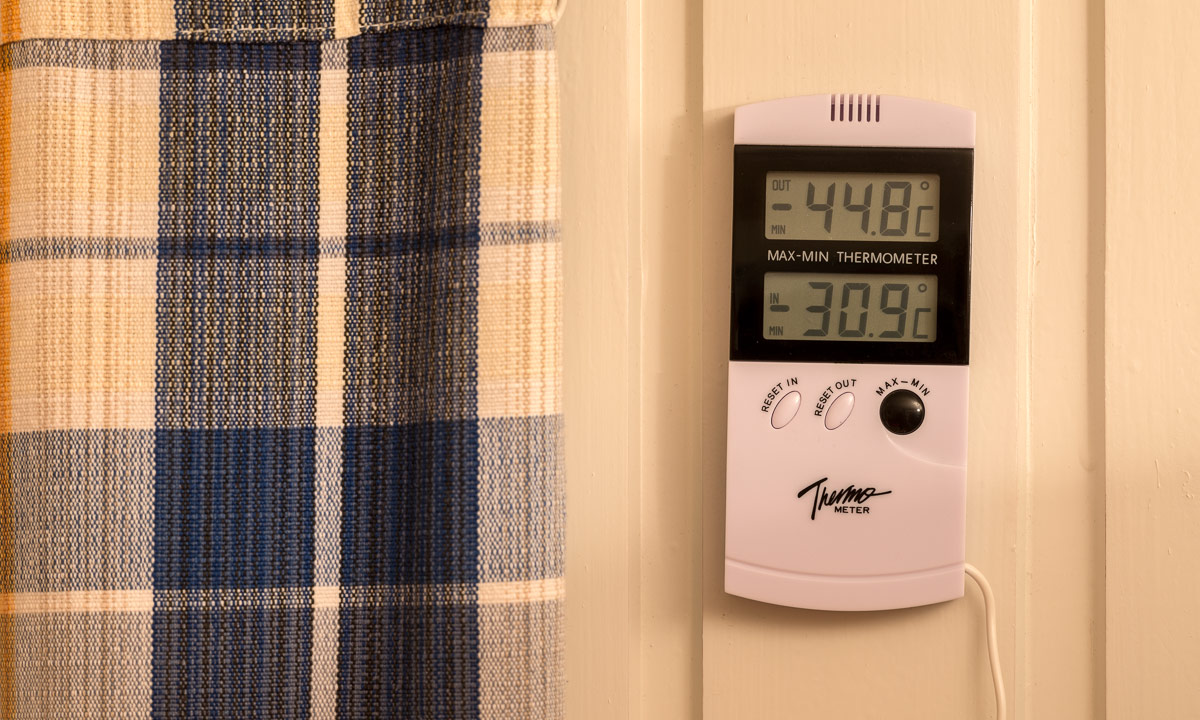
When we arrived at our cabin, we had -21 °C, later the temperature dropped to -22 °C. Probably the whole day had been quite cold in the lowlands. The inside of the cabin was quite cold, only + 11 °C, since the main heating wasn’t build for those wintry temperatures, but on the other side it was still 33 °C warmer than outside. A huge difference!

The rest of the day: Calm and lazy – just perfect after such a great tour.

A short trip to Arvidsjaur – Starter

This article is part of the series “2015-12: Short trip to Arvidsjaur”.

On the day after Christmas Annika and I thought about making a short trip to the “inland” where weather is colder and snow depth is bigger. What about Arvidsjaur for example where I’ve been six weeks before. It’s only two hours away. We looked for a room to stay overnight but we weren’t lucky in finding a room that was (a) affordable, (b) nice and (c) free.

Therefore I asked on Facebook if someone would have a tip or even better a stuga – a cottage. Ten minutes later Pär, a friend in Skellefteå, answered and offered us his private stuga for as long as we want to stay. What a great offer!

The next day we packed the car with warm cloths, food, snow shoes, camera equipment, bed clothes and a lot of water (which the stuga lacks) and drove to Arvidsjaur. Round 9:30 we arrived and were glad that neighbours already started the main heating, since it was -12 °C outside. After unpacking the car and switching on the others electric radiators we made a short trip by foot. Days are still short – 3 hours, 12 minutes this day – and as short was our trip. Mostly we walked in the shadow of the pine trees, first on the small road, than on a snowmobile track, but sometimes the low sun shimmered through a gap in the trees.

When we stood at the lake we could see Arvidsjaurs local tree-covered mountain with some ski slopes cut into the wood. Left of it was another mountain, that was completely treeless and snow covered. It looked quite high. How far it might be? Round the corner or many miles away? We planned to check this the next day.

Evening was calm – inside as outside. Stars twinkled above the frozen and snow covered lake right behind the house. The next photo is taken from the terrace. The photo reveals to types of light that were invisible in real life: The pink gleam of Arvidsjaur and a the greenish glow of a very faint polar light.

Christmas flood

Yesterdays Christmas was still a bit white and snowy but then – déjà vu – it got warmer and started to rain. At the same time the sea level was extremely high again: More than 100 cm above normal. I did the beach walk with chest waders and spikes and took the picture of one of the small pine trees with my underwater camera:

The locals that have their summer cottages on the near island Storgrundet came with their cars to check the sea level. They were a bit nervous because just now they cannot reach the island; neither by boat nor by foot. The ice itself is still thick but not at the borders where the warm weather melted it away.

Same day, another place: Skellefteälven – even more water than some weeks ago. The waterside promenade along the river had a layer of ice on the bottom and was flooded with up to 30 cm water.

Interesting weather, but I miss the snow.

Did anyone of you had a white Christmas?

In between the seasons

Today is winter solstice which means that it’s the shortest day of the year. For the astronomers winter starts today, for the meteorologists it already started on 1st December. But winter, well …

It has been a special winter so long this year. Again.

Beside of some colder days it has been too warm with more rain than snow. All minor streets are covered with a shell of wet ice and the thin leftover snow cover is icy, too.

It’s almost the same as last year. Or 2013. Or 2011. Perhaps it’s just the normal weather anomalies, but perhaps it’s already the ongoing climate shift and we will call that a normal winter twenty years from now. Future will show.

The water level in the Baltic Sea has been high for several weeks, today with +60 cm; +95 cm are predicted for Christmas Day. That’s what it looks like:

On other parts of the ice you could see wet snow mobile tracks, but I wouldn’t dare to enter the ice without asking the locals.

According to the forecast the weather won’t change much the next days and on Christmas Day it probably will rain. But there’re places way up north, where it will be even warmer this year: The forecast for Montréal in Canada predicts +17 °C for Christmas Eve!


Translation:

EnglishGerman
winter solsticeWintersonnenwende