The ice weakens

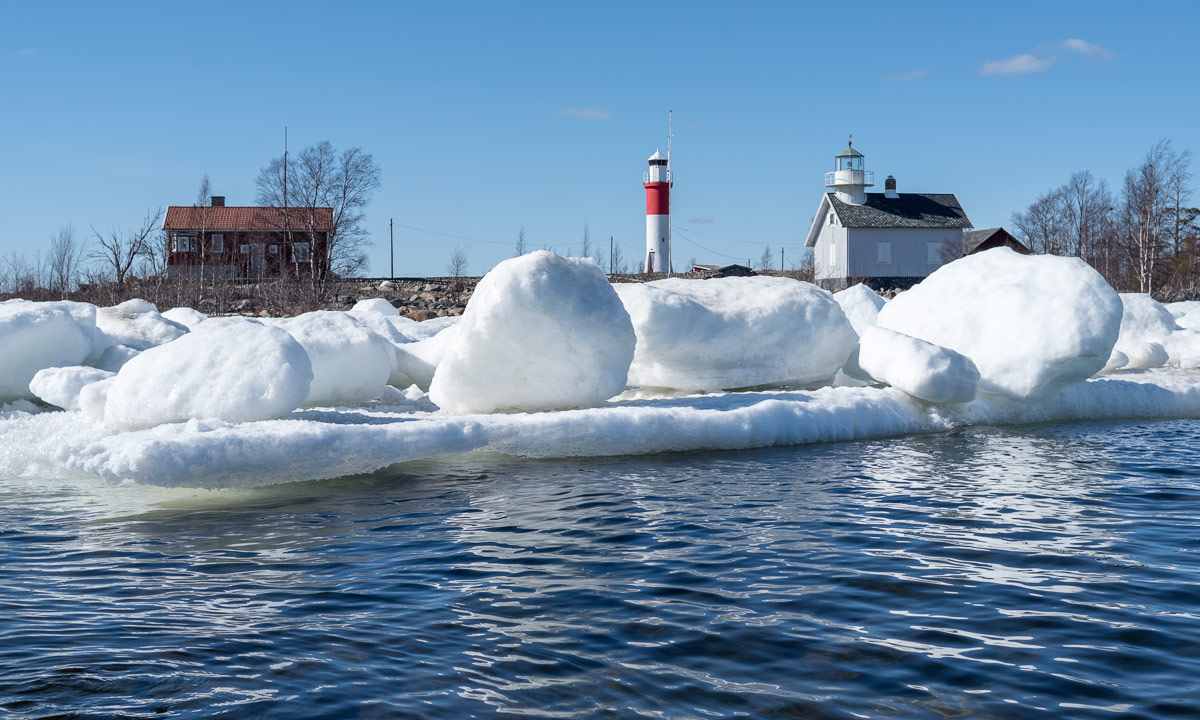
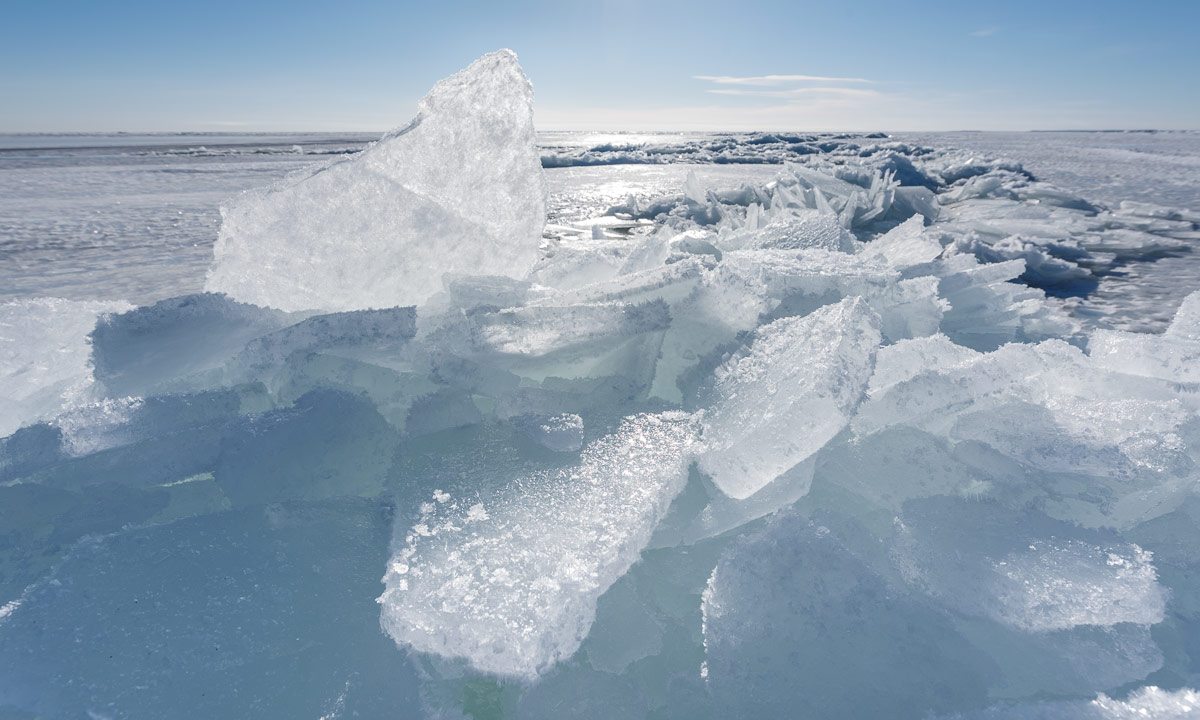
The Baltic Sea is still covered with ice. The warmth of the last days however has not only melted away a lot of snow on land but also warmed up the ice on the Baltic Sea. The layer of snow has vanished and you can see the first open water round the stones.

Parts of the sheet of ice look soft and unstable. Probably it’s still thick and solid and probably it’s still possible to walk the two kilometres to the island Gåsören, but I wouldn’t dare to do it anymore.

I’m waiting for open water and the first opportunity for a kayak trip instead.

Almost spring …

Torneträsk and Port of Narvik

On thursday – three days ago – Annika and I drove to Abisko to enjoy some winter days in the Swedish mountains. Skelleftehamn is in Northern Sweden, Abisko is in Northern Sweden, but it’s still 570 km to go by car.

Yesterday I stood up quite early, because the sun was shining and I wanted to go onto the lake Torneträsk (one of Sweden’s biggest lakes – 70 km long) to make some photos. The whole lake is covered by a thick layer of ice and a thin layer of snow.

In the front you can see stacked up ice that builds along the fissures in the sheet of ice, in the background you can see Lapporten – the landmark of the region.

After a while fog came down and when you looked against the sun you only could see vague shades and pale colours. It looked more like standing in a sandy desert, not on the icy surface of the Torneträsk.

Some hours later: Annika and I had planned to do a ski tour near the Swedish-Norwegian border. We packed the car with our skis, cameras and hot tea and set off. It’s 38 km to the border. Behind that border – on the Norwegian side – there’re a lot of cottages and since it’s Easter and probably every single Norwegian is in his cottage there were a lot of parked cars, too.

We looked for a parking place as well. The most parking places were stuffed with cars and were furthermore only for private use. I continued driving and we looked for a public parking place. Well, we found one but the surrounded mountains were too steep for skiing. We stopped anyway to check our position on the map. After that we helped some Norwegians to dig out their car that was completely stuck in the packed snow – on the very same parking place! There’s a reason, that most of the locals have all-terrain vehicles or at least cars with all-wheel drive.

My Saab doesn’t have such and from now on I was even more cautious in choosing a potential place to park. To make a long story short: We didn’t found a single parking place that was (a) available, (b) public, and (c) not too snowy. That’s why we changed plans and continued to Narvik, which is 46 km behind the border.

There’re (at least) three signs for leaving the mountain plateau and approaching Narvik:

  • The road is narrower
  • The road has much more curves and bends
  • It gets much warmer. (down to -9 °C in Sweden, +5 °C near Narvik)

Soon we saw the first fjord, the Rombaken:

We continued to Narvik that seemed to be completely closed due to the Easter Saturday. Therefore we headed to the Port of Narvik and looked around there. Most ports I know are locked and fenced off. Not in Narvik. Here it’s possible to walk around, enter the piers and have a closer look to the ships. And we were completely alone.

Narvik is a huge contrast compared to Abisko! Even if I prefer landscape and nature to towns, I like this place.

But anyway we drove back to the wintry mountains of Swedish Lapland quite soon and round an hour later we arrived again at our fine and cozy room at Abisko Cabin.

Wintry Scandinavia in a nutshell (without the skiing).

Långhällan again

Two days ago Annika and I walked on the sea ice outside of Långhällan and had a view on large patches of open water.

Today I visited this place once more, but the whole area was covered with ice again. Some areas were covered with dark solid ice, some with ice floes that have frozen together. You could see walls of broken ice and dark channels between the different parts.

When I entered the terra incognita I half expected to fall through the ice and was equipped with the following:

  • my immersion suit, which is completely waterproof (and warm due to the thick neoprene)
  • isdubbar – handles with sharp peaks for pulling oneself out of an ice hole
  • my Nikon AW1 – a waterproof camera

To my big surprise all ice was thick and stable enough to bear my weight.

I couldn’t see any open water, but I could hear the sounds of ice and water below me. The cracking and clicking, the low, sonor pulsing drones echoing under the icy surface and sometimes even rhythmical beeping noises – like the Baltic Sea sending Morse code. An experience both fascinating and frightening.

Some impressions of today:

First day of spring

Today it’s the first day of spring. In the forest you could see the first snowless patches of soil covered with blueberry plants and the first birds sang their spring songs. But if you continued your walk through the woods until you reached the shore and had a look over the Baltic Sea, it looked like winter would be endless and continue forever:

But if you went on the ice and looked closer you could see, that the frozen surface only covered parts of the Baltic Sea. There was open water ahead. Blue open water. Blue open water with tiny little waves.

Oh, what I longed for my kayak – I would have loved to paddle on the crystal clear sea to the icebergs that you could see near the horizon.

The first day of spring in Skelleftehamn – still wintry but with a promise of spring coming soon.

Colourful sunset

After a really warm day (+12 °C!) we got a colourful sunset. Unfortunately I was too late to catch the most colourful period.

The ice on the Baltic Sea is still thick, but the snow melted and left many ice water puddles between the snowmobile tracks.

Vårvinter

Where are we – Annika and I? In the Arctic on our way to the North Pole?  Looking for polar bears?

Well, not really! We’re on the frozen Baltic Sea on our way to the island Gåsören, enjoying the blue sky and the warm sun.

But we didn’t only enjoy the warmth of the sun, but the warmth of the sauna, too – even if we didn’t fire it as hot as it should be for a real sauna experience.

We were not the only ones on the ice of the Baltic Sea yesterday.

There were ski tracks and skiers.

There were snowmobile tracks and snowmobile drivers.

There were moose tracks …

… and there were moose on the ice, too. Far, far away, but clearly visible.

“vårvinter” means “spring winter” and describes this season, where the land is still covered with snow and ice, but the temperatures aren’t longer as cold as in January or February.

No sun today

As you can see in the blog posts before, we had really nice winter weather with a lot of sun the last weeks. Even last night was clear. When I stood up at 7 o’clock we had -15 °C outside, but it was cloudy. Three hours later the temperature has climbed to -5 °C and it started to snow.

Annika and I went outside to go for a walk. It became a bit longer and chillier than planned: We went to the shore and rounded the island Norrskär on the thick ice layer that covers the Baltic Sea. When we returned to the mainland, wind and snowfall had intensified. It’s still snowing, but not very much, just some centimetres, I guess.

This photo shows a nameless stony island between Norrskär and the mainland. What a contrast to the photos of the sunrise some days ago.

It’s not the photo, it’s the whole landscape that looks monochrome and the island Gåsören – 2 kilometres away – was even completely hidden behind the falling snow.

Icicle tree – a short trip to Holmsund

When I took the car to Umeå three days before, temperatures where between -20 °C and -31 °C. Today it was much warmer in Umeå, just round -4 °C.

Annika and I took the car to Holmsund, a place 20 km south from Umeå. This coastal locality has round about 5500 inhabitants and is special, because here starts the only ferry connection from Sweden to Finland beside those from Stockholm. When we arrived, the ferry from Vaasa in Finland just had anchored.

Neither of us has been in Vaasa before, so we thought about making a trip to Finland, perhaps already in two weeks, if the weather isn’t too bad.

Right beneath the ferry dock there’s a pair of piers reaching 700 meters into the sea. If you look east, you see that the Baltic Sea is ice covered beside of the waterway. But in contrast to the Baltic Sea outside of Skelleftehamn, which is thick, solid ice, you can see the big ice floes lift and lower with the underlying waves. If you look west, you see the mouth of the river Umeälven, where the water is mostly open and small ice floes float and drift southwards.

I don’t know, when it has been so windy, that the waves rolled over these piers, but you could still see the result: Many of the dried up flower stalks and the lower branches of bushes and trees were covered with a thick layer of ice. It must be both impressive and frightened to witness such a stormy weather in winter.

Short trip to Bjuröklubb

Yesterday I went to Umeå by car, but I took a detour. In Övre Bäck, where I made the photo from the “Winter tree” I left the E4 to drive to Bjuröklubb, a salient that reaches wide into the Baltic Sea.

In summer, you can walk up from the parking place, eat in the Café Fyren or follow the wooden walkway up to the light house. In winter time this place is abandoned. I took my snow shoes and went first along the shore and then up to the light house.

Temperatures were between -25 °C and -30°C and the sky was totally clear. Another wonderful winter day.