Two days on the Hurtigruten

This article is part of the series “2017-02: Northern Norway”.

On Wednesday we left Kirkenes and started our journey to the next destination: Stokmarknes on the Vesterålen where we planned to visit good friends of mine.

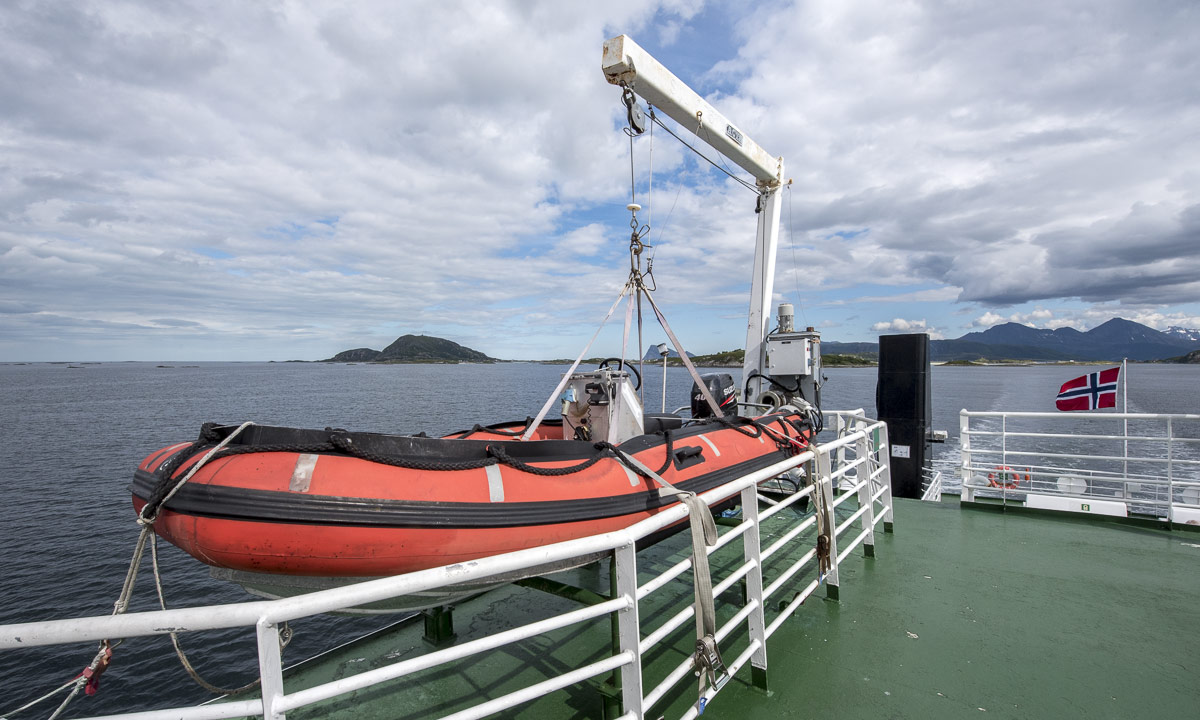
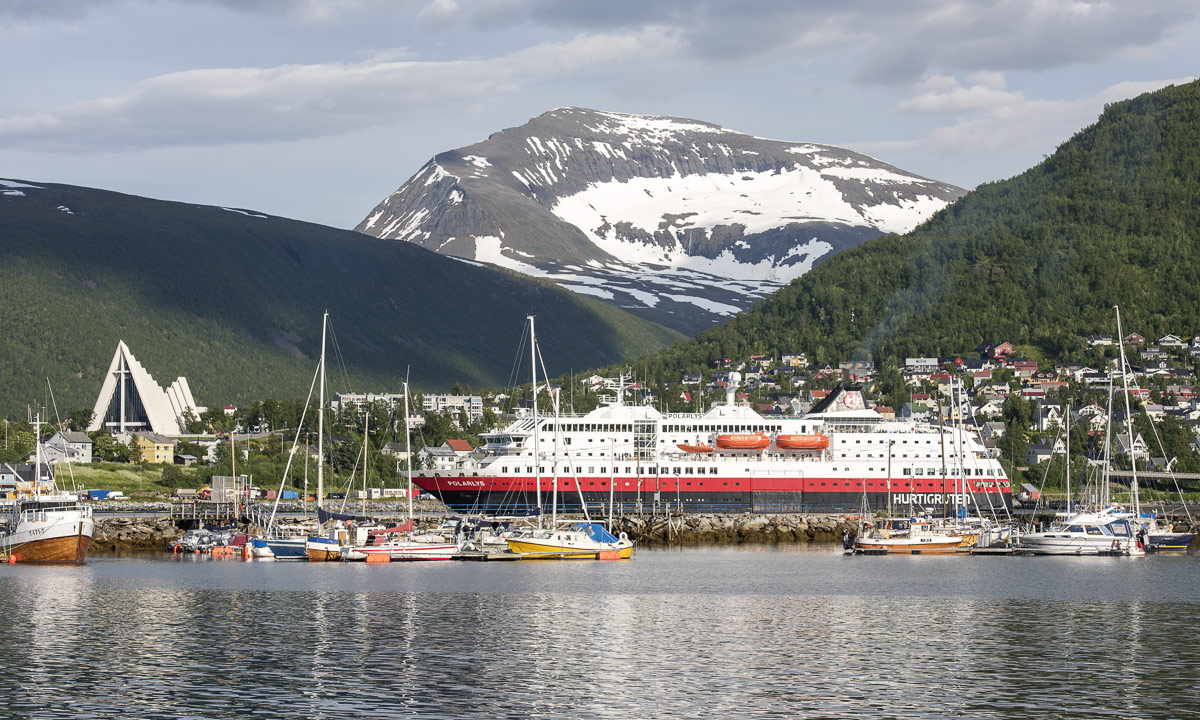
KirkenesStokmarknes would be 1000 km by car and take at least 14 hours, if you take the faster way through Finland and Sweden. Anyway there’s an alternative: The Hurtigruten express route, which connects many coastal towns, among others Kirkenes and Stokmarknes. That’s why we took the Hurtigruten ship instead of driving for at least two days. In Vardø we entered the vessel Trollfjord and 16:45 we started our two day long tour.

The first night we went to bed quite early and I only took some pictures in Berlevåg. Since the ship already was moving again I decided to make a longer exposure with the camera on a tripod. That’s Berlevåg by night seen from the Hurtigruten:

We missed Mehamn, Kjøllefjord, Honningsvåg. The first place with a landing stage I saw was Havøysund, were we anchored from 7:45 to 8:00. Shortly after we met the Lofoten, the oldest and smallest ship of the Hurtigruten fleet today. It was tiny compared to the much bigger Trollfjord (which is tiny compared to modern cruise ships).

I tried to be as much outside as possible. It was cold and quite windy, not only because of the airflow, but the gusty wind, too. First I thought, that I would be extremely overdressed in my Canada Goose expedition parka, but soon I found it quite comfortable to wear it in the chilly weather.

In Hammerfest we left the Hurtigruten, looked round in town and bought food. In Øksfjord it started to get dark and the black-white mountain ranges became blue.

… and blurred if you wanted to …

… and it got darker …

Then it started to snow. Sometimes the snowfall was quite heavy especially with the wind and I was even more glad about my warm parka.

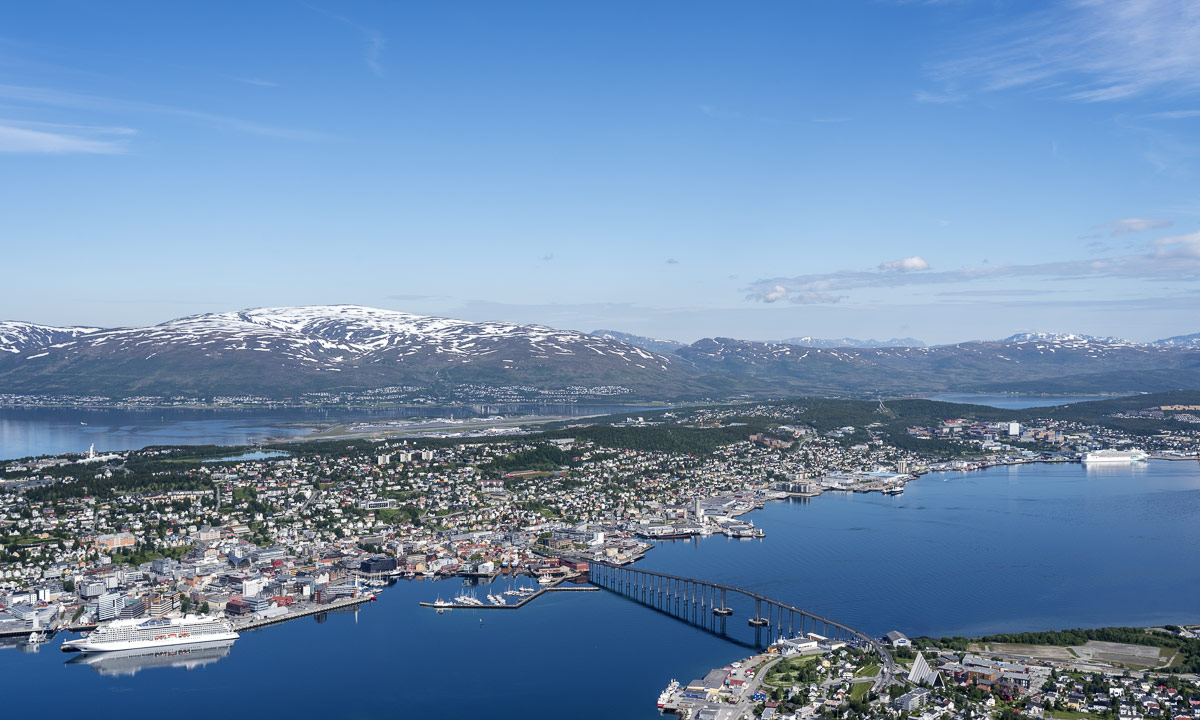
In Tromsø we arrived at 23:35 and I made some night shots of this favourite town of me.

We could have left the ship for a visit of Tromsø but we preferred sleeping. We’ll probably visit Tromsø this summer.

The next morning came and the last day aboard began. Good for me, because even if I was glad to slip the car ride it’s not my world to be on a large ship looking at the landscape rolling by. Last night snow fall has brought much snow on the top deck. I never waded through snow drifts on a ship before.

At the same time the Trollfjord anchored in Harstad, a town on the island Hinnøya.

On our way to the next destination Risøyhamn it got extremely windy, the stabilised ship started to roll and to pitch and heavy snow showers appeared, reducing the view to some hundred metres.

Suddenly the wind calmed down, the snow showers were left behind and for the first time of the whole cruise patches of blue sky and finally the sun came out. We approached Sortland, the last stop before our destination Stokmarknes where I gazed at the beautiful mountains of the Lofoten archipelago in the south.

I generally dislike the last 30 minutes of transportation, if it’s by train or by plane. I just want to arrive, and so it was on the Hurtigruten. Impatiently I waited in the inside of the Trollfjorden for its arrival in Stokmarknes, then another fifteen minutes for the allowance to enter the car deck and another ten until I was allowed to drive the car onto the very same car elevator which I used to enter the ship almost 46 hours ago.

I could write a lot more about the Hurtigruten and its passengers, but that’s another story. Short résumé: I love those ships for transportation, but cruising is not my cup of tea. (Anyway, the outside jacuzzi on the top deck is really great!)

The Varanger Peninsula

This article is part of the series “2017-02: Northern Norway”.

Never have I been so far northeast before, travelling from Kirkenes to Vardø, where Annika and I would enter the Hurtigruten vessel Trollfjord. After the visit of the Sjøsamisk Museum we were glad to be in the warm car again as it was quite stormy outside with temperatures round -12 °C.

We left the E6 in Varangerbotn and continued eastwards on the E75. While there were many trees along the E6, the landscape became more and more arctic now. Between Varangerbotn and Vadsø there were still small and scattered birch trees and thickets, but there’s hardly any visible vegetation left between Vadsø and Vardø in wintertime. On the left side of the street lay snow covered mountains, hills and tundra plains, on the right side the rough Barents Sea. Hardly believable that people live here, but they do, mostly on places quite exposed to the sea and of course near to the E75, the only street.

We had to catch the Trollfjord the same day, a pity, since there was so much to look, to explore, to photograph. Next time I would plan an additional overnight stay to have more time.

Far away at the horizon of the Barents Sea we could see something rectangular. A container ship or our Trollfjord? Coming further and the ship coming nearer we could see that it indeed was the Trollfjord that left Kirkenes some hours after us.

We didn’t have much time to visit Vardø, just a very brief run through the witchcraft trials memorial, then we had to enter the big ship by car. I was the only car boarding; most passengers are cruisers, either taking the whole tour Bergen—KirkenesBergen, or the much shorter Tromsø—Kirkenes—Tromsø.

We got our room (small, but sufficient), I bought internet for two days (quite poor, since it blocks a lot of urls and ports, among others my mail traffic) and then we left Vardø by Hurtigruten.

Since then Annika and I have been on the Trollfjord. In three hours we’ll be in Tromsø, tomorrow afternoon we’ll leave the ship in Stokmarknes and will stay on the Vesterålen for some days.

4×4 winter impressions of Kirkenes

This article is part of the series “2017-02: Northern Norway”.

Kirkenes – the harbour

While Annika and our friends in Kirkenes enjoyed their breakfast in the Hotel Thon I took a short promenade along the Johan Knudtzens gata to take some pictures. Already the view from the hotel terrace over the fjord is quite impressive and shows the beauties of the arctic nature while the harbour shows the more practical sides of living here: fishing, both commercially and just for fun.

A hike onto the top of the Lyngberget

After the breakfast we took the car to Jakobsnes and a bit further to take a promenade up the mountain Lyngberget, which lies on the other side of the Bøkfjorden. Here you can have a wide view over the whole town of Kirkenes – at least as long it doesn’t snow, as it did on our way back. I just love these wintry landscapes where you have views over fjell and fjord, but the wind was quite chilly and soon we looked like the participants of an arctic expedition.

The Huskies of the Kirkenes Snowhotel

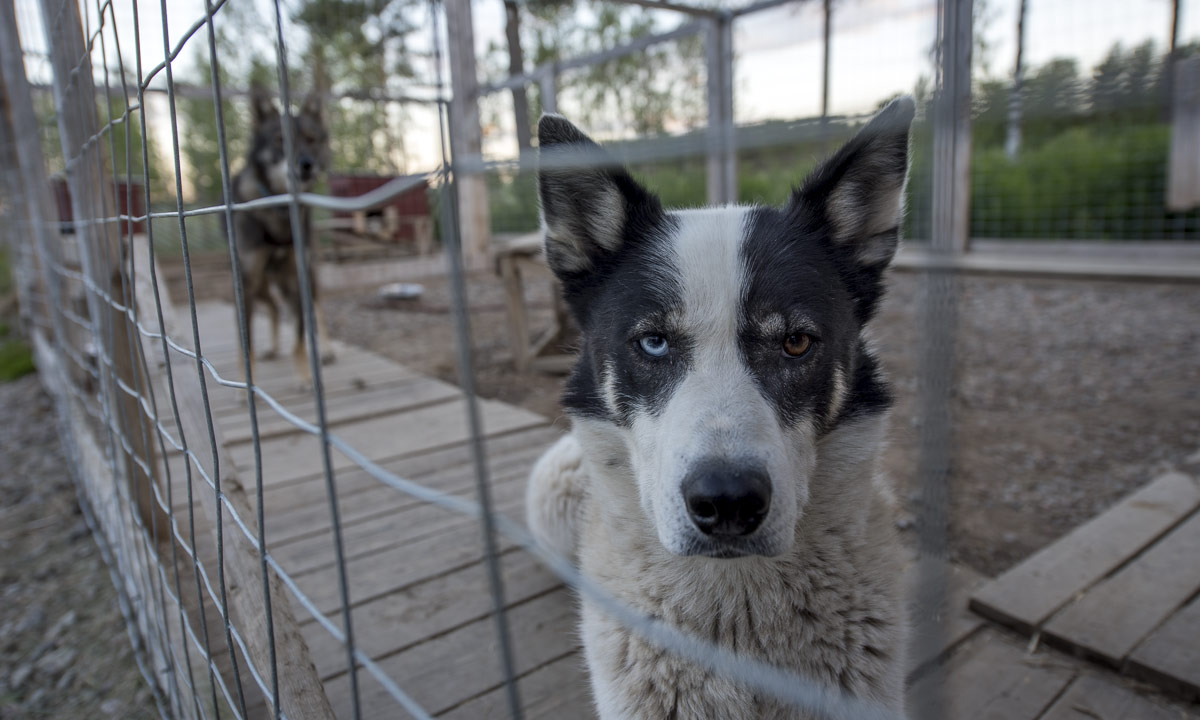
Today we played tourists and visited the Kirkenes Snowhotel, which is just some hundred metres away. The Snowhotel has 180 Huskies including the seniors plus 30 puppies. The huskies are like we humans – some are working, some are resting, some are curious and some are shy. But they are all very kind and friendly.

Inside the Kirkenes Snowhotel

I slept in tents, in igloos and outside in wintertime. I even slept in the Kirkenes Snowhotel two years ago. This time Annika and I enjoy sleeping in the inside of our friends house (Thank you for your great hospitality, Christine and Ørjan) but gave the Snowhotel a visit. And it was worth it – especially the lounge with it carved ice blocks is very impressive.

Tomorrow we’ll leave this fine place, take the car to Vardø in the North (yes, that’s still possible!) and take the Hurtigruten from there to our next destination.

Winter Paddling

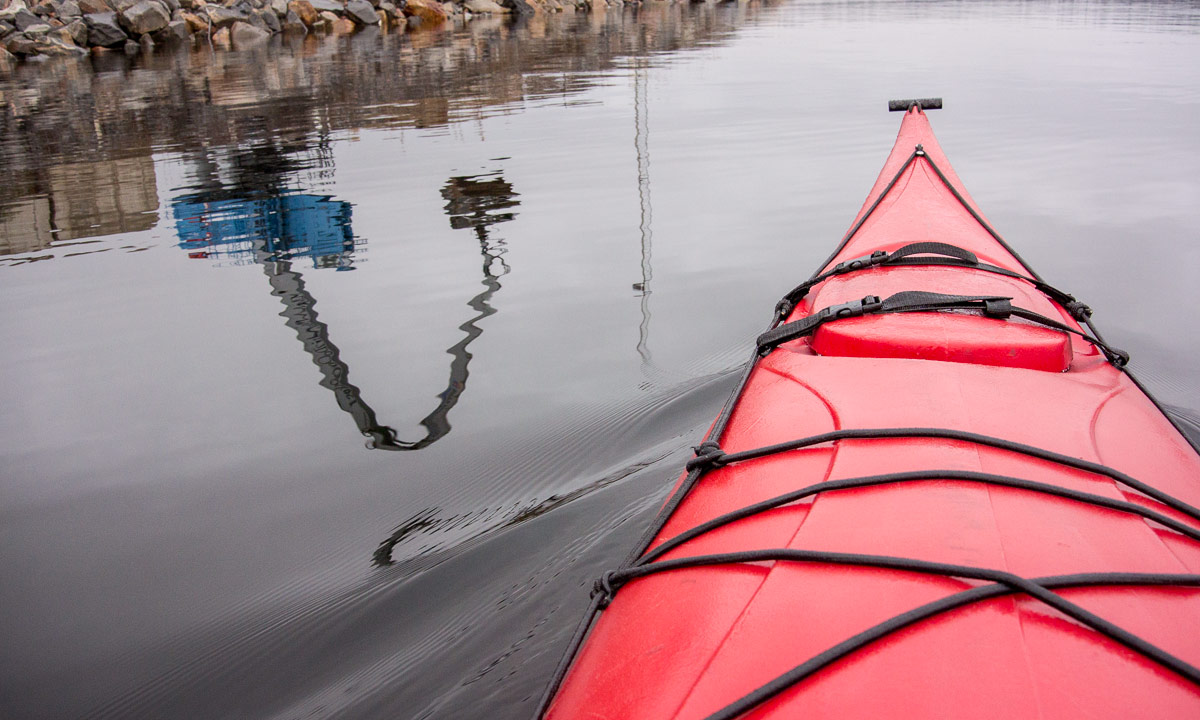
Yesterday I haven’t had the time, but today I finally opened the paddling season 2017. Normally I would expect the Baltic Sea to be completely ice covered at this time of the year, but warm and windy weather has prevented that until now.

First I was unsure whether I should paddle today because of a wind warning (more than 14 m/s), but when I looked at the Baltic Sea this morning the wind already had calmed down. Some hours later my kayak lay on some old ice floes ready to depart.

I put on my waterproof neoprene suit, entered the kayak and started to paddle along the icy coast. It felt a bit like late April – open water, hardly any snow left on land, just -2 °C and only the coast was covered by a thick layer of old ice. That impression changed when I came to the Bredskärsviken between the mainland and the islands Klubben, Bredskär and Norrskär. Here the water surface was covered with ice. Not with large ice floes as in springtime, but with crushed ice of all thicknesses between 1 mm and 15 cm. I entered the zone of crushed ice which made my kayak bumping against some thick underwater ice floes I didn’t see in time but soon I was amidst the drifting crushed ice.

It took me some minutes to leave that ice zone, even if it was only some meters to the open sea. I continued paddling southeastward along the rim of the drifting ice. I could see two people crossing the solid ice between the island Bredskär and the mainland. The ice on that part of the Bredskärsviken had been solid for weeks since it is sheltered by the wind.

… in contrast to myself. I felt the wind freshen more and more and the waves got more and more vivid when I paddled along Klubben heading for the island Flottgrundet. Here I decided to cancel the tour and to turn back. Probably a good idea, because now I really had to work against the high wind. You could see the wind blowing tiny ripples onto the already wavy water and more than once I got my face sprayed by water and wind. I couldn’t rest longer than for four seconds without floating back and the thick neoprene of my drysuit may be great for staying safe but not for a workout like this. Soon I was quite exhausted.

Finally when I was almost back ashore I “parked” my kayak in the drifting ice to make some more photos. The ice stopped me from drifting back. Next time when I’m in the need of a rest period I shall remember that.

In this segment the crushed ice was some centimetres thick. Because of the waves had been constantly pushing and pressing the ice together parts of it stood upright. An odd view.

The last stage of my short kayak trip was less exhausting since so near ashore the wind was less strong and soon I was on land again. A nice first kayak trip 2017.

What happened next?

  • I undressed the neoprene suit, put on pants, boots and a softshell jacket
  • I put on the belt with an attached rope and carabiner
  • I pulled the kayak over the ice and up the embankment to the street where I put it on the cart
  • I fixed the carabiner to the kayak and went home pulling the cart with the hip like a five meter long red dog
  • Home again I hung up the neoprene suit for drying, changed clothes and had a meal

A wet business

It’s not often, that Västerbottens coast – where I live – is involved in three different weather warnings, two of them of class 2:

  • Land: Warning class 2 snowfall that can lead to strong snowdrifts – snowfall up to 15-30 cm
  • Sea: Warning class 2 very high water level – ca 110 above average
  • Sea: Warning class 1 gale (strong wind) – southeast ca 15 m/s average wind speed

I was out this morning to make some pictures of the high water mark. A wet business …

1. Storgrundet – not so wet

First I took the car and drove to Storgrundet. Big parts of the beach were under water – or rather slush. Some boats hibernating on the sandy beach were so surrounded by the sea again, but since they were safely tied they didn’t swim away.

2. Skellefteälven – wet

I continued to a parking place by the riverside of the river Skellefteälven. Here I had to change to chest waders since there was 50 cm of water and wet slush on the way – to much for my rubber boots. You should know where to go since the river bank is quite steep.

Since the parking place is lower than the street and covered with at least 15 cm fresh snow it took me five minutes to drive up the snowy slope. Again and again I sticked fast and had to roll backwards to give it another try. My next car definitely will have an AWD.

3. Näsgrundet – very wet

Näsgrundet is a small peninsula in the Baltic Sea and quite exposed to the elements. I stood in a mixture of ice slush and water and tried to keep the lens dry since the wet snow came just from ahead with great speed. At least the waves were not too high (I only had rubber boots on). This is probably my favourite motive from today.

4. Näsgrundet again – extremely wet

I love the motive on the photo above but wasn’t completely content with the image composition. So I went to the same place again, this time equipped more waterproof: Chest waders again and a rain coat over the fur trimmed winter anorak. While I shot the photo above with a 35mm lens I now used a 14-24mm wide angle lens and tried to get nearer to the motive.

Snow fall had increased and so did the wave height. It was impossible to keep the lens dry for half a second and after some minutes of trying anything was wet from a mixture of wet snow and sea spray. The ice-covered tripod started to freeze and I was afraid for my camera that looked quite soaked, so I abandoned this “photo session” and returned home.

Tomorrow the water level will be half a meter less, so these images cannot be retaken. I have to learn more about photography in really bad and wet weather.

Kayak – is it a boat or a sledge?

Today I was out and did some canoeing. There was a special reason for that: Johan from Sweet Earth wanted to make a short film about kayaking in wintry conditions for Skellefteå kommun, the municipality of Skellefteå. He asked me whether I wanted to be the canoeist and I accepted gladly. Since the weather forecast looked good for today we planned to make the film today.

And the weather was good – it was fantastic! When I woke up at 6 o’clock, the sky was still dark but starry and completely free of clouds. The thermometer showed -13.8 °C – the coldest temperature in Skelleftehamn this season. I was curious about Storgrundet, where it happened to be open water the day before. How would it look like today?

Some minutes later I stood on Storgrundet’s boat bridge and lit my strong flashlight. As almost excepted the water has completely frozen over last night and the rim of the new ice was about 3 cm thick. Too thick to break through with my kayak. Anyway, it could be less thick a bit farther away, I considered.

At 7 o’clock Johan arrived and we discussed the possibilities:

  • Plan A: starting at the Lotsstation farther away, where there’s open water and probably no ice at all, but perhaps less motives.
  • Plan B: trying to start at Storgrundet, where it might be impossible to kayak, but it would look nicer. And there would even be a Plan B2.

We decided for Plan A. I fetched the kayak from the garage and pulled it through the deep snow to the street where I put it onto the trolley. I pulled the kayak to the beach while Johan followed by car filming. Soon I arrived at Storgrundet’s parking place, but not Johan. Some minutes later my phone rang: Johan’s car got bogged down in the snow and he had to shovel it free. I returned to give him a push. Luckily his car was free soon again and we arrived at Storgrundet for sunrise.

I took off my winter anorak and slipped into my waterproof immersion suit – ugly but vital. I removed the kayak from the trolley and pulled it to the end of the boat bridge. Near the shore and round that boat bridge the ice was white, it was older and thicker. Some metres away it was transparent and you could see the sea bottom. That ice was less than 12 hours old. I positioned the kayak at the rim of the white ice that bore my weight and entered slowly the fresh ice. It took just some steps and – Splat! – the ice broke and I stood in chest deep water. Well, that came not unexpected. That’s why I had the waterproof suit on and my isdubbar round my neck.

“Isdubbar” or ice claws are sharp spikes with handles. These are attached to a cord to be worn round your neck. If you fall through the ice you can use the spikes of the ice claws to pull yourself out of the ice hole back to safety. A must have when going onto the ice in early winter or unknown terrain!

I managed to crawl onto the ice even without the ice claws, because the immersion suit has so much buoyancy. I put the kayak onto the little ice hole and climbed in. Unfortunately the kayak wasn’t heavy enough to break the ice. I tried and pushed, wiggled and jiggled until I managed to forge ahead perhaps ten meters. Anyway I only succeeded into bending down the fresh and soft ice, instead of breaking it. Since the paddle had zero grip on the wet ice I couldn’t steer at all and turning was completely impossible. Finally I gave up and pushed myself backwards with the glove protected hands.

When I came to the older and slightly higher ice I was kind of trapped. I couldn’t push myself backwards hard and fast enough to come up onto the safe ice surface. I tried several times and at last I just left the kayak – Splat! – went through the ice again, crawled onto the safe ice and dragged the kayak back to the boat bridge.

The result: Paddling on ice: round 25 m. Paddling in water: 0 m. Baths taken: 2. Photos taken: zero. I hope, that Johan filmed my abortive efforts. It will make me laugh watching it.

But as I said, there was Plan B2:

500 meters to the northwest the Baltic Sea is not in the lee of the island Storgrundet anymore. Here at the bay Flunderviken it usually takes much longer for the water to freeze over. While Johan had to take the save way on land I could go straight ahead by crossing the ice with my kayak in tow. First I had to plunge through soft ice and water again but then the ice was of the older and stronger kind and it was easy to get ahead. I knew, that Johan would be slower and I would had time to make some pictures.

Anyway even Plan B2 was in danger: Flunderviken was iced, too. At least I could see open water 100 or 150 meters ahead. Perhaps the ice would be weaker and I could go through the ice howsoever and reach open water. But first I had to wait for Johan who had to stomp through more than knee-deep snow to arrive. Time for another photo, time for going through the ice again, this time only knee-deep. Even here the ice was 3 cm thick – too thick to paddle.

Soon Johan arrived and I made my reservations. I didn’t believe in “ice-paddling” that far. Johan got an idea: Wouldn’t it possible to use the ice claws to push oneself forward? Well, I could try. The idea appeared to be brilliant. It was quite easy to push oneself forward, even it was hard work for my non-existing arm muscles. It went great until the ice got weaker and the kayak started to break it. Here it was hard to reach ice solid enough to pull oneself forward with the spikes. It took a long time and I had to take breath several times until I reached the last meters of the ice cover where ice was so thin that I could use the paddle again and finally I was free. Hip, hip, hooray!

Now I was able to paddle freely as on a warm summer day. Beside of the floating ice needles. Beside of wearing my heavy immersion suit. Beside of the snow that covered all shores. Beside of the ice crust on my kayak …

And beside of my exhaustion because of the struggles traversing the ice. Anyway I wasn’t here for a long tour but for being filmed. I didn’t want to get too far away from Johan who was landbound. Therefore I took just a short round and made some more photos before I started back.

I followed my old route where the ice already was cut and it was much easier to get ahead. Soon I reached the thicker ice – first still cracking under the weight of me and my kayak, then thick enough to bear us without any complaints – and then the shore where I had to plunge in into knee-deep water for the last time before I went ashore.

Conclusion

It was great fun testing out the limits of winter paddling in Skelleftehamn today. It won’t be the last time that I do such. However this is only possible with proper equipment. Without immersion suit or dry suit, isdubbar and such this tour wouldn’t have been possible at all.

So, folks: Be crazy and be safe!

And – as promised – the link to the video.

#snowember16 – part III

This article is part of the series “2016-11: #snowember16”.

And the snow fall continues. Today it didn’t stop snowing at all. 40 cm of snow covered the backyard of my house in the morning, now it’s already 65 cm and probably the fence will be buried by the snow soon.

Most people are only out to clear the snow, by shovel, snow blower or – more efficient – by tractor. The big municipal snowplough has just come through for the first time today, leaving a “plogkant” (plough rim) – a wall of snow, round 60 cm high, on the side of the street. That means, before I even think off taking the car, that stands on the driveway of my property, I have to go out and shovel all that snow away. And that snow of the plogkant is always quite compact and therefore heavy.

The neighbours have started to look at me almost a bit angry. They know, that I’m snow-addicted and just love that kind of weather while they just see the work. Perhaps I would think the same, if I had lived here the whole of my life.

But anyway – it is so beautiful with all that snow. Have a look by yourself.

  • The 1st photo is made in Ursviken this morning, when I took my first winter bath.
  • The 2nd photo shows the way to Storgrundet at the coast.
  • The 3rd photo shows the sandy beach of Storgrundet, or at least the snow covering it. Looks like boat season is soon over now.

Today it’s even cold the first day with day temperatures round -6 °C. In combination with all that snow, it’s hardly believable that it’s just the beginning of November.

The forecast says, it will permanent frost temperature the next 10 days. I – sorry, my neighbours – would approve it.

Kayaking in the sunrise

“BING-BINGA-BINGA-BING-BING-BING-A-BINGA …!”

… yells the alarm on my mobile. I open my eyes, still partly caught in my dreams. Then I realise: It’s 5 o’clock in the morning and I’ve planned a paddle trip today. Out there it’s still pitch black and reluctantly I get up and get some breakfast. I’ve already packed the day before: dry suit – neoprene boots, gloves and hood – camera in a waterproof bag – water and chocolate. The compass and the live vest are already in the kayak. I leave, pulling my kayak behind on its trolley and the temperature is -4.5 °C – the coldest day since April. Round half an hour later I’m ready to start the tour. The sun hasn’t risen yet and some pink clouds hang in the blue sky.

At the sandy beach I drag the kayak into the water, lay the paddle on both the boat and the shallow ground to avoid tipping and climb in. I do some strokes, unfold the rudder that helps my steering the kayak and turn right. It’s low water and much more stones and rocks are visible as usual. I turn right again to paddle between the island Brambärsgrundet and the mainland. After that I turn left again and see the horizon and an archipelago of stones. I have to make my way through and more than once I hear the typical clicking sound, when the sea is so shallow, that the rudder at the rear touches ground and is lifted up.

The colours start to change: From light pink to something you could call apricot to warm orange. And then the sun starts to rise. It’s not that I’ve never seen sunrises before, but still I love to watch.

The sun rises a bit higher and starts to illuminate the colourful trees on the island Storgrundet which I’m approaching. Before I reach that island I turn right again and head to the open water. All I see in front of me is water, waves, the sky, clouds and midmost: the horizon. It looks like I just could paddle straight ahead to the horizon for ages. Probably it would take ages: it’s round 150 kilometres to the Finnish mainland.

So I turn left again and paddle along Storgrundets outer shoreline, go round the western peak and to the same beach were I started my tour one and a half hours before. A quite short, but pleasant kayak trip.

I go ashore and drag the kayak to the beach. It’s still below zero. The spray water on the kayak is frozen and there’s hoar frost on leaves and wood, especially in the shadowy places.

Now I exchange the dry suit for pants and jacket and the neoprene hood for a woollen cap. Dry suit and such is great for protection in case of falling into the cold water, but the “normal” clothes feel much more comfortable. I make a last photo of the beach and the island Storgrundet in the back, then I return home dragging the kayak behind.

At 9 o’clock I start my normal work.

“New Year’s resolution”: Be more outdoors in my everyday life, even if it’s short.


Boat bridge by day and night (featuring Aurora)

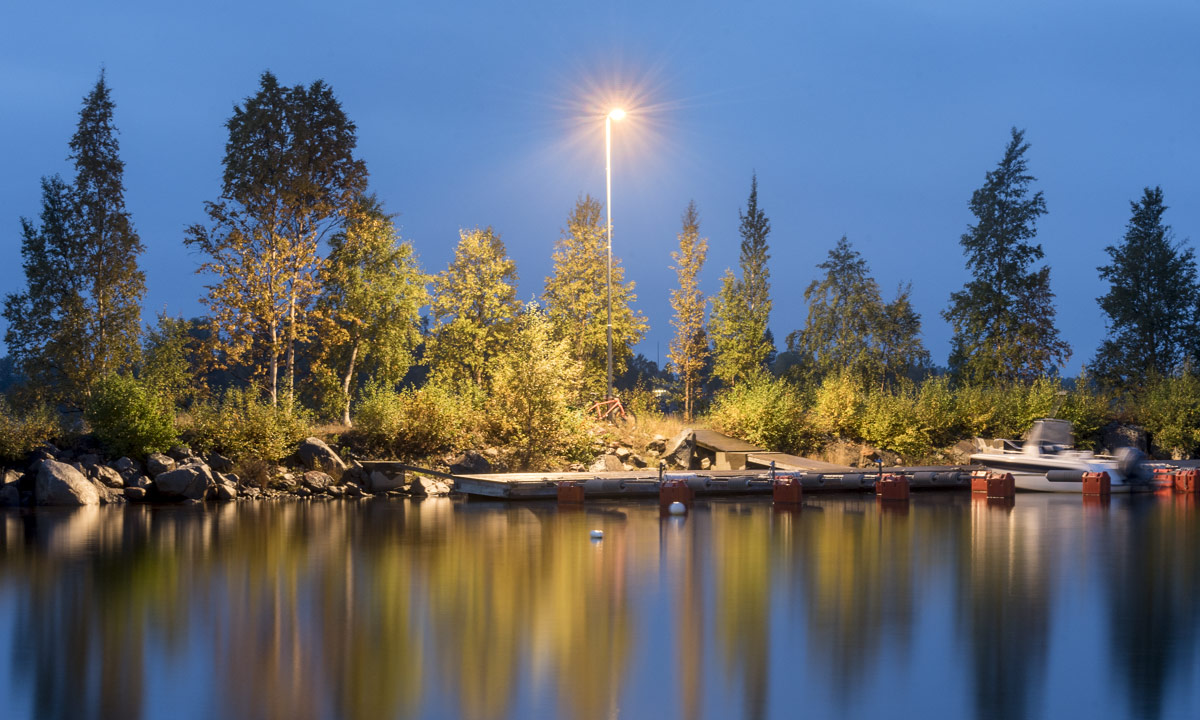
Two photos of the small wooden, floating boat bridge at Storgrundet, the nearest beach from my house in Skelleftehamn. Both are made today.

One is a snapshot, made 10:30 in broad daylight. The sky is bright blue, the birch leaves are still yellow, slowly turning brown. A boat has just put out to the near island. The sun still warms, but it is windy and the air is fresh. Tiny waves make the boat bridge wobble and you can hear the waves gurgle.

Almost twelve hours later, att 22:08 I make the second image, this time with a tripod and 10 sec exposure time. The sun went done at 6 o’clock and the temperature has dropped to 4 °C. A cloudless and starry sky arches above the near island and the rests of a polar lights are flickering above the horizon. Just as this morning the boat bridge is wobbling in the tiny gurgling waves – that’s way this photo is jittered.

I like either views, both the autumn leaves in the sun and the polar light in the night. However while I enjoy the autumn days just as they are, the polar light increases the anticipation of the coming winter – still months away, but coming for sure.

ɥʇnos uʍop ʎɐʍ – part II

Two days ago I started a journey southwards. After half an hour in Stockholm, where I changed trains, I sat in the X2000 to Malmö – a four and a half hour trip. I looked out of the window to have a look at Stockholm and saw the train crossing the Årstaviken on a high rail bridge.

Then I got tired and tried to fall asleep. Then the landscape got a bit boring. Then it got dark. That’s why my camera stayed in its backpack for a long time. Then our train started to delay more and more. Will I be able to catch my connecting train in Malmö? I knew, there were later trains the same day in case of missing this one, but I was a bit nervous anyway. I was tired and just wanted to end this part of my journey as soon as possible.

Two or three minutes before the departure of my connection we arrived in Malmö. I left the train, and started to run: Where’s track 2B? To the left – to the right – holding left – running down the looong escalator. Where’s the train? Oh – the track changed. Where’s track 1A? The other end of the same platform. Jogging again. Where’s the train? Oh – not here yet. Phew!

Some minutes later I entered the local train to Trelleborg where I finished my 12 hour 40 minute journey and took the short way to my hotel. I checked in, went to my room, took a shower and a photo and soon I was fast asleep.

Ten hours later: I stand on the huge ferry to Sassnitz, Rügen, Germany. The ferry crossing will take a bit more than 4 hours. Twice I am inside to buy small things to eat and to drink, the rest I sit or stand outside having a look at Sweden leaving behind, the open Baltic Sea with nothing in view beside of an offshore wind park and some other ships far away. Some places on deck were quite windy, other were wind-protected so that I can sit in T-shirt enjoying the sun. Two and a half hours later Kap Arkona, the northernmost tip of Rügen comes into view and later the outstretched chalk cliffs of Jasmund. A good hour later the ferry goes ashore in Sassnitz and I am in Germany – for the first time after Christmas 2014.

I think, travelling by ship could be my favourite style of travelling. You are not bound to your seat, you can walk around, you get food (if you want) and you can look at the sea. What a pity, that there’s no ferry from Skelleftehamn to Sassnitz. Come on, shipping companies, it’s both the Baltic Sea, it cannot be so hard …

Some images of yesterday: