Eight times Ytre Kiberg and around

This article is part of the series “2018-03: Varanger peninsula”.

Day 31 and 32 of my winter journey 2018

1. Yesterday, Ytre Kiberg – the morning

Two days ago two other guests arrived at Cape East Arctic Adventure, our cozy stay in Ytre Kiberg. They came from Utrecht in the Netherlands and were on a three week car trip from Utrecht to the North Cape and back – 8500 kilometres in total!

Trond, our fantastic host made a special breakfast for them: King crabs, locally caught in the Barents Sea. Annika and I got our share, too. King crabs are probably my favourite seafood but it was the first time I got such for breakfast.

After breakfast Trond had some work to do: clearing the snow with his rotary snow plough. Last days had been very windy with some short but intense snow showers. The snowploughs had to work a lot to keep the roads clear of snow and Trond had to clear the snow on his property several times a day. This morning the snow drifts were especially high and Trond had to work hard to get through with his snowblower.

2. Yesterday, Vardø – a private guide tour by Trond

After the driveway was cleared, Trond invited the Dutch guests and us to a short private guided tour in Vardø. We entered his all-wheel drive car and he drove us the short way to Vardø – a town with 2100 inhabitants located on an island – where he showed us some of his favourite places. There is a lot of street art in Vardø and next time I have to take a closer look to all the graffiti and more conceptual artworks. But you cannot do all in a single journey.

There’s a mountain pass between Vardø and Ytre Kiberg called Domen. It’s quite exposed to the elements and when we crossed it waves of driving slow covered the road.

3. Yesterday, Skallelv – a short visit

Soon after we arrived in Kiberg, the Dutch guests left and Annika and I made a car ride to Skallelv, 30 km south of Ytre Kiberg. The weather was really nice: sunny and hardly any wind. We went round a bit and I made some photos. I had however problems with some lenses, they got moisture inside that tends to freeze when being outside. Hopefully they will dry within the next days.

4. Yesterday, Vardø – the Vardøhus Fortress

After a rest we took a tour to Vardø again, this time we wanted to focus on two local attractions: The fortress and the witch memorial.

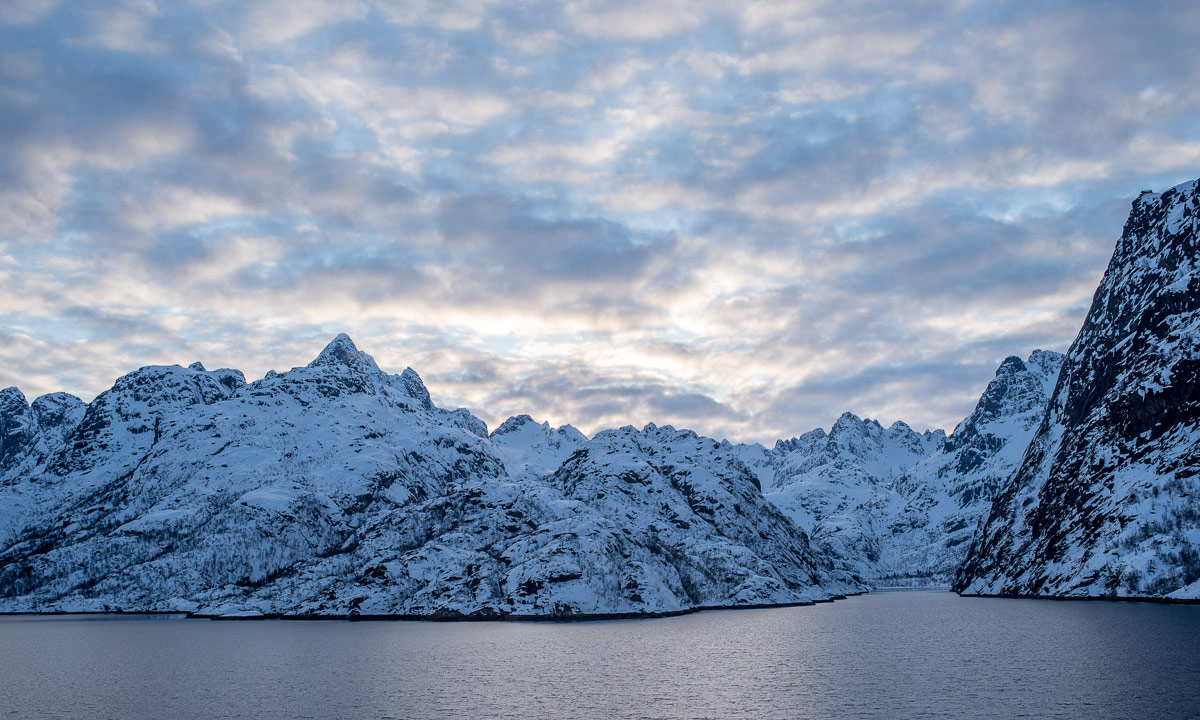
The Vardøhus Fortress (Vardøhus festning) was built round 1300 and is the northernmost fortress of the world. Beside of being a museum it is used today as a school for the Norwegian marine. Shortly after we arrived there, the Trollfjord, a Hurtigruten ship landed in Vardø and shortly after many tourist rushed through the fortress. In contrary to us they only had litte time.

5. Yesterday, Vardø – Steilneset Memorial

After visiting the fortress we went on to visit the witch memorial. It’s not easy to reach. First of all you have to know that it is called Steilneset Memorial (or find it visually), then you have to plunge through deep snow, because there are no cleared ways to the memorial.

In 1621 91 people, mostly women and Sami people had been executed for witchcraft. This memorial, created in 2011, shows the history of all 91 people and lists the confessions made. It is a shocking and touching place about the cruelty of mankind and worth to visit, if you are in Vardø and have the time.

After this long and eventful day we were quite exhausted and decided to take it a bit more easy the next day.

6. Today, Ytre Kiberg – a promenade in Ytre Kiberg

Today morning it was quite warm (-4 °C) and almost windless. 10 cm of new snow had been fallen over night. After breakfast we took a medium short promenade along the beach and into the village and back. The weather was changeable as it uses to be here. It could change from sun to snow within less than a minute.

Snow fall intensified and it became a bit windier, too.

7. Today, Ytre Kiberg – a private tour though the partisan museum

At 15:30 we had an appointment: we were invited to visit the Partisanmuseet – the partisan museum in Ytre Kiberg. We would get a personal guided tour from Steinar Borch Jensen – expert for the history of Kiberg and around – who would open the museum for us.

Trond took a huge spade, we entered the car, drove the short way to the museum, plunged through the snow to the entrance, where Steinar already had started to clear the outer stairs. Trond joined him shovelling.

The museum is not the biggest and the showpieces maybe not the most special, it’s the stories behind the showpieces that matter. Steinar had a lot to tell about the partisans in Northern Norway that fought on the Soviets side against the National Socialists in World War II. Beside of Steinar’s huge knowledge about that time there was another facet, that made our visit in the museum very special. Both Trond and Steinar have personal relations to the partisans. They know their relatives and they know the places where they lived. For many Norwegians the history of WWII is not just an academic interest but personal history. Soon the last witnesses of the past will be gone.

I felt very touched by the visit and was glad that we got the opportunity to get involved into the local history, but it made me thoughtful, too and reinforced my personal pacifistic worldview.

8 .Today, Ytre Kiberg – the first Varanger polar lights

Actually I planned only seven stories in this long blog article, but well …

I was out after a great two course dinner: reindeer (provided by Trond), pancakes (provided by Annika) and me doing the dishes. I wanted to make a photo of Cape East Arctic Adventure, Trond’s house, where Annika and I had such a good time. Then I spotted faint polar lights. I wore only a t-shirt and got in to fetch my Canada Goose parka. I was outside quite a while since the polar lights gradually became stronger. They constantly changed place making it hard to take any good pictures. It was -10 °C, quite windy and more and more I closed the zipper of the parka to prevent freezing. After a while the aurora weakened and I went in to look at the photos. I’m not content with the image above, but it’s a nice remembrance of our fantastic stay at Cape East Arctic Adventure in Ytre Kiberg.

Tomorrow we will leave and stay in Ekkerøy for some days.

Tusen takk, Trond, for your kindness and your great hospitality!

A trip to Murmansk – day two

This article is part of the series “2018-02: A trip to Murmansk”.

Day 23 of my winter journey 2018

When we came home from our dinner last night it started to get quite foggy und it became colder. The fog intensified and the city started to smell smoggy.

This morning however was clear and some millimetres of snow dust had fallen over night making everything looking white and fresh. It was much colder than the day before (Murmansk airport reported -29 °C) but the hotel doesn’t have a thermometer so I don’t know how cold it was in town.

After breakfast we went through the Park Zhertv Interventsii (Парк Жертв Интервенции), a small park directly at the hotel.

Then we continued through the streets and across the railway to the port.

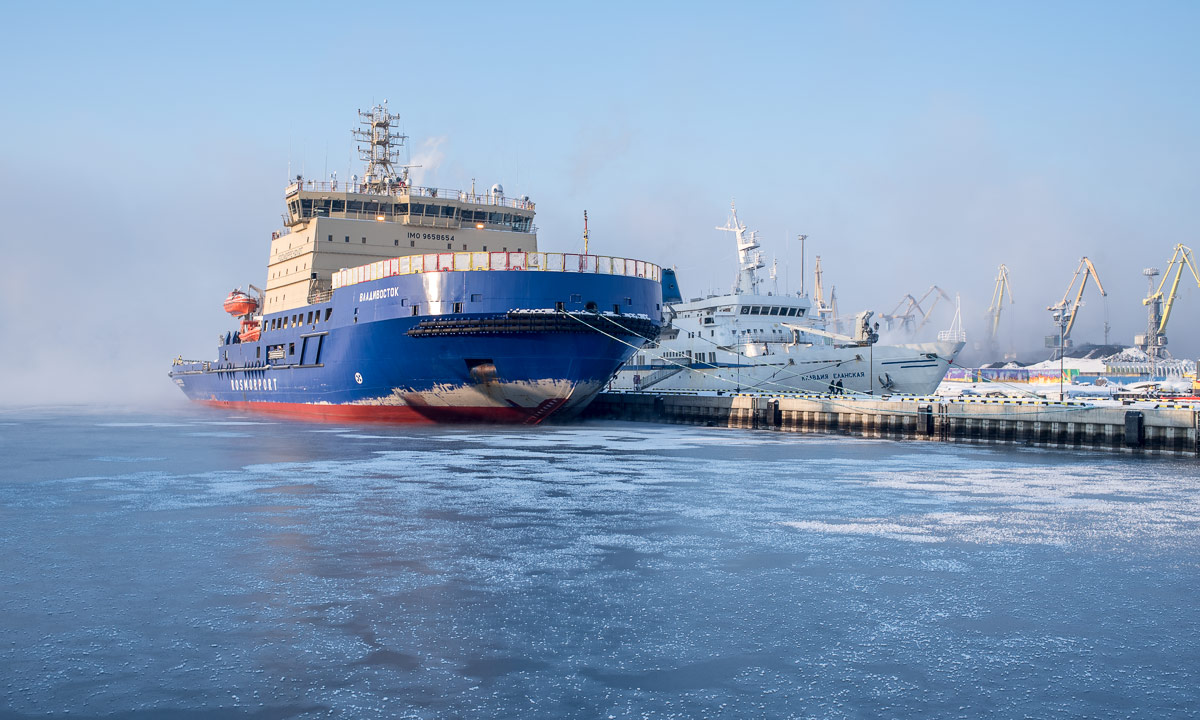
We wanted to visit the atomic icebreaker Lenin (Ленин) and check if we already could buy tickets. Lenin was the world’s first nuclear-powered surface ship and launched in 1957. She was decommissioned 1989 and subsequently converted into a museum.

Two big ships lay at the pier: Lenin and Vladivostok (Владивосток). Parts of the water surface were covered with ice but most of the water was open and steaming in the cold. The other side of the Kola Bay was hardly visible in the fog although only one kilometre away. The small ice particles in the air made the air feel quite cold.

A man left the icebreaker to meet a french couple at the pier, that had booked a tour. Unfortunately we couldn’t follow with them since this tour was privately booked. The man could speak a bit of German and we learned that the outside temperature was round -22 °C and that we had to wait for the first public tour at 12 o’clock.

So we went back to town, this time crossing the railway by a pedestrian bridge. Large chains of good wagons, some empty, some filled with charcoal were seen on almost all tracks.

While Chris and Ørjan went their own ways Annika and I went to the center to find a book shop. We knew that we had to follow the Lenin Alley (Проспект Ленина) and we found several book stores where I among others bought a pictured children dictionary English—Russian.

We continued the alley and finally came to Murmansk Mall (Мурманск Молл), a large shopping mall. Here both local stores and many international shops as e.g. H&M were found. The mall was extremely tidy and a huge contrast to the many rundown concrete buildings.

We’ve been in another mall the day before where you mostly could find Russian fashion for women. And that means mostly fur coats, partly in very fancy colours, high heeled boots and a lot of accessories in pink, silver and glitter. Some of them looked like plastic toys made for four-year-old girls, but in adult sizes. A fashion quite different from the informal one in Germany or Sweden.

I was really irritated when I entered some shops. People in Murmansk don’t smile or even laugh in public unless they know each other quite well. When you enter a shop the salesperson will stand up and observe you and even follow you through the shop. They won’t take contact with you, they won’t smile but will instead look stonily at you. I felt treated completely unwelcome and more like a thief than a customer. Strange and irritating!

Annika and I went back to the hotel and passed a Lenin figure and a house painted in bright turquoise, a colour that seems to be quite popular in Murmansk, as some other houses were painted the same.

We met Chris and Ørjan at the hotel and continued to the port together. Although it had become warmer it was still quite cold and some of the water that was open in the morning had frozen over in the last hours.

We arrived at the port at half past eleven and were the first one’s for the guided tour through the icebreaker Lenin. Shortly before twelve Annika and I could go aboard but most other tourist pushed to the front so that Chris and Ørjan were left behind. Later we realised that they attended another tour just some minutes later.

The following hour was one of the most boring experiences for long and made me remember some of the dullest school lessons. We were guided in a crowd of people by a Russian guide that loved to speak in a monotonic language without a split second of resting. Since he was so eager to talk another group behind us fenced us in so that we could hardly move and we were really glad to be able to sneak from the icebreaker before the guided tour was over. I guess, that most tourists are Russians too and so are able to understand the guide but even then I consider this kind of guiding as extremely boring and almost narcotic. My personal advise: Look at the boat from the pier but avoid the tour.

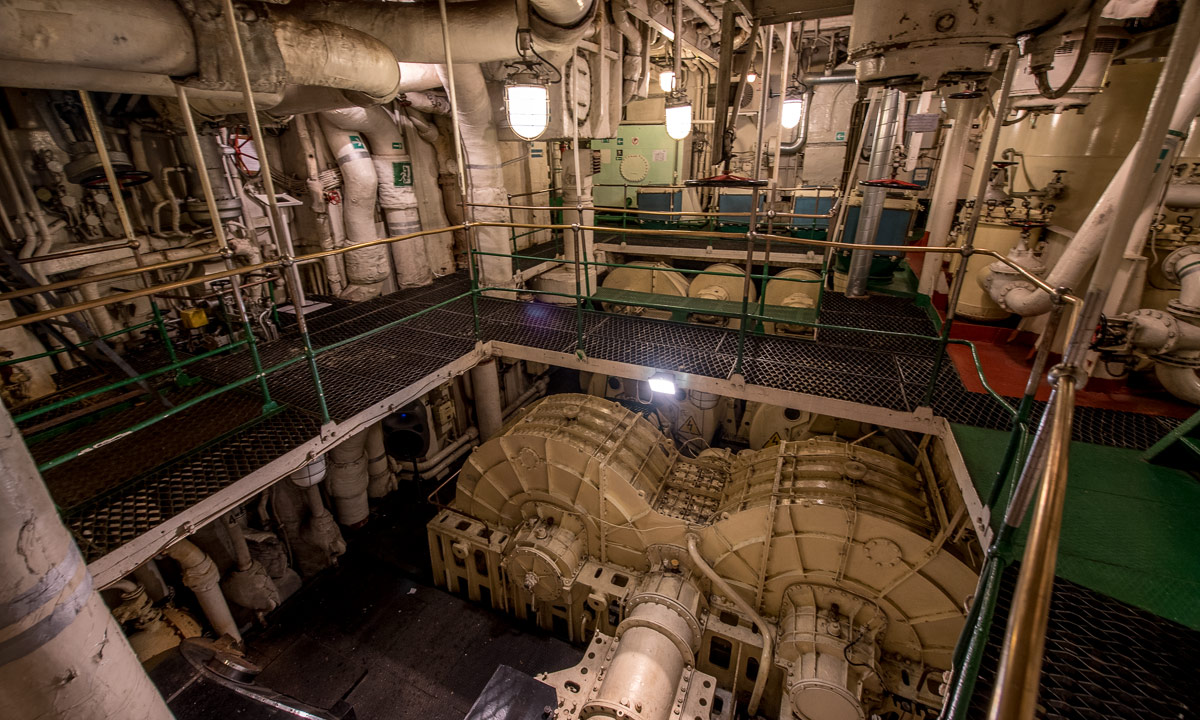
Some pictures from the inside anyway.

After this experience we needed fresh air and a café. We went to the Café Yunost (Кафе Юность), took some sweet cakes and after that we returned to the hotel to rest for a while.

In the evening we went to Terrasa (Терраса), another restaurant, though not to the White Rabbit (Белый кролик), our preferred choice. First it was Friday and then it was a holiday: Defence of the Fatherland Day. Therefore many restaurants had been fully booked. We enjoyed the food, went home to the hotel to take a short drink. Then we went to bed early. Next morning the alarm clock would ring at 6:15 local time, that’s 4:15 Swedish time.

When being in the hotel I took pictures from above. Here you could spot almost all places and attractions we visited the last two days, among others Alyosha, the Church of the Savior on Waters and the icebreaker Lenin. A good summary of the last two days.

Waiting for the roof box installation

My ancient roof box, that fitted well on my Saab is quite incompatible to my Subaru Outback. Today I had an appointment with the car repair shop. While I waited for them I took a promenade and made some photos on the nearby property of the boat club Ursvikens Segelsällskap. Nothing special and – due to the dull light – in black and white.

Sunnanvik at dawn

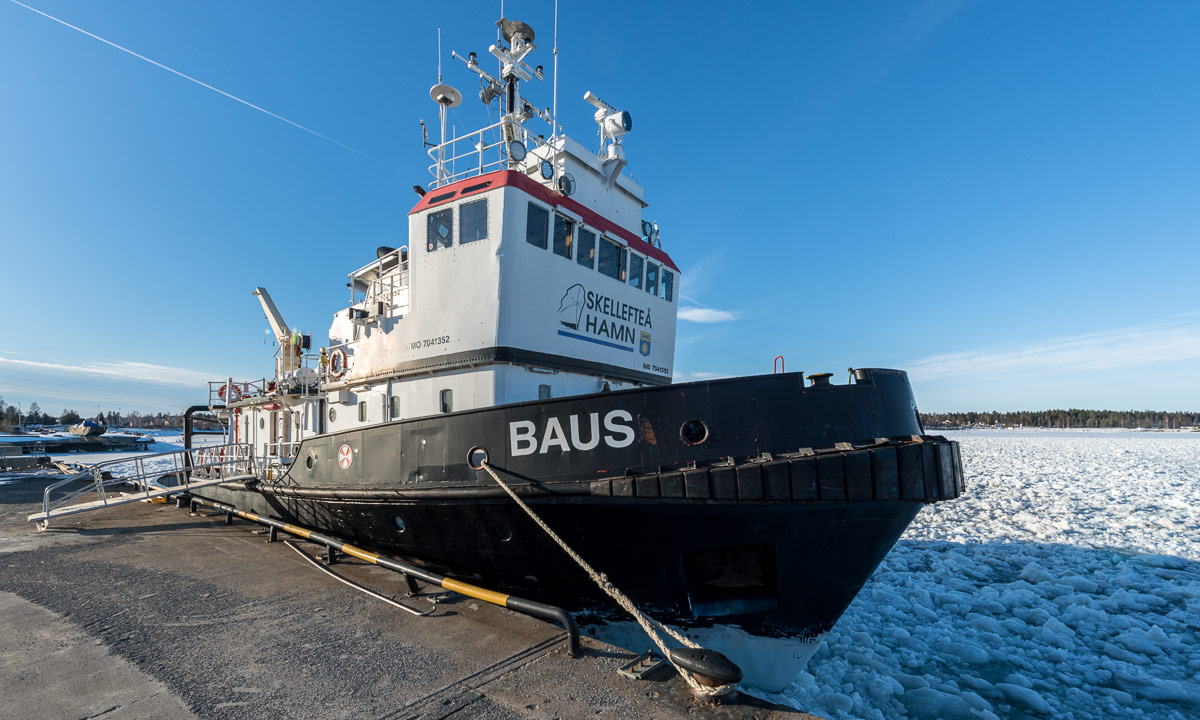
Last night when I returned home from town I saw the small ice breaker Baus at the pier of the cement factory. When I went out this morning – it was -17 °C outside – Baus already had left. Instead the Cement Carrier Sunnanvik had come and was anchored at the pier, its strong spotlight illuminating parts of the ice covered bay.

In the background you see the copper smelter Boliden Rönnskär. So Skelleftehamn is not only nature as my blog sometimes seem to indicate, but industry, too. Sometimes you can get afraid when you see big cargo boats coming in filled with many thousand tons of sulfuric acid. On the other side this industry creates jobs for a lot of people and last not leasts heats my house with district heating. Two sides of a coin …

Kayakvideo – my thing – winter kayaking in Skellefteå

Last summer I was asked by filmmaker Johan Granstrand if I would be interested in making a small film about my winter paddling. I felt honoured to be asked and gladly accepted.

Despite to this year we got a lot of snow already in the beginning of November last year. Since weather was nice (and cold) we decided to make the film on November 12, exactly one year ago.

I already blogged about this day in my post “Kayak – is it a boat or a sledge?”. Some weeks ago I got the permission to share the link to the video and that’s what I do today.

“Min Grej – Kayaking i Skellefteå på vintern” on Vimeo.

(I really like this film but I don’t like listening to me talking. My Swedish sounds awfully!)

Late autumn paddling

It’s so nice to kayak on a sunny summer day, wearing just shorts and t-shirt, feeling the warm breeze, taking a bath and having dinner on a warm sunlit rock by the sea.

I wonder, why I hardly do that! This summer I paddled exactly twice – once in May, once in June. Now it’s November!

When I saw the thin layer of ice at Storgrundet this morning I was kind of alarmed – the days of paddling this year are numbered.

I fought a while with my weaker self but finally it was me who won. I put on my drysuit, neoprene boots, hood and gloves, took my little waterproof camera and fetched my kayak from the garage. The weather was still a bit sunny and temperature round -4 °C. (According to the weather forecast it should have been cloudy for hours, temperatures above zero and rain on its way. But well, the Swedish weather forecasts are hardly reliable.)

It took less than ten minutes till I reached the small bay Killingörviken where I launched my kayak. Within this short time period clouds have been approached from the sea covering half the sky.

The first 70 meters were hard work. Even when the ice is only 7 mm thick it’s not easy to paddle through because you have to break the ice not only with the kayak itself but with the paddle as well to be able to push forward. But soon I reached open water, crossed the street and reached the larger bay Kallholmsfjärden, home of the port Skellefteå Hamn. At the rear the sky was still blue but in front of me dark clouds approached and soon it started to snow …

No! Wrong! It didn’t snow. Snow stayed home and sent his asshole cousin: Freezing rain. (Rain indeed, sometimes the weather forecast is right.)

I thought back to the time, where I had lived in Essen. In that time I used to say “winter is coming, the rain is getting colder”. And so it felt today. It was chilly, wet, grey, twilit and dull. A typical autumn day in Essen. Or winter day. Or … . But I get off the point …

Anyway when I crossed all the bridges that traverse the channel Kejsar Ludvigs kanal, my mind wandered back again. Here it even looked like Essen.

But there are differences. First of all I never paddled in Essen and then Skelleftehamn is a coastal town which means that you reach the sea in less than no time:

Near the coast there was another layer of ice and again I had to cut through. My plan was to paddle round the peninsula Kallholmen, meaning that I would have to cross the sheltered bay Kurjoviken. Would I manage it or would the ice shield be too thick to be easily crossed? Well, I’ll see …

I paddled along the southern side of Kallholmen. There was hardly any wind and hardly any waves. Time to stop photoing and just enjoying the motion. Kurjoviken however came nearer and when I went round the west tip my misgivings became true. The whole bay was iced.

I gave it a try and started paddling through ice a third time this day. Already after ten meters the ice was 10 mm thick and I knew that I had 500 meters more to go. I decided to give up my original plan and returned. Backwards since it’s hardly possible to turn in ice.

It was still grey and quite dark, but it stopped raining and there was a a silver lining on the horizon.

It started to rain again. The raindrops were so tiny that I hardly could see the drops impacting the water surface. The surrounding looked hazy and mysterious and it was hard to guess distance and size of other objects.

“Is there a man standing on a rock amidst the sea? Or is it just a rock? Did it move or not? It moved! Is it a bird? I’m not sure. Yes, it’s a seabird, perhaps a cormorant. And the four dark spots ahead? Is it small rocks? Or big rocks? Or seals? Or trees far away in the haze?” Probably it was trees, that spot was further away than excepted.

Finally I reached “Ice Shield II” were I used the ice-free channel that I created an hour before. A second time I paddled along Kejsar Ludvigs kanal and reached the harbour.

A second time I crossed the bay, reached “Ice Shield I” and soon went ashore.

Well, let’s say I tried to go ashore. It was easy to leave the kayak but hard to go up the shallow slope, since the cold rain had instantly become ice on the still frozen ground and it was extremely slippery. Did you ever tried to drag a trolley with a kayak behind on freshly frozen streets? With neopren shoes made for water, not for ice? One patch on the street was so slippery that I really felt stuck. I could not move in any direction but finally I made it and some time later I arrived home.

My plan for 2018: Much more kayaking. In sun or rain, night or day – doesn’t matter as long as it’s save.


Ships and boats in Skelleftehamn

Today I planned to make some autumnal pictures in the early evening. I took the car to the small boat harbour tjuvkistan in Skelleftehamn. It felt like ages ago that I had been there. On the way there I saw a ship anchored in the commercial port. I stopped and to my surprise it was a ship from my hometown: The “Seabass” from Bremen. Of course I had to take a picture:

I went on to tjuvkistan and took some photos with trees (and boat navigation lights) reflecting in the sea. Still many boats lay in the small harbour or were on the way from or to the islands, but soon most boat people will set their boats on land before the weather gets too cold.

Hopefully I will have some other opportunities to make more pictures as long the leaves have not fallen down.


29 August: Kungsleden day 10 – Alesjaure—Abiskojaure (7+15 km)

This article is part of the series “2017-08: Kungsleden hike”.

From Alesjaure to Abiskojaure it’s round about 22 km to go. That’s the longest day’s march on that part of the Kungsleden. The first 7 km go along the lake Alisjávri which is good for a special reason: In summer there’s a boat shuttle service that allows hikers to skip this part. We all decided to take the boat, both to shorten the distance and to enjoy the boat trip itself.

Since the first regular boat starts at 10 o’clock we had a very relaxed breakfast with a lot of time. The quite large shop had fresh eggs so we had the pleasure of boiled eggs for breakfast. And very special egg cups …

The sun came out and illuminated the Alisvággi, the valley that leads to Tjäktja.

We went to the shipping pear already at 9:30, to go sure that we would find places on the boat. Andi ran up the yellow flag – the signal for the boatsman. The sun came out and I decided to take a bath. Not so easy, since the water was only knee-deep (and as icecold as expected).

Soon the boat arrived with stugvärd J. onboard. He was out fishing and succeeded: eight big arctic chars he caught.

At ten o’clock we departed. I could have stayed on the boat for hours, not only because I love to go by ship or boat, but even more because the sami boatsman had so much to tell.

He was living in Alesjávri for the summer “together with his dog and three common gulls” to run this transport business that he considers as a holiday. In September he would continue herding his reindeers. There are 17 families left in his sameby that do reindeer husbandry full time. (A sameby is kind of juridic and economical collective for reindeer husbandry.) He told us much more (all in Swedish) but after barely half an hour we arrived at the other shipping pear and went ashore.

When we started to walk it started to rain – bad timing. It was more a series of rain showers and I put on my hood and put it off again many times. Almost all mountains lay in the clouds, only the Ádnji seemed to have sun the whole time.

While we went on something chirped. Beep – Beep – (silence) – Beep … . We had heard that sound before on our hiking tour, but it was the first time that we could spot the matching bird. It was a golden plover as we figured out later. The bird was a bit nervous while I crawled nearer and nearer to get a photo, but it didn’t flee. Unfortunately my travel tele lens is not the best but I got a photo anyway.

We crossed the long reindeer fence that separates the sameby Laevas in the south and the sameby Gabna in the north. We just had to climb some stairs, where the Kungsleden crossed the border.
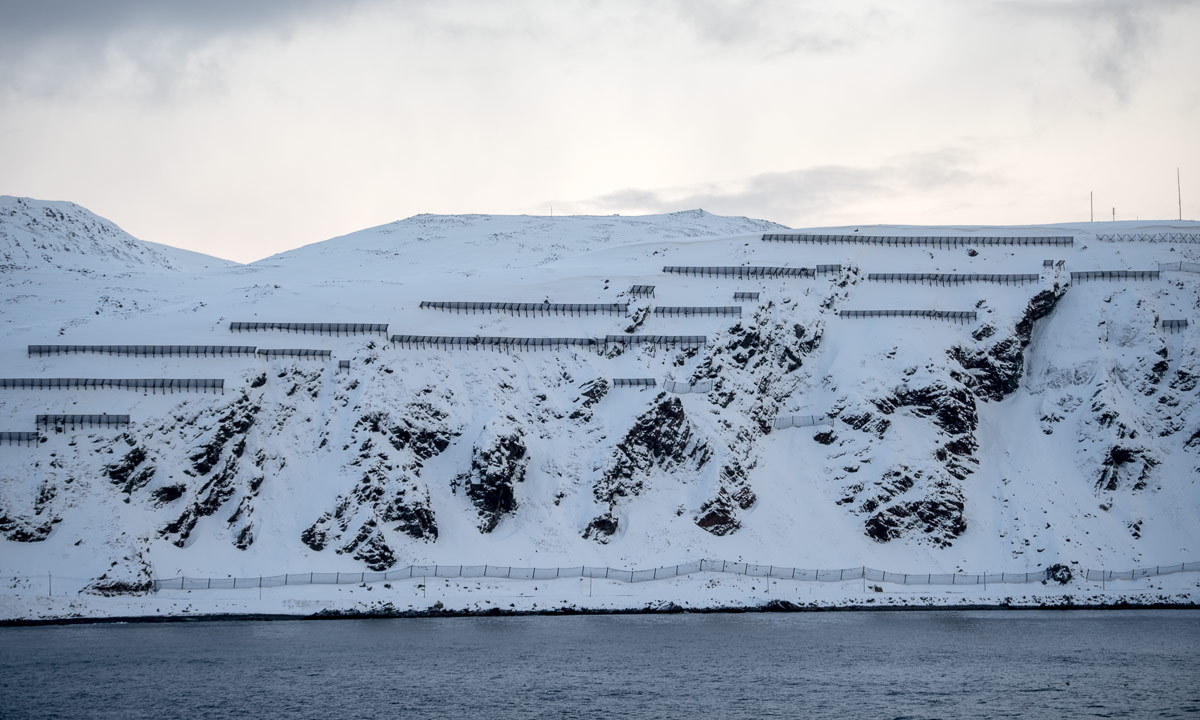
I knew that I had to say farewell to the treeless kalfjäll soon. In a short while we would enter the valley Gárddenvággi that would lead us deeper and deeper into more forested terrain. I was a bit sad, when i said farewell to that wonderful landscape.

The next kilometres were rainy, stony and muddy and we all just wanted to arrive in Abiskojaure, well knowing that it still would take some hours until we would arrive. I just trotted along and didn’t use my camera until we arrived in Abiskojaure. Here we finally made the photo of our four backpacks that we had talked about for days, but I was much too lazy to arrange it nicely.

The rain had stopped and the sun came out again so I took some last photos of the day, eager to eat something and to relax in the sauna.

Since Abiskojaure is the last hut before Abisko we found a lot of leftover food as dried vegetables, noodles or tuna sauce. That gave us a formidable afternoon meal. While we prepared for the sauna we heard, that there were moose on the other side of the lake. Indeed two female moose stood there in the wateraquatic plants. There were far away but we saw them dipping there heads into the water (they could hold their breeze really long) and eating aquatic plants. We saw them wading, swimming and shaking out the water. They had spotted us but knew that we were far away and no danger for them.

Katrin, Annika and Andi headed for the sauna, I watched a bit longer. When I went back to the hut I saw some others photoing something. It was a huge male moose, that stood amidst the huts and seemed to be not at all shy. I never saw a male moose so close! The moose went away, but stopped again, when he found rallarros flowers between the old toilet building and the wood shed. While watching us all the time he continued picking flowers with his huge mouth and eating them. At least twenty people stood there, watching, photographing and filming. Since all were quite sensible – no one was too hasty, too loud or came too near – we all could watch this big animal for some minutes. Then it took some step into the forest and almost instantly vanished in the shadows. What an experience!


20 August: Kungsleden day 1 – Vakkotavare—Teusajaure (16 km)

This article is part of the series “2017-08: Kungsleden hike”.

The idea to walk the Kungsleden with my sister Katrin and my brother-in-law Andi had been existing several years. This year we put our plan into action and went this famous Swedish long-distance trail from Vakkotavare to Abisko, which is round about 110 kilometres. Fortunately Annika had time to join us.

We started our tour on 20 August, exactly two weeks ago. As many hikes our tour started with public transport: The bus 93 from Gällivare to Ritsem. The last 130 km of that route are famous for being Sweden’s longest dead-end road.

We however left the bus at Vakkotavare where we immediately started the tour. We had no time to loose since our destination – the Teusajaure hut – is located on the other side of the lake Teusajaure and we hoped for a lift with the motor boat at 19:15 to avoid rowing cross the lake.

The first part of the trail is quite steep and leads along a mountain brook with some waterfalls. 500 metres in altitude can be exhausting, when it’s the first day and the backpacks are still packed with some extra food.

Finally we were on the plateau on the “kalfjäll”, the alpine region above the tree line. I really love that bleak but wide landscape where you can look so far.

Until then we were quite lucky with the weather. It wasn’t sunny but at least it didn’t rain. But the weather worsened. The clouds became darker and it started to rain, first lightly then gradually intensifying. We could see some patches of old snow far away but soon all mountain peaks vanished in the thick layer of clouds.

The last part of the trail descends again. This was probably the most dreadful stage of our whole hike: it rained more and more and the steep stony path downwards was muddy and slippery. Despite of the rain there was not a single wisp of wind. So every second we stopped we were immediately surrounded by clouds of mosquitoes that landed in our eyes and nostrils or tried to get into our ears to suck our blood. Anyway we hardly rested anyhow since we tried to reach the boat.

We managed to reach the landing stage at the lake Teusajaure in time, wound up the signal for the boat (a white plastic jerry can) and waited. At least we were glad that the hut Teusajaure was in sight.

I felt disappointed and frustrated. It was the first hiking tour in Sweden for Katrin and Andi. What would happen if the weather would stay like that? And the muddy trails? And the mosquito clouds? Would we continue or abandon the tour? What would they think about hiking in Lapland? Would they ever come again …?

Soon we could see the boat leaving the other side of the lake. Minutes later it arrived. We put the backpacks onboard, jumped in, put on live wests and soon brought across the lake.

On the other side we unpacked the wet trunks and the stugvärd – the mountain-lodge keeper – gave us four beds to sleep. While Annika and I had hiked in Sweden many times it was brand new to Katrin and Andi and felt like a culture shock:

No electricity, no water tap and no water toilet neither! Instead of that: candles, a wood fired oven, two gas cookers and some buckets with water – partly fresh, partly used. And the earth closet somewhere out in the dusk. Again I felt a bit guilty that I persuaded Katrin and Andi into that Kungsleden hike.

Anyway the first tour day that was long away from being ideal came to a nice end: We had pasta, fresh chanterelle mushrooms and sour cream with us for the first day and therefore could enjoy a dinner far above standard. Now we only hoped for the rain to stop. It didn’t take long until we went to bed and soon we all slept.

What do you do if you don’t want to get a motor boat lift? You row by yourself. That’s round 1 km one way.

There are three rowing boats total. If you have two boats on your side, you’re lucky: Just take the boat and row across the lake.

If you have only one boat on your side, you have to row three times: First you take the boat and cross the lake. Then you row back with the same boat and a second boat in tow. Then you leave that second boat and row again a third time. So it’s ensured that there’s always at least one boat on each side.

Three trips round Tromsø

This article is part of the series “2017-07: Tromsø”.

It’s me who is thrilled by the North, who loves to travel to places like Tromsø or Kirkenes. It’s my mother however who has been much northerly than I was. She was in Spitsbergen/Svalbard with a cruise ship many years ago. But on the way back the route had to be changed due to fields of drifting ice and therefore the travellers couldn’t leave the ship in Tromsø. So my mother missed Tromsø on that cruise.

This year we managed to close this gap: three weeks ago my mother took a plane to Munich, another plane to Oslo and a third plane to Tromsø, where Annika and I picked her up from the airport. That’s why we’d travelled to Tromsø by car two days before.

We had four days in Tromsø, I will write mostly about the first two:

Monday, 10 July

Weather was better than forecasted and so the first thing we did after breakfast was taking the car, crossing the Tromsøysundet on the Tromsø Bridge and taking the Fjellheisen on the other side of the town. Fjellheisen is a cable car up the mountain Storsteinen (approx. 420 m), where you have an incredible view over the town Tromsø, the island Tromsøya and the mountain ranges on the neighbouring islands.

We stayed there the whole morning, enjoying the view, walking around, eating ice cream and looking at the arctic flowers that grew everywhere.

Finally we went down with the cable car again driving back to Tromsø and since the weather was sunny and nice we just continued driving, leaving Tromsøya again, this time using the Sandnessund Bridge. We continued our trip on the island Kvaløya (Whale island), Norway’s fifth largest island. At the western end there’s a bridge leading to the island Sommarøya which sometimes looks like like a caribbean island with it’s turquoise blue bays.

Annika and I were very keen to take a bath, but we all were hungry too, so we took a lunch first. While we were eating our fried fish, clouds approached and soon it started to rain. So much to our summer bath plans …

After looking around on Hillesøya (another bridge, another island) we drove back, this time taking the coastal way in the south of Kvaløya. Finally even the sun came back and illuminated the bright yellow blossoms of Lotus corniculatus, or common bird’s-foot trefoil that covered the sides of the narrow road.

Have a look at the beach photo above. It’s not sand, it’s corals covering this beach, which makes them looking even more caribbean – at least as long it’s sunny.

Late in the afternoon we arrived at our hotel after our first day together.

Tuesday, 11 July

After the rainfalls of the night sun came out again. Time for another trip to the surroundings – this time the island Senja, Norway’s second largest island (beside of Svalbard).

The first part of the tour was the same as the trip to Sommarøya the day before, but instead of turning right the last T-junction we turned left to Brensholmen and waited for the ferry to Botnhamn/Senja. Annika downloaded an app to pay the passage, since it was much cheaper than paying cash. As in Sweden it has become quite unusual to pay cash. The idea to start early was a good one, we were one of the last cars to fit on the ferry. Some others were unlucky – they had to wait for many hours or change plans.

Hour plan was to take a round trip on Senja using the roads 862, 86 and 861. In addition to that we planned to take some side trips.

The first side trip was special, since it led through a dark tunnel cut into the rock, that much too narrow for two cars to pass. In addition to that it was curved and bent so that you couldn’t see other approaching cars in advance. There were lay-bys were you could try to squeeze in and let others pass and I was really glad that the regular bus had left the tunnel minutes ago.

But when we left the tunnel we got “Norway in a nutshell”: Wide bogs, birch and pine forests, clear blue lakes, green meadows and fields and most impressive: big snow covered mountains, some of them looking unreachable by foot, so steep and harsh they were.

But it wouldn’t be Norway without the fjords. Sometimes the coast is as rocky as the mountains, sometimes it provides sandy beaches in beautiful bays. And finally we came to our bath, all three of us. Of course the water was cold, but the air was warm and we stayed in the water quite a long time.

We continued our round trip, again some clouds approached and again some rain drops fell. I thought we’d have to wait an hour for the ferry back, the ferry arrived simultaneously. I realised that I looked wrong when I checked the timetable, but we were lucky and found a place on the ship anyway.

On the way back we didn’t stop for taking pictures any longer. First of all the weather had become grey and dull and then we were tired and hungry. So we stopped only at the supermarket to buy some food for the dinner.

The other days

We did it right, making the larger trips in the beginning, because the other two days it was cloudy and rainy. Time for some sight seeing and indoor activities in the city that we hardly touched the last two days.

We visited the Polarmuseet – we went shopping (kind of) – we tried to visit the Tromsø Cathedral (in vain, it was closed).  We visited a photo exhibition in the Universitetsmuseet – we were on board of the seal hunting ship Polstjerna (another museum) – we strolled around in the beautiful botanical garden (hard to find!). We ate lunch or dinner at the harbour – we visited the park Prestvannet – we visited the Hurtigruten ship Trollfjord, the very same ship Annika and I travelled with last winter. Did I forgot something? Certainly!

On friday we started our road trip back to Skelleftehamn were I live, but that’s another story.