Gåsören at daybreak

This article is part of the series “2018-08: Iceland”.
Saturday, 2 September – from Svinafell to Reyðarfjörður by car
Annika and I woke up quite early and left our cabin in Svinafell already round 8 o’clock. That’s why we were almost alone, when we came to the lake Fjallsárlón into which the glacier tongue Fjallsjökull calves. Some larger and many small icebergs floated on the brown glacier water. We walked along the shore, touched some of the small ice blocks and watched them floating into the creek Fjällsá.


When we left the beach of the lake, many more people arrived, although this “first lake” is not as the “third lake”, the Jökulsárlón. The latter is much more touristic. Many cars stood on the huge parking place and hundreds of tourists walked around, taking pictures or took tours with zodiac boats or amphibian vehicles. The good thing with cold lakes: You always find the opportunity to take pictures without any tourist.


We didn’t see many animals yet on Iceland, beside of many sea birds and of course countless sheep (mostly in groups of three) and Icelandic horses. Here we saw the first wild mammals: seals swimming around in the lake, diving and reappearing again after some time.

After we left these lakes behind and continued east, the traffic on the Ring Road decreased more and more. We were on the way to the East Fjords that are far less touristic than the south of Iceland. It was just fun to drive the Ring Road and watch the scenery changing. Just a few pictures from some of the breaks we made.


It was quite late when we arrived in the coastal town Reyðarfjörður, where we got a room with an own bathroom. Time to cook and wash some clothes.
The next day we would leave the East Fjords and head north.
There are so many wonderful and special locations to stay overnight in Northern Scandinavia. Many of them are quite far away as e.g. Låktatjåkko (590 km) or Kjølnes Fyr (970 km). Others are quite near.
Two days ago Annika and I started a two-day journey to such a place, unknown to both of us. Already the journey was interesting, since you cannot reach the destination by land. We started in Umeå and drove to Norrfjärden, where we parked the car and waited for the 8 o’clock ferry to the island Holmön. This ferry is operated by the Trafikverket (Swedish Transport Administration) and free of charge.


We had four hours to explore this island, part of the island group Holmöarna, that have 75 year-round inhabitants. The small village Byviken, where we arrived has a boat museum and a small shop, that is open all year. We went for a walk and discovered a nice place: Bergudden. There’s a lighthouse and you can rent rooms, on request even in wintertime.


We arrived back in time to wait for the departure of our next vehicle: Holmöslupen.


Holmöslupen is a chalupa, an old cutter-like sail boat which is a reconstruction of an old boat type as commonly used 100 years ago. It takes up to 12 passengers and you are allowed (and asked) to help with e.g. hoisting the sails. Life vests available, sailing experience not needed. This boat would bring us to our final destination.


The wind was so weak, that we sailed only a part and mostly used the motor. Otherwise the trip (planned to take 40 to 60 minutes) would have taken several hours. We passed the islands Trappskär and Lill-Fjäderägg before we arrived at our travel destination Stora Fjäderägg, an island of 1.8 km × 1.3 km. Here’s a hostel driven by the STF (Swedish Tourist Association). The story of this hostel is worth to tell:
After people of the boat museum were done with the building the Holmöslupen they asked themselves what to do with such a fine and seaworthy ship. It was them who had the idea to install a hostel on the uninhabited island Stora Fjäderägg just to give the chalupa a purpose. That’s why there is a hostel on a desert island in the Northern Baltic Sea and a wooden boat that transport the guests.
Some images of the island:


There is electricity on the island, there is mobile internet and there is drinking water. The latter comes from a well and especially this year you have to be economical with it due to the long period of dryness. Luckily it rained some days ago and the rain barrels were filled to the brim. The rain water is used for washing oneself and for the dishes. The hostel has a fully equipped kitchen, but you have to bring all food with you.
Annika and I had decided for one of the all-time travel dinners: spaghetti with pesto and parmesan cheese. It was very warm but not too hot to sit outside. We enjoyed our meal and watched the barn swallow feeding its six children that begged for food with open beaks. They seemed to be almost grown-up and hardly fitted into the small nest any more.

We were told, that there are many seals round Stora Fjäderägg and where to find them. Together with Annika I doubtfully followed the tiny path through the heath – I’ve never seen a single seal in the Swedish Baltic Sea since I moved here eight years ago. The ground became rocky and we had a view of the sea. First I saw a black spot on top of a grey spot. A seal on a rock? Then we saw round black spots floating back and forth – definitely seals, I never heard of swimming rocks … . I used a small tree for cover and creeped nearer. The back spot was a seal too and other seals were lying along a headland a bit farther away.
I took the camera, ducked and tried to creep nearer to a large boulder to hide behind. The seal however saw me and *splash* jumped into the water and dived away. I waited behind the rock and I was lucky. After some minutes a seal approached the same rock and crawled onto it. I was so near that I could hear the flippers splashing.


After having taken these photos I returned to Annika and the seal – seeing me – dived again. This rock kept empty for the next time but along the headland more and more seals appeared and seemed to cover the rocks completely. Next time I’ll definitely will take my huge tele photo lens with me.

We both sat there for a while – on a big rock, both listening and watching. The sun had already set, zillions of small insects hummed and buzzed around and we watched the many grey seals, at least 40 of them. Finally we decided to walk back as long it was light. Some of the small paths are not easy to walk on. On our way back I stopped because I saw something moving. It was a young hare. No, it was two of them. No, even more.
Three young hares were hopping around, eating a bit of grass and completely ignoring us. I was able to get close to three meters and still they didn’t seem to be frightened at all. I increased the ISO of my camera to 3200 and took some photos of these cute furry animals. (Don’t ask me what they do in photo 3 and 4, I’m not a hare expert.)


When we arrived at the hostel nightfall had intensified. Frog hopped around everywhere and the blue hour invited for taking more pictures. I however was tired and only took a photo of the old lighthouse before going to bed.

The next day: After a nice outside breakfast Annika and I took another walk over the island. Stora Fjäderägg has a lot of historical places, anything between the not-so-old lighthouse and ancient heaps of stones only readable for archeologists. Here are some of them:


Again it was warm or even hot at midday. Passing the lighthouse we returned to the hostel longing for water to drink.

Apropos lighthouse: We were ten people on the island that had stayed overnight: The host family (3), Annika and I (2), a family from Örnsköldsvik (4) and a man that had bought that old lighthouse. He showed Annika and me around and told us about his plans to renovate the lighthouse and to build a flat into it. A great project that probably will take some years, because it’s just a summer project.


We already had packed our backpacks and cleaned our rooms, now we were ready to go back to the small harbour waiting for the Holmöslupen. This time we were lucky, we could use both mainsail and foresail to sail back to Holmön.


Step by step we came back to civilisation: Holmön – the grocery shop (ice cream!) – the ferry to the mainland – the parked car – driving the E4 to Umeå – a Thai restaurant – home at Annika.
Conclusion: Absolutely worth it! I’m sure it wasn’t the last time, that Annika and I travelled to this very special place.
More info:
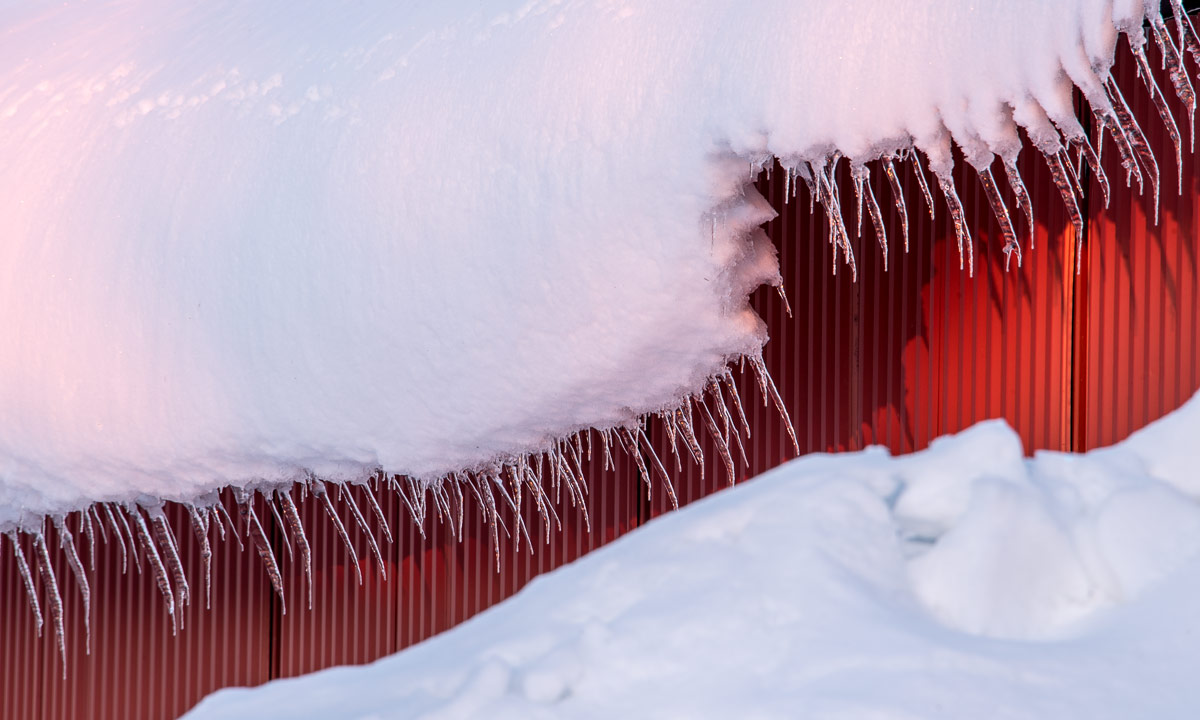
The weather of the last weeks has been hot, mostly too hot for me. Even today’s thunderstorm and heavy rain showers didn’t manage to cool down the temperatures below 20 °C. I’m really longing for cooler weather. Since I cannot change the weather itself I can only provide some winter photos from the archives. Voilà:


This article is part of the series #escapism. It’s about being outdoors and leaving civilisation behind in excursions that take less than 24 hours. Everyone should have time for such!
Yesterday I wanted to take advantage of the good weather and decided to make a kayak trip to the island Gåsören. I planned for an overnight stay and that means packing a lot of things:

Anything on the photo beside of the empty plastic box came with me. From left to right: Dry suit, life jacket, food and stove, camping map, spare clothes, tent, camera equipment, water bottle, book, sleeping bag, neoprene boots, 5 litre water canister. It’s almost miracle that everything fits into the kayak. Since it was quite warm I only wore pants and a t-shirt and of course the life jacket, that’s a matter of security and therefore principle.
I paddled between the islands Storgrundet and Brambärsgrundet, passed Vorrgrundet and then headed to Klubben and Flottgrundet. Here I left the islands behind and continued to Gåsören. The weather was nice and the sea was calm. Already 50 minutes later I arrived. I dragged the kayak ashore, took all baggage and went to my favourite campground (and one of the few placed not completely covered with pebbles and rocks) where I put up the tent.


After “cooking” and eating I visited two friends that own one of the two summer cottages on Gåsören. It’s really a beautiful place they have. We talked about paddling, hiking, skiing and much more. It was late when I want back to my tent and the sun started to set.

I didn’t go to sleep directly but watched the sun going down and the many fluffy but extremely clumsy seagull chicks walking around. They cannot fly yet and use to stumble over every other stone. What a contrast to the elegant flight of the grown ups.


It was much brighter than it looks like on these backlit photographs. It doesn’t get dark in the night and I found it hard to sleep, not only due to the bright night but also to the increasing wind and the constantly screeching seagulls. I put on a woollen cap. It was not cold at all but it helped to block the direct light (though not the shrieks of the gulls).
At half past five I gave up and started to finish a book I’d been reading for a while. That took some hours. At half past eight I took a frugal breakfast: Toast with cheese.


Then I packed everything together. Clouds had started approaching and I wanted to have everything stowed in the kayak before the rain. The sky above was still blue but the sea started to get choppy.

I stopped by my friends again to say farewell. They have their cottage on the lee side of the island and we enjoyed the last hour of sun before the clouds started to cover it.
I dragged the kayak into the shallow water. It was hard to start against the wind, because the kayak was constantly turned parallel to the approaching waves. Wrong direction and quite unstable. But after some tries I managed to leave the island behind. It was exhausting but easy to paddle against the wind. Anyway I wouldn’t have dared to cross the open sea in these conditions without wearing a dry suit even if it’s only 600 metres. The water is still very cold and in case of the kayak capsizing I wanted to be completely sure to be able to reach the shore without hypothermia.
It took twice the time than the day before. The sky was grey and cloudy and it had started to rain. It may not sound like that, but it was real fun paddling through wind and waves. The hardest part was going round Vorrgrundet where I had to go parallel to the short waves. Here I had to be fully focussed to keep my balance. As soon as I reached Storgrundet I was in the lee of that island again and the water was much calmer. Soon I arrived at yesterday’s starting point.
The whole trip took less than 20 hours and is therefore a candidate for the series #escapism.
Finally, two selfies, one sunny from yesterday and one rainy from today (made in the lee of a small island).


This article is part of the series “2018-05: Gotland”.
It’s Thursday, our 4th full day on Gotland. Today we want to hire a car, meet Ingrid again and explore Fårö, an island northeast from Gotland.
We return our e-bikes, that we used the last two days and walk to Mickes biluthyrning, where we rent a VW Passat from 1995. Annika drives. We fill up the car and drive to Lärbro, where we meet Ingrid. She has been living on Gotland for a year and will guide us around.
In Fårösund we drive on the free ferry; the ferry crossing takes only 8 minutes. Then we are on Fårö.


First stop: Fårö kyrka. Beside this church used to be a tourist information, but it doesn’t exist anymore. It’s not a big problem, since Ingrid knows all these places she wants to show us.

The next stop however is a request of Annika and me: a real bakery! With a few exceptions, there are no bakeries in Northern Sweden and we enjoy visiting this one. We buy bread and cake and take a break to eat the latter.

We drive through the landscapes of Fårö, which are as varied as Gotland’s landscapes. Sometimes you think, you are in Spain or Greece, sometimes you believe being in Northern Germany and (only) sometimes in Sweden. Now I understand the Swedish people better, who say that Gotland is not Sweden.
Next stop Fårö Fyr, the lighthouse of Fårö, located at the easternmost point of Fårö. There’s a beautiful rock coast, but we do not stay very long, there’s a lot to see.


Next stop Skärsändan, a beautiful sandy beach that is several kilometres long. Annika and I take a bath (the water is quite shallow) and then Ingrid, Annika and I walk barefooted along the beach.


After a longer promenade we continue our Fårö exploration trip. On the way to Langhammars Raukar we make a stopover. Here we find many things typical for Gotland and Fårö: grey sheep, windmills, thatched houses, braided fences and dry stone walls.


Next stop is Langhammars Raukar, one of the famous spots with rauks – steep limestone formations formed by the waves of the sea. On of them reminds me on the stone statues of the Easter Island.


We continue to another fascinating spot, three kilometres away: Helgumannen, an old abandoned fishing village. This group of tiny wooden houses located on a rocky beach that seems to be endless looks really remote and I ask myself what kind of live the inhabitants had.


The last stop on Fårö for today: Gamle Hamn, another spot well-known for raukar. The last photo shows the “coffee pot”. Personally it reminds me more of Buckbeak, the hippogriff in Harry Potter.


I has become late, we are hungry and a bit tired. Ingrid drives the way back to the ferry and soon we are on Gotland again. Here we take the first restaurant and get something to eat, before we drive back to Lärbro and say goodbye to Ingrid.
Tusen takk, Ingrid for a wonderful day!
When Annika and I arrive in Visby it’s so late that the sun sets and the ice cream shop is already closed.
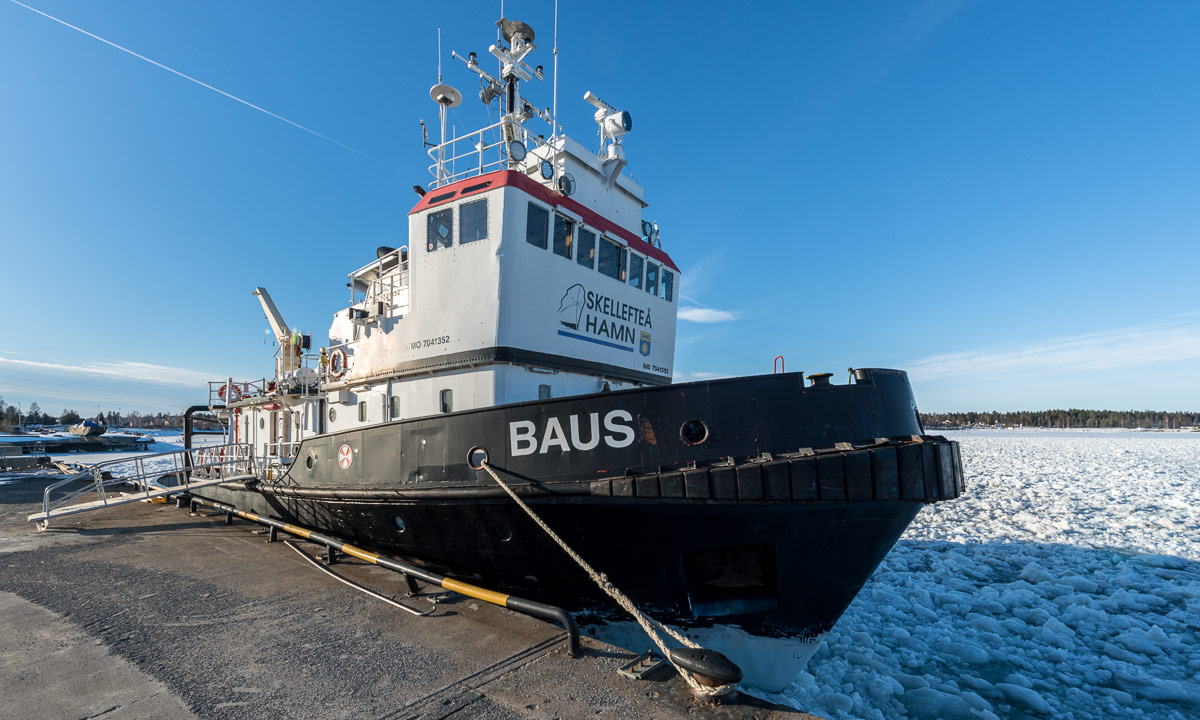
This morning I saw not only the ice fishermen, but also the icebreaker Baus clearing the ice in the port of Skellefteå in Skelleftehamn. In the afternoon I remembered, that I had come into contact with K., one of the crew members on Facebook some weeks ago. I had asked if it was possible to go with the Baus to take photos sometime. K. had answered that I should just go there and ask the people. And so I did today.
I met a guy who works on the icebreaker and learned that it’s hard to make some kind of appointment. In winter no one knows exactly, when ships will arrive or depart due to the weather and the ice conditions and therefore neither when the Baus would start. But they would actually leave in twenty minutes to clear the ice for the ship Ice Star and I was allowed to join …
Sixteen minutes later I was at the dock again, this time with better clothes and my camera equipment that I got from home. How good that I live so close.
I was allowed to enter the Baus and say hello to the captain on the bridge.

He welcomed me, showed me some of the controls to steer the boat and allowed me just to go round everywhere to take photos. I didn’t want to disturb him, because he had to focus on his work and my plan was to make photos, not to interview the crew. At first I went up onto the top deck.


The water was completely covered with crushed ice. Some of the ice floes were at least half a metre thick. Slowly the Baus departed from the dock and I went down to the bottom deck to be closer to the icy sea.


While the Baus was slowly moving back and forth I went on every possible deck. I really enjoyed that freedom that you never can have on bigger ships as e.g. the Hurtigruten ships.


After some time of waiting and some time of moving around the way was clear for the Ice Star. Slowly it departed and followed the cleared channels between the solid ice where it with increasing speed left “Skellefteå Hamn”, the port of Skellefteå in Skelleftehamn.


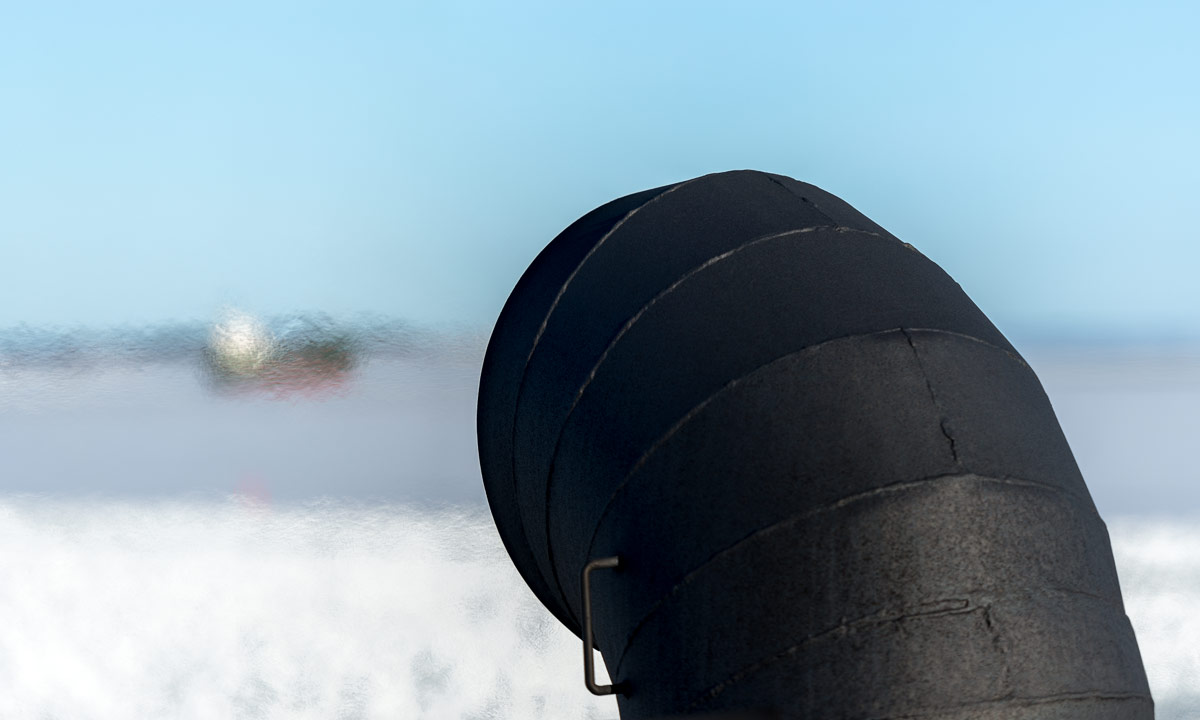
While my eyes followed the Ice Star I spotted something blue at the horizon. Water! Somewhere behind the island Gåsören the ice had started to break and now open water covered the Baltic Sea behind Gåsören. Maybe the next paddle tour is closer than I think.

The Baus already had started to turn around (the previous photo shows the funnel at the rear) and return to the dock. I enjoyed watching the different types of ice.


Until now, the trip was extremely calm, now it started to get more rumbling, because Baus now went through packed ice – crushed ice that had frozen together and now was split into large irregular chunks. Great channel-like cracks developed in the ice, which soon closed again.

After some more minutes the Baus arrived and after thanking the captain for the opportunity to follow I left the icebreaker. The whole trip took less than 90 minutes, but felt much longer. I’ve been living in Skelleftehamn for almost eight years and it was a great experience to see my place of residence from a completely new perspective.
Thanks a lot, crew of icebreaker Baus!
Seeing the blue open water was a welcome spring sign. I saw two others today:
The first butterfly of the season, a small tortoiseshell that fluttered around the top deck of the Baus and (perhaps less romantic) the first teenager in shorts in front of ICA, the grocery store. I’m still waiting however for the first wild spring flower in Skelleftehamn.
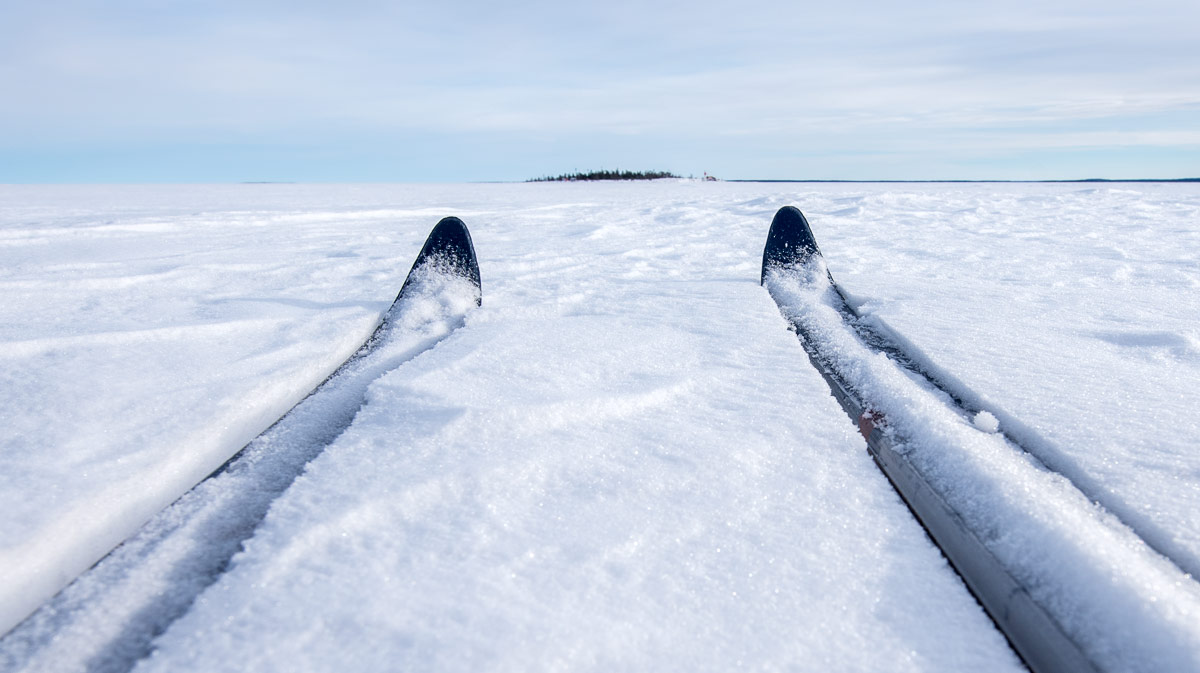
Today I took advantage of the marvellous weather and joined a ski tour over the frozen bay Kågefjärden to the island Bergskäret. Bergskäret is the island in the Kågefjärden that is nearest to the open sea. We were four: Hans and Stefan, with whom I have already made some trips, Kenneth and myself.
We took the car to Kågehamn where we started the tour. Round 5 kilometres over the snow covered frozen Baltic Sea and we arrived at the island. We were not the only ones. We looked for a good spot on the sunny south bank of the island where Hans made a fire with fire steel and we grilled the sausages that Kenneth had bought. I had a light down jacket with me but instead of putting that on I put off my soft shell because I felt so warm. Although it was hardly more than +2 °C the sun warmed us and the island protected us from the wind. After barbecuing, eating and resting a bit we went round the island and skied back to Kågehamn. Round 11 kilometres in the finest weather. A good way to spend the Sunday!
Tack för turen Hans, Stefan, and Kenneth.


On the way back we saw the first whooper swan of the season. Another spring sign.
While the snow and ice on the Baltic Sea are still beautiful the minor streets are in a very poor condition. The ice on the street is so deeply rutted that I’m quite glad about the high ground clearance of my Subaru. Anyway I learned that even a car with permanent all-wheel drive can spin out although driving slow.
Yesterday at 17:40 my tent was set up on a snowy plane near the sea ice where I planned to stay for the night.


The dinner was part luxury (a really cold coke), part pragmatism (some instant curry chicken of dubious consistency) and part necessity (chocolate!). After the dinner I walked along the shore, which was completely covered with ice and snow. First I walked on land, then on the sea ice. You may think, that a landscape that solely consists of snow and ice must be quite colourless, but no, when there’s light there are colours!


When I came back to my tent, it already had become dark and the almost full moon hovered over the tent. And that was my view from the tent, too: The moon, some stars, snow, ice and the icebound sea.


You might wonder, where I am. Good point, I’ll explain. Let’s go back half a day.
Yesterday I worked only half a day and was home early. I had a plan in my mind: as long as the sea ice is as thick as just now, why shouldn’t I ski over the Baltic Sea to the island Gåsören and spend the night there. I’ve done that in summer twice by kayak but never in wintertime. So I picked myself up, packed skis and pulka and took the car to the small harbour Tjuvkistan.
While the Baltic Sea was open one year ago it is still covered with thick ice this year. Instead of open water one can spot only a snow covered plane and some tracks – made by hare, a moose, another skier, but mostly by snowmobiles, the favourite winter vehicle of many locals. I however do not own such a snöskoter but prefer skiing anyway.
The linear distance between Tjuvkistan and Gåsören is only 2,3 km and so I arrived at the island soon. In summer it’s hard to find a tenting place (I know only one), since almost the whole island is covered with stones and rocks. This winter however Gåsören is covered with at least 50 cm of snow and so it was easy to find a good place to tent. Scroll up to the first photo and you see it.
OK, back to the story …
At nine a clock it was quite dark and a layer of clouds approached. Good arguments for cuddling up in my warm down sleeping bag and go to sleep. Good night, world.
At five a clock I woke up and felt fairly well rested. I got up for taking some photos. Although it’s already the end of March the nights can be quite chilly and I guess that we had temperatures round -10 °C. I put on more or less all clothes that I had with me and made some photos. The moon had wandered on its orbit to the west and hovered above Gåsören’s old lighthouse.

That photo looks like being shot at the dead of night, doesn’t it? So let’s turn around and look to the east:

It’s less than 8 minutes between the previous two images and it’s more the cardinal direction than the time difference that is responsible for the different light and colours. I walked around for two hours and was just happy to be there at that fantastic place that fantastic morning and to experience all these different kinds of ice and light.


I became hungry so I returned to the tent. or tried … . Just a photo of the lighthouses behind the ice. And another one of my camp site.


But now: finally breakfast. Water, crisp bread and cheese. That may not be the most exciting food, but I didn’t care, I enjoyed the incredible view over the icebound Baltic Sea in winter.
After breakfast I walked around another time and took some more photos.


Another break. This time just pure luxury. Since I wasn’t in a hurry the tent was still set up. So I could cuddle up in my cozy sleeping bag again and took a long daytime nap. The temperature was still below zero but the sun was high up in the sky and warmed the tent. And there was even chocolate left. Just “gemütlich”!
When I woke up an hour later a layer of stratus clouds had approached and the light had become dull. A good time to pack anything back into the pulka, to put on my skis again and to start the “long” way home. Good bye, Gåsören. Next time when I visit you it will probably be with the kayak. I love winter, but paddling in summertime is great, too.
When I had arrived at the car after Jonas’ and my previous ski tour, it was in Kvikkjokk, 400 km from home. This time the car was parked less than 3 km from my house. I’ve been living in Skelleftehamn for many years now but still I’m happy about the beautifulness of it.

This article is the first one of the new series #escapism. It’s about being outdoors and leaving civilisation behind in excursions that take less than 24 hours. Everyone should have time for such!
tent with snow pegs · inflatable camping mat · down sleeping back (a warm one!) · clothes for skiing · spare clothes · winter anorak · thermal pants · warm boots · woollen cap · 2 pairs of gloves · down west · skis with poles and boots · pulka with hip belt · water (both cool and hot) · food (a lot!) · knife · camping stove · matches · kitchen stuff · mobile phone · power bank · headlamp · sunglasses · thermometer (it broke) · compass · isdubbar (essential emergency equipment in case of breaking into the ice) · toilet paper · snow shovel · camera equipment · tripod · grand piano (just kidding)
This article is part of the series “2018-03: Varanger peninsula”.
Days 38 to 40 of my winter journey 2018
After our stopover in Kongsfjord we continued the road 890 in direction Berlevåg. The road follows the coastal line of first the fjord Kongsfjorden and then the open Barents Sea. Our destination for today is Kjølnes Fyr where we planned to stay over for one or two nights.


Kjølnes Fyr is located on a small headland called Kjølneset 5 km east from Berlevåg. We had booked a two-bed room at this place because it looked more interesting than the “large” city Berlevåg with its round thousand inhabitants. At half past one we arrived.

I directly fell in love with this place. The lighthouse – some other houses around – a rugged rocky coast, partly covered with snow, partly with seaweed – to the west bare mountains and to all other sides the open Barents Sea.
If you started a boat trip from Kjølnes Fyr heading north, the next land you would approach would be Kongsøya, part of Svalbard.
Viggo who operates the lodging gave us the key to the lighthouse and we took a closer look. The original lighthouse from 1916 was destroyed in World War II, the new lighthouse was built in 1949 and has a very functional and sober appearance. We went up and looked over the Barents Sea watching the high waves breaking at the rocky shore.


Viggo and his wife moved to Kjølnes Fyr in last autumn. He has rented the houses, that are protected as a historic monument. He told us from a winter storm that he experienced in January. Wind speed was up to 70 m/s (~250 km/h) and the upper floor of their house was shaken so violently, that the vibrations moved around the furnitures inside. Compared to that experience we had it quite calm.
The only thing we made over daytime was driving to Berlevåg to buy food. In Norway almost all shops are closed on Sundays and there were things we needed (spaghetti …) and things we wanted (chocolate …).
Later that evening we drove to Berlevåg again to see the Hurtigruten ships coming in.
Under the night the wind got a bit stronger and the waves approaching from the north had become higher. Annika and I took a really lazy day. I was outside several times, but only for taking photos of waves. They never broke at the same place twice and gave me a hard time making pictures.


Weather became worse the whole day: The wind increased more and more and it started to snow, which means that snow was thrown into my face vertically when I dared to look into the wind. When it started to get dark, the ice and snow covered rocks in the cold light of the blue hour made the landscape look as what is actually is: arctic.

Already in the afternoon the Norwegian Meteorologisk institute had issued a class one wind warning for the whole area. I started to get a bit nervous. The next day we wanted to continue to Båtsfjord, our last stay on our Varanger trip but I was not sure whether the weather would allow it. Anyway, all roads were still open.
It had snowed a lot in the night and still was snowing heavily. Due to the stormy wind parts of the ground were completely bare of snow while other parts were covered with knee deep snow. At the same time it was quite warm, hardly below zero. The weather warning was extended to the afternoon but wind should decrease a bit over the day, so we planned to start round 12 o’clock. I was out and took some more photos, but it was really rough weather, especially for the camera.


Right after breakfast Viggo got a call of another guest approaching from Berlevåg by car. She couldn’t find the departure to Kjølnes Fyr due to severe weather conditions and asked for help. He took the car and drove to the main road just to mark the departure visually. When she came in she looked quite exhausted from the short car trip. She advised us not to continue the trip that day and told us, that visibility was partly only 10 meters which would make it impossible to see the next way mark.
We waited some time but despite of the stormy wind the visibility looked really good. Therefore we decided to give it a try and drive at least to Kongsfjord, that we passed two days ago. Here we could either continue our trip or take a room and stay in Kongsfjord overnight.
So we packed the car, said goodbye, removed the snow from the car and started our car trip to Båtsfjord at 11 o’clock.