Dark, windy and wet

This article is part of the series “2020-10: New in Tromsø”.

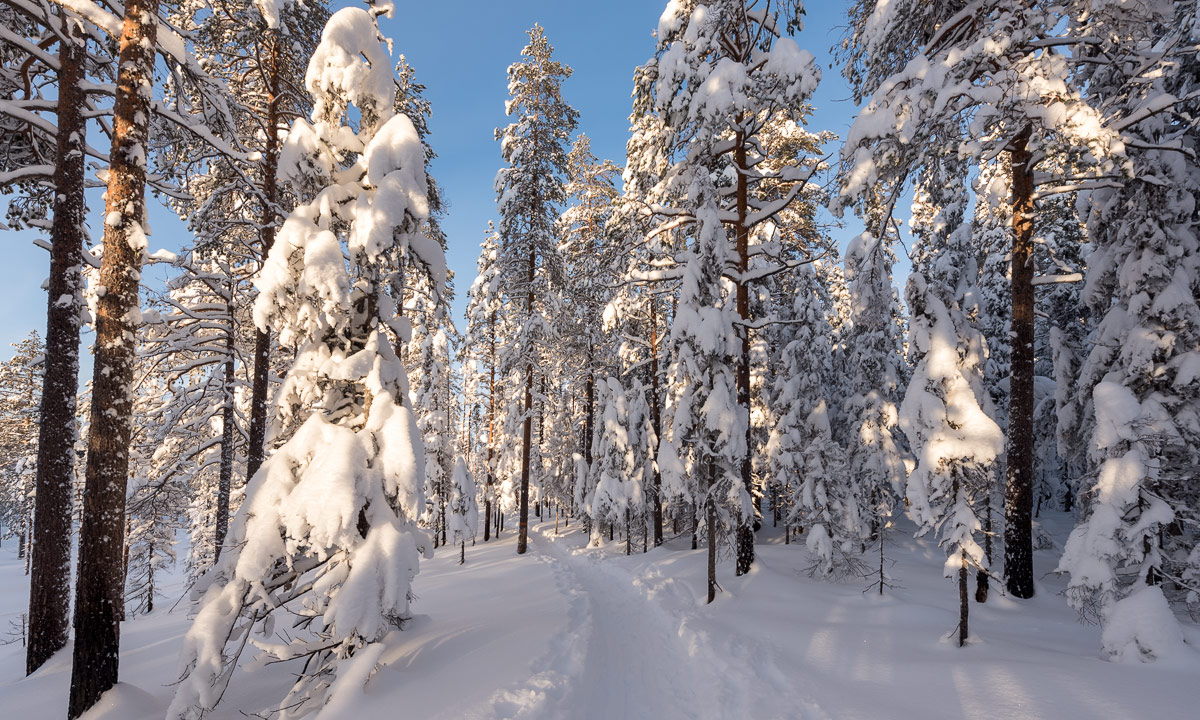
Perhaps you saw the photos that I took on my way to work five weeks ago. The sky was blue, it was quite warm and the sun was shining.

Today it was completely different. For the first it was dark. Dark on my way to work and dark again on my way back. Sunrise was at 8:33 and sunset already at 14:21.

Then it was quite windy and very rainy the whole day. Sometimes it just rained a bit, sometime it was bucketing down huge amounts.

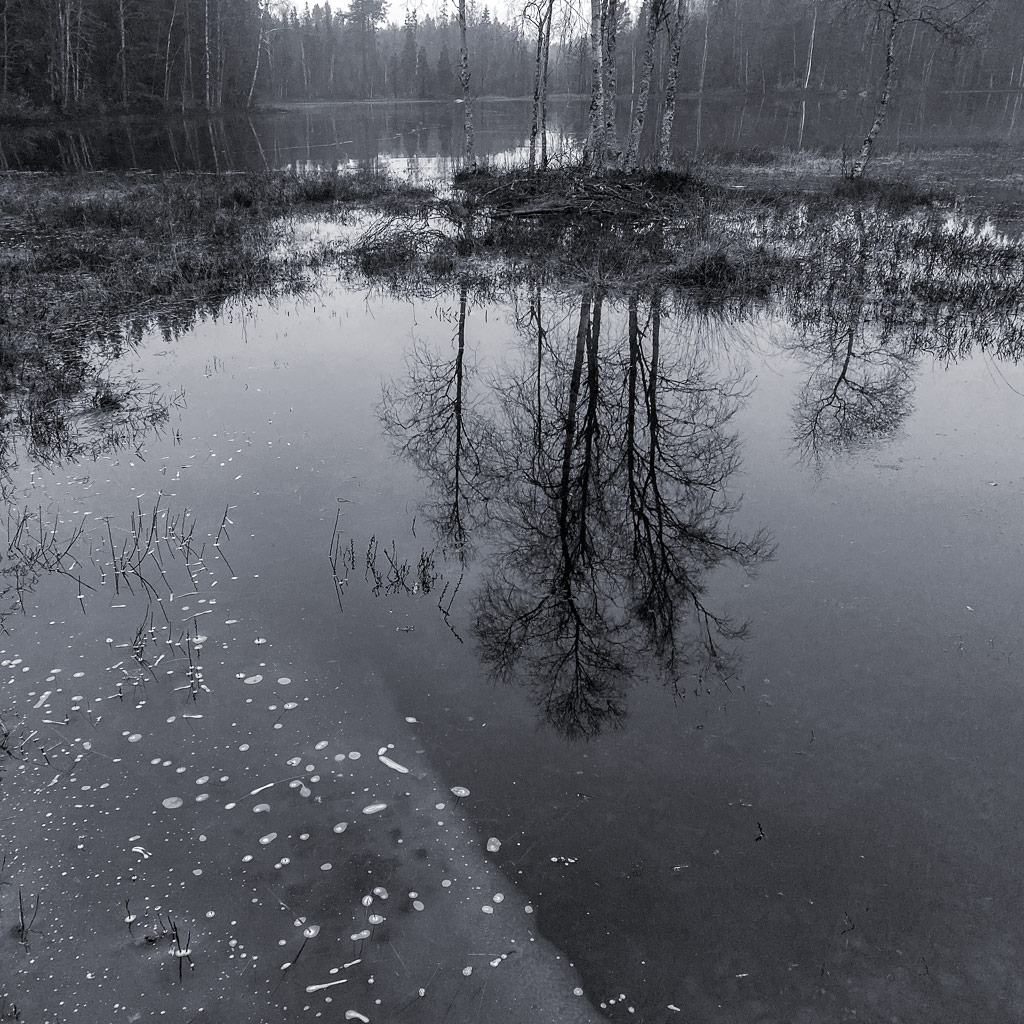
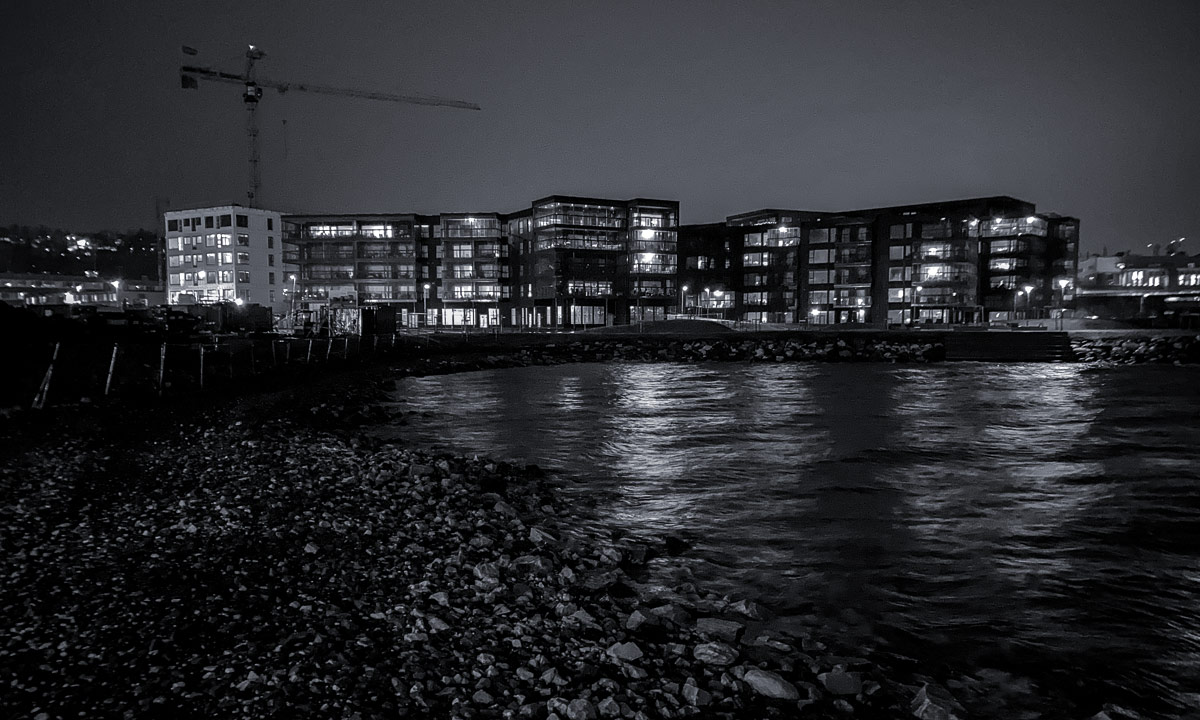
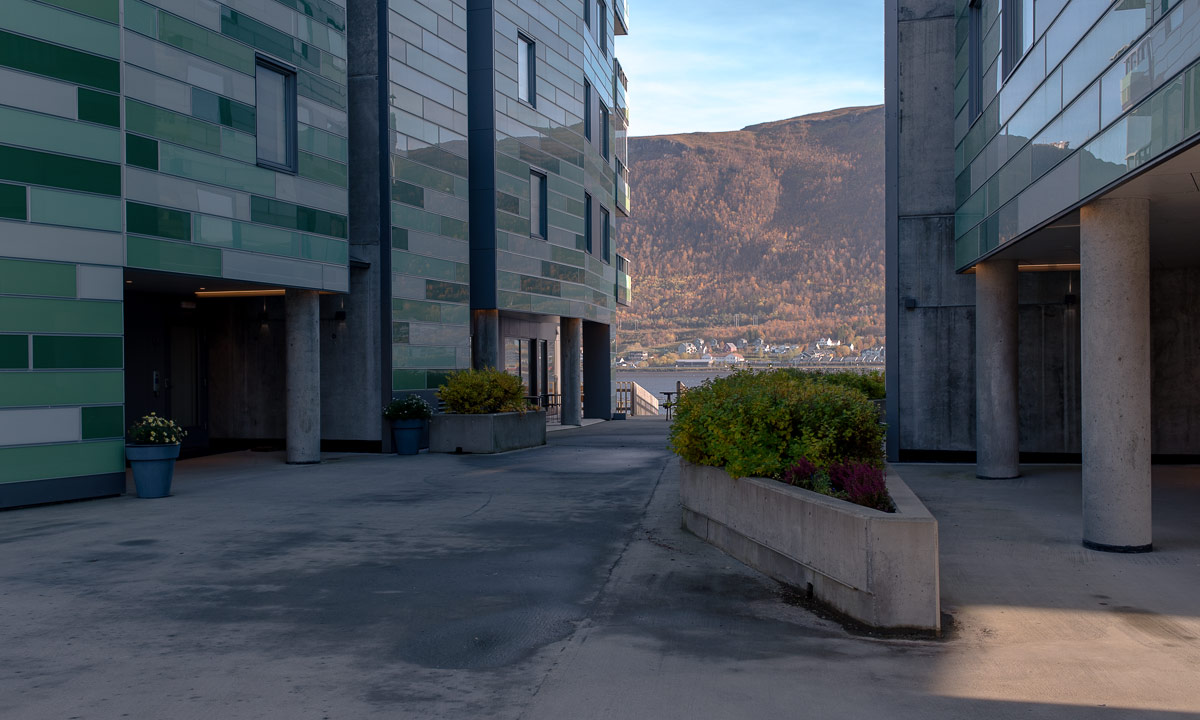
Here are some photos from my way to work. Taken with my iPhone and black-and-white again.

The way back was more exciting. When I went round the Framsenteret – the marina to my left – I first thought I was totally lost in the dark. I didn’t know that there was a huge artificial lake to the right. I never saw it before. Carefully I tested with my rubber boot, it was 25 cm deep. Then I realised that this was no lake but the parking place. It was completely flooded. Did it really rain so much? Apparently.

I continued stomping through huge water puddles. My outfit: rubber boots – rain pants — waterproof parka – reflective vest to be seen by others – headlamp (in one of the parka pockets)

Then I realised that even the sea water level was exceptionally high. Would I be able to go back the very same gravel path you can see on the second photo? That path lies quite low and in the morning I could see a chain of seaweed lying on the side facing land. When I arrived, the way was completely gone. I could only see the water of the sea up to the site fence.

To make a long story short: I continued the path. Mostly it was 30 cm of sea water covering the gravel. That still worked with my rubber boots, but it shouldn’t have been more. I was really glad to have a bright LED lamp. Probably I wouldn’t have dared without it. And not it beacme clear that there will come a day where this part of my favourite way to work will be impassable without offshore survival equipment.

Appendix one: and the sun?

Tromsø is located at the latitude of 69° 39′ N, almost 350 km north from the polar circle. That means, that the days not only get shorter and shorter but that there’ll be a time where the sun doesn’t rise and set at all. This time is quite near: In three weeks it will be the last time you’ll be able to see the sun and then again in January.

To illustrate this I made some charts. The y axis of each chart shows the dates from 1 January (top) to 31 December (bottom). Each row shows the solar altitude for that day by color.

From left to right: München, Germany – Obbola, Sweden (my home) – Tromsø, Norway (my current workplace)

Sun | Sun (golden hour) | civil twilight | nautical twilight | astronomical twilight | deep night

These are the main differences:

München has sun each day, but a real dark night, too.

In Obbola in Northern Sweden there’s always at least 4 hours of sun (if the clouds allow it) but it hardly gets dark in summer.

Tromsø has the most extreme changes of sun altitude during the year: Round seven weeks of polar night in winter and almost ten weeks of polar days with midnight sun between May and July.

So there’s much to experience here. The next experience will be the technique sea kayak course this weekend. Probably with a lot of rain at 3 °C and on Saturday even gusty winds round 14 m/s.


October snow in Tromsø

This article is part of the series “2020-10: New in Tromsø”.

Yesterday evening it started to snow and this morning it still has been snowing. 10 cm of snow cover the streets, cars, houses, trees – it’s the first noteworthy snowfall in Tromsø, since I’ve been here.

The beauty of the snow won’t last long because already on Saturday it will be warmer again and it will thaw away. But hey, it’s only late October. Winter hasn’t even started yet.

And now I’ll take a short breakfast and walk to work.

My way to work

This article is part of the series “2020-10: New in Tromsø”.

Today I got the test result: corona negative. So I was allowed to go to work at the Norwegian Polar Institute. It’s a bit more than 2 km to walk and I did walk.

Here are 16 photos, from the street where I live to the entrance of the Framsenteret.

As usual: A click will enlarge the photo, then you can navigate by clicking or using the left and right cursor arrows on your keyboard.

A walk in the bog Torsmyran

Annika googled it, then we visited it shortly last Saturday, yesterday I took the opportunity to visit this bog with more time: The Torsmyran Nature Reserve.

The parking place is right next to the E4, 45 km southwest from Umeå. You open a gate (and close it behind you to keep the moose away from the road). Then you walk to a small forest strip and follow a round 100 metres long wooden ramp leading into the bog. The platform at the end of the ramp is raised so you have a nice view over the 8.3 km² large bog.

That’s it.

As long as you don’t dare to enter the bog by foot. At first the bog looks flat, but if you take a closer look you see that there are slightly higher parts, mostly covered with heather. Even pine trees grow here and the ground is safe to walk. Beside of these parts there are large areas covered with peat moss, a sure sign that you will get wet walking onto. Even with rubber boots! And there are depressions. Some are covered with water, others with brown mud.

Is the mud deep? Well, have a look at the next photo:

You see the bit of a stick sticking in the mud? That’s my walking stick that I use when hiking through bogs. It’s two metres long. Without any effort I could stick it into the mud like that. Anyhow it was possible to avoid such treacherous places in this labyrinth of humps and pools, even though I came quite near to take same pictures.

After a while I come to a line of wooden planks. Old wooden planks. Old, half rotten planks with rusty nails looking out. I decide to follow the path. First it is quite easy, but then the planks go submarine. Since both my camera and I myself are packed waterproof I continue. Although the planks were slippery I succeed without taking a bath.

There is a signpost in the middle of the bog, leading to cities and places in the area. Who needs a signpost at such a remote place? Well, winter is coming and the bog will be frozen and covered with snow. Then the whole area is easily accessible by snowmobile. And that’s what the signpost is for: Helping the snowmobile drivers.

I leave the signpost behind and continue the path. Partly the planks lie directly on the mud. *Crack!*. One of the planks breaks under my right foot but still supports my weight. When I come to another watercourse to cross and see the the planks deeply sunken into the water I decide to turn back. This passage looks quite challenging and for a round trip I would have to cross the watercourse again at another place.

Slowly I walk back to the platform at the end of the ramp. I have to zigzag a lot to avoid open water or muddy patches but I arrive. I’m quite wet and muddy from taking some photos. I however already suspected that and have spare clothes in the car and a canister with water for cleaning. And something even more important: Chocolate and something to drink!

Disclaimer: It’s not the first time that I hiked on boggy ground. It needs some experience to avoid the soft patches and knowing how to free yourself when sinking in mud. That’s why I have a long and stable walking stick with me that could support my weight in case of sinking. Take care!


A skitour from cabin to cabin – part 1

This article is part of the series “2020-03: Ski tour Jämtland II”.

I already have made ski tours in Scandinavia. The first one was 2005 and others in 2006, 2007, 2009, 2013, 2016, 2018, 2019 and 2020. What I never did before was doing two ski tours in a row. This year is a premiere. Four days after the last tour day with Arne and Jonas I had the pleasure to do another tour with Annika.

As the tour before we planned to start in Vålådalen and even parts of the tour were equal, only we skied the other way around. If you ask me, travelling the same area twice doesn’t matter, because the weather you cope, the people you meet, the experiences you have, they are all different.

2 March – Vålådalen – Stensdalen Fjällstuga

Annika and I start our ski tour at 9:30. 5 cm of fresh snow cover all snowmobile tracks. Only some fresh ski tracks show us that we are not the first ones.

We ski through the forest. The weather is grey, it snows a bit, -9 °C. I think the forest looks boring in this dull light. Today I hardly take the cameras out of my backpack. Only a small pine tree gets my attention.

Will I take any photos on this second ski tour? Well – I don’t have to. We’ll see …

We arrive in Stensdalen Fjällstuga, the first cabin at 15:00. We can choose: the old or the new cabin? We are curious about the new cabin and get a six bed room. We are four people in the room which is equipped with three bunk beds. I sleep in the upper bed and can look through the tiny square window. Annika’s window is snowed in.

People who know me know that I prefer the mountains to the forest. Does the mountains like me, too? It seems so. On the plywood wall of one of the earth closets it is written: “Fjället älskar dig.” – “The mountains love you.”

The rest of the day? Sauna — dinner — early bedtime. Tomorrow we want to get up at 6:30. It’s only 14 km to Gåsen but it is 350 metres higher than Stensdalen and we are not sure how long it will take.

3 March – Stensdalen FjällstugaGåsen

6:00. The alarm clock hasn’t rung yet but we are already awake. We leave our sleeping room and enter the huge common room with kitchen, where I light the huge wood stove. Annika is boiling water for tea. We have a full breakfast with bread, cheese, and eggs – all leftovers from our breakfast at the hostel the day before.

We like the style of the new cabin. It may be less cozy than the old ones but the separation of the sleeping room is nice and there’s a lot of space so that even with a lot of people it is hardly crowded.

8:20. We just walked across the wooden bridge by the sauna and strap on our skis. 8 cm fresh snow have fallen. We ski through birch forests. Our skis sink 10-15 cm into the snow.

Suddenly Annika makes a sign to stop and to be quiet. It’s a bird – a woodpecker chopping on an old tree trunk. Carefully I get out my camera with the telephoto lens and slowly I ski towards the bird. It seems to ignore me. When I’m hardly three metres away I start to crouch. Frrrr … the woodpecker flies away. For the bird lovers (and Google): It’s a three toed woodpecker.

The snow is soft and we are slow. How long will it take us to Gåsen? I hope that the snow is less deep in the kalfjäll – the parts above the timberline. After 4, 5 km the forest opens and a large ascending mountain slope comes into view. We meet two skiers that come from Gåsen (they have been really fast). We thank each other for making a trace. A trace that we hardly need for now the snow is much harder. So it’s less exhausting to ski although we have to ski up. Less than two hours later we have approached Stähtja, an emergency hut that we use for a break.

When we continue the sun has started to peek through holes in the clouds. The lighting moods are great and sometimes hardly believable. Snow is purple in the shadow and yellow in the sun, sometime the scenery looks like big studio lights have been set up for filming. I think it’s nearly impossible to catch these sophisticated moods but of course I try anyway.

We ski about a large snowy saddle that looks infinite. A sign says “Gåsen 3km”. First we are completely alone but then another skier approaches. It’s stugvärd Ebbe, one of the cabin wardens whom I already met on the other ski tour. He welcomes us and continues skiing. We continue, too. On the highest point of the saddle Gåsen comes into view.

Just before we arrive Ebbe returns from his ski trip and welcomes us again, this time with hot berry juice – the traditional welcome on the STF mountain cabins. We are the only guests and in the same room as Arne, Jonas and me nine days before. The proof? The garlic that we had forgot is still there.

Later four French people arrive. They hardly speak to us. I guess they only feel comfortable speaking French, a language we cannot speak.

The wind increases. We do not care. We want to stay here at least one more night.

4–5 March – two days at Gåsen

It’s windy in the morning. Outside its -8 °C, inside our cabin temperature has dropped to 7 °C. I fire the “Upland” wood stove. It is very slow and it will take half the day until the cabin is warm again. The French group leaves. I do not envy them because the wind is increasing and it is snowing.

At 10:00 we leave our cabin and go to the stugvärdarnas cabin. Ebbe has invited us to fika – coffee – and Svitlana has baked a delicious chocolate cake. We sit there and talk for almost two hours until we hear the sound of an approaching snowmobile. It transports food and goods, both for Svitlana and Ebbe as well as for the Fältjägaren Fjällstuga, 30 km in the south.

We invite Svitlana and Ebbe for dinner. Annika had dried potatoes, onions and vegetables at home to spare weight. Now she is watering the dried food.

Later that day I have another appointment. Ebbe and I fetch water from the waterhole. Ebbe wanted to do that in the afternoon when the wind has calmed down, since it’s a bit to go to. You see the tiny square right from Ebbe’s head on the first photo? That’s the waterhole. It’s four metres deep, so you take a bucket to pull up the water, fill it into the plastic containers and then use the sledge to pull it back. One container for the warden’s, one for our cabin.

And the used water? There are own buckets for it and an own place where to pour out them. They are marked with the word slusk.

At 18:00 Svitlana and Ebbe arrive. Annika has used milk powder, egg powder and the watered potatoes and vegetables to make frittata. It’s enough to invite Magnus from Göteborg as well. He slept in the tent the nights before and now stays in the same cabin as us. Svitlana brings fresh bread and Annika’s frittatas taste great. We even have some Florentine biscuit as dessert. A luxury multi-course  dinner at Gåsen with great company. What a fantastic evening!

Annika and I decide to stay another day. Magnus is not sure yet.

We take it easy this morning. Magnus has decided to stay, too. So Magnus and I can help Ebbe with the gas cylinders. Full gas cylinders have to be connected to the warden’s cabin. The gas connection is at the back of the cabin and was completely snowed in, since here the snow reaches over the roof. Ebbe has already dug down to the door and Magnus and I use a rope to slowly lower the heavy gas cylinders down to Ebbe. These are jobs, where a stugvärd needs support of the guests and we are glad to help.

Not only the back of the stugvärd cabin is snowed in. The old cabin is also surrounded of snow and with a single step you could climb on the roof. Ebbe told us, that a snow groomer would come in two weeks to dig out the cabin.

This day more people arrive. First to constantly talking women, than a party of six. Magnus already fled the crowd by moving to the other room, Annika and I follow soon. There it is cold, but quite.

The weather has got better and tomorrow both Magnus and us want to start early. He will return to Storulvån, we want to continue to Vålåstugan.

Continue with part 2 >

Skiing and tenting in Jämtland – part 4

This article is part of the series “2020-02: Ski tour Jämtland I”.

Tuesday, 25 February – calming down

Midnight has passed. Arne, Jonas and I are sleeping in the tent, somewhere between the mountain cabins Gåsenstugan and Vålåstugan in the mountains of Jämtland. After ten tour days and nights with very stormy weather it finally seems to have calmed down.

Half past one – BANG! BANG!! Three people wake up, red lights from three headlamps appear. What was that? The tent was just hit by two storm squalls. A new storm again? An unpredicted one? We leave the tent and Arne and Jonas tighten the tent lines. Back in our sleeping bags we carefully listen a while, but it has calmed down again.

Interruption from the blog author: I apologise. Until now I used the word “storm” 38 times in this tour report. You may call it bad style but we had a lot of weather with high Beaufort levels. Until now. Spoiler: the rest of the tour was calm and I won’t mentioned the s-word in this article again. And now back to the 25 February!

When I wake up at 7 o’clock the sky is blue and the air is crisp and clear. -10 °C. Soon the sun rises and illuminates the snow covered mountain tops.

We have a lot of time. We have three more days to ski and it’s only 25 km to my car. So we take a detour. Although it’s -10 °C the sun is so warm that we take of our jackets.

We approach Vålåstugan where we have been a week ago. Now the main building is shovelled free and we can take a sun bath on the terrace.

After our break we continue north until the way forks. We decide to take the detour over Stensdalen but to continue tenting. And another tent night it is, between some trees and with the view over the beautiful fjäll. The sun goes down, followed by the new moon. And there are more lights to see: stars, planes, the planet Venus, satellites and in the distance the lights of Vålådalen – the gate to civilisation. -15 °C.

Wednesday, 26 February – into the forest

Another beautiful morning. Sun and blue sky. -16 °C. So calm that we can eat outside of the tent. And brush our teeth as well.

We take a break at the Stendalsstugan. We are welcomed with hot berry juice, the traditional welcome on the STF cabins. The old building burned down in 2010, so a new one was built and inaugurated 2014. It’s huge and very modern. It looks very practical but less cozy and we are not sure whether we like it or not.

We continue the way down to Vålådalen. Single birches become birch forests, spruce trees become spruce forests. Moorland appears and huge pine trees. With the snowy mountains in the back this land looks Canadian to me. (I’m an expert, I’ve never been to Canada.)

We find a nice place to camp with the hope for sun in the morning. The temperature has dropped to -21 °C, the coldest temperature yet. This will be our last tent night. Tomorrow it’s only 10 km to go the parking and then we have booked rooms in the near hostel Vålågården. I’m always sad to bid the fjäll farewell but I’m looking forward to a hot shower and fresh clothes. I guess I smell like a wet fox.

Two course dinner: the main dish is couscous and for dessert chocolate creme.

Thursday, 27 February – back to civilisation

Blue sky again. Our sleeping hang or lie outside for drying. Yes, it is possible to dry a sleeping bag in -16 °C. The ice round the opening sublimes.

The last day is a day of last time activities. Melting snow the last time. Dissolve milk powder the last time. Dismantling the tent the last time. Packing the pulkas a last time. And starting a day on skis the last time.

Relaxed we ski back. Today we meet more skiers than the 12 days before. Some start a longer tour, many are doing day trips. A fallen tree invites both for a rest and a tour photo of all us three (there aren’t so many).

And that’s the last of more than 120 tour photos I published in this four-part tour report.

Dear readers, thanks for reading. You are very welcome to comment the articles. (Or pay me a winter holiday in Canada)

Dear Arne and Jonas – tack för turen! Thanks for the tour. I’m looking forward to the next one!

P.S.: Here’s a link to a map with our overnight stays and some of the breaks: Google Maps – Skitour Jämtland 2020.


Skiing and tenting in Jämtland – part 3

This article is part of the series “2020-02: Ski tour Jämtland I”.

Saturday, 22 February – skiing to Gåsen

Day 8 of our ski tour. After we have found shelter from the storm in the emergency hut Hulke we where eager to continue out tour. Next stop Gåsen fjällstugan and finally a resting day is awaiting us.

As usual I am awake before 7 o’clock. Time to visit the utedass – the outdoor toilet – and take a snapshot in the blue hour with my iPhone SE. Technically the image is crappy but I love the almost pointillistic appearance of the photo. Since it looks rough it reflects reality much better than the technically superior photo, that I took with my Nikon D750 45 minutes later.

The first 4 km lead us 150 meters up. Easy, but a bit boring since the weather is grey and dull. When it’s cloudy like that, the contrasts are so poor, that you cannot see any structures in the snow.

That’s not a big deal as long we climb the mountain. Soon we can see the buildings of the Gåsenstugan although they are still nearly 5 km away. But between them and us there is the valley Holkendurrie. We have to ski down 150 meters again. Perhaps this wouldn’t be a big deal for me although I’m a real lousy downhill skier but just in this valley it starts to snow and it gets quite windy. Now there’s even less contrast and the snow looks like a white, untouched paper.

It takes some time for me to ski down. I know, that there are icy patches and snow drifts but I cannot distinguish between them. It’s all plain white. I fall the first time, when my right ski gets stuck in a small snow drift, while the pulka – still on fast, crusted snow – just pushes me down. Ouch, my left wrist didn’t like that. I fall once more, but after a while I managed to reach the valley, where Arne and Jonas have waited for me. Now it’s time to ascent again, this time round 200 metres. At 13:30 we arrive at the cabins.

Anders, another skier that we met at Helags recommended the old cabin which he considered very cozy. This cabin however is almost completely snowed in and it’s quite clear that it is not habitable right now.

Anyhow it’s the stugvärd we have to ask where to sleep. For today is the first day, where the mountain cabins are officially open. That means, that one or two stugvärdar are around. These voluntary working people tell guests like us where to sleep, accept payments, show where to fetch water or firewood, explain the kitchen (if necessary) and sell food and some other items in a small shop.

So we walk to the cabin with the sign “Stugvärd”. We have to climb down some large stairs cut into a huge snowdrift, then we enter a small anteroom and finally the shop where we are welcomed by the stugvärd. We are the first guests today. We directly pay for two days because we all want to have a day off – both for resting and avoiding new storm squalls that are forecasted for tomorrow. We are in the left part of the (only) other habitable cabin, another Abrahamssonstugan. I use the shop to buy ecologically chips and cola – pure luxury!

Jonas fetches firewood, Arne water from the well (and by chance catches a river trout with the bucket). We hang up our jackets, sleeping bags and other clothes to dry. The rest of the day we throw firewood into the wood stove, since this part of the cabin hasn’t been used since last year’s September and everything is cold, especially the walls and mattresses. It takes hours for the room to get a little warm. No other guests come this day, we stay alone, enjoying the cabin that provides everything you need.

Sunday, 23 February – a stormy resting day

Again I am the first to wake up. Again the night was stormy and it still is. Round 9 o’clock, Ebbe, the stugvärd drops in. He invites us to fika – the Swedish coffee break – for 15:00. If we shovel free his door.

First I take some photos through the window, then I go out into the storm. According to the forecast we have storm squalls up to 27 m/s this morning. Snow is blowing everywhere and my wide angle lens will have problems with moisture for days.

Then I go the the cabin of the stugvärdarna. The entrance door is snowed in over the door handle. How did Ebbe get out of the house? I shovel away the snow and then enter the cabin. Ebbe tells me, that he had to climb out of the window since he couldn’t open the door. It was the second time since they arrived five days ago. I’m glad to help.

It storms all day. When we go to the utedass (hardly 50 m away) we look like polar explorers. In the night we will be glad about the reflecting waymarks to find the way.

At 15:00 we leave our cabin and visit the stugvärdarna Ebbe and his wife Svitlana. It’s not only coffee we get, Svitlana has baken delicious brownies. Tasty! I feel honoured being invited by them and we have a great time together talking about hiking tours, places like the Sarek and safety in the mountains. After an hour or so we use the shop to buy additional food for the evening, then we leave.

Two other skiers have arrived. It’s hardly visible from the stugvärdarnas kitchen because the snow in front of the window is piled up so high. They join us in our room. It’s warm inside and the candles provide a cozy light. Outside it’s still storming. As the evening before I wear balaclava, ski goggles and headlamp when I go to the utedass.

It was a good day for resting! Thank you Svitlana and Ebbe for your hospitality. Hopefully we’ll meet again!

Monday, 24 February – finally tenting again

Again a stormy night, nothing to mention anymore after so much wind and storm. I remove about 80 cm fresh snow in front of the entrance door of the stugvärd cabin and trudge back through knee deep snow drifts. My pulka is visible from the side, the others almost completely buried in the snow.

If the weather forecast is right, wind shall finally decrease for some days. Hopefully that’s true so that we can sleep in the tent again. We leave Gåsen at 10 o’clock. First we have to ski through deep snow but then the snow is more compact and effortlessly we ski down to the emergency hut Härjångsdalen. After a short break we continue equally fast.

If we continue like this we’ll soon reach the cabin Vålåstugan. Since the wind really calmed down we slow down, too and start looking for a good place to camp. After several days in the kalfjäll above the timberline we spot the first birch trees. We stroll around a bit because it is still early. At 14:00 we have found a nice camp ground amidst some birches. As usual Arne and Jonas erect the tent while I take photos.

Later even the sun comes out. The first time while tenting.

Now it’s time to melt snow, to cook and to eat. Today’s dinner is spaghetti with pesto and chocolate as a dessert. Already at 19:00 we lie in our warm sleeping bags. The outside temperature -14 °C. I close my eyes and minutes later I fall asleep.

Continue with part 4 >

Skiing and tenting in Jämtland – part 2

This article is part of the series “2020-02: Ski tour Jämtland I”.

Wednesday, 19 February – tenting in the kalfjäll

The night in the mountain cabin Vålåstugan was stormy, but in the morning the wind has calmed down. We leave Vålåstugan behind and head southeast.

Our way leads to Helags, the highest mountain in Jämtland. The Helags Mountain Station is about 23 km away, but we don’t have to go the whole way today since want to camp. The way leads up and there are less and less birch trees. Soon we are above the timberline in the kalfjäll – the bare mountains.

We take a break at Ljungan, one of Jämtlands emergency huts. For once it is not windy but it’s cozy to sit inside anyway.

Now we are already halfway to Helags. We decide to continue since the weather is supposed to get worse tomorrow. It would be nice to have just a short distance to the mountain station tomorrow. Ljungan lies in the valley of the river of the same name. Now we have to ski up again. We continue skiing the whole afternoon. On the one side I consider it quite exhausting, on the other side it’s so beautiful watching the light changing in the setting sun. White – yellow – orange – “peach” – purple and finally white again, but a cold one.

It’s already dark when we have found our campground for tonight. It is hardly protected again wind and storm but according to the weather forecast this night is supposed to be relatively calm.

If people ask me why I love winter tenting although it can be uncomfortable and sometimes even troublesome, have a look at the next photo. Can you imagine standing there? With an itching nose in the cold but the down parka keeps you warm? Looking at the milky way and zillions of stars? Hearing nothing than the crunch of snow underfoot and your own breath? Feeling how you calm down and find a deep satisfaction inside? That’s why I love winter tenting!

Thursday, 20 February – visiting Helags Fjällstation

Two o’clock. Suddenly we are all awake. It has got stormy again and tent was shaken by some stormy gusts. Is another storm approaching? No, soon it calms down again.

The next morning it is cloudy but calm. Through some gaps we can see the colours of the sunrise.

Some of the daily morning routines: melting snow – dissolving milk powder for the muesli – having breakfast – packing our things – dismantling the tent – putting on skis and the harnesses for the pulkas. It always takes a while, but we are not in a hurry, Helags is less than 7 km away. We leave at 9:40, ski to the winter trail that we left yesterday evening and follow the waymarks.

The wooden red crosses are our friends! Sometimes it seems quite boring following these waymarks, especially if you can see dozens of them standing in a straight line. But there’s a reason, that the distance between the red crosses is quite small. The weather can by very rough in the mountains and the visibility very poor. And the weather in the mountains can change very fast.

And so it happens to us. Within short the wind increases more and more. First it’s easy to continue but soon we are skiing in full storm. You hardly see more than the next red cross while the storm tries to knock you over. I manage to take some last snapshots with my smartphone.

Then I have to stop taking pictures because it would be too dangerous. We could loose each other or I could loose a mitten and get frostbite. There is hardly anything to see anyway because the visibility is extremely poor. I can spot a Arne, who is in the lead, my skis and sometimes the next red cross, that’s all. It’s very demanding to ski in storm, both physically and mentally and I’m really glad when we finally arrive at Helags. How long it took? I don’t know. I loose any sense of time in this kind of weather.

There are people at the Helags Fjällstation. Some craftsmen fixing things and two women working for the STF preparing Helags for the opening in eight days. After a bit of confusion we are shown the way to the emergency shelter, where we push the pulkas and ourselves inside. Arrived and protected from the storm.

We are safe and sound but disappointed. The cabin has eight beds and even electricity but no possibility to cook. I talk to one of the STF people who reacts with a mixture of confusion and ignorance. The only answer I get: it’s pre season and everything is closed. I tell them, that the mountain cabins as Lunndörren and Vålåstugan do provide everything even off-season but I get the same answer again. Quite disappointing.

Two other skiers have arrived. They manage to persuade one of the women to open another cabin with a kitchen until tomorrow. But the chaos continues. First Arne is locked in while using the indoor toilet in the main building and all STF people have left by snowmobile. Then they arrive again and want to lock the cabin with the kitchen already now, while we’re using it.

I never felt more unwelcome in Sweden since I moved here ten years ago. Actually we wanted to take a day off at Helags but it’s clear that this is not the place to be. We will leave tomorrow morning.

Friday, 21 February – finding shelter in Hulke

The next morning the storm has calmed down a bit and it promises to be a sunny day.

The kitchen is still open. Jonas fetches snow to melt on the electric(!) stove.

The utedass, the outdoor toilet is more than 100 m away from our cabin and lacks waymarks. I wouldn’t have dared to use it in full storm. But now I do. Things to bring: A warm jacket and a head lamp.

Although the storm subsided, it is still windy and the blown snow glistens in the sun.

Our departure is delayed a bit: A mitten I accidentally have dropped is blown away 20 metres. Jonas can fetch it before it is blown away even further. I pull on the glove and we can start.

The Helags massif is incredible beautiful and only reluctantly I break up. I would have loved a resting day but as I mentioned above not here.

Easily we continue. We have the wind behind us. First we slide down, then we have to cross the saddle between the mountains Miesehketjahke and Soenehketjärra.

From there we can spot the emergency hut Hulke. We only have to slide down the mountain saddle and we are there. Quickly we decide to stay here for the night because again hard winds are excepted for the night.

Most emergency huts have signs that restrict overnight stays to emergency situations. Not Hulke, so we feel safe to use it. Of course the firewood stays untouched. It is provided to save lives, not to increase comfort. We use our camping stove to cook and our warm clothes and sleeping bags to stay warm.

It doesn’t take long and it’s stormy again. I have to go to the utedass. After I have finished I open the door of the utedass from the inside. It is blown open so violently that the handle pulls me out of the building before I realise what happened. Jonas happens the same with the hut. From now on we open the doors only a bit and squeeze ourselves through the gap. And I wear ski goggles outside. My Nikon cameras dislike this weather and I only make some snapshots with my smartphone.

We sit on our inflated camping mats on top of the wooden benches. Mukluk boots warm our feet, warm jackets our body. After dinner we lie down. Jonas and I on a bench, Arne on the floor between us. Storm squalls howl in the stovepipe and make the hut vibrate. Will the stormy weather stop one day or will it continue forever?

Continue with part 3 >