Skiing and tenting in Jämtland – part 2

This article is part of the series “2020-02: Ski tour Jämtland I”.

Wednesday, 19 February – tenting in the kalfjäll

The night in the mountain cabin Vålåstugan was stormy, but in the morning the wind has calmed down. We leave Vålåstugan behind and head southeast.

Our way leads to Helags, the highest mountain in Jämtland. The Helags Mountain Station is about 23 km away, but we don’t have to go the whole way today since want to camp. The way leads up and there are less and less birch trees. Soon we are above the timberline in the kalfjäll – the bare mountains.

We take a break at Ljungan, one of Jämtlands emergency huts. For once it is not windy but it’s cozy to sit inside anyway.

Now we are already halfway to Helags. We decide to continue since the weather is supposed to get worse tomorrow. It would be nice to have just a short distance to the mountain station tomorrow. Ljungan lies in the valley of the river of the same name. Now we have to ski up again. We continue skiing the whole afternoon. On the one side I consider it quite exhausting, on the other side it’s so beautiful watching the light changing in the setting sun. White – yellow – orange – “peach” – purple and finally white again, but a cold one.

It’s already dark when we have found our campground for tonight. It is hardly protected again wind and storm but according to the weather forecast this night is supposed to be relatively calm.

If people ask me why I love winter tenting although it can be uncomfortable and sometimes even troublesome, have a look at the next photo. Can you imagine standing there? With an itching nose in the cold but the down parka keeps you warm? Looking at the milky way and zillions of stars? Hearing nothing than the crunch of snow underfoot and your own breath? Feeling how you calm down and find a deep satisfaction inside? That’s why I love winter tenting!

Thursday, 20 February – visiting Helags Fjällstation

Two o’clock. Suddenly we are all awake. It has got stormy again and tent was shaken by some stormy gusts. Is another storm approaching? No, soon it calms down again.

The next morning it is cloudy but calm. Through some gaps we can see the colours of the sunrise.

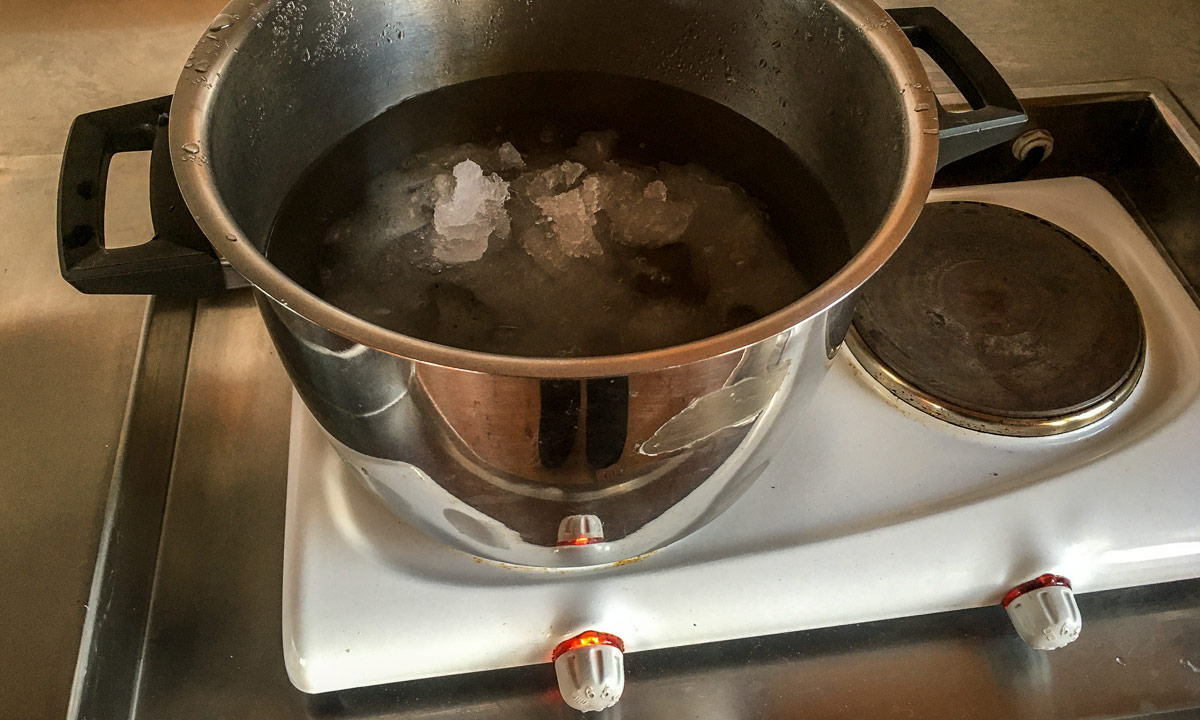
Some of the daily morning routines: melting snow – dissolving milk powder for the muesli – having breakfast – packing our things – dismantling the tent – putting on skis and the harnesses for the pulkas. It always takes a while, but we are not in a hurry, Helags is less than 7 km away. We leave at 9:40, ski to the winter trail that we left yesterday evening and follow the waymarks.

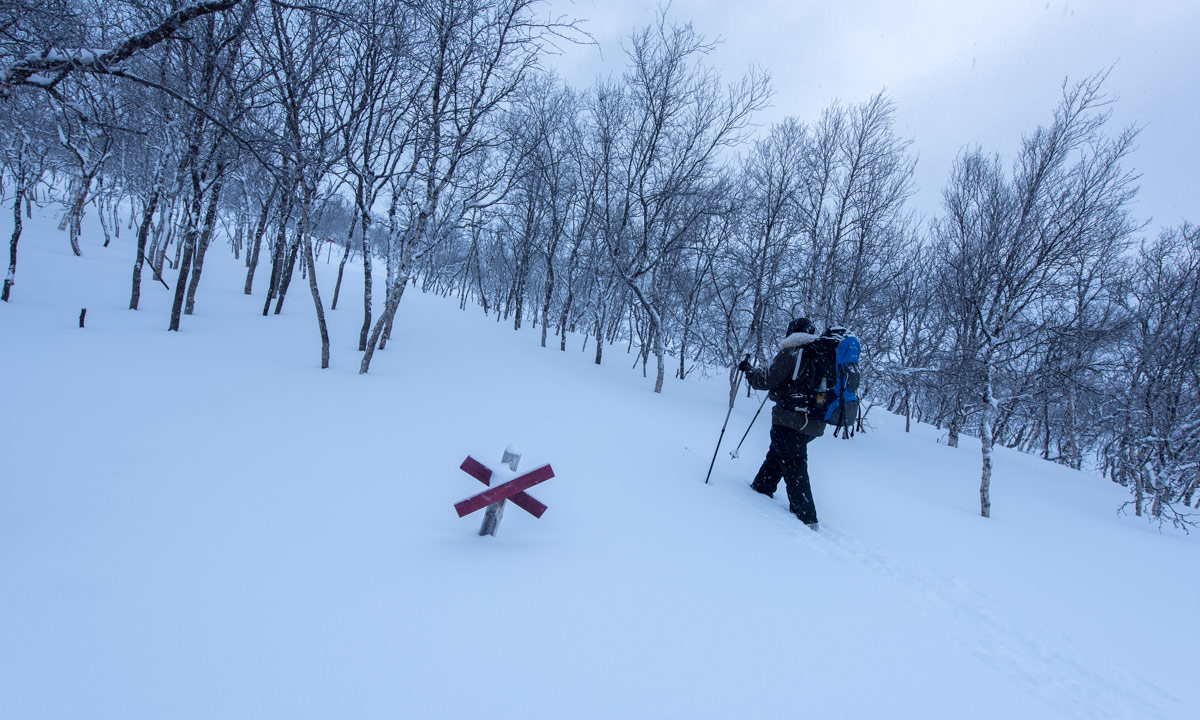
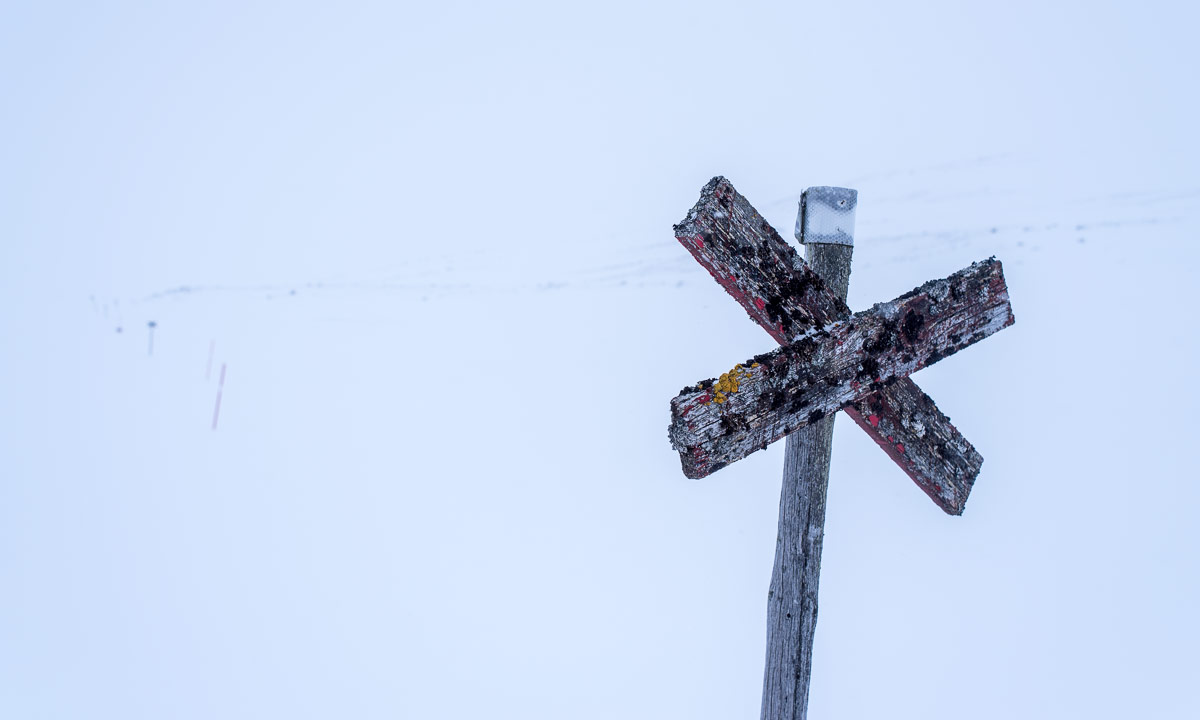
The wooden red crosses are our friends! Sometimes it seems quite boring following these waymarks, especially if you can see dozens of them standing in a straight line. But there’s a reason, that the distance between the red crosses is quite small. The weather can by very rough in the mountains and the visibility very poor. And the weather in the mountains can change very fast.

And so it happens to us. Within short the wind increases more and more. First it’s easy to continue but soon we are skiing in full storm. You hardly see more than the next red cross while the storm tries to knock you over. I manage to take some last snapshots with my smartphone.

Then I have to stop taking pictures because it would be too dangerous. We could loose each other or I could loose a mitten and get frostbite. There is hardly anything to see anyway because the visibility is extremely poor. I can spot a Arne, who is in the lead, my skis and sometimes the next red cross, that’s all. It’s very demanding to ski in storm, both physically and mentally and I’m really glad when we finally arrive at Helags. How long it took? I don’t know. I loose any sense of time in this kind of weather.

There are people at the Helags Fjällstation. Some craftsmen fixing things and two women working for the STF preparing Helags for the opening in eight days. After a bit of confusion we are shown the way to the emergency shelter, where we push the pulkas and ourselves inside. Arrived and protected from the storm.

We are safe and sound but disappointed. The cabin has eight beds and even electricity but no possibility to cook. I talk to one of the STF people who reacts with a mixture of confusion and ignorance. The only answer I get: it’s pre season and everything is closed. I tell them, that the mountain cabins as Lunndörren and Vålåstugan do provide everything even off-season but I get the same answer again. Quite disappointing.

Two other skiers have arrived. They manage to persuade one of the women to open another cabin with a kitchen until tomorrow. But the chaos continues. First Arne is locked in while using the indoor toilet in the main building and all STF people have left by snowmobile. Then they arrive again and want to lock the cabin with the kitchen already now, while we’re using it.

I never felt more unwelcome in Sweden since I moved here ten years ago. Actually we wanted to take a day off at Helags but it’s clear that this is not the place to be. We will leave tomorrow morning.

Friday, 21 February – finding shelter in Hulke

The next morning the storm has calmed down a bit and it promises to be a sunny day.

The kitchen is still open. Jonas fetches snow to melt on the electric(!) stove.

The utedass, the outdoor toilet is more than 100 m away from our cabin and lacks waymarks. I wouldn’t have dared to use it in full storm. But now I do. Things to bring: A warm jacket and a head lamp.

Although the storm subsided, it is still windy and the blown snow glistens in the sun.

Our departure is delayed a bit: A mitten I accidentally have dropped is blown away 20 metres. Jonas can fetch it before it is blown away even further. I pull on the glove and we can start.

The Helags massif is incredible beautiful and only reluctantly I break up. I would have loved a resting day but as I mentioned above not here.

Easily we continue. We have the wind behind us. First we slide down, then we have to cross the saddle between the mountains Miesehketjahke and Soenehketjärra.

From there we can spot the emergency hut Hulke. We only have to slide down the mountain saddle and we are there. Quickly we decide to stay here for the night because again hard winds are excepted for the night.

Most emergency huts have signs that restrict overnight stays to emergency situations. Not Hulke, so we feel safe to use it. Of course the firewood stays untouched. It is provided to save lives, not to increase comfort. We use our camping stove to cook and our warm clothes and sleeping bags to stay warm.

It doesn’t take long and it’s stormy again. I have to go to the utedass. After I have finished I open the door of the utedass from the inside. It is blown open so violently that the handle pulls me out of the building before I realise what happened. Jonas happens the same with the hut. From now on we open the doors only a bit and squeeze ourselves through the gap. And I wear ski goggles outside. My Nikon cameras dislike this weather and I only make some snapshots with my smartphone.

We sit on our inflated camping mats on top of the wooden benches. Mukluk boots warm our feet, warm jackets our body. After dinner we lie down. Jonas and I on a bench, Arne on the floor between us. Storm squalls howl in the stovepipe and make the hut vibrate. Will the stormy weather stop one day or will it continue forever?

Continue with part 3 >


Skiing and tenting in Jämtland – part 1

This article is part of the series “2020-02: Ski tour Jämtland I”.

This year I’m lucky. I did two ski tours in a row, that’s spending more than three weeks in the beautiful mountains of Jämtland. Let’s start with the ski tour number one.

We are three people: Jonas, with whom I already did three ski tours before, Arne, who is doing his first ski tour and me.

Saturday, 15 February – shelter from the storm

Jonas and Arne live in Northern Germany. They arrive in Östersund by train at 6:37 in the morning. 23 minutes later we enter the large shop ICA Maxi to buy food for eleven days. It takes an hour to decide what to choose and find these items in the large shop. After we have managed to stuff the shopping bags into the packed car we drive to Vålådalen. There’s a parking place that we use as the starting point for our tour in the fjäll. It takes some time until we have packed our pulka sleds with all our stuff and they are quite heavy loaded.

At 13:15 we leave the parking behind and start our ski tour. It starts with a challenge. Although we have a tent we need to reach Lunndörren, the first mountain cabin tonight. Just now the weather is calm but according to the Swedish weather service a storm will approach tonight with gusts of wind up to 30 m/s. That’s more than 100 km/h or wind force 11 (violent storm)! Definitely not the night to spend in a tent, if you have the choice. Although it’s only 14 km to the cabin, it takes us more than 5 hours. There’s the heavy pulka sleds, some short but steep slopes to climb, pinching boots and much more that slows us down. Exhausting or not – it’s great to be outside in the winter again.

Sun down is round 17:00. For the last part we use our head lamps. In darkness we arrive at Lunndörren at 18:30. As usual, one cabin is opened for out-of-season hikers as us. Here you have all you need. There’s a table and stools, bunk beds and most important: a wood stove. Firewood is found in the vedbod, the woodshed. The water? Probably there’s a place to get water from the lake. We however go outside with a bucket and fetch snow to melt on the wood stove.

The sky is still clear and the night is starry but it already has started to blow more and more.

Sunday, 16 February – camping by the river

It’s 5:30 in the morning. Storm gusts howl around the house. Violently they blow snow from here to there and I have to pee. Not my favourite combination. I manage to open the door but have to crawl over the icy patch to prevent being blown away. Every mountain hut has it’s outhouse but I prefer the nearest tree. That spares me 20 meters to brace myself against the storm. I have to hold tight on the tree to avoid being blown over. Back in the cabin I can hear the storm but a mountain cabin is a great shelter and soon I fall asleep again.

Fortunately the storm has weakened, when we get up.

Today we don’t want to go far and look for a nice place to tent. So we take it really easy in the morning and it’s already 11:45 when we start our second tour day. Slowly we gain height and there are less and less trees.

Hardly three hours later we have found a nice tenting place. It’s in the forest to be protected against storm and wind and by the small river Lunndörrsån. Jonas tests crossing the river to fetch water – it works. Fresh water is a luxury in winter. It takes less energy to warm up than snow and it tastes much better!

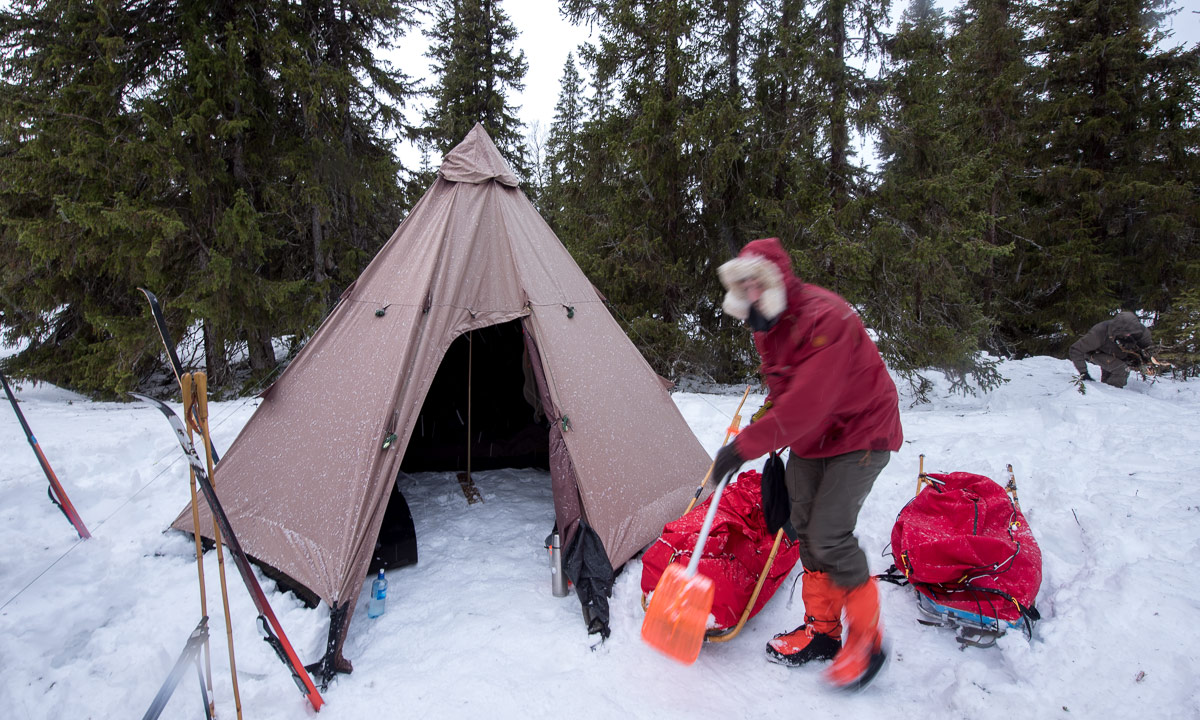
You see the orange shovel? We have two snow shovels with us and we use them both to dig a large hole for a camp fire. The dead wood that we find is soaking wet and it takes Arne some time until it burns.

Where there is a fire there is no boredom.

Later Jonas, how is the tour cook is preparing food. Today it’s köttbullar with mashed potatoes and chanterelle sauce. Tasty! Already a quarter to eight we lie in our warm sleeping bags and soon we fall asleep.

Monday, 17 February – warm weather in the forest

Of course I did not sleep well. I always need two or three days until I got used to sleeping in a sleeping bag in winter time. One of the reasons is the reduced freedom of movement, one other the VBL.

A vapour barrier liner (VBL) is used to prevent moisture getting into the down filling of the sleeping bag. There the moisture would freeze and so reduce the isolating effect of the down feathers. So far so good. In practise it has the same comfort as sleeping in a huge plastic trash bag and although there are good reasons to use a VBL I dislike them.

But I shouldn’t complain. I had it warm and I got enough sleep. Some storm gusts have shaken the tent but all in all it was a quite night. And so is the morning by the river. Even the sun tries to peek through the clouds.

At 10:40 we move on. First we have to cross a small plateau called Finnångelflätet. It is quite exposed to the wind and hardly covered by snow.

One hour later the view is completely different. The ground is white again. The wind has intensified and gets stormy. At the same time it’s warm – slightly above zero – which makes the snow very sticky. Sometimes it feels like half the hill sticks under my skis.

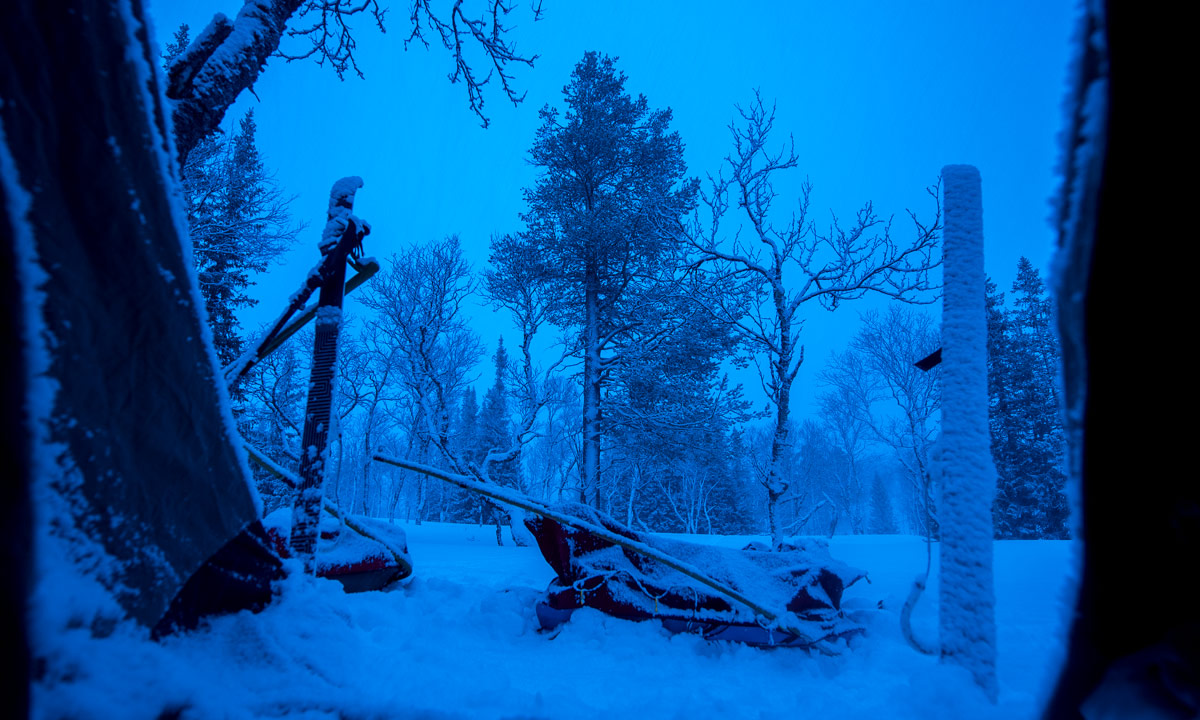
The good thing with tenting is that you are flexible. We do not have to get to a cabin or hut, we just need a sufficient campsite. Right after crossing the river Tronnan (we ignore the bridge and cross the ice) Arne and Jonas start looking for a good place to camp. And find it. The snow is loose and we trample on the snow to harden it. At some places we sink knee deep in the snow. It has started snowing and when we look out of the tent we see the snow covering the skis used as huge tent pegs and the pulkas.

Tuesday, 18 February – arrival at the Vålåstugan

Phew – my sleeping has been much too warm. It is made for -25 °C, not for 0 °C. My wool underwear is wet but still does it’s job anyway: keeping me warm.

As the day before we move on at 10:40. The tent has become quite heavy due to the wet snow and the warm temperatures. Now it’s both wet and frozen. We have decided to reach the mountain cabin Vålåstugan today. I find it exhausting to ski. I have to take tiny breaks to catch my breath on every slope. Perhaps it’s because it’s the third tour day but I may be wrong.

Luckily Vålåstugan is not far away and we arrive already at 13:30. There are several buildings. The main cabin, surrounded by huge snow drifts won’t be opened before 21 February but the other cabin is open. Again we are alone, we haven’t seen a single person the last days.

This cabin is of a well known type. It’s a Fjällstuga 65, also known as Abrahamssonstugan. A corridor, one room to the left, one to the right with ten beds each. It works quite well with up to eight people, then it starts to get a bit crowed. We use the whole space to dry our sleeping bags, jackets, boots, gloves and other clothes. As I mentioned we are alone.

Wrrrr—wroooom—wrooooom! Not anymore. Snowmobiles are approaching with people dressed in bright colours. They park in front of our house. Who are they? It’s an official party of the mountain rescue (probably training), the police (checking the emergency phones), way markers and later two snowmobiles with people from the Swedish Tourist Association STF. They pull trailers in which people sit. It turns out that they are the wardens of Vålåstugan and Gåsen Fjällstuga, that will open these cabins in three days. The wardens of Vålåstugan directly start to dig out the main house (that will take some time), the others leave a bit later.

I haven’t had internet access for two days. So I’m glad to ask the police for a weather update: wind this night, sunny round -10 °C the next day, then wind in the night again. Looks like this tour is a stormy one.

It’s cloudy but the sun manages to peek though from time to time. The birch branches are bent by the wind.

And later that evening we even get a bit of polar lights. The only ones I’ll see the next weeks.

Continue with part 2 >

On the road IV and V

Back to Sweden · Sneringsvika—Rötviken – 315 km

Have I told you, that the weather in Norway is constantly changing? So it was as well when I continued my road trip the day before yesterday.

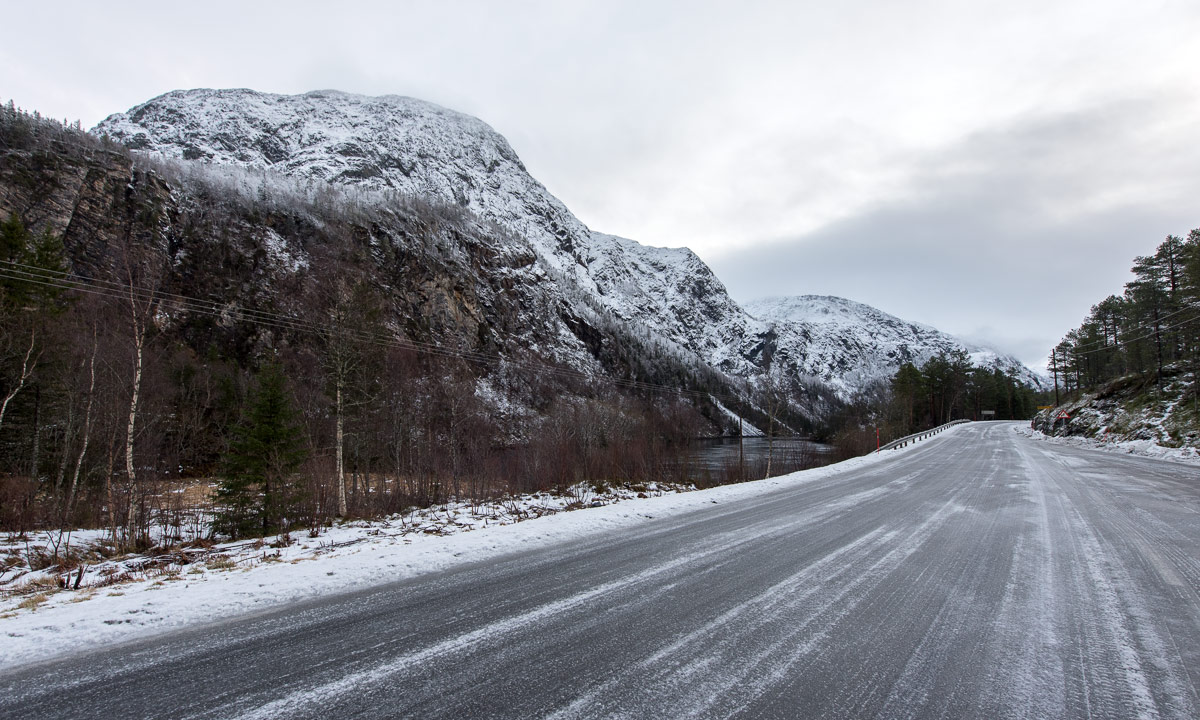
It wasn’t cold, but most of the precitipation came as snow and even by the sea everything was white.

In Hofles I waited for the ferry to Lund which takes 25 minutes. I love standing onboard and watch the snow covered hills and mountains pass.

On the other side there was first less snow, …

… but as soon as the road climbed up a bit everything was white again. Here are two photos from a barbecue hut by the road 74 to Sweden. The first one from now, the other made in August 2016.

This time I have booked a cabin in advance. It is in Rötviken, 20 km behind the Norwegian-Swedish border. Although the campsite is by the road it is really quiet. Hardly any car uses this road.

I was tired from all the driving of the last days and fell fast asleep. The next day I would take it easy.

Arrival · Rötviken—Orrviken – 139 km

What a beautiful morning! The sun came out the first time since I left Solberget four days ago. Two dogs were barking. Did they bark at me? Now, it was the two moose that were about to cross the road but then turned too the the lake Hotagen.

This day I didn’t have to go far, just 140 km along broad roads through the Swedish forest. Easy to drive but a bit boring to look at.

I made a short stopover in Östersund, the largest town in the county Jämtland.

Then I continued to Orrviken.

Today I will spend my day here and repack my things for a ski tour that I will start with two friends tomorrow. Then I’ll be offline for about two weeks.

Vi hörs – see ya.

ICROSS

I walk along a forest path. The snow has become too deep for the car. In the right hand I carry a large waterproof bag, in the left hand my bright red neoprene drysuit. On the back I have an ICROSS.

A what?

Let’s quote the ICROSS websiteWhat is ICROSS? – ICROSS® is a new type of watercraft. It resembles a float tube, but has many characteristics of a kayak.

My friend Hans Brettschneider bought two ICROSS for his camping ground In Bureå and invited my to test them today. We want to paddle over the Baltic Sea to the near island Björkön. According to Hans the Baltic Sea is still open.

When I arrive in Bureå Hans already had started inflating the ICROSS with a motor-driven air pump. We put the rafts into his car and drive to a place near the beach where we manually inflate them until they are filled to the brim.

(You see the rectangular patch free of snow on the ICROSS? That’s where Hans’ iPad was before I took it away for the photo. Hans uses it as a camera and takes it into the snow, the hot sauna, just everywhere)

On the back of the ICROSS there are D-rings where you can attach belts to carry the ICROSS as a backpack. That’s what I do in the first photo. We start carrying the ICROSS until one of the plastic hooks of the belt breaks. We then realise that it is much easier to drag the raft behind like a sledge. It’s winter!

After 800 metres walk through the forest I arrive at the coast. I must laugh. The Baltic Sea is far beyond from being open. It is covered with ice and snow to the horizon! Is it just slush or solid ice? I put on my drysuit and life jacket and enter the sea ice. I splash through sludge but underneath there is ice thick enough to carry my weight.

Time to change plans.

Instead of paddling (or walking) to Björkön we take fika here at the coast. There’s even a table with benches. Hans has coffee and sandwiches while I have tea and a pretzel. It snows.

Hans however has a plan B in mind. Right beside his fantastic camping ground, just behind the sauna there’s the river Bureälven. And this stream is still open. After fika we walk to the car and take it to his camping ground. There we trudge through the snow to the sauna by the river.

Again we put on waterproof clothes and put the ICROSSes into water. We have to rearrange the belts that hold the seat to improve the balance, then it’s fun to paddle to and fro. While my touring kayak is long and keeps direction, the ICROSS is easy to turn and very agile. Anyway I wouldn’t use it for longer paddle trips. Too exhausting.

(Do you see what Hans has in his hands on the last photo? I told you that he takes his iPad everywhere.)

After a while of testing and taking pictures we go ashore. Did I mention the sauna? Hans had fired it before our winter paddling experiment. It is not hot, only 30 °C, but it’s nice to sit there and relax a bit. I go into the river again, this time for winter bathing. Then a bit of sauna again until we call it a day.

Tack for turen, Hans – thank you for the tour. And thanks for your photos, which I cropped and edited for this blog article.

30 cm snow

This week finally it snows. There is 30 cm of snow in my backyard and if the forecasts are right, it’ll be 45–50 cm at the end of the week. At last it looks wintry, even though the open Baltic Sea is still free of ice.

After taking the photo above I took the car to Tjuvkiskan, another place by the sea. The gravel road was covered with snowdrifts that became higher when I approached the sea. I could easily drive through the first ones but finally I was stuck in a half-metre-high and several metre long snowdrift. My Subaru was grounded and even with the “X-Mode” program I could neither continue nor put back the car. Fortunately it took only some minutes to shovel away the snow round the tires and then I was able to back the car out of the snow drift. The last metres to Tjuvkistan I walked …

When I looked at the photo above I realised how big the tyres are. It’s really half a metre of snow around my car.

Enough about cars – I wanted to enjoy winter and be outdoors.

There’s a very nice cross-country ski run in Skelleftehamn. It hadn’t been prepared this year due to the warm and rainy weather. Now snow had come and the snow on the track will be compacted but not yet prepared for cross-country as long it continues snowing.

Yesterday I took my fjällski – my “mountain skis” and made a tour through 10-15 cm deep snow. I was really slow and it was quite exhausting.

Today I took my fjällski again and now the snow was packed. I was faster and although the tour was longer it was less exhausting. And the descents were more fun. The last kilometre the wind increased and it started snowing again.

Temperature -6 °C. Wind. Snow. Fur hood. Woollen mittens. Ski boots. Almost like winter.


Finally it’s snowing again

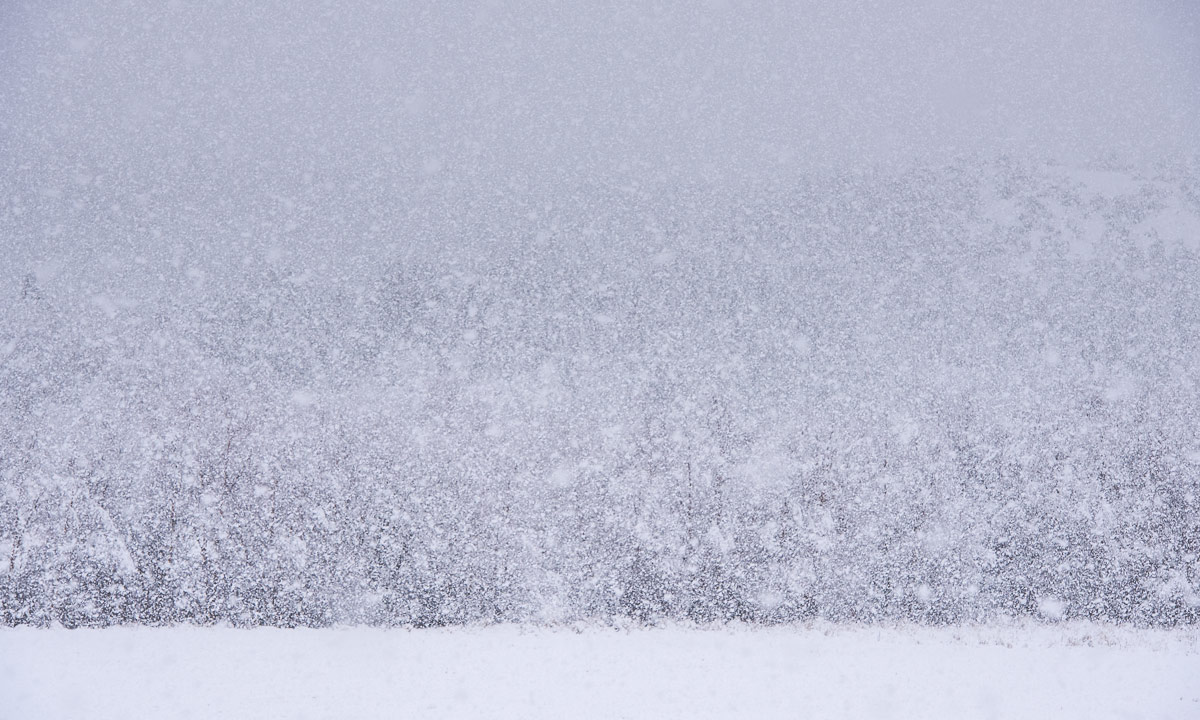
After two weeks with warmer temperatures, rain and a lot of fog it has become colder again and last night it started to snow. 15 cm fresh snow has already fallen.

Thursday, 16:55: -7.6 °C and it’s still snowing. Looks like I need gloves and a cap for jogging. And of course a headlamp, because sunset was already three hours ago.

Addendum

One hour later. 40 minutes of (slow) jogging through the wintry landscapein the dark. Exhausting, but beautiful!

My car tracks from this morning are mostly snowed over. The latest tracks are not from a car, but a snowmobile. Now I hope, that the great people of the Friluftsfrämjandet Skelleftehamn soon prepare the illuminated ski track. I’m longing for some afterwork cross-country skiing.

Welcome, winter 2019!

Today was the first “real” winter day. Some more snow fell last night and today it was subzero the whole day with temperatures round -5 °C and a lot of sun.

Now I’m longing for the start of the ski season.

The second image with the blue sky and the snow covered trees is a bit special: it’s made through the window of my current office. What you cannot see: behind the trees is the European Route E4. But anyway,  there are worse views.

Three autumn colours of the ground

This morning on the way to work – wet snow covers the minor roads and bicycle paths.

This afternoon on my way home I made a stopover – bright and colourful the forest, bleak and dull the bog.

What are your autumn colours?

Cycling home

At time I have a project which is located at Solbacken, Skellefteå’s shopping centre outside the city. Normally I take the car because the public transport is quite poor. Yesterday however I took the bicycle. On the way there I chose the straight way. That’s 16.8 km, which took me 54 minutes.

On the way back I chose a longer and slower route. As forecasted the weather was warm and sunny, round 26 °C.

In short:

+++ unlock the bicycle +++ pass the recycling yard (Yuck, it stinks!) +++ follow the forest road +++ gaze at the first autumn colours +++ notice the crossing ski track +++ slow down on b-bum-bumpy passages +++ feel a bit lost +++ look at the map +++ realise that I’ve come longer than thought +++ pass the go-kart ground +++ follow the asphalt road leading away +++ know the sandy shortcut +++  approach the stugområde (area with summer cottages) +++ observe the largeness of some these cottages +++ spot a bathing place +++ take a bath in the Baltic Sea +++ drink +++ continue the gravel road +++ cycle along the small, winding forest path +++ pass Harrbäckssand +++ do not take a bath there (too shallow and too muddy) +++ follow my lengthening shadow +++ push the bike down the bumpy, sandy slope +++ follow the forest path +++ see the barbecue hut +++ realise that I’m in Skelleftehamn and almost home +++ taking a final “spurt” +++ home +++

This way was only 3 km longer, but took more than 30 extra minutes to cycle due to the bumpy roads. Beautiful anyway, but not the route I’ll choose regularly.


Back home

After almost four weeks of travelling in southern Scandinavia I’m back home in Skelleftehamn again. Yesterday afternoon Annika and I arrived in Umeå, Annika’s residence. Before I drove back to Skelleftehamn today we hiked round the lake Grössjön which is just some kilometres southeast from Umeå. The circular track is very beautiful and leads through pine forests and bogs. A wonderful place, that gives me a stronger “Sweden-feeling” and makes me much more home than many places we travelled the last weeks.

Today the Swedish proverb “borta bra men hemma bäst” feels right. It’s literal translation is: “(being) away good, but (being) home best.”

It’s still summer but some things have changed since I drove away from Skelleftehamn four weeks ago. It gets dark again in the night. Now – at 23:15 – I can go out, look up into the sky and see the star Vega in the constellation of Lyra. And it gets cool again in the night. Just now it’s 5 °C. So that the house can cool down. Good for a person like me who prefers temperatures below -25 °C to those above +25 °C.