No whales today

To the left the Brim Explorer, a boat located in Tromsø for amongst other whale watching. To the right the tourists waiting to be boarded. The boat is fully booked, I am not alone.

Before leaving an announcement: The crew will try its best but it’s not granted that we reach the waters where the whales are. Anyone is free to leave and given a full refund. Most people stay and so do I. First of all I’m not surprised, as another tour operator already cancelled today’s tour. And then I just want to be a day on the water. Whales of course would be a nice extra.

To the left Tromsøbrua, the bridge that connects Tromsø with the mainland. To the right the safety on board drill, that everyone had to join.

And then we’re off.

To make it short: What we didn’t get today was whale sightings. What we got today was rough weather in the open parts. The boat was rolling and pitching like a cork in the waves. More than one passenger got sea sick. The unpredictable movements of the boat and the dim light under the grey sky made photographing a bit adventurous. Several times I was forced in and one passage even the doors were locked. The rest I was outside, partly taking photos, partly just looking around and letting the wind blow around my nose.

Conclusion: an awesome tour even without whales. If you want to participate as well: take your warmest clothes with you. And those of you that just want to stay home and look at some whale photos may read my article about Whale watching in Andenes. Enjoy.

Note to myself: Tromsøya –Ringvassøya/Reinøya – Vannøya – Nordfugløya – Arnøya/Laukøya – Skervøya/Kågen – Lyngen – Reinøya – Tromsøya

Grense Jakobselv

This article is part of the series “2021-08: Northern Norway”.

This sign marks the only Russian–Norwegian border station. In February 2018 I crossed this border to Russia together with Annika and two friends. This time we stay in Norway and I take just a photo of the sign.

Our destination today (which is 30 August): Grense Jakobselv, a small border village. As the road to Hamningberg the road there is opened only in summertime and we never have been there before.

It starts like a typical car trip. The road goes along the Jarfjorden and a large lake. In Vintervollen the road turns right and we see the barrier that closes the road in winter. It is open. Now the road leads over the mountains. The rocks here are the oldest in Norway with an average age of 2.9 billion years. I’m not a rock expert and so I take a photo of a birch instead of a random rock whose type and age I cannot determine.

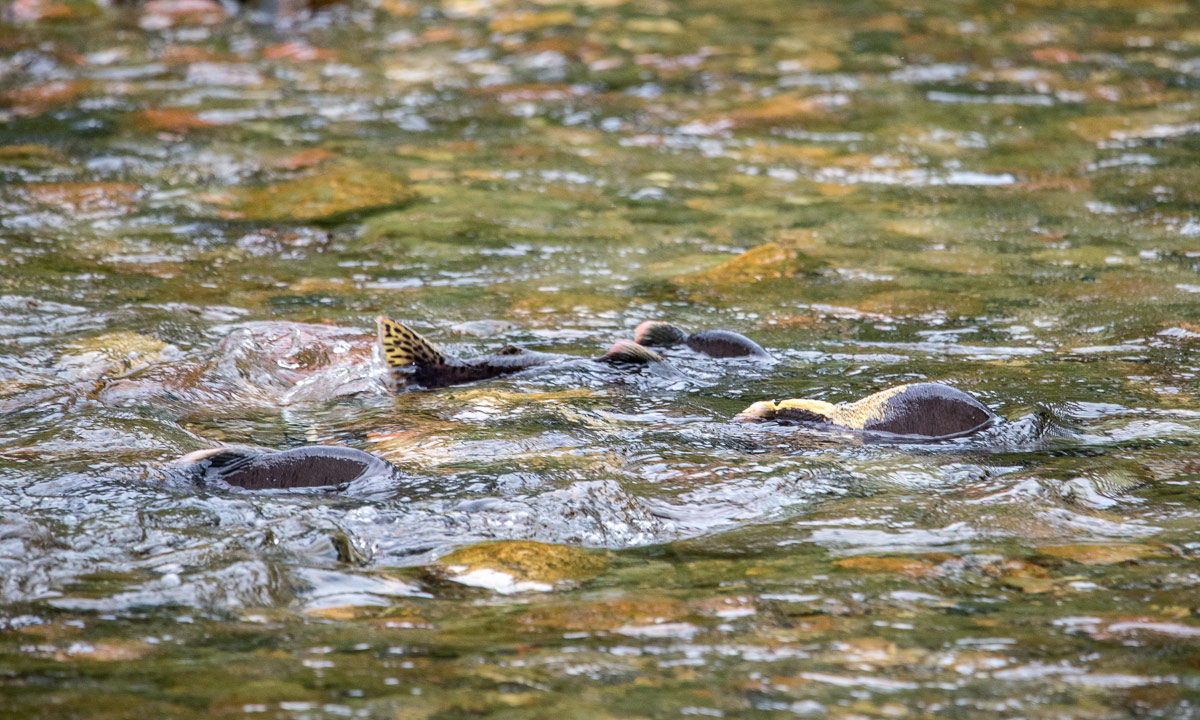
We reach the small river Jakobselva. This small and shallow river is special because here it marks the Norwegian–Russian border. The pink salmon (also called humpback salmon) do not care, they are busy to go upstreams and not all fish succeed.

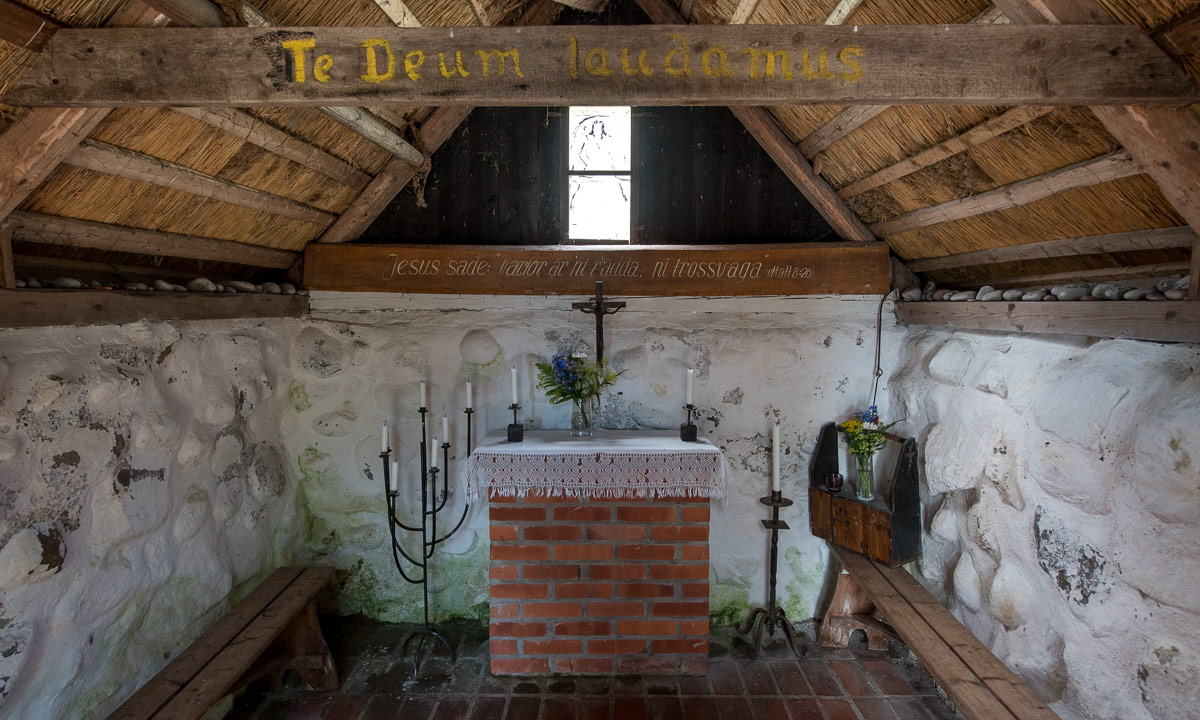
We continue to the village Grense Jakobselv. For me the biggest surprise was the chapel. In my view every northern Norwegian church is made of wood and painted white. Not the King Oscar II Chapel (built 1869) that is made of stone.

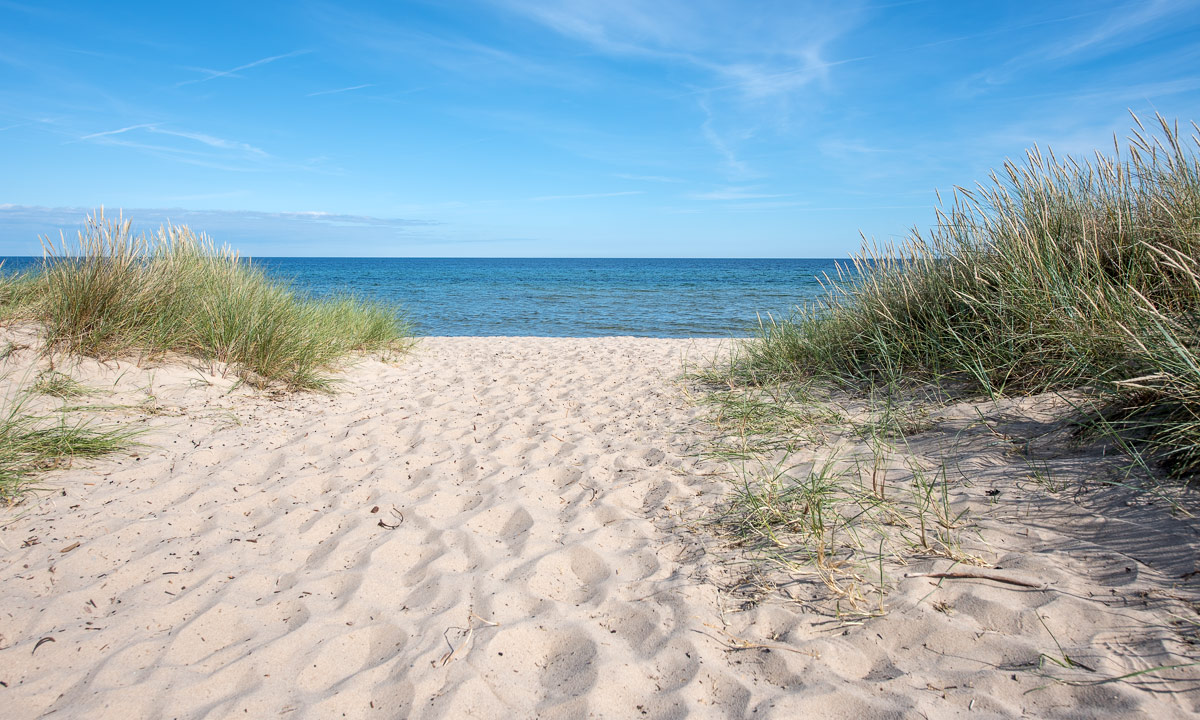
While I wasn’t properly prepared about the church I knew something else: There is a sandy beach. It is at the very end of the road. Annika and I take a bath. Water temperature is about 11–12 °C. It feels quite strange to change clothes for a bath while you can hear the Norwegian army practising shooting.

As many minor roads in northern Norway the road to Grense Jakobselv is a dead-end road and so we have to drive the very same road back. After having been back we get something we have missed on the journey so far: an afternoon nap!

Norwegian summer journey I

This article is part of the series “2021-08: Northern Norway”.

Annika and I have two weeks holiday and are travelling through Northern Norway. Our southernmost point: Lofoten, right now we are in Hammerfest.

Ten images looking back:

10 – We are on the high plateau Sennalandet. There are hardly any trees and the road E6 crosses the plateau in a straight line. I can imagine how rough and lonely this place may be in winter.

9 + 8 – The Øksfjordjøkelen is definitely worth the 16 km detour. The parking place and the small path leading through the sparse birch forest grant impressive views on this glacier. When the weather is clear.

7 – It’s grey on our passage from Andenes, Vesterålen to Gryllefjord, Senja. I stand on the top deck of the ferry and wonder how many tourists may have rung this bell and what had happened then.

6 – We just left Andenes by ferry. The razor sharp mountain line of Bleik will soon transform into a whitish grey scheme slowly vanishing in the drizzle.

5 + 4 – It is grey on our short ferry passage from Fiskebøl, Lofoten to Melbu, Vesterålen, too.

3 – One of the typical features of the Norwegian landscapes is the presence of high summits and fjords. Sometimes the mountains are reflected in the water surface of the sea.

2 – Hauklandstranda is one of these incredible beaches on the Lofoten islands with white sand and turquoise water. The sun is shining – time for a bath. Air temperature 11 °C, water 12 °C. Not as cold as expected.

1 – We pass Sildpollnes kapell on the Lofoten twice. Once on our way south and once when heading back again. There’s a parking place by the road where stairs and ways lead up to some hills that present a view over the landscapes around.

0 – On Saturday I leave Tromsø to fetch Annika from Riksgränsen train station in Sweden. It’s still not possible to travel further to Narvik by train. Our destination today: a room in Tjeldsundbrua.

A wintry weekend in Saxnäs

If the mountain won’t come to Muhammad, Muhammad must go to the mountain.

While the coastal weather has still much too warm (last night it rained again onto the icy roads) you can still seek winter in the Swedish mountains. Annika and I used the long weekend to visit Saxnäs (and my piano tuner who owns a house there). Some days ago it had rained even there but fortunately it snowed afterwards and everything was white when we arrived there Friday evening.

Seven impressions of Saxnäs

1 – wind and snow

The night and the first day in Saadteskenjuana/Saxnäs was very windy with squalls round 20 m/s. That’s why we chose the car to look around, not the skies. The bay Faepmienloekte/Fatmomakkeviken, part of the large lake Gåaltoe/Kultsjön was partly open. Maybe because of the current of the stream Jeanoe/Ransarån, maybe because of the stormy wind and the warm weather. In the back the wind blew the new snow over the ice and highly into the air. It was not cold, but windproof clothes were necessary to feel comfortable.

A comment on the naming of the locations: The first part is the Sámi name, the second the Swedish name. The headlines and repetitions have only the Swedish names to keep it short.

2 – Fatmomakke

Faepmie/Fatmomakke is an old Sámi meeting point. In 1781 the Swedes erected a first chapel. Both Sámi and Swedish people lived here. Since 2014 it is a “kulturreservat” – an area to protect the culture of that place. I loved the old wooden houses by the lake Gåaltoe/Kultsjön.

3 – lake and mountains

When we drove back we still could see snow blowing over the lake. Above the whirling snow dust the risen sun had started to illuminate the mountains of the Marsfjäll.

Step by step we drove back to Saxnäs and I used every parking place to take pictures.

4 – polar stratospheric clouds

A rare phenomenon had been observed the last days: polar stratospheric clouds. I already could see some the days before on my way from Skelleftehamn to Umeå. Now in Saxnäs they were spread over half the afternoon sky. If they are near the sun the light is diffracted and the clouds are very colourful. I have seen such clouds before but never as intense and colourful as that day.

5 – skiing through the dark

In 2005 I bought my first fjällskidor – backcountry skis with steel edges. I had used them on many tours – from short half-day trips to multi-day winter tours with pulka and tent. They had become quite worn and battered, therefore I bought a new pair some weeks ago, including new boots. Now it was time to test them.

The test went very well, but the ski track around the lake we didn’t find. So we went cross-country and returned after a while. The way back was much faster because we could follow our own tracks and didn’t have to navigate.

6 – cross country skiing

The next day was grey but quite calm. We took the car to the Bagarstugan, starting point of the ski tracks in Saxnäs. The ski tracks weren’t prepared yet but some minutes later we met a man that was about to start the preparation. The classical tracks are prepared by snow mobile, the broader skating tracks by snowcat. So finally we were lucky to have our cross country ski premiere on a freshly cut track. Great!

7 – Saxnäs by night

Annika invited me to dinner and we decided to walk the 2 km from my piano tuner’s house to the hotel. Good to have some motion before and after dinner. We passed the closed village shop and soon approached the hotel. Urgently recommended: reflex vests to be seen by the cars.

Beside of the employees we were completely alone in the large hotel restaurant. It’s still pre-season.

Now I’m back in Skelleftehamn. The road is icy and wet from last night’s rain. The average of the max temperature forecast for the next 9 days: +1.3 °C. Come on, winter, where are you!?

Translation:

EnglishGerman
polar stratospheric cloudPerlmuttwolke

Day 23 – travelling north again

This article is part of the series “2019-07: Southern Sweden”.

July 30 – Falun—Grövelsjön

Yesterday morning a guest room in Vetlanda in the forestal Småland – today evening a tenting place in Grövelsjön in Dalarna’s fells. We are travelling north again.

Yesterday we travelled from Vetlanda to Hosjö/Falun where we met Alex in real life the first time. It was just an overnight stay because we wanted to take a detour on our journey home that would take a bit of time.

Tuesday, seven o’clock. We say goodbye to Alex who has to leave for work. I take a bath in the lake Hösjön nearby. After breakfast Annika and I pack our things together and leave Alex’ cosy house behind.

As Alex recommended we follow tiny roads through Dalarna County – a county I’ve never visited before. As parts of Småland the scenery is extremely charming and looks a bit like “Sweden in a nutshell”.

In Leksand we reach the Siljan, Sweden’s seventh largest lake. We take the southern road to Mora via Sollerön, an island in the Siljan. Although the road is near to the lake it leads mostly through forest so that we can see the lake only from time to time. That’s quite typical for Swedish roads.

In Åsen we take a short stop to take pictures of the wooden chapel.

We follow the road 70 to Idre and turn right in the road to Grövelsjön. The trees become smaller and the mountains on the horizon higher. I’m glad to approach the fjäll, my favourite Swedish landscape. We make a last stopover at the church …

… then we arrive at our destination for today: Grövelsjön Fjällstation. This mountain station is operated by the STF – the Swedish Tourist Association. As we already have expected there are no rooms left, but we have a tent with us, that we set up in a sparse birch forest in the middle of other colourful tents. After dinner – pasta with pesto cooked in the common kitchen – Annika goes into the sauna while I take a short hike up the mountain. I do not reach the top of the Jakobshöjden, but at least the kalfjäll above the treeline.

There are no mountains home in Skelleftehamn, but after the sandy beaches of Österlen in Skåne and the mixed woodlands of Småland I feel home again when I see these landscapes. It’s still more than 630 km to Umeå and 750 to Skelleftehamn. But we do not plan to drive home yet – au contraire! Tomorrow we will travel to Norway.


Day 11 and 12 – Figeholm and Kalmar

This article is part of the series “2019-07: Southern Sweden”.

18–19 July

Three days Annika and I stay with our Friends Astrid and Hein in Figeholm in the historical province Småland. The first two days we make day excursions.

Astrid recommends to visit Stensjö By, an untouched village with houses from the 18th and 19th century, surrounded by an old cultural landscape. We stroll around the wooden houses, where chicken are picking and scratching for food and follow two of the round trails along dry-stone walls or the typical braided fences.

From Stensjö by it’s not far away to Figeholm, where we take a stop (and ice cream). A small channel branches from the sea. It looks like a “gracht” in the Netherlands and makes the town look a bit Dutch.

Home again we take a long bath in the lake Frisksjön right behind Astrid’s and Hein’s house together with their children. The photo from the water lilies is taken while swimming.

In the evening I take some photos of another building on the property. It is the old residential building but it has gone to rack. At least it is not in danger of collapsing and I can enter it. Hein, who is a professional carpenter wants to rebuild that house, probably a large-scale project … .

The next day Annika and I drive to Kalmar, a beautiful town on the sea with roots in the middle age. We park by the sea and walk to the cathedral which is open.

After lunch we walk to the old water tower, which contains private flats nowadays. From here we head to the castle grounds, where there is a variety of old trees. I love especially the huge leaf trees and admire them; we don’t have such in Northern Sweden.

Soon we approach the “main attraction”, Kalmar Castle, one of the best-preserved renaissance castles in Europe. Beautiful in the sun!

We go along the castle moat until we reach the sea. Here’s a long bathing jetty – what a pity that we do not have our bathing clothes with us.

We are quite eager to bath, but we decide to choose another place. Just some kilometres east in the Baltic Sea there’s the island Öland. It is 137 km long and has almost 26000 inhabitants. From Kalmar there’s a 6 km long bridge to the island. It takes us just a quarter-hour to reach Öland and another ten minutes to reach the bathing place Präskviksbadet in Lökenäs. Finally we kan take a refreshing bath at the small sandy beach, while we look on the coastal line of the main land.

Day 10 – leaving Skåne

This article is part of the series “2019-07: Southern Sweden”.

17 July – Mälarhusen—Figaholm

Today we leave Skåne and continue to the historical province Småland, home of Astrid Lindgren and many of her characters. But before we start our tour we have breakfast and before breakfast we take a morning bath in the Baltic Sea. 12 °C water temperature – a bit chilly. We lock the tiny, cozy house where we stayed the night and start our car trip north.

We make many small stopovers and bath three other times this day, enjoying the fresh water and the warm sun.

Some photos:

Day 6 – Finjasjön

This article is part of the series “2019-07: Southern Sweden”.

13 July, Hovdala and Finja

When we leave the car at the parking place of the castle Hovdala slott the first think I see and hear are the bees at the beehives. The bees are lucky, they have their own huge flower field, where red poppy, blue cornflowers, white oxeye daisies and many other flowers bloom.

We take some ice cream at the café and start our promenade. We want to go north to the lake Finjasjön, walk along the lake and head south again. It’s quite easy to get lost, because there are zillions of paths, tracks and small roads. Many of them are marked but not necessarily at the important points. Therefore we randomly follow some tracks or roads, trying to use a local paper map and the sun for orientation.

We follow some signs to the Trädhuset – the tree house, a café build on a high wooden platform between the trees. First all people sit outside but that changes with the incoming thunderstorm. It’s raining hard and Annika and I consider how to get back to the car. We don’t have rain clothes with us.

We are lucky, the thunderstorm is moving away and soon the sun is shining again. We walk back, this time using the smartphone for navigation. Although it’s barely 20 °C the air feels damp and hot. With the digital guidning we are soon back at the car, just before it starts raining again.

Since it is raining we cancel our bathing plans. Instead we had north where we take another promenade and visit the Finja Church. Finja itself is a small locality with 600 inhabitants. The church however had great importance in the middle age. It was build in the 12th century and some of the old chalk paintings are created round 1140.

We were lucky that the church was open and we even got a guided tour. The guide mentioned that this church comes from the end of the viking time, long before the existence of nations like Denmark or Sweden.

The weather was still showery, so we decided to postpone bathing and drive back to our hosts house.


Winterly Tromsø in May

I’m sitting in the bus somewhere in Northern Finland. We just passed the sign “Tornio 410 km”. Are we there, it’s only some more minutes to Haparanda from where a car ride of another 270 km awaits us. Then I’m home.

Home from the incredible interesting and inspiring but also exhausting Barents Press International Media Conference that took place in Tromsø for two days. Great speakers, great talks! Here are some of the topics:

  • EU and the struggle against fake news
  • How to make your climate change story into a click-blockbuster
  • #Barents #Beingyounghere: Official book release
  • Norwegian spy scandal in Russia: A close friend’s story

At the same time winter had come back to Northern Scandinavia and so to Tromsø. I used the mornings and evenings to walk round or just visit the roof terrace of our hotel to make some pictures of Tromsø.

Thursday 2 May – the weather is quite nice. I’m glad to walk around after the long bus trip there.

Friday 3 May – the morning is windy. First it’s dry but then snow showers rack over Tromsø for the rest of the day. Some of them are quite intense.

Saturday 4 May – Tromsø is covered with fresh snow. The air is cold but the ground is warm and so the snow is partly melting again. In the evening some very intense snow showers cover Tromsø with more snow.

Sunday 5 May – partly cloudy, partly blue sky that reflects in the sea water. And so do the ships.

Although I enjoyed the conference it was a bit of a pity that I didn’t have more time to take pictures and explore the city. On the other side I’ve been in Tromsø several time and probably will be there again.

I would love to work there for some months but the tax rules of the non-EU-member Norway would make that quite complicated because then I had to declare taxes both in Sweden and in Norway.


All articles about Tromsø >