A tour to the easternmost point of mainland Norway

This article is part of the series “2018-03: Varanger peninsula”.

Day 29 and 30 of my winter journey 2018

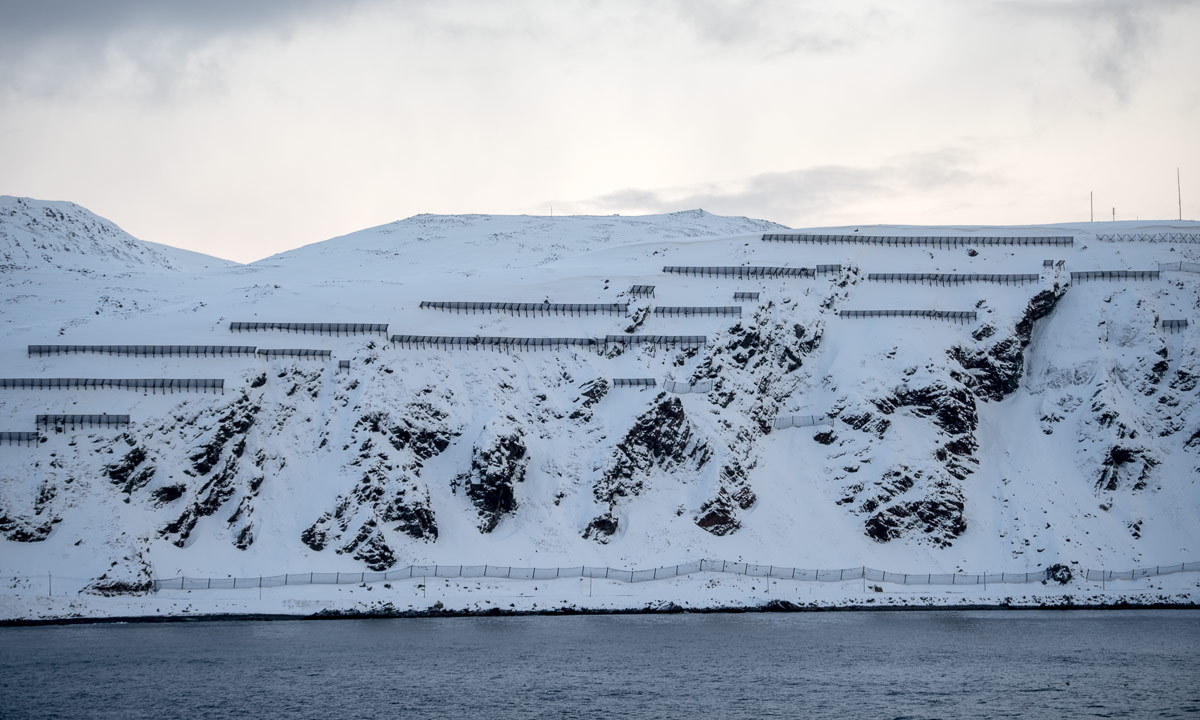
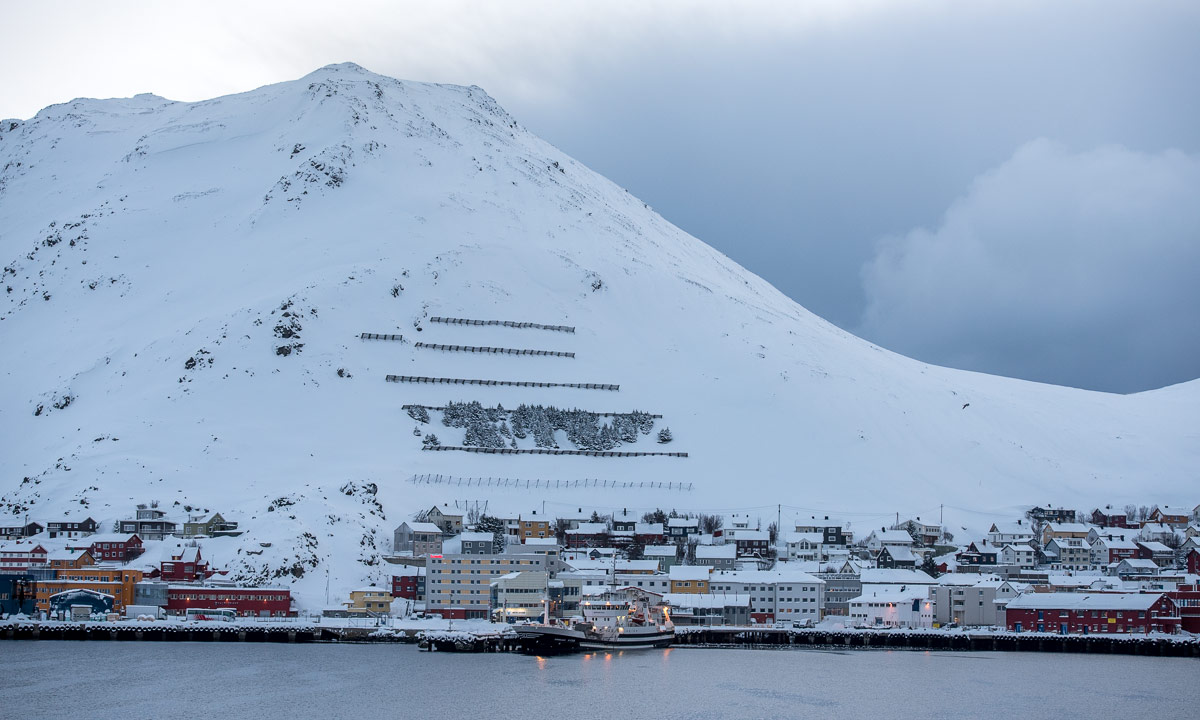
Yesterday we continued our journey to Ytre Kiberg which is 13 south of Vardø, one of the Hurtigruten stops. We started in Vadsø – another Hurtigruten stop – after a breakfast with our host Nils, bought a basis of food for the next days and took the E75 northwards. We made a stopover in Ekkerøy, a village on a peninsula near Vadsø. We like this place and will try to stay there for some nights next week.

At lunchtime we reached Cape East Arctic Adventure, our stay for four nights. We were welcomed by Trond, the owner and operator of Cape East Arctic Adventure and were shown our cozy bedroom, the kitchen and the homely living room. After making ourselves at home we went along the beach to the village and the harbour.

In the evening we were invited to a three course dinner based on freshly caught cod: Fish soup – cod with potatoes and carrots and finally cod roe. Everything was extremely tasty and it was Annika’s and my first time where we tasted cod roe. Yummy!

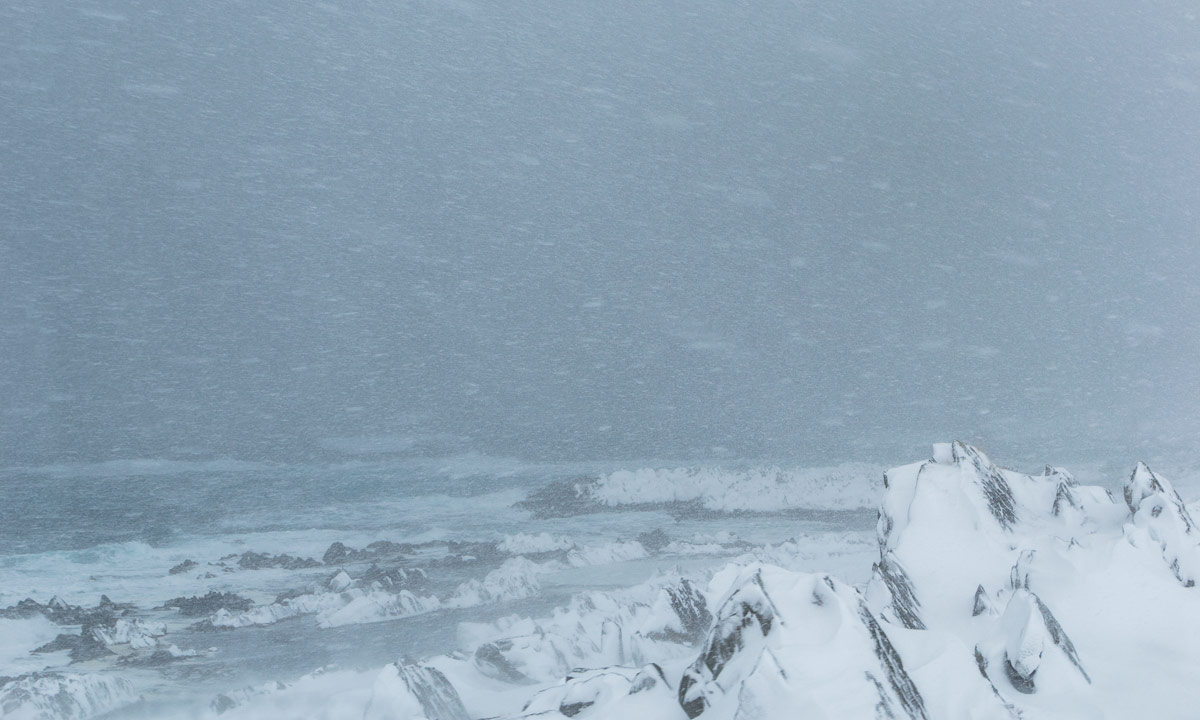
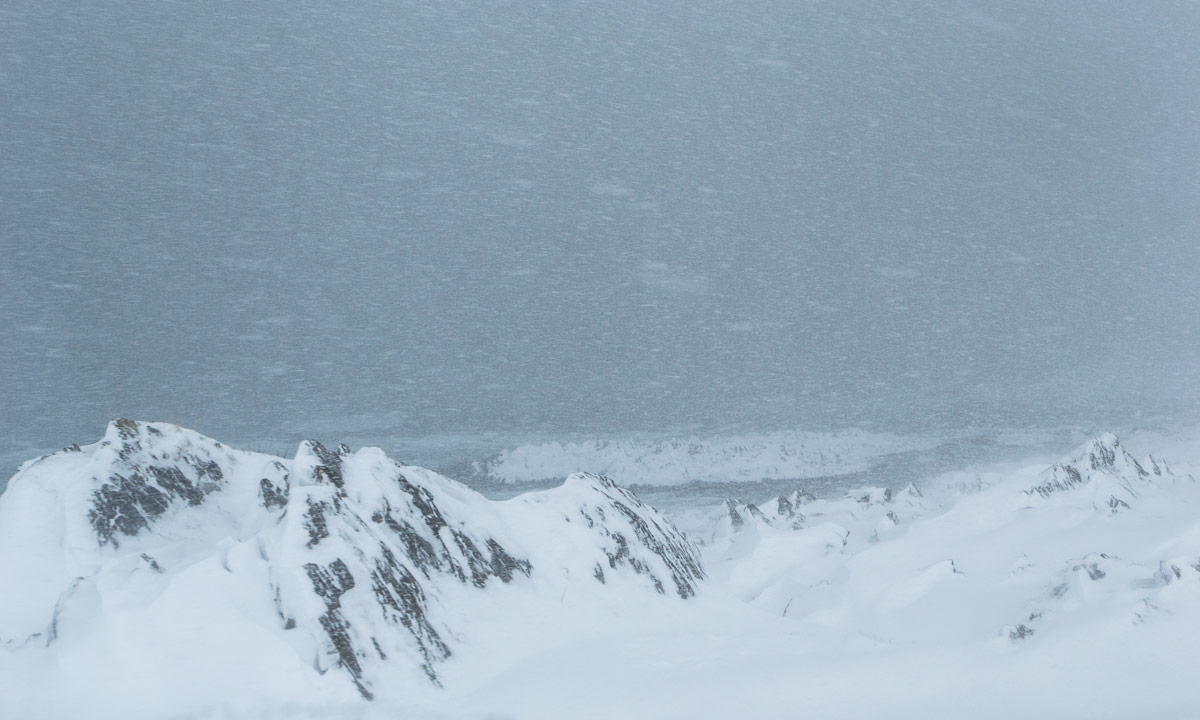
In Kiberg you are as east as you can be in the Central European Timezone, therefore sun is rising already at 6:24. I was awake very early and took a morning walk round 6 o’clock. Some snow drifts had been created by snow and wind over night but now the weather was less windy and quite sunny. At least for a short time. While I went the way to Indre Kiberg clouds approached, wind increased and it started to snow. It was hardly imaginable that it was sunny just a short time before. Weather changes here quite often as Annika and I should find out later.

After breakfast Annika and I took the car to the other side of the village, put on our snow shoes and started a hike to Kibergsneset, easternmost point of mainland Norway. This place is more east than e.g. St. Petersburg, Kairo or Istanbul! It was windy but quite sunny, when we started our tour but weather changes fast on the Varanger Peninsula:

Actually this hike is just a promenade but the weather may transform it into a small expedition. We were exposed to wind and snow and grateful, that we didn’t experienced a full storm. The weather was rough anyway and I was glad about my windproof jacket and two pairs of mittens.

We continued on a small hiking trail, first with, then without snowshoes because the thin snow layer was hardened by the wind and easy to walk onto. There’s a coastal fortress build by Germans in WW2 on Kibergsneset but we couldn’t see it in the snow weather. Instead of looking for it we continued to the small lighthouse at Kibergsneset that marks the easternmost point of mainland Norway (and most of Europe). Shortly before we reached it the sun came out and we continued the last metres in full sun. While I made some photos a small snow shower approached with the sun still shining.

From the lighthouse there was an amazing view over the arctic coast of the Barents Sea, but only for some moments. Soon the next snow shower came by and hid most of the view onto both the coast and the sea.

The way back was much shorter because we knew the way and went downwards. Even though the view was limited by the snow showers Ytre Kiberg came into view again soon and surprisingly the weather was nice and sunny again.

After this very windy promenade we were glad to find shelter in my car. We took the car to Vardø to eat something and after that we tried the road to Hamningberg. We knew that the road was closed in winter but we curious how long we would come.

Well, not very long. We managed to get to Smelror, some kilometres north from Vardø.

The main road however was definitely closed as you can see. There are no people living in Hamningberg permanently and the only motorised way to reach it in wintertime is by snowmobile. For car it is open less than half the year.

We took the car back to Kiberg, enjoyed the incredible and unbelievable colours of the sky and were surprised by a strange weather phenomenon: -6 °C and rain (including a faint rainbow!)

The rest of the day? -10 °C and wind outside, no more photos, no more excursions.

Fun fact: We took the E75 northwards. If you would take it southwards you could travel more than 4000 km and finally would arrive on Crete, Greece.

A trip to Murmansk – trip home

This article is part of the series “2018-02: A trip to Murmansk”.

Day 24 of my winter journey 2018

After two days of visiting Murmansk we were prepared for our trip back. The bus arrived shortly after 7 o’clock local time (5 o’clock CET) and we started our trip home.

We left town and crossed the Kola Bay. It was still dark.

Then I fell asleep. I woke up shortly before our rest at the small shop, that seems to be located in the middle of nowhere.

Meanwhile it was as bright as day. We followed the E105 that would bring us first to the Russian-Norwegian border and then back to Kirkenes. Some images taken from the bus:

Finally we came to the border. We had to leave the bus with all our luggage. I bought huge winter rubber boots in Murmansk and some books and was curious what I would have to do at the customs, but since I stood in the queue “nothing to declare” no one cared.

Next station: showing the passports. Chris, Ørjan and Annika had already went through, now it was my turn. I gave the passport to the border official, trying not to smile – no one seems to smile when communicating to strangers. The man looked at my passport for several minutes, typed things into the computer, looked at the passport again, stood up and left. He came back with a woman discussing something in Russian. The woman left again, the man continued working. Again he left, again he came back with the woman. I didn’t understand a single word and started wondering what the problem could be, I guess it was computer problems. It took round 15 minutes until I got my passport back with some Russian words, probably an apology or an explanation about what went wrong.

I climbed into the bus and we were driven to the Norwegian customs. What a difference! The handling was not only much faster, but much more friendly. The Norwegian border officials smiled, made some friendly small talk and hardly a minute later we were through the customs and again in the Schengen Area where you can move between countries without needing a visa.

Some very brief observations from Murmansk:

  • The difference between poor and rich, cared and ruined is quite visible
  • People won’t smile at you, especially the officials and salespersons
  • The food in the restaurants we visited was extraordinary good
  • Many people don’t speak any English. Exceptions found in our hotels and restaurants
  • I felt like 4 year old when I tried to decipher the Cyrillic letters.
  • I didn’t feel welcome every second, but safe all the time

Travelling to Murmansk was a very interesting experience and I would love to see more of Russia. Next time I would like to use internet services as e.g. couchsurfing to get into contact with the locals. I guess I would get another view of Russia.


A snowshoe promenade

Day 27 of my winter journey 2018

Today our current host Chris took half a day off and we (Chris, Annika, I and two dogs) made a trip into the valley Pasvikdalen. There’s a small place called Strand where we parked our cars at the former boarding school, nowadays a museum. Here we started a small small snowshoe tour up the Brattberget.

Brattberget means the “steep mountain” but first of all the mountain is more like a hill and then the way up is not steep as all. First we went through denser forest, then then forest and the view opened a bit. Soon we were up on the top of the hill.

There’s a toilet and two benches on the Brattberget. While the benches were covered with snow, the toilet was still visible.

The weather was nice and we had a great view. To the north and west of the lake LangfjordvatnetUhcavuonjávri, to the south, remote in the distance of Russia.

After a short rest in the sun and some photos we descended the same way we went up and soon were at our parked cars again. A short and nice snowshoe tour through the hilly and wintry Pasvikdalen.

A trip to Murmansk – day one

This article is part of the series “2018-02: A trip to Murmansk”.

Day 22 of my winter journey 2018

tl;dr Alyosha monument · old concrete buildings · Church of the Savior on Waters · view over Murmansk · restaurant Tundra · nocturnal Murmansk

Alyosha (Алёша)When we arrived in Murmansk the day before it was already dark and we were tired. Today after breakfast we were eager to explore. We ordered a taxi to our first tourist attraction: The Alyosha Monument.

“Defenders of the Soviet Arctic during the Great Patriotic War” (Защитникам Советского Заполярья в годы Великой Отечественной войны), commonly called Alyosha (Алёша) is a monument to Soviet soldiers, sailors, and airmen of WW2.

It was build in 1974 and it’s the second-tallest statue in Russia. The 70th aesthetics and the communistic concrete appeal didn’t help to make me like this statue, but I always have difficulties with war memorials. I’m a pacifist.

I enjoyed however the view over Murmansk. It was visible, that it’s a large town (it has 300,000 inhabitants) with a large port and many concrete high-rise buildings.

After we visited Alyosha we started to walk back into the center of Murmansk, where our hotel Azimut was located. We turned right into the street Ulitsa Aleksandrova. To the left there were old concrete buildings. They were extremely rundown and I was shocked to see these building and imagine people living here. Maybe the inside would look nicer, but the outside was horrifying.

In many directions you could see these high-rise estates with rectangular concrete buildings. But we could see something else: a Ferris wheel. We went on and came to a permanent amusement park, located beside the lake Semyonovskoye (Семеновское озеро). Of course the lake is covered with ice and snow in wintertime and some locals used the ski tracks going round the lake.

From that place the next destination was quite near: the Church of the Savior on Waters (Спас на Водах), a small Russian orthodox church, built 2002.

When we came to the church I could see some people leaving, going backwards and making the sign of the cross again and again. It is allowed to enter the small church but not to take pictures. I’ve never been in an orthodox church before and I was stunned. The walls were covered with icons of saints and incense was burned. Some elderly women were lighting candles and immersed into deep prayers and almost seeking physical contact to the icons and other objects. I felt deeply touched by this lived religiosity although I’m not religious by myself. On a table some food was placed. Bread and fruit, among others a bag with three lemons. Sacrifices or donations to the priests?

I have to admit that I felt like an intruder and completely at the wrong place. I have to read more about this religion and a bit about how to behave.

We continued our promenade back and passed the Memorial Complex to the Soldiers and Seamen Who Died in Peaceful Time.

We left the memorial behind and entered the streets of the center. We walked back to our hotel and took a short rest. We passed an old theatre, painted in bright indigo but more a ruin than a building. A pity, I think it must have been beautiful in former times.

Then the hotel. I had twisted my ankle one week ago and was glad to rest the foot a bit. Time for shooting some photos from the 16th floor.

Some hours later. We decided to eat dinner and Annika and I found the restaurant Tundra (Тундра) that got excellent reviews in the internet. And excellent it was. The restaurant was fully booked but we were allowed to sit in the bar. In Russia the food is quite cheap compared to Scandinavia even in really good restaurants. The dishes are not as huge as in many places in Europe. I like that because it gave me the opportunity to taste different things: borscht and caviar with seaweed. Both very tasty!

After a nice evening at this great location with fantastic food we went back to the hotel. Murmansk is definitely not the most beautiful town in daylight but it wins a lot when it gets dark because many places, streets, parks and buildings are illuminated with lights of all colours.

We have seen a lot that day, both the beautiful and less beautiful facets of this arctic Russian town and I was as exhausted as I use to be when strolling through a big town for a whole day.

We were glad however to have another day to explore a bit more.

Some other random pictures of the day:

A trip to Murmansk – prelude

This article is part of the series “2018-02: A trip to Murmansk”.

Day 21 of my winter journey 2018

I think, I know northern Europe quite well, especially when it comes to Sweden and Norway. There are many gaps to fill as for example Iceland, the Faroe Islands or Greenland, but thats all island only reachable by plane or by ship.

There is however a huge arctic area that is reachable by land, although with minor difficulties. I’m talking about Russia.

The journey started two months ago with an idea. When Annika and I planned to visit Chris and Ørjan in Kirkenes, why shouldn’t we cross the Norwegian-Russian border and visit Murmansk, the world largest town north from the polar circle. Chris and Ørjan were as interested as us, so that we were four people on that short trip to Russia.

Unlike the other countries we use to visit we would need a valid visa to cross the border and travel to Russia. Even though we used the help of a travel agency in Kirkenes that helped us with the visa application it took some efforts until the visa were ready.

Two month later – or four days ago – we started our journey. At 2 o’clock we entered a small bus in Kirkenes and drove to the border, which is only 15 km away. First stop: the Norwegian side. We showed our passports and entered the small bus again. Next stop: the Russian border. Here things started to take more time.

We had to fill out a form in two copies, that was as small as the passport. Therefore some lines were so tiny that the letters hardly were three millimetres high. Even with instructions it took much concentration to fill out these forms and since we only had one ball pen it took a long time till we were ready with the form completion. After that we had to show our passports and the forms to the frontier guard. Motto: don’t smile! That took time, too, but after this accurate border check we were ready to enter the bus again.

I’ve never been in Russia before and I was really curious to see this country that is near in geography but remote in my mind. The first part of the bus tour however didn’t reveal anything new. Mostly we could see snow, hills and birch trees – the very same landscape as on the other side of the border. Even the street signs seemed to be alike beside of some Cyrillic letters.

But when we came to towns like Zapolyarny (Заполя́рный) or Pechenga (Печенга) it was quite visible that we had left Scandinavia. No wooden houses painted in red and other colours were visible, but large rectangular concrete buildings.

After some time it begun to get dark and it started snowing. The snowfall quickly intensified and the bus driver who was very cautious slowed down. When we reached Sputnik (Спутник), the buildings were hardly visible anymore in the snowy dusk.

Soon after Sputnik we took a ten minute break. I would have loved to go to the toilet but they took (a) 25 Rubel and (b) only cash. We hadn’t any Russian cash and therefore couldn’t use the toilet, but at least Annika succeeded to buy some kind of pizza with credit card.

It became dark and I started to get tired. I love to travel by train but I consider it exhausting to sit in a bus. Soon I started to doze off. But finally Murmansk (Мурманск) on the other side of the Kola Bay (Кольский залив) came into view. We left the E 105, crossed the bay and drove through the outskirts of the town.

Two other passengers were brought to another hotel, then we four to our hotel Azimut. Internet reviews taught us, that you have a good view from the upper floors and were lucky to get our hotel rooms in floor 16, the floor right under the “Sky Bar”. The internet was right, the view was great:

Next day we would meet at 8 o’clock local time (Moscow Time) which is 6 o’clock Norwegian time. Two whole days of exploring Murmansk lay before us, but before that we had to sleep and rest.

A ski tour in the Kvikkjokk mountains – day 5 and 6

This article is part of the series “2018-02: Ski tour near Kvikkjokk”.

Day 11 and 12 of my winter journey 2018

After our second night in the tent (it was 20 °C warmer than the first night) I woke up at 7 o’clock. My thick isolated sleeping bag was much too warm and I was glad to get out of “bed”. Time for some photos of our tent and the surroundings.

Today we wanted to leave the trees behind and ascend to the kalfjäll – the treeless mountains region. Since we already were level with the treeline we soon came to the place where you hardly see anything more than snow, some rocks and the winter waymarks.

Jonas is interested in many things, among others bouldering. When we came to a nice large boulder after some hours of skiing, he took the opportunity for a (very) short bouldering session. Here’s the evidence photo:

After that short break we continued our tour over the kalfjäll. It snowed and it was quite windy. The boulder was quite near to the mountain shelter Kurajaure, where we arrived half an hour later.

The wind had grown stronger and stronger and we were glad to enter the shelter. We took the pulkas in, too. These mountain shelters aren’t made for overnight stays beside of emergency situations. We however decided to stay in this shelter anyway for some reasons I won’t reveal here.

Of course we didn’t use the woodstove and firewood. We took our own paraffin stove, prepared food and slept in our sleeping bags, since unheated the shelter was as cold outside as it was inside. But there was a big difference: We were protected against the strong snowfall and the rough winds. I went outside anyway to take some photos in the dusk.

This time we did something new: we set the alarm clock for the next day. We wanted to reach the mountain hut Tarrekaisestugan which we passed two days before and suspected that we had to ski through a lot of fresh snow against rough headwinds and strong snowfall. Since we didn’t know how much time it would take we had set the alarm clock to 7 o’clock. The plan was to leave 8:30, but it became 9:20 when we started our 6th tour day.

It was -12 °C and quite stormy. I guess the windchill was round -30 C. I closed my fur trimmed hood as much as possible and later I took even a buff over mouth and nose to protect against the icy snow that the wind threw into my face. I used three pairs of gloves and mittens – one over the others – to protect hands and fingers. Here’s a selfie of me (left) and Jonas (right) made on the kalfjäll.

There was a lot of new snow, probably 10 to 15 cm. All snowmobile tracks (and our own from the day before) had disappeared. We returned the very same way that we went the day before. Although weather was rough, skiing was easier than expected, because we went more down- than uphills. The steep part however was a real disappointment. This stage had costed a lot of efforts to climb the day before, now it took less than ten minutes to ski down. After a passage over the frozen lake Tarrekaisestugan came into view.

It took more time than expected to cross the lake, but the most exhausting part was the slope by the lake that we had to climb up to reach the mountain hut. Here at least 30 cm of fresh snow had been falling and even the deepest snowmobile tracks were hardly visible. After we arrived and removed our skis I removed ice from the outside of the window. I had to plunge through hip deep snow to reach it. The snow depth behind the hut was at least two meters.

After two cold nights we were glad to dry both sleeping bags and clothes and hung up mittens, jackets, boots, caps and much more and to heat the woodstove.

Our dinner: couscous with roasted salami, dried tomatoes and ready-made champignon sauce. Tasty!

The two photos showing me on skis are made of Jonas Balbasus.


Crossing three borders

Day 19 of my winter journey 2018

Whilst I still haven’t finished the blog articles about my ski tour with Jonas, life (and holidays) went on. Jonas and I had arrived at Solberget on Thursday evening and Jonas went home yesterday (on Sunday). This morning I packed the last things, stuffed them into the car and went to Nattavaara Station, where Annika arrived with the 7:38 train. With this reunion another stage of my six and a half week winter journey had begun. Destination: Kirkenes and Varanger, the easternmost parts of Norway.

Today we started with a travel day by car. We travelled 600 kilometres and crossed three borders.

Stage one: (Solberget) – NattavaaraGällivareSvappavaaraVittangiÖvre SopperoKaresuando.
And the first border: Sweden – Finland.

Stage two: Karesvanto (Finland) – Palojoensuu (Finland) – road 93 …
Second border: Finland – Norway.

Stage 3: … road 93 – Kautokeino (Norway) – Karasjok (Norway) – Karigasniemi (Finland).
The third border Norway – Finland. And since it was dark and I was tired we directly continued to our destination for an overnight stay: Giellajohka (Finland).

The temperatures had been between -20 °C and -28 °C for the last hours and the weather was bright and clear. The new fingernail moon shone above the eastern horizon and the first stars came out. Good conditions for polar lights. And we had polar lights actually here in Giellajohka but unfortunately a thin layer of clouds approached and therefore the aurora was less impressive. A photo anyway:

Tomorrow we will continue to Kirkenes to visit friends. It’s a smaller distance to travel than today, just 209 kilometres.

A ski tour in the Kvikkjokk mountains – day 4

This article is part of the series “2018-02: Ski tour near Kvikkjokk”.

Day 10 of my winter journey 2018

After two days in the Njunjesstugan Jonas and I continued our tour in the mountains west from Kvikkjokk, The weather continued to be grey and dull with temperatures round -11 °C and last night’s snowfall brought five to six centimetres of downy snow.

The winter trail led through forests and hills – one of them so steep, that we hardly managed to ascent it by foot. I guess, that some of the people marking the way prefer the snowmobile before the skis and adapt the trail to that …

Soon we reached the lake Darrávrre which we followed to the mountain hut Tarrekaisestugan. We made a rest, not to stay there but to simplify the continuation of our ski tour. The next tour would lead uphills and we wanted to reduce weight. Therefore we left food, paraffin oil and some spare clothes in the wood shed and took only food for two days with us. After two days in the higher mountains we would return to the hut.

We carried on. By crossing the lake Darrávrre to the west we left the hiking trail Padjelantaleden. On the other side of the lake the trail climbed up the hill. It was not as steep as feared and even if the ascent was quite exhausting for me we managed to get up to the tree line.

We reached an altitude of approx. 680 meter. Here we left the trail and erected the tent in the twilight between some birch trees. This time the snow was stable after tramping it down with the skis and we hadn’t to dig down as three nights before. It had become even warmer: -7 °C and it snowed. Both of us were longing for clear, crips and sunny winter days but it didn’t look like we would get better weather. At least it wasn’t as stormy as forecasted.
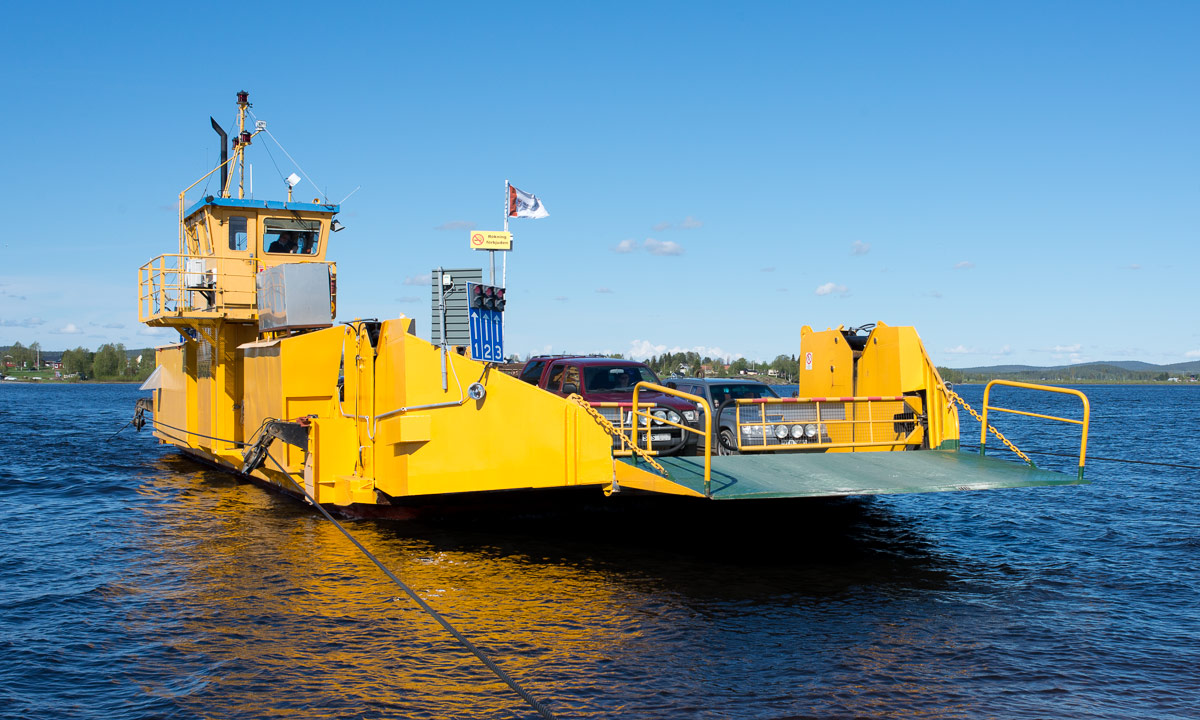
 

Lagom winter

It’s probably not the first time, that I use the word lagom in this blog. You could translate it with “just right”. Not too hot, not too cold – not too much, not too little. That’s lagom.

Just now the winter behaves lagom, too. Om Friday evening 5 cm of snow covered my garden, tonight it’s round 20 cm. Not 76 cm as last year, not 2 mm as the year before, just 20 cm. That’s lagom! Even the temperatures are quite moderate, lying round -5 °C.

I didn’t have much time to enjoy this winter, because I’ve worked quite much the last time. Today evening however I managed at least an evening promenade through the near forest, first along some ways and paths, then across country. It was snowing a bit and everything was quite. I could hear neither bird nor car, only the scrunching of the snow under my feet. Today I went afoot but I got my back-country skis from the garage hoping for more snow to come.

29 August: Kungsleden day 10 – Alesjaure—Abiskojaure (7+15 km)

This article is part of the series “2017-08: Kungsleden hike”.

From Alesjaure to Abiskojaure it’s round about 22 km to go. That’s the longest day’s march on that part of the Kungsleden. The first 7 km go along the lake Alisjávri which is good for a special reason: In summer there’s a boat shuttle service that allows hikers to skip this part. We all decided to take the boat, both to shorten the distance and to enjoy the boat trip itself.

Since the first regular boat starts at 10 o’clock we had a very relaxed breakfast with a lot of time. The quite large shop had fresh eggs so we had the pleasure of boiled eggs for breakfast. And very special egg cups …

The sun came out and illuminated the Alisvággi, the valley that leads to Tjäktja.

We went to the shipping pear already at 9:30, to go sure that we would find places on the boat. Andi ran up the yellow flag – the signal for the boatsman. The sun came out and I decided to take a bath. Not so easy, since the water was only knee-deep (and as icecold as expected).

Soon the boat arrived with stugvärd J. onboard. He was out fishing and succeeded: eight big arctic chars he caught.

At ten o’clock we departed. I could have stayed on the boat for hours, not only because I love to go by ship or boat, but even more because the sami boatsman had so much to tell.

He was living in Alesjávri for the summer “together with his dog and three common gulls” to run this transport business that he considers as a holiday. In September he would continue herding his reindeers. There are 17 families left in his sameby that do reindeer husbandry full time. (A sameby is kind of juridic and economical collective for reindeer husbandry.) He told us much more (all in Swedish) but after barely half an hour we arrived at the other shipping pear and went ashore.

When we started to walk it started to rain – bad timing. It was more a series of rain showers and I put on my hood and put it off again many times. Almost all mountains lay in the clouds, only the Ádnji seemed to have sun the whole time.

While we went on something chirped. Beep – Beep – (silence) – Beep … . We had heard that sound before on our hiking tour, but it was the first time that we could spot the matching bird. It was a golden plover as we figured out later. The bird was a bit nervous while I crawled nearer and nearer to get a photo, but it didn’t flee. Unfortunately my travel tele lens is not the best but I got a photo anyway.

We crossed the long reindeer fence that separates the sameby Laevas in the south and the sameby Gabna in the north. We just had to climb some stairs, where the Kungsleden crossed the border.

I knew that I had to say farewell to the treeless kalfjäll soon. In a short while we would enter the valley Gárddenvággi that would lead us deeper and deeper into more forested terrain. I was a bit sad, when i said farewell to that wonderful landscape.

The next kilometres were rainy, stony and muddy and we all just wanted to arrive in Abiskojaure, well knowing that it still would take some hours until we would arrive. I just trotted along and didn’t use my camera until we arrived in Abiskojaure. Here we finally made the photo of our four backpacks that we had talked about for days, but I was much too lazy to arrange it nicely.

The rain had stopped and the sun came out again so I took some last photos of the day, eager to eat something and to relax in the sauna.

Since Abiskojaure is the last hut before Abisko we found a lot of leftover food as dried vegetables, noodles or tuna sauce. That gave us a formidable afternoon meal. While we prepared for the sauna we heard, that there were moose on the other side of the lake. Indeed two female moose stood there in the wateraquatic plants. There were far away but we saw them dipping there heads into the water (they could hold their breeze really long) and eating aquatic plants. We saw them wading, swimming and shaking out the water. They had spotted us but knew that we were far away and no danger for them.

Katrin, Annika and Andi headed for the sauna, I watched a bit longer. When I went back to the hut I saw some others photoing something. It was a huge male moose, that stood amidst the huts and seemed to be not at all shy. I never saw a male moose so close! The moose went away, but stopped again, when he found rallarros flowers between the old toilet building and the wood shed. While watching us all the time he continued picking flowers with his huge mouth and eating them. At least twenty people stood there, watching, photographing and filming. Since all were quite sensible – no one was too hasty, too loud or came too near – we all could watch this big animal for some minutes. Then it took some step into the forest and almost instantly vanished in the shadows. What an experience!