Thaw

After spending Christmas in Southern Germany I started travelling back to Skelleftehamn in several stages.

28.12. – Augsburg—Bremen

First a local train to Ingolstadt, then a 1st class seat to Bremen, where I spent the night. In the North German Plain it was really foggy.

Both trains were in time and the journey was comfortable. Sorry folks, no Deutsche Bahn bashing.

29.12. – Bremen—Mölndal

The next day my friend Delle picked me up by car. He wanted to visit me in Skelleftehamn and I took the opportunity for getting a lift home. The first day we travelled to Flensburg, through Denmark and then to Mölndal near Gothenburg, where we took a hotel room.

30.12. – Mölndal—Umeå

Why Mölndal? There is a tyre dealer where you can hire winter tyres with spikes. After breakfast we drove to the garage and Delle’s car got spiked tyres. Then we headed east to Gävle and then north to Umeå which took the whole day.

Did we need the tyres? Not yet – the temperatures were extremely high. 10.5 °C in Vesterås and 6.5 °C in Sundsvall. Especially the first half of the journey was quite boring. Trees to the left, trees to the right. A house. A bus stop and again. Trees to the left, trees to the right. Later there was more to see – even in the darkness.

I think it was 22:30 when we arrived in Umeå, but I’m not sure. I was soo tired!

31.12. – Umeå

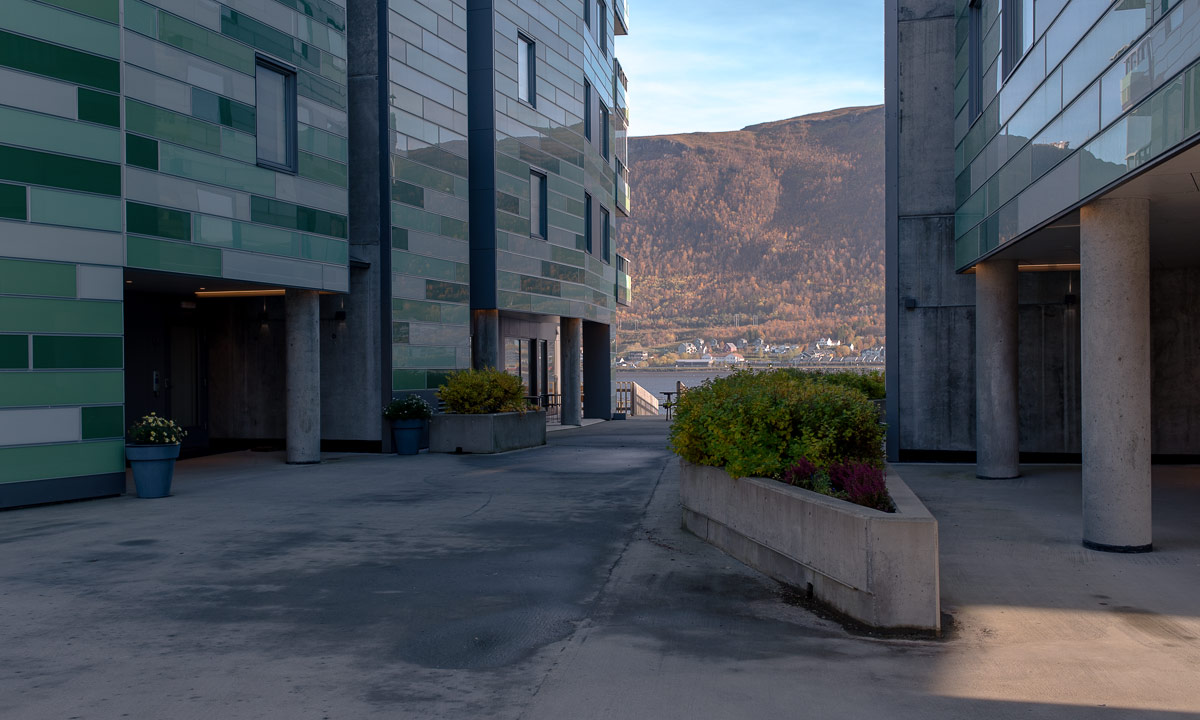
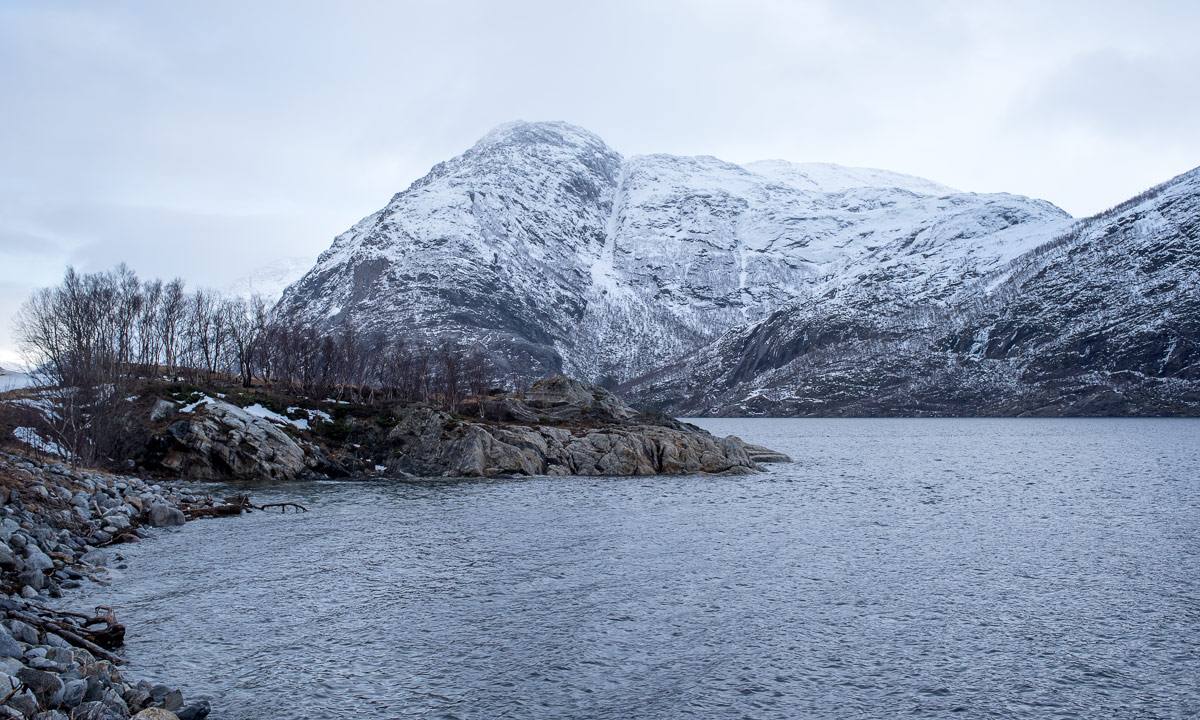
Finally a nice day with sun and even a bit of frost! First Annika, Delle and I bought some side dishes for the lamb chops that Delle brought from home. Then we took a short tour to catch some wintry impressions before it would get warm again.

And then: New Year’s Eve – A happy new year to you all!

1.1. – Umeå—Skelleftehamn

The last stage of the journey was short – just 130 km and I was home again after eleven days with seven different overnight stays. I’m very glad about being home again but also disappointed.

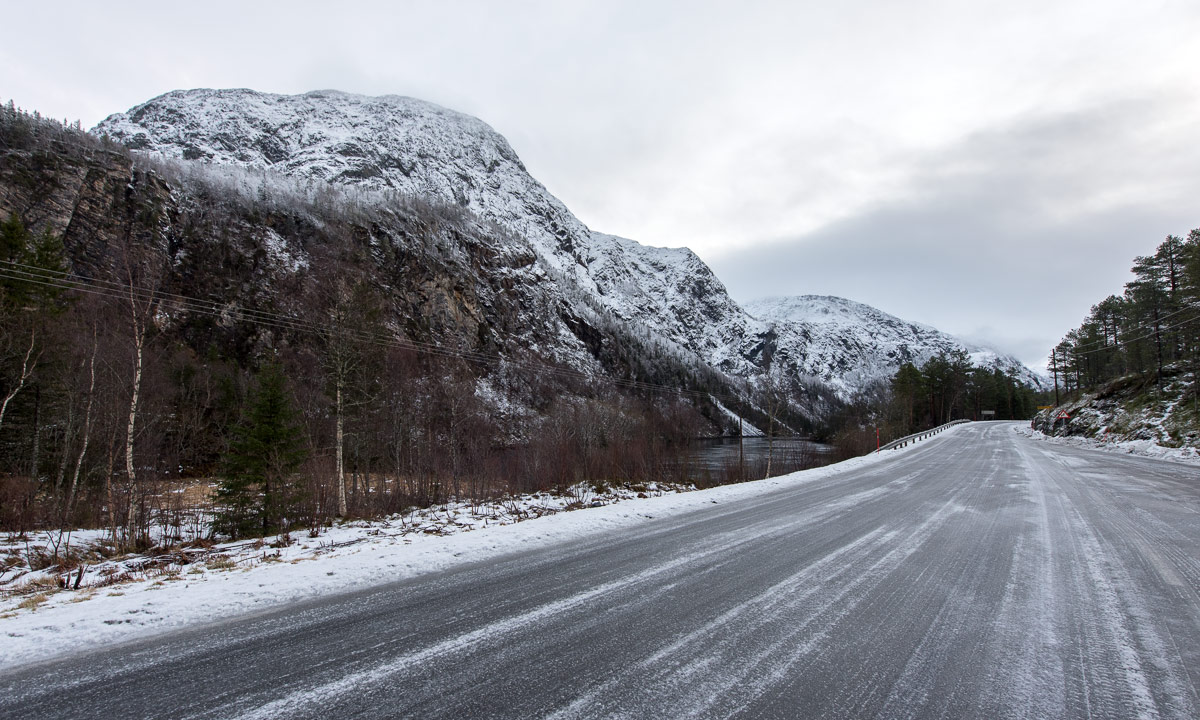
The weather is just awful. It is warm and grey, last night it rained. The roads are extremely icy and slippery. Today I took a bend on a minor road and the car just slid sideways despite the four-wheel-drive and the “Nokian Hakkapeliitta 9” – one of the best spiked winter tyres you can buy. Luckily nothing happened to the car since I took the bend quite slow (but apparently still too fast).

The whole of Scandinavia is much too warm – up to 16 °C warmer than normal and Norway broke several warmth records. It was warmest in Åndalsnes with 18.6 °C! Even though it will become a bit colder there is no stable cold winter weather in sight.

We know that the man-made climate change will lead to much warmer winter weather in Scandinavia. Maybe we have already started to witness the effects. It might be only the beginning of more drastic changes in the future.

Addendum (3.1.)

Another record: 19 °C were measured in Sunndalsøra, Norway yesterday. This is the highest winter temperature ever measured in all of Scandinavia.

Tyre change

The weather on my way home from yesterday night’s chamber choir rehearsal was, well …

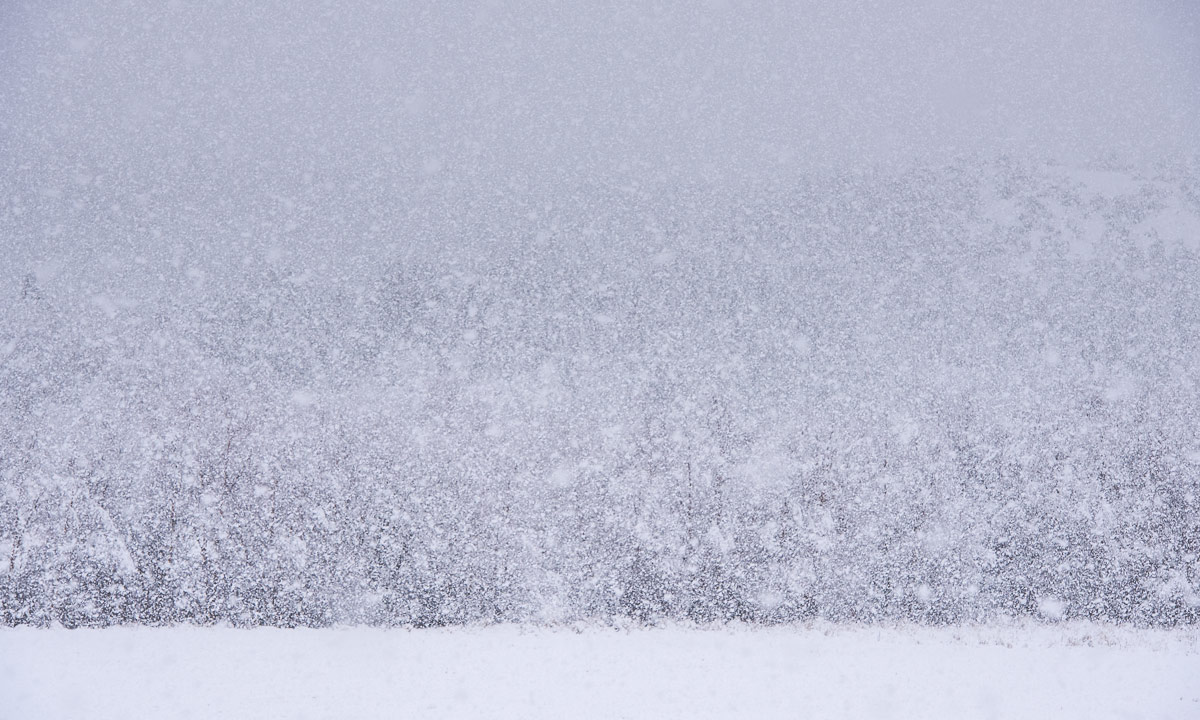
It was sleeting and snowing quite intensely with temperatures around the freezing point. I was really glad, that I got a lift, because the driver’s car already had winter tyres – but not mine. When I arrived in Skelleftehamn it was dry, but I could here some rain showers later that night.

This morning it was sunny, -2 °C and the street was icy. Final call for changing my tyres. I arrived at the garage 15 minutes before opening, because I expected loooong waiting queues, but interestingly enough I was the very first. It was a beautiful morning with blue sky and the sun illuminated the yellow birch trees, shone on the frozen puddles and through the ice-covered car windows. Time to take some pictures with my iPhone.

Soon my car was equipped with my winter tyres “Hakka 9” and I could drive to work. I wouldn’t have dared with summer tyres. A snapshot from my way to work:

By the way: “Hakka 9” is how the Swedes call Nokian’s “Hakkapeliitta 9”. These studded winter tyres are excellent, but many Swedes struggle with the Finnish name.

Three autumn colours of the ground

This morning on the way to work – wet snow covers the minor roads and bicycle paths.

This afternoon on my way home I made a stopover – bright and colourful the forest, bleak and dull the bog.

What are your autumn colours?

Cycling home

At time I have a project which is located at Solbacken, Skellefteå’s shopping centre outside the city. Normally I take the car because the public transport is quite poor. Yesterday however I took the bicycle. On the way there I chose the straight way. That’s 16.8 km, which took me 54 minutes.

On the way back I chose a longer and slower route. As forecasted the weather was warm and sunny, round 26 °C.

In short:

+++ unlock the bicycle +++ pass the recycling yard (Yuck, it stinks!) +++ follow the forest road +++ gaze at the first autumn colours +++ notice the crossing ski track +++ slow down on b-bum-bumpy passages +++ feel a bit lost +++ look at the map +++ realise that I’ve come longer than thought +++ pass the go-kart ground +++ follow the asphalt road leading away +++ know the sandy shortcut +++  approach the stugområde (area with summer cottages) +++ observe the largeness of some these cottages +++ spot a bathing place +++ take a bath in the Baltic Sea +++ drink +++ continue the gravel road +++ cycle along the small, winding forest path +++ pass Harrbäckssand +++ do not take a bath there (too shallow and too muddy) +++ follow my lengthening shadow +++ push the bike down the bumpy, sandy slope +++ follow the forest path +++ see the barbecue hut +++ realise that I’m in Skelleftehamn and almost home +++ taking a final “spurt” +++ home +++

This way was only 3 km longer, but took more than 30 extra minutes to cycle due to the bumpy roads. Beautiful anyway, but not the route I’ll choose regularly.


Day 5 – Götaland

This article is part of the series “2019-07: Southern Sweden”.

12 July, Jogersö—Gränna—Bjärnum

It always seems to be the third night in a tent, when I got used to the camping mat and sleep very well. Nevertheless I’m looking forward to a real bed. Annika and I dry the sleeping bags and the tent in the sun and have breakfast. Half past nine we start our journey farther south. We have to drive 413 km, mostly on the E4, the very same European route, that connects UmeåSkellefteå, Piteå and Luleå.

Here it connects Nyköping, Norrköping, Linköping and Jönköping. While å stands for river, köping means market town.

We stop in Gränna, a town by the lake Vättern which is Sweden’s second largest lake. Here’s a large campsite, a lovingly designed minigolf course, a ferry to the island Visingsö and – most important for us now: several restaurants and ice cream shops. Children are wading in the water, grown up are sunbathing on the public benches, the place is touristic but not crowded.

There are nice bathing places along the coast of the Vättern, so we bath twice, first in Röttle, then near Sjöbergen. Since the Vättern is so large you can think that you bath in the North Sea or Baltic Sea – until you taste the water. It’s fresh, not brackish or salty.

Röttle has another attraction besides its bathing place: there were severals water mills. Here we stroll around for a while.

After our long break we continue our car trip southwards. We cross the border to Skåne, the southernmost part of Sweden. In the evening we arrive in Bjärnum.

You see the light behind the front window of the house? That’s our place for the next days.

A word to the title of the article: Sweden is divided into three parts: Norrland in the north, Svealand in the middle and Götaland in the south. The population density in Götaland and Svealand is more than ten times as high as in Norrland.

Fog in Skelleftehamn

Yesterday fog patches pulled up from the sea. At the coast was quite dense and hid anything further than 20 meters away.

But fog does not only hide things farther away, it also reveals other things nearby. For example the many spider nets in a small bog nearby.


Four days in Österbotten

Last Monday Annika and I travelled to one of Umeå’s nearest neighbouring cities: Vasa. Vasa is located in Finland and the fastest and easiest way to get there from Umeå is by ferry. Taking the car round Kvarken and the Bothnian Bay – the northernmost parts of the Baltic Sea – would be more than 800 km.

2. April – sunny Islands, cormorants and bad roads

The forecast promised sunny weather and I wanted to flee the town of Vasa (round 68000 inhabitants). Our plan was to explore some of the large islands of the Kvarken Archipelago which consists of several thousands of islands and islets.

We left Vasa municipality and entered Korsholm municipality. In Alskat we left the Finnish mainland, took a bridge to the island Fjärdskäret and then the large bridge Replot bron – more than a kilometre long – to the Björkö skärgård.

We made a short stop at the church in Björköby, the main village of Björkö. To our surprise the church wasn’t locked and we could enter. Probably it was only open for the handyman working there. I even went up to the organ but I didn’t dare to climb the clock tower without asking.

From Björköby it’s not far to Svedjehamn, a boat harbour. The coastal sea was still covered with ice and no boat could be seen. Probably many of the boats were in the red boathouses, that were everywhere.

We looked around, then we followed a path to the large observation tower, which is dark and almost 20 metres high. An eye-catching landmark. Beside of some ice fishers that parked their cars at the coast, we were completely alone. Only seabirds could be heard, mostly the typical honking call of the Whooper Swans.

From the tower we had a nice view both over land and sea. The land was framed with ice, but further out the sea was open. Birds flew around, mostly Whooper Swans and small flocks of ducks (being shooed away by other birds). Suddenly a group of dark birds passed our tower, it was a flock of cormorants.

After a while of amateur bird watching we descended the tower and went back to the parked car. We were hungry and took the way back to the Replot Bridge, where we got a delicious lunch at Berny’s Café and Restaurant.

After that we headed for another island in the north. This was quite challenging to drive because larger parts of the way were covered with ice with deep ruts. I had to drive quite slow to keep on the way. In Köklot I made the photo of the only boat in the fishing port, later I just had to photograph the small red hovercraft. I would love to have such a vehicle that can access the sea the whole year round.

I followed the bad road for a while but finally I had to turn because all turnouts were closed. It took a long time to drive back and when we arrived in Vasa we both were tired.

Later this day: A dinner with Asian food, a small coastal walk in Vasa and a bit of luxury: Our flat had a tiny sauna.

3. April – history lessons, old Vasa and Indian food

Already the day before we had decided that we wanted to stay two other nights in the region of Österbotten. We had given Couchsurfing another try. We contacted K.D. that lives in the Korsholm municipality but he didn’t have any place for us. He suggested however that we could meet in the city. So Annika and I went to the monument on the market square where we met K.D.

We got an extremely interesting history lesson about Finland in General und Vasa, while we slowly walked through the city. I didn’t make a single photo, I was too eager listening. After some hours K.D. had to leave but he invited us to the museum Stundars for the next day.

Later we took the car to Gamla Vasa, the old town that burned down in 1852. Some walls, among others of the old church from the 15th century are still there.

Later this day: Indian food and another sauna session.

4. April – a meteorite, two museums and welcoming hosts

Already before the journey we learned about Söderfjärden, a large plain which is an impact crater of a meteorite impact 520 million years ago. The plain lies south of Vasa and we took the car there.

The exhibition at the crate’s centre was closed but outside there’s a model of our solar system. I never walked from the sun to Mercury, Venus, Earth, Mars, Jupiter and Saturn – here it was possible.

We only had limited time, so we took the car to Uranus and Neptune – two small blue-green orbs. Then we changed our perspective back to here and now. We saw the first cranes of the year, more geese and more whooper swans.

From Söderfjärden we drove to the museum Stundars, which is quite nearby. We met K.D. again who had opened the “Smedens stuga” – the cabin of the smith – together with a colleague. We thanked for the day before and had an interesting talk about history and now.

We couldn’t stay for long because we had another appointment. When we had stood on the deck of the ferry three days ago we got in contact with S.. He gave us his phone number and this day we met him in Malax where he opened the Kvarkens Båtmuseum and gave us a private guided tour.

I was deeply impressed by the boat that was used for seal hunting. The hunters lived on the ice for several months with nothing but their boat to live in. We do not talk about the middle age, we talk about the 20th century. The last time this boat was used for seal hunting was in 1963, only five years before I was born!

Through Couchsurfing Annika got in contact with A. and M. who live in Västerhankmo, north from Vasa. We were welcome to live with them for two days, although they had other guests and one of the sons would return from Australia the very same day. We felt honoured that we could stay anyway. We drove to their house, where we were shown a huge couch to sleep over and got in contact with the residents – both human and feline.

Later this day: z-z-z-z

5. April – cloudy weather and a bilingual car trip

The weather was cloudy and we were quite lazy. We had seen a lot the last days and we learned a lot. We learned especially a lot about the Finland-Swedes, the Swedish speaking minority in Finland. Although their nationality is Finnish they have Swedish as a first language. Österbotten is one of the regions in Finland with a lot of Finland-Swedes. In Vasa 25% have Swedish as a first language, in the neighbour municipality Korsholm it is 72%. All people mentioned above are Finland-Swedes and have Swedish as a first language.

The children grow up with Swedish and go to Swedish schools, where they will learn Finnish as a secondary language.

Even the culture is different. When Annika asked for (Finnish) tango events she was told that this would be more a Finnish thing and therefore not easy to find in Österbotten.

It is said, that “the” Finns are much more direct then “the” Swedes who try to avoid any conflict, when possible. I experienced the Finland-Swedes as more to the point than the Swedes and I have to admit, that I enjoyed it because of my own quite direct personality.

Back to 5. April. We took the car and travelled around, first to some other islands.

In Isokyrö we stopped for the old stone church, built between 1513 and 1533.

Temperatures were above zero and everything looked grey and dull. The leftover snow was wet and the gravel roads were muddy. When we returned to our overnight place my car looked really dirty – but in their special way the dirt patterns were beautiful anyway.

Later this day: Having a good time with M., A., and family including a very tasty meat soup with homemade bread and petting the cute cat

6. April – with the Ferry to Umeå

6:40: the alarm rings – 7:05: we sneak out of the house (we said goodbye the evening before) – 7:45: we roll on board of the ferry – 9:00: the ferry starts its journey back to Sweden – 12:30 (Swedish time): we arrive in Holmsund, 20 km from Umeå.

Thank you, K.D, thank you S. “för trevlig sällskap” – for nice company!

Thank you, M., A. and family – for your hospitality and “för trevlig sällskap” as well!

Later this day: The first flowers of the year:

Late March at the coast

The last few days it was quite warm with maximum temperatures round 10 °C. The warmth of the sun warmed the rocks and made the ice melt around them. Today it was very windy and the water level was 50 cm above average. Therefore the sea ice rose while the coastal ice has still been frozen solid to the shore. That has resulted in large cracks in the ice which made the high water flow up through the cracks and cover the coastal ice.

This turquoise blue water almost looks Caribbean, but of course the water is still literally ice cold. And while the air is warm at daytime, the ground is still so cold, that ice needles grow on the undercooled water puddles.

Spring equinox was a week ago, now the days are longer here than in Central Europe. Sunrise tomorrow will be already at 5:00. I hope that sun and wind will remove the ice cover on the Baltic Sea soon. I’m longing for opening the kayak season 2019.

The lake Semyonovskoye in Murmansk

This article is part of the series “2019-03: Redex Murmansk”.

I was in Murmansk with Barents Press with a project called Redex 2019. The project goal is to establish contacts between sports journalists and exchange experiences.

Saturday, 16 March

While swimmers still compete in 1000 m of ice swimming as part of the 3rd Ice Swimming World Championship in Murmansk I leave the spot and start to go back to our Hotel Park Inn. That’s round 5 km to go.

In Summer I would have to go round the lake Семёновское озеро/Lake Semyonovskoye. Now it’s winter and I can simply go across. The ice is at least 50–60 cm thick as the huge ice cuboids along the way show. In the heap of these ice blocks kids were playing. One of them probably will become next generation’s polar explorer.

On the other side of the lake I can spot grey concrete buildings – as cuboid as the ice blocks – and the Russian orthodox church Спас на водах/Saviour on Waters. They have been the background scenery of the championship, too.

And I see people everywhere. The lake is not crowded, but used of many people for different activities. Some of them are sitting on folding stools and doing ice fishing. Others are going for a walk or doing cross country skiing. The nice thing: some of the skiers are quite athletic and fast, others are do not have any technique and are quite slow. But they ski anyway. And all of them seem to enjoy being outside.

These funny “motor-bananas” probably only exist during the ice swimming: The vehicles consist of three parts. In the middle there’s the “chauffeur” standing in a sledge-like plastic tub. At the rear a banana-shaped inflatable rubber thingy is attached on which people can ride. The whole thing is driven by a small caterpillar attached to the front of the plastic tub and operated by the man in the middle.

I start to cross the lake. I pass a snowman and admire his artful face. He looks however too serious to be my namesake Olaf from the film Frozen.

The lake is not so big and soon I reach the other side. Here’s the winter bathing place I already heard of before. I’m angry with myself that I didn’t take swimming trunks and towel with me because the cold water looks inviting. But no swimwear, no bath.

Here I have to leave the Lake Semyonovskoye and I start following the main road Улица Челюскинцев/Ulitsa Chelyuskintsev back to the hotel. Temperature is above zero and the snow is soft, brown and greasy, but it’s easier to walk on that than on blank ice. At the branch Улица Туристов (“Tourists Street”) a woman comes my way. She bears skis with an old-fashioned binding system. I’m sure she wants to go to the place I just left: the Lake Semyonovskoye.

Redex 2019 – side dishes

This article is part of the series “2019-03: Redex Murmansk”.

I was in Murmansk with Barents Press with a project called Redex 2019. The project goal is to establish contacts between sports journalists and exchange experiences.

Thursday, 14 March

The first two days of Redex 2019 and therefore half the time in Murmansk is already over. Yesterday was very intense, today was more relaxed.

Yesterday we met trainer Erika of Fizkult, a gym for people with special needs such as medical rehabilitation. We met trainer and director of the bandy team Murman. We were shown the hockey stadium, the most northern ice rink in the world and the bandy arena. We met Irina Andreeva, leader of the municipal Sport Committee in her office. By good luck we met Davaadorj, ice swimmer from Mongolia while visiting the sport swimming pool. We watched a rehearsal of a flag parade, part of the closing ceremony of the 3rd Ice Swimming World Championship and we had dinner in the Sumakh restaurant in the Volna shopping mall.

To come to all these places we walked sometimes but mostly we took the trolleybus. There’s always a ticket collector in the bus and you have to pay cash. A trip costs 32 Rubel, that’s round 0.45 Euro.

Here I won’t tell all the stories about all the interesting people we met. I’ll just show some images that I made yesterday. That’s why I called the article “side dishes”.

Today we took a trolleybus to the sport complex Долина Уюта/Dolina Uyuta where there was a huge cross country skiing competition of school kids. It was interesting to see all the kids and teens warming up and the communication with their trainers. Looks like a great place to ski, even though I cannot skate but only ski classical style (on a very low level).

After that we went to the press conference of the 3rd Ice Swimming World Championship, the main event in Murmansk that will start tomorrow. 400 swimmers from 33 countries will compete in ice swimming with distances up to 1000 metres. But that’s another story.

Just two other snapshots photos from today: