Båtsfjord – Ørnes by Hurtigruten

This article is part of the series “2018-03: Varanger peninsula”.

Days 41 to 44 of my winter journey 2018

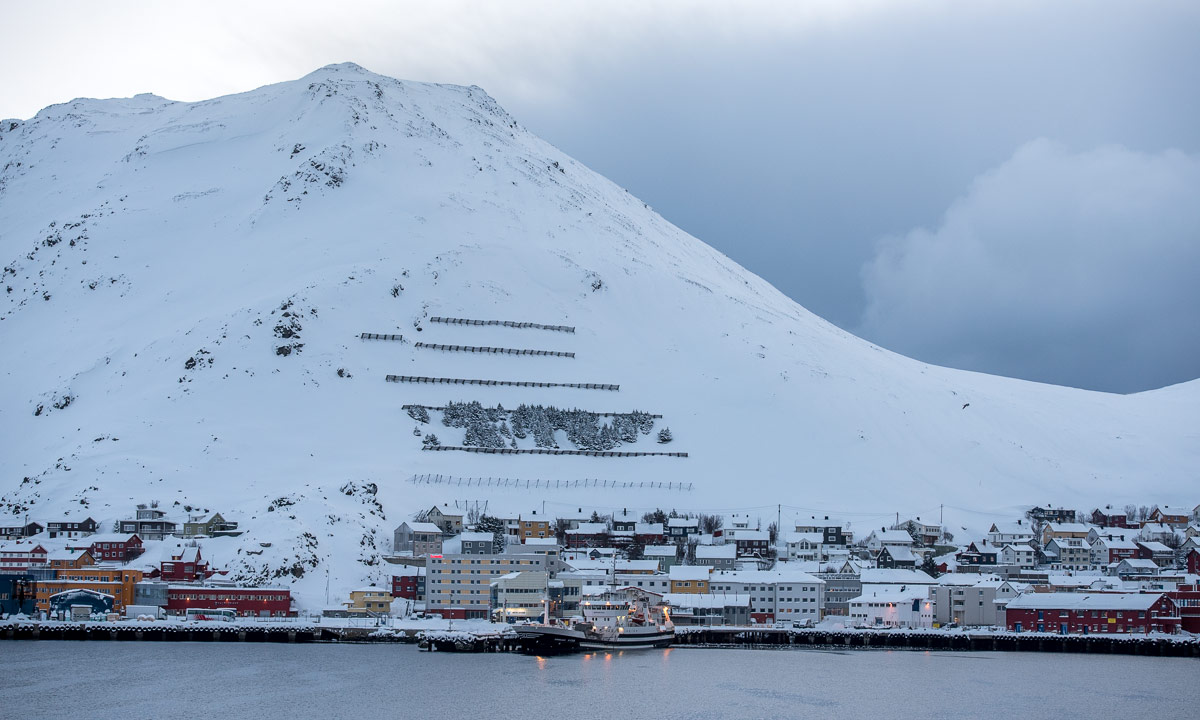
13 March at 19:45 the Hurtigruten ship MS Nordnorge docked in Båtsfjord. Annika went on board with all our luggage that we would need the next days, while I drove the car into the elevator. The next 59 hours we would travel many miles but stay in the same cabin. Cabin number 305. Kind of luxury. We would even get breakfast because of a campaign. On 16 March round 7:00 we would leave the ship in Ørnes and drive home.

I will not write much about this part of the winter journey but showing photos from the Hurtigruten trip with some comments.

13 March 20:30 – finally on the Hurtigruten. Shop, reception, restaurant and people cruising.

13 March 22:00 Berlevåg – the westernmost of the four Hurtigruten stops Vadsø, Vardø, Båtsfjord and Berlevåg. Some days ago we stood on the breakwater to see the ships coming in, now I stand outside on the bow of the ship to see the very same breakwater passing as we approached the peer.

14 March 05:25 – very early and quite cold in the wind. I’m the only one outside beside of people working.

14 March 05:40 – approaching Honningsvåg on the island Magerøya. Main attraction of that island: the North Cape.
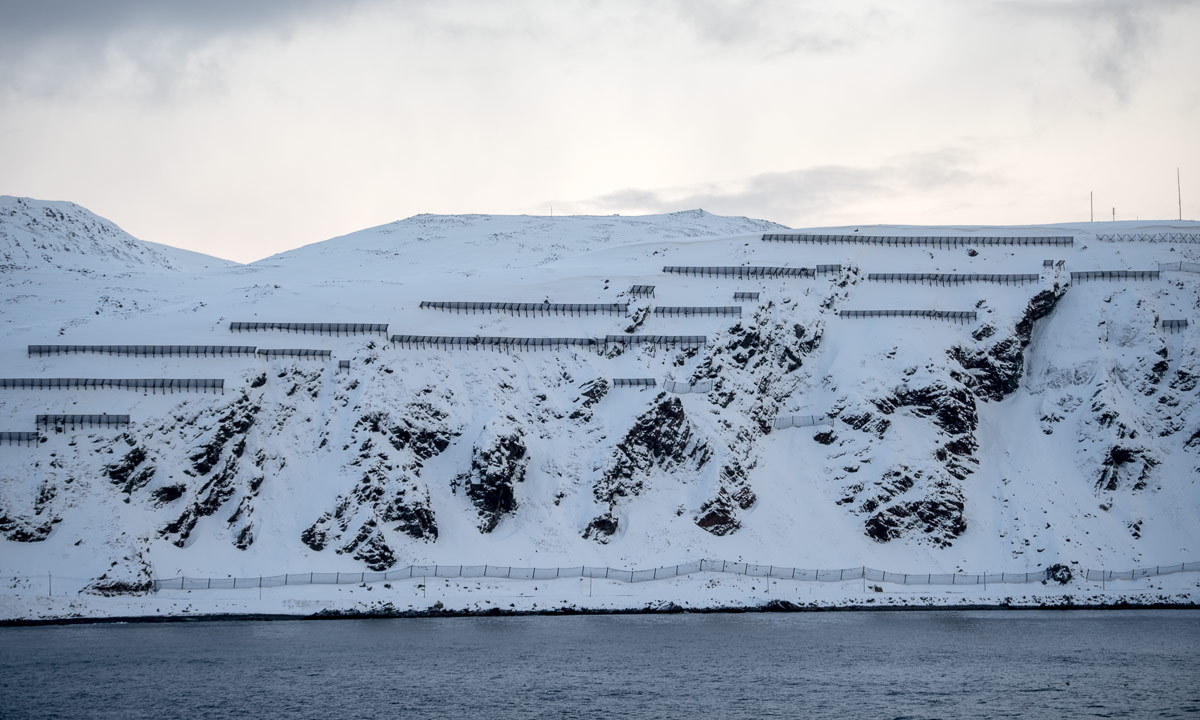
14 March 06:35 – I stay outside and look at the constantly changing weather.

14 March 08:25 – two ships pass. First a smaller boat, twenty minutes later the Hurtigruten ship Kong Harald. It’s snowing.

14 March 11:15 – we approach Hammerfest. Normally the ship will lie there for two hours, but today the ship is late.

14 March 15:45 – I’m outside for some hours and enjoy the view at the landscape. Everything is constantly changing: The mountains, the perspective, the light.

14 March 20:15 – strong polar lights cover the sky. Many people are outside and so are we. I already showed some photos in the article Aurora on the Hurtigruten.

14 March 23:45 – we approach Tromsø. Annika and I are already in our cabin and ready for sleep, but I can see the Tromsø Cathedral through our porthole. (We booked a cabin with limited view to save money and our porthole is more like a tube.)

15 March 07:30 – it’s not cold but very windy on the bow of the ship. My advise for such a winter journey: take the warmest jacket you have.

15 March 07:35 – we approach Harstad.

15 March 10:20 – we reach Risøyrenna – the Risøy Channel, build between 1911 and 1922 to enable bigger ships pass between the islands Andøya and Hinnøya. Only seven meters deep.

15 March 17:00 – we approach the quite famous Trollfjord. In winter however the Hurtigruten ships do not enter it.
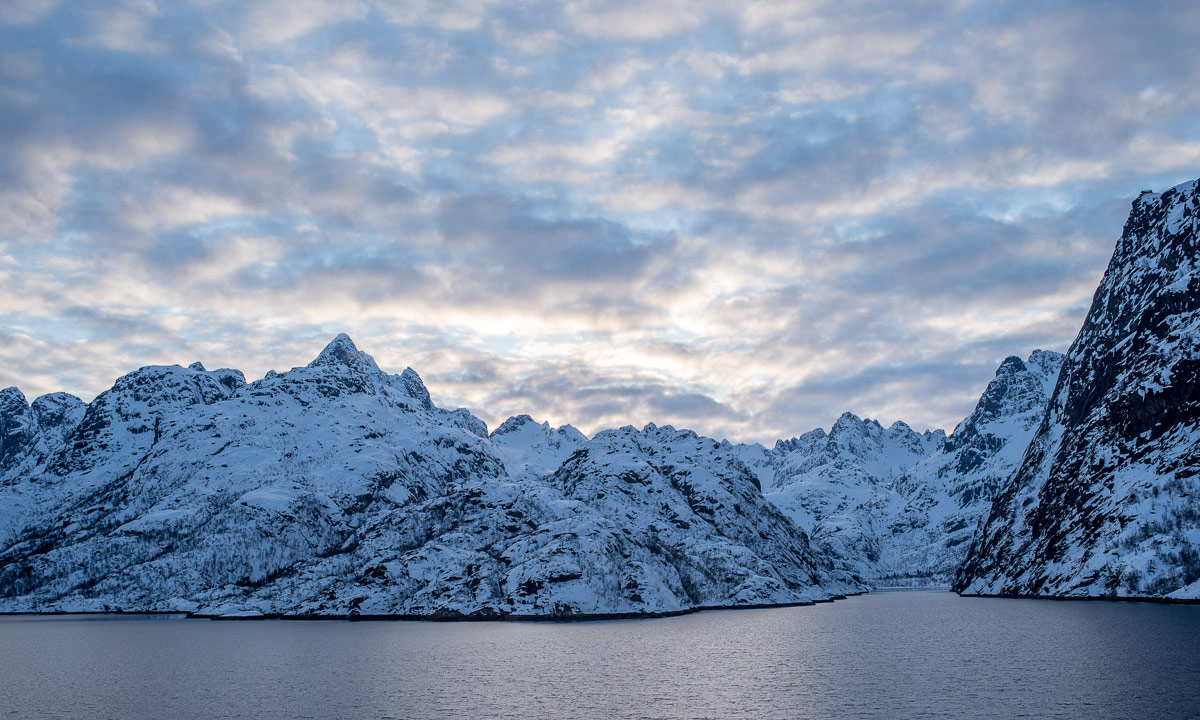
15 March 18:30 – we arrive in Svolvær, largest town on the Lofoten. It’s a longer stop and Annika and I leave the boat for looking around.

16 March 06:00 – the alarm clock rings. At 7 o’clock we will arrive in Ørnes, leave the ferry and drive to Skelleftehamn. 583 km by car then I’ll be home again after more than six weeks of travelling.

Why travelling in Northern Norway can take time

This article is part of the series “2018-03: Varanger peninsula”.

Day 40 of my winter journey 2018

At 11 o’clock we left Kjølnes Fyr and started our car trip to Båtsfjord. First we had to take the road 890 to Kongsfjord and over the Kongsfjordfjellet, then we had to continue on road 891 over the Båtsfjordfjellet to Båtsfjord.

I wasn’t sure if we would manage it due to the severe stormy and snowy weather. Another guest staying at Kjølnes Fyr had a hard time driving the 5 km from Berlevåg with very bad visibility. The roads however were still open though marked with a warning “difficult driving conditions because of snowstorm”.

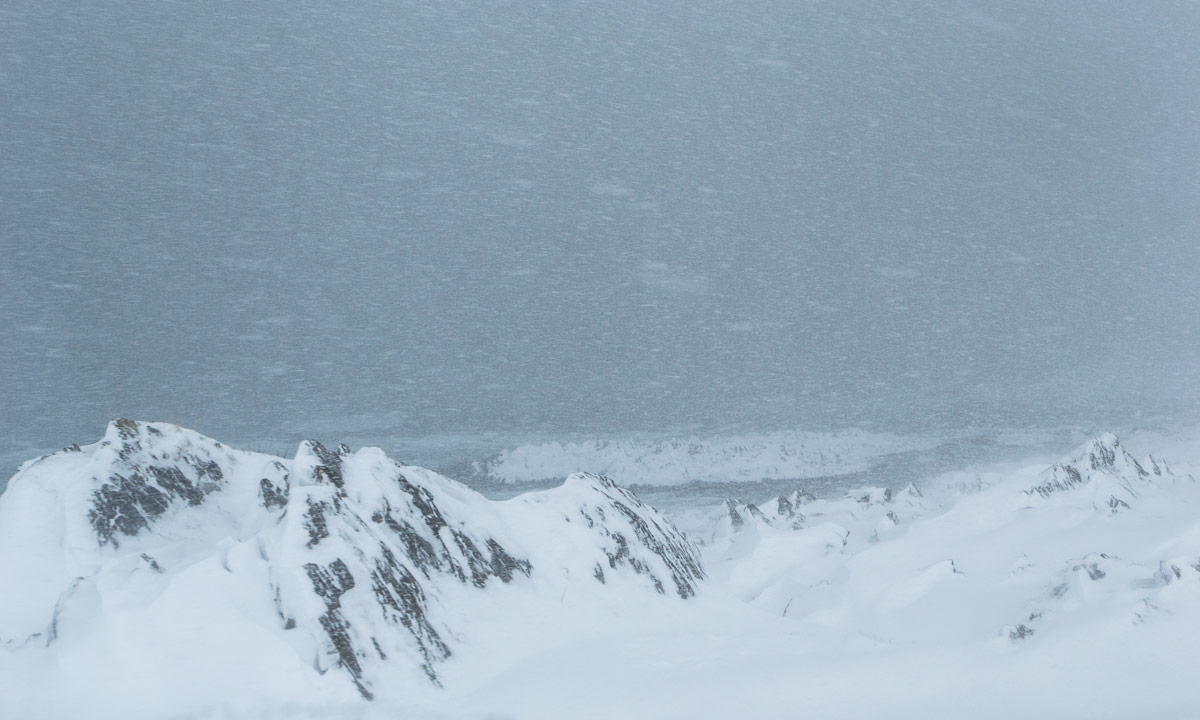
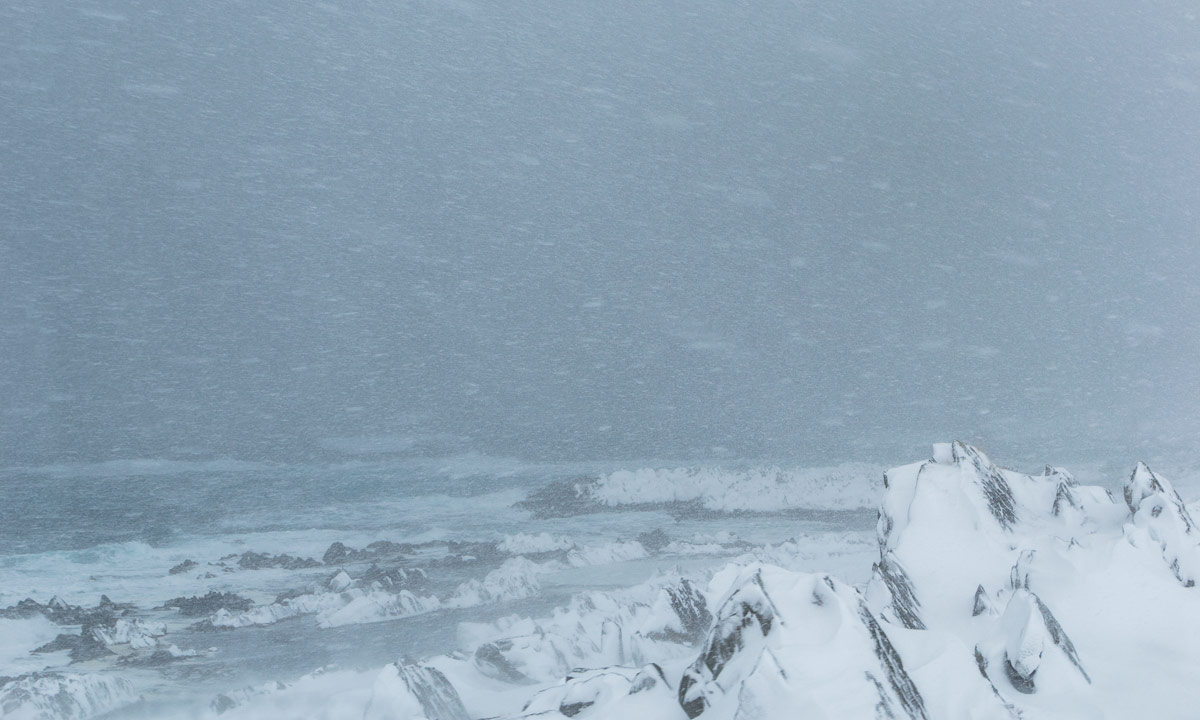
And yes, it was stormy and it snowed a lot. The sight on the road however was still quite good. While I focussed on the road Annika took some photos of the coast beside of the road:

Some parts however were very hard to drive, since the visibility was extremely bad. It was hard to see whether there were snowdrifts on the road and how deep they were and several times I had to stop completely to find out, where the road continued.

I started to doubt if it was possible to cross the mountain passages but we would make it at least to Kongsfjord where we could stay overnight if continuing became impossible. Annika tried to check the traffic information of Vegvesen – the Norwegian Public Roads Administration – but there was no mobile internet available.

I continued driving along the E 890 and the only other vehicle we met was a snow plough. The street behind it however seemed as snowy as before.

Shortly before Kongsfjord Annika’s smartphone was online again and she informed me about the updated traffic information: The mountain sections of both the 890 and the 891 where restricted to kolonnekjøring which means that you cannot drive alone but have to follow a convoy guided by a snowplough. The kolonnekjøring was scheduled to 14:30. The good thing: Driving in a convoy would be much easier than driving alone.

When we arrived in Kongsfjord it was 12:10, so the 28 km drive from Kjølnes Fyr had taken more than an hour. We were lucky that there is a landhandel – a grocery – in Kungsfjord that is open all year. We entered the landhandel, told about the kolonnekjøring and were invited to coffee and cookies straightaway. A big thank you to the owner for the warm welcome!

While we sipped our coffee and waited we constantly checked the traffic informations. After a short while we learned that the start of the kolonnekjøring was postponed to 17:00. That meant more waiting, but we were not the only ones. Other men in work clothes – mostly fishermen – waited as well. They told stories, laughed out loudly while drinking coffee or eating fast food. Anyway we all were still lucky. While we only had to wait some more hours many other roads were completely closed due to the weather, among others the way to Mehamn, the passage between Kiberg and Vardø and the only way to the North Cape.

Hours later: We said goodbye, cleared the car of snow and drove the short way to the boom gate. Here some other vehicles, mostly trucks waited for the convoy to start. One of the truck drivers attached snow chains to his truck.

Dusk had already been falling when our convoy started some minutes after 5 o’clock. My job for the next time was following the rear lights of the car in front.

Some passages were quite easy to drive, some passages were hard to follow due to the blowing and driving snow. (Sorry, no photos.) After 35 minutes we arrived at the T-junction, where the 890 from Kongsfjord, the 890 from Tana Bru in the south and the 891 from Båtsfjord meet. A long queue of cars coming from Tana Bru already waited. Some minutes later the convoy from Båtsfjord arrived as well. The snowplough leading the convoy to Kongsfjord passed and seconds later our queue of cars started to approach the intersection were we turned left to follow the convoy to Båtsfjord.

This part of the trip was extremely exhausting. It was dark, the convoy was slow and mostly the visibility was really bad. I just tried to follow the red lights in front and it felt like hours and hours until the snowplough turned right and we suddenly arrived in Båtsfjord. Here it seemed to snow as much as in the mountains and I was very relieved when I finally parked the car at our overnight stay. Phew – that was no easy ride and I’m really grateful that convoys led us over the mountains under the snowstorm conditions.

The rest of the day? Buying foodstuff at REMA 1000, eating fast food, falling asleep quite fast while the snow squalls over Båtsfjord continued. According to our host 30 cm of snow already had fallen that day and more was expected.

At least we arrived in Båtsfjord, probably our last overnight stay on land. The next evening we would take the Hurtigruten to Ørnes, were we would drive home to Skelleftehamn and Umeå.

(The first five photos were shot by Annika. I did the editing.)

A trip to Murmansk – trip home

This article is part of the series “2018-02: A trip to Murmansk”.

Day 24 of my winter journey 2018

After two days of visiting Murmansk we were prepared for our trip back. The bus arrived shortly after 7 o’clock local time (5 o’clock CET) and we started our trip home.

We left town and crossed the Kola Bay. It was still dark.

Then I fell asleep. I woke up shortly before our rest at the small shop, that seems to be located in the middle of nowhere.

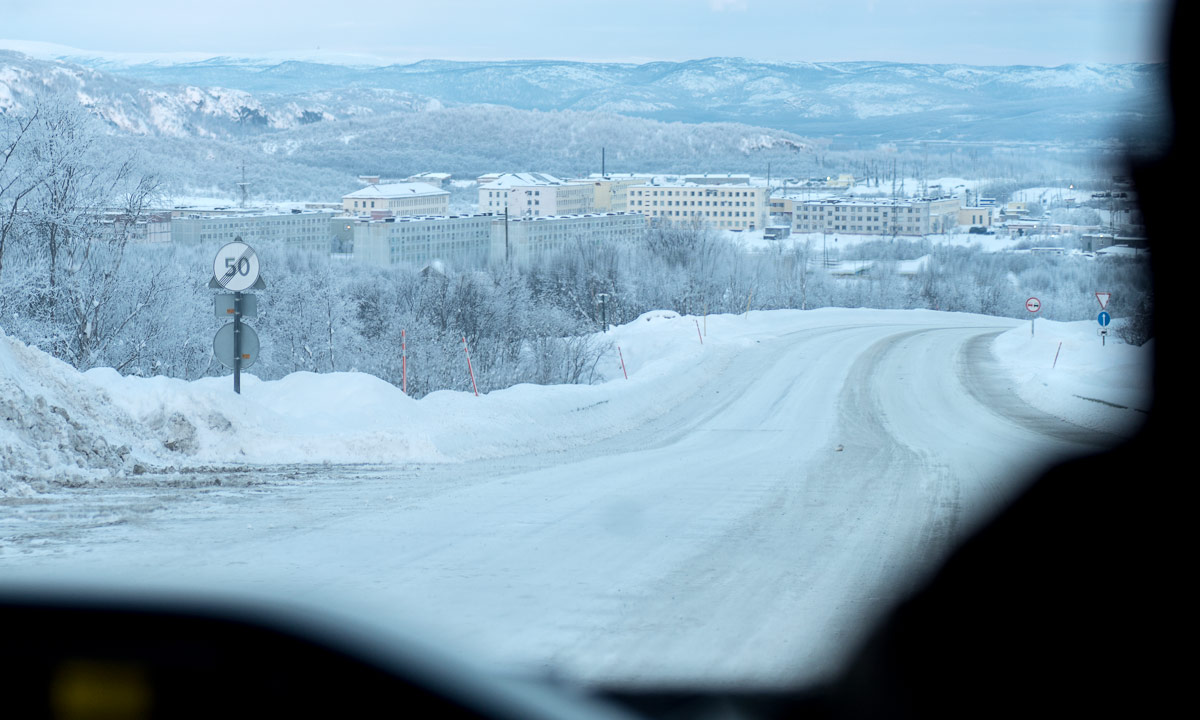
Meanwhile it was as bright as day. We followed the E105 that would bring us first to the Russian-Norwegian border and then back to Kirkenes. Some images taken from the bus:

Finally we came to the border. We had to leave the bus with all our luggage. I bought huge winter rubber boots in Murmansk and some books and was curious what I would have to do at the customs, but since I stood in the queue “nothing to declare” no one cared.

Next station: showing the passports. Chris, Ørjan and Annika had already went through, now it was my turn. I gave the passport to the border official, trying not to smile – no one seems to smile when communicating to strangers. The man looked at my passport for several minutes, typed things into the computer, looked at the passport again, stood up and left. He came back with a woman discussing something in Russian. The woman left again, the man continued working. Again he left, again he came back with the woman. I didn’t understand a single word and started wondering what the problem could be, I guess it was computer problems. It took round 15 minutes until I got my passport back with some Russian words, probably an apology or an explanation about what went wrong.

I climbed into the bus and we were driven to the Norwegian customs. What a difference! The handling was not only much faster, but much more friendly. The Norwegian border officials smiled, made some friendly small talk and hardly a minute later we were through the customs and again in the Schengen Area where you can move between countries without needing a visa.

Some very brief observations from Murmansk:

  • The difference between poor and rich, cared and ruined is quite visible
  • People won’t smile at you, especially the officials and salespersons
  • The food in the restaurants we visited was extraordinary good
  • Many people don’t speak any English. Exceptions found in our hotels and restaurants
  • I felt like 4 year old when I tried to decipher the Cyrillic letters.
  • I didn’t feel welcome every second, but safe all the time

Travelling to Murmansk was a very interesting experience and I would love to see more of Russia. Next time I would like to use internet services as e.g. couchsurfing to get into contact with the locals. I guess I would get another view of Russia.


A trip to Murmansk – day one

This article is part of the series “2018-02: A trip to Murmansk”.

Day 22 of my winter journey 2018

tl;dr Alyosha monument · old concrete buildings · Church of the Savior on Waters · view over Murmansk · restaurant Tundra · nocturnal Murmansk

Alyosha (Алёша)When we arrived in Murmansk the day before it was already dark and we were tired. Today after breakfast we were eager to explore. We ordered a taxi to our first tourist attraction: The Alyosha Monument.

“Defenders of the Soviet Arctic during the Great Patriotic War” (Защитникам Советского Заполярья в годы Великой Отечественной войны), commonly called Alyosha (Алёша) is a monument to Soviet soldiers, sailors, and airmen of WW2.

It was build in 1974 and it’s the second-tallest statue in Russia. The 70th aesthetics and the communistic concrete appeal didn’t help to make me like this statue, but I always have difficulties with war memorials. I’m a pacifist.

I enjoyed however the view over Murmansk. It was visible, that it’s a large town (it has 300,000 inhabitants) with a large port and many concrete high-rise buildings.

After we visited Alyosha we started to walk back into the center of Murmansk, where our hotel Azimut was located. We turned right into the street Ulitsa Aleksandrova. To the left there were old concrete buildings. They were extremely rundown and I was shocked to see these building and imagine people living here. Maybe the inside would look nicer, but the outside was horrifying.

In many directions you could see these high-rise estates with rectangular concrete buildings. But we could see something else: a Ferris wheel. We went on and came to a permanent amusement park, located beside the lake Semyonovskoye (Семеновское озеро). Of course the lake is covered with ice and snow in wintertime and some locals used the ski tracks going round the lake.

From that place the next destination was quite near: the Church of the Savior on Waters (Спас на Водах), a small Russian orthodox church, built 2002.

When we came to the church I could see some people leaving, going backwards and making the sign of the cross again and again. It is allowed to enter the small church but not to take pictures. I’ve never been in an orthodox church before and I was stunned. The walls were covered with icons of saints and incense was burned. Some elderly women were lighting candles and immersed into deep prayers and almost seeking physical contact to the icons and other objects. I felt deeply touched by this lived religiosity although I’m not religious by myself. On a table some food was placed. Bread and fruit, among others a bag with three lemons. Sacrifices or donations to the priests?

I have to admit that I felt like an intruder and completely at the wrong place. I have to read more about this religion and a bit about how to behave.

We continued our promenade back and passed the Memorial Complex to the Soldiers and Seamen Who Died in Peaceful Time.

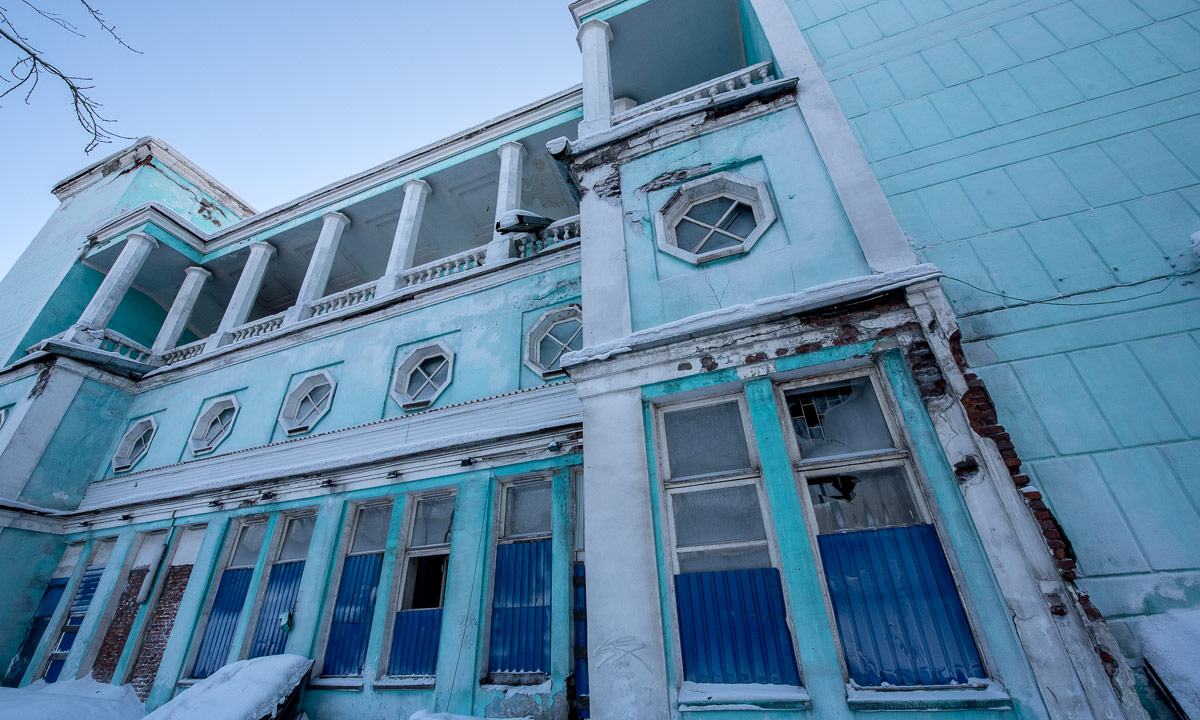
We left the memorial behind and entered the streets of the center. We walked back to our hotel and took a short rest. We passed an old theatre, painted in bright indigo but more a ruin than a building. A pity, I think it must have been beautiful in former times.

Then the hotel. I had twisted my ankle one week ago and was glad to rest the foot a bit. Time for shooting some photos from the 16th floor.

Some hours later. We decided to eat dinner and Annika and I found the restaurant Tundra (Тундра) that got excellent reviews in the internet. And excellent it was. The restaurant was fully booked but we were allowed to sit in the bar. In Russia the food is quite cheap compared to Scandinavia even in really good restaurants. The dishes are not as huge as in many places in Europe. I like that because it gave me the opportunity to taste different things: borscht and caviar with seaweed. Both very tasty!

After a nice evening at this great location with fantastic food we went back to the hotel. Murmansk is definitely not the most beautiful town in daylight but it wins a lot when it gets dark because many places, streets, parks and buildings are illuminated with lights of all colours.

We have seen a lot that day, both the beautiful and less beautiful facets of this arctic Russian town and I was as exhausted as I use to be when strolling through a big town for a whole day.

We were glad however to have another day to explore a bit more.

Some other random pictures of the day:

A cold and crisp winter day

Day 4 of the winter journey 2018

This morning was cold, clear and crisp with temperatures round -25 °C. The snow glittered and the sun slowly started to illuminate the snow covered trees. Today Annika would travel back to Umeå and our main plan for that day was to not have any plans at all.

Dirk, the owner of Solberget asked me however if I could have a short photo session to make pictures of his reindeer sledges in action – one of the attraction of the wilderness retreat. And I gladly accepted. Here’s a first selection of the photos i made.

When I later took Annika to the nearest train station Nattavaara the temperature dropped to temperatures round -30 °C. Good to know, that the small station in Nattavaara has a small heated waiting room where you can wait for the train.

Her train was several hours late (I’ll come back to that topic later …) but thanks to internet and mobile app we already were informed about that delay and hadn’t wait too long until the train arrived in Nattavaara.

Annika will be away for two weeks until we’ll meet again and start our main winter journey. Meanwhile I’ll do a ski tour with Jonas, a good friend from Germany who should already have arrived the day before. Which he didn’t. Well, the train delays – I promised you to come back to that topic.

Due to a snowstorm in Gävleborgs län all trains to Northern Sweden had been cancelled. Jonas had been stuck in Stockholm. He couldn’t take the train the next day neither since it was fully booked. Therefore he was forced to wait another day and then take the night train with a scheduled arrival on Monday, 7:38. This train however was stuck in Vännäs for many hours due to technical problems. Instead of arriving on Saturday, 12:40 as originally planned he arrived on Monday, 17:00. That’s more than 52 hours delay!

But finally he arrived and tomorrow we can plan our ski tour which we’ll probably start on the day after tomorrow, 7 February.


Hampstärnsstugan

There’s a hiking trail from Umeå to the lake Tavelsjö, the so-called Tavelsjöleden. The first stop after 5 km is the mountain hut Hampstärnsstugan. Today it opened for the first time this season and served waffles and some other snacks.

While Annika and I had used our new cross-country skis the last days (lightweight, slim and fast) we decided to use our sturdy back-country skis today since we didn’t know anything about the trail conditions.

The trail however was almost perfect, we just had to follow the railway-like ski tracks. We would have been much faster with the other skis, but we just enjoyed being outside and of course the warm chocolate and waffles in the stuga.

While we skied round 10 km, most of the families probably came by car. It was fun to watch the small children on their sledges and toboggans dashing down the slopes, even though we had to jump away several times to avoid collision.

I love being outdoors far, far away from civilisation, but it’s great as well to be able to make such short holiday trips just out of town.

Sunnanvik at dawn

Last night when I returned home from town I saw the small ice breaker Baus at the pier of the cement factory. When I went out this morning – it was -17 °C outside – Baus already had left. Instead the Cement Carrier Sunnanvik had come and was anchored at the pier, its strong spotlight illuminating parts of the ice covered bay.

In the background you see the copper smelter Boliden Rönnskär. So Skelleftehamn is not only nature as my blog sometimes seem to indicate, but industry, too. Sometimes you can get afraid when you see big cargo boats coming in filled with many thousand tons of sulfuric acid. On the other side this industry creates jobs for a lot of people and last not leasts heats my house with district heating. Two sides of a coin …

Visiting the “Vindelälvsdraget”

Yesterday Annika and I went to Vännäsby , 25 km away from Umeå, to view the 30th Vindelälvsdraget which is the world biggest draught dog relay according to the organisers. It started in Ammarnäs in the Swedish mountains on Thursday and ended just in Vännasby on Sunday. That’s a distance of 381 km in three and a half days.

Some of the competitors used a sledge pulled by four to six dogs, but most of them skated on skis and had one or two dogs dragging (more or less). They came along on the frozen river Vindelälven, turned into the river Umeåälven, which they had to leave right after the bridge. Some of the teams managed it perfectly while others had to shout höger! (right) to the dogs several times until they obeyed. The river bank is quite steep and was a real challenge for the discipline of the dogs. One of them just rolled in the snow while the skier tried not to slip and fall, while some others were shortly distracted by the smell of the grilled sausage by the trail. However all teams managed to come up where there were only some 100 metres left to the finishing line.

The speaker at the finishing line was great. His talk was so “adagio”, laid back and completely free of any stress. I really enjoyed his almost zen-like moderation which was the total opposite of the normal sport presenters stressful reporting attitude. My kudos!

Some photos:

Links: Website / Information pdf (both in Swedish)

Two days on the Hurtigruten

This article is part of the series “2017-02: Northern Norway”.

On Wednesday we left Kirkenes and started our journey to the next destination: Stokmarknes on the Vesterålen where we planned to visit good friends of mine.

KirkenesStokmarknes would be 1000 km by car and take at least 14 hours, if you take the faster way through Finland and Sweden. Anyway there’s an alternative: The Hurtigruten express route, which connects many coastal towns, among others Kirkenes and Stokmarknes. That’s why we took the Hurtigruten ship instead of driving for at least two days. In Vardø we entered the vessel Trollfjord and 16:45 we started our two day long tour.

The first night we went to bed quite early and I only took some pictures in Berlevåg. Since the ship already was moving again I decided to make a longer exposure with the camera on a tripod. That’s Berlevåg by night seen from the Hurtigruten:

We missed Mehamn, Kjøllefjord, Honningsvåg. The first place with a landing stage I saw was Havøysund, were we anchored from 7:45 to 8:00. Shortly after we met the Lofoten, the oldest and smallest ship of the Hurtigruten fleet today. It was tiny compared to the much bigger Trollfjord (which is tiny compared to modern cruise ships).

I tried to be as much outside as possible. It was cold and quite windy, not only because of the airflow, but the gusty wind, too. First I thought, that I would be extremely overdressed in my Canada Goose expedition parka, but soon I found it quite comfortable to wear it in the chilly weather.

In Hammerfest we left the Hurtigruten, looked round in town and bought food. In Øksfjord it started to get dark and the black-white mountain ranges became blue.

… and blurred if you wanted to …

… and it got darker …

Then it started to snow. Sometimes the snowfall was quite heavy especially with the wind and I was even more glad about my warm parka.

In Tromsø we arrived at 23:35 and I made some night shots of this favourite town of me.

We could have left the ship for a visit of Tromsø but we preferred sleeping. We’ll probably visit Tromsø this summer.

The next morning came and the last day aboard began. Good for me, because even if I was glad to slip the car ride it’s not my world to be on a large ship looking at the landscape rolling by. Last night snow fall has brought much snow on the top deck. I never waded through snow drifts on a ship before.

At the same time the Trollfjord anchored in Harstad, a town on the island Hinnøya.

On our way to the next destination Risøyhamn it got extremely windy, the stabilised ship started to roll and to pitch and heavy snow showers appeared, reducing the view to some hundred metres.

Suddenly the wind calmed down, the snow showers were left behind and for the first time of the whole cruise patches of blue sky and finally the sun came out. We approached Sortland, the last stop before our destination Stokmarknes where I gazed at the beautiful mountains of the Lofoten archipelago in the south.

I generally dislike the last 30 minutes of transportation, if it’s by train or by plane. I just want to arrive, and so it was on the Hurtigruten. Impatiently I waited in the inside of the Trollfjorden for its arrival in Stokmarknes, then another fifteen minutes for the allowance to enter the car deck and another ten until I was allowed to drive the car onto the very same car elevator which I used to enter the ship almost 46 hours ago.

I could write a lot more about the Hurtigruten and its passengers, but that’s another story. Short résumé: I love those ships for transportation, but cruising is not my cup of tea. (Anyway, the outside jacuzzi on the top deck is really great!)

#snowember16 – part V

This article is part of the series “2016-11: #snowember16”.

Last night it snowed another 15 cm, increasing the snow depth in my backyard to 76 cm and finally the fence in my backgard was gone, hidden by the snow.

You see, that the picture looks a bit hazy? That’s because it snowed still a lot, when I made this picture this morning at 6 o’clock. You see that blending light to the right of the house? It’s a tractor that already had started to plough away the snow.

Some hours later Annika and I took the car to Bureå – another “snow pocket” nearby. As a matter of fact I was curious, if there was even more snow as here in Skelleftehamn.

Finally I could take a picture of the beautiful pavilion Åbacka paviljong which lies near Bureå on the other side of the E4. A huge pile of snow left by a tractor came in handy to get a higher perspective.

And we saw buried cars. And half buried tractors, and really buried cars, and a quite snowed in bicycle.

I heard from some people living in Bureå, that at least one meter of snow has fallen, but I couldn’t find such places in town.  I seemed to be as much snow as home, perhaps a bit more.

When we took a detour, left Bureå and headed to Burvik over the hill Bureberget (altitude: 99 meters!) the snow walls at the sides of the road increased. I stopped the car on the side of the street and just took some steps into the forest. Here the snow was really much deeper, I should say round 110 cm! Here seems to be Bureå’s “snow center”.

I left Annika at the bus station and took the E4 to Skellefteå where I had a meeting at one o’clock. Well, I tried to take the E4, but from the next exit on it was closed due to an accident. I left the E4 and took a secondary route. There were many trucks and other cars taking the same detour and since the road was quite snowy and it still snowed the drive was at quite a low pace. Following a truck is no fun since you hardly see anything beside of the white snow whirling through the air. That is called snörök – “snow smoke”. Sometimes it was not easy to follow the street because all meadows and fields are just as white as the road and the red sticks marking the road hardly help in the snörök.

I took it easy, stopped the car in one of the rare snow-free parking bays and made a photo from the collapsed barn buried in the deep snow.

When I came home the snow fall had stopped and the streets where ploughed. On each corner you could see piles of snow up to four meters high. And finally even my elder bush seemed to realise that summer is over and has started to cast of its leaves.

Tomorrow I’ll take a day off and enjoy the early winter. Skis or snowshoes? I haven’t decided yet.

Some other snow depth:

  • The neighbour at the other side of the street: 86 cm.
  • Some people in Bureå: 100 cm, already four days ago.
  • Someone in Lycksele in the inland: 2 cm!