Takk for turen – Thursday paddling – 8 september

Oh, what a wonderful kayak tour! And oh, what wonderful weather!

We were 31 kayakers from the Tromsø Sea Kayakers Club today and split into two groups. 19 paddled to Telegrafbukta, where I’ve been last week, 12 paddled to Grindøya, where I’ve been in June. I joined the Grindøya group and was very glad that I got some training this year. Not because of the waves that we had on the way there but because the group was experienced and quite fast. But I managed to follow and could take some snapshots on the tour.

Now it starts getting dark quite soon and we must have lighting at our life vests and the stern of the kayak. I had only some make-shift light and have to buy some equipment for next Thursday.

But now it’s getting late, so no more words, just some photos. To all today’s fellow paddlers: takk for turen – thanks for the tour.

Some summer days in Sweden

I was home in Sweden for only three weeks but the time feels long and rich. Annika and I had guests most of the time but some days in between just the two of us.

A short kayak trip in the sun

On 1 July I used my lunch break to paddle to the beach. I took a bath and lunch there and then paddled back to work. Ah, I love this type of lunch breaks!

A day trip to Norrbyskär

On 3 July Annika and I took the car to Norrbyn and from there the ferry to the island Norrbyskär. Always worth visiting, especially when the warm weather invites to a bath.

A wavy kayak trip

On 4 July Annika and I made a kayak trip to and round the island Tarv. Normally this would be a quite relaxing tour of 10–11 km. But due to the windy weather the sea was pretty choppy and we had to focus a lot on the waves and the rocks.

No one of us took any photos there, but in the more sheltered waters beside and behind the island it was possible to take some photos again. And another bath.

Finally rain

On 7 July it finally rained in Obbola. The rain came too late for the dried up lawn but probably saved a lot of flowers and bushes in our garden.

Hiking twice

On 8 July Annika and hiked twice. First round Grössjön together with guests from Germany, then just we two at the Kronören naturreservat. Grössjön is mostly forest and bogs (and a lot of mosquitoes) while Kronören is also open landscape by the sea.

Back to Tromsø

Ten days ago an 10 July I travelled back to Tromsø. Train Departure in Umeå 2:15 in the night, bus arrival in Tromsø was 17:30.

I felt cold and made a Covid test the next day. Bang – positive! Therefore I couldn’t take advantage of the beautiful summer weather in Tromsø but stayed home in bed the week.

I made some short hikes on the weekend but the weather was dull, foggy and rainy.


The first Thursday paddling in Tromsø

Today was the first torsdagspadling (Thursday paddling) of the Tromsø havpadleklubb, one of the two large kayak associations in Tromsø. Now we have enough light in the evening that you can take tours after work and it’s not so cold anymore. Well, kind of …

While it is not my first kayak tour this year – I paddled for example four weeks ago in Sweden– it is my first one in Tromsø and most of all the first one with others. We were nine paddlers today, eight experienced kayakers and me, the beginner. Fortunately the tempo was low and wind and waves were not demanding. So I could follow without any problems.

First everything went wrong. I could not book a kayak in the internet. Then I could reserve it but not pay it. Then one zipper of my neoprene boots was jammed. Then I could not close my drysuit zipper. Then I lost a part of my waterproof iPhone bag. Then I could not find my woollen cap. And so on. And so on. But with a lot of help of my fellow paddlers I finally was on the water. And luckily someone remembered me to attach the spray deck. (In Sweden I hardly use it.)

Oh – so nice to paddle again!

It took perhaps 15 minutes until we were right in the first snow shower. Not unexpected, since it had been snowing in Tromsø for three days now and we have subzero temperatures and at least 20 cm of snow on the ground. It was so beautiful with the sun peeking through holes in the clouds while the snow was falling.

But between the showers the sun came out.

Until the next shower. Now we were quite near the bay Telegrafbukta which is in the direct neighbourhood of my apartment. There I had taken a winter bath yesterday (water: 3.5 °C), now we approached it by kayak. We slowed down a bit – time for discussing paddle technique or to go ashore and re-adjust the footrests.

We did not go on land because the weather was not too inviting. So we paddled back against the sun and through a new snow shower. This time the wind increased a bit and we got even some waves on our way back.

Round two hours and eight or nine kilometres later we arrived at the club houses of the Tromsø havpadleklubb. Time to dry the kayaks, put them back and change to more civil clothes.

Takk for turen – thanks for the tour – I’ll be there next Thursday!

Two small winter paddling tours

Two small morning kayak tours I did this week. One two days ago, one today. Weather was just too great to sit inside the whole day: sunny with temperatures between -10 and -6 °C and a calm wind.

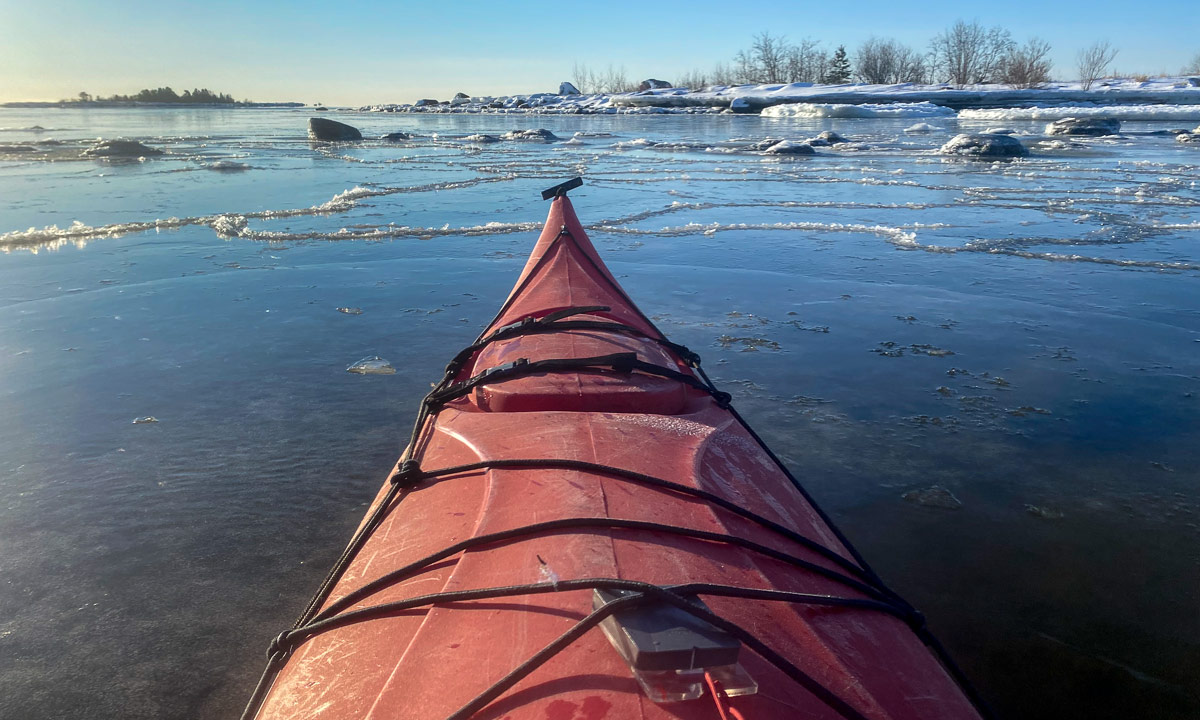
Here is a photo of each tour start:

As you can see it had snowed a bit between these two tours.

The day before yesterday I just wanted to circumnavigate the small islet Lillskär, but there was too much ice to cross and crossing ice with a kayak takes time. And since I work full time, time is limited. So I just paddled around a bit and then back.

Due to the frosty temperatures the ice was thicker today though hardly more extended. I started at the same place but then continued to the island Bredskär. From there I wanted to circumnavigate the island Bredskärssten, but the same story as two days before: At the northern shore of the island there was an ice field. Crossing it would have taken too much time so I changed my plans and made a smaller tour. Nice to be outdoors anyhow!

How do you cross ice with a kayak? If the ice is safe, just walk. You wear a drysuit and have your safety equipment with you, don’t you!? If the ice is very thin, just paddle through (use your cheapest paddle). But if the ice is between 1–2 cm, the ice may not bear you and you cannot use the blades of the paddle neither.

Then you can use isdubbar – part of the ice safety equipment. With these ice claws it is possible to pull yourself forward while sitting in the kayak.

If you are lucky the ice is thick enough to let the kayak glide over it quite fast. If you are less lucky the kayak will constantly break though and then it can be pretty exhausting, especially when the ice claws break the ice as well. Then it is sometimes simpler to pull yourself forward by grabbing the ice with your hands. Waterproof gloves or mittens strongly recommended!

The ice did not last long

The morning of 10 January is my the coldest this winter: -20.5 °C. A longer period of frost has frozen over the Baltic Sea earlier than usual. I stand at the shore by our house. Ice as long as I can see.

I follow the coastal line to take photos. Ice fog draws in.

When I return from my pre-work photo trip the temperature has risen to -15 °C and it gets warmer hour by hour. In the evening it’s only -3 °C and it has become stormy.

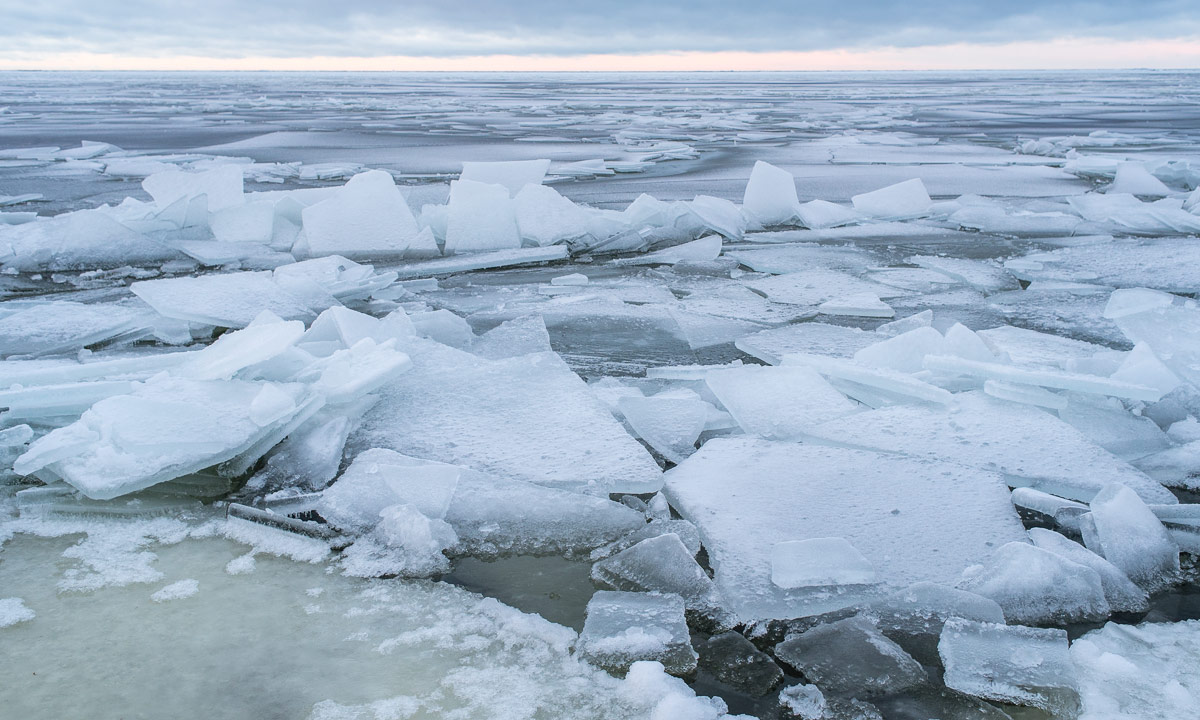
Two days later I’m out again. It thaws. The effects of the storm are visible: The wind pushed the ice shield ashore where the ice broke into countless pieces.

Movements at the horizon. Large waves roll along the sea and build an ice wall by the rocks south from the island Bredskärssten, 1300 metres from our house. I would love to take photos there but there’s no way for me to get there. It’s too windy for a hovercraft and I don’t own one. So I take mobile phone photos through my spotting scope.

The next day. Similar situation but now with the sun illuminating the splash that the waves throw at the ice walls. The thaw has melted the snow on the ice and made it wet. It twinkles and glistens in the sun. Beautiful to watch.

In the night it is stormy und gusty again.

14 January – the next day. As every day it is too dark in the morning to spot the sea. A small line of red at the horizon signalises the approaching sun. And there it is: 09:03 – sunrise.

Now I can see that beside of some leftovers by the shore all the sea ice has gone. Crushed by the waves and the storm and floated away. Now there’s open water from shore to horizon. Probably it will take some time until the Baltic Sea freezes over again.

And what can you do in open water? Correct – you can kayak!

It was just a very small tour round Lillskär. First it was just a lunch break again and then it was still very windy. Wind came from west and I didn’t want to drift to Finland ;-)

Kayaking however wasn’t dangerous. It’s easy to paddle against the wind – easier than side winds – if the distance is not too big. Probably more dangerous is the large, wet patch of blank ice in front of our house. Slippery as hell! Hopefully it gets colder and snowier soon.

Link to a Swedish article of the SMHI: Bottenviken snabbt avtäckt igen.

Tromsøya crossing in winter

An almost true story to be read out loud with a deep and rough voice.

I survived one of mankind’s largest expeditions of our times – the crossing of the arctic island Tromsøya from south to north! Probably I’m the first one, who dared to face this extraordinary challenge.

The arctic ice breaker could not approach the harsh coastal line of Tromsøya’s southern tip. Too mighty the storm, too sharp the rocky cliffs, too high the enormous waves! I was forced to row the last mile in a wooden dinghy. When I approached land I realised that despite of months of planning I was without food! Would I survive? Well, the tour must start, with or without provisions. One has to go on in live.
The land was wild and it was hard to find the entry point of my expedition. Where is Sydspissen, the Southern tipp? With my extraordinary orientation skills I finally managed to find this unexplored promontory which would be the starting point for my crossing.

I followed the coastal line through a field of invincible rocks. The storm howled and the surge of waves covered everything in spray. I decided to leave the exposed coast and seek shelter in the inland. To my surprise I found some ancient dwellings.

It seemed that this hostile island had been inhabited earlier. What a discovery! I continued my way and realised that I was not alone. People still seemed to live here. While most of the indigenes hid inside some dared to be outside, guarded by their dogs. The houses were shocking. While the people seemed to have some basic skills in woodcraft, they still lacked the knowledge of constructing right angles.

I continued my way through the forbidding terrain. After a while it opened and gave view to an extent of ice. Could it be a lake? Probably it had been frozen for centuries. Here I spotted more locals. As the others before they ignored me. Didn’t they dare to seek contact? I do not know. First I though they would hunt seal or walrus but they just seemed to wander around without any goal.

Soon I was alone again in the rough mountain scape of this arctic island. Orientation was extremely difficult. Without my compass and sextant I probably would have been lost forever in this pathless country. I was completely on my own.

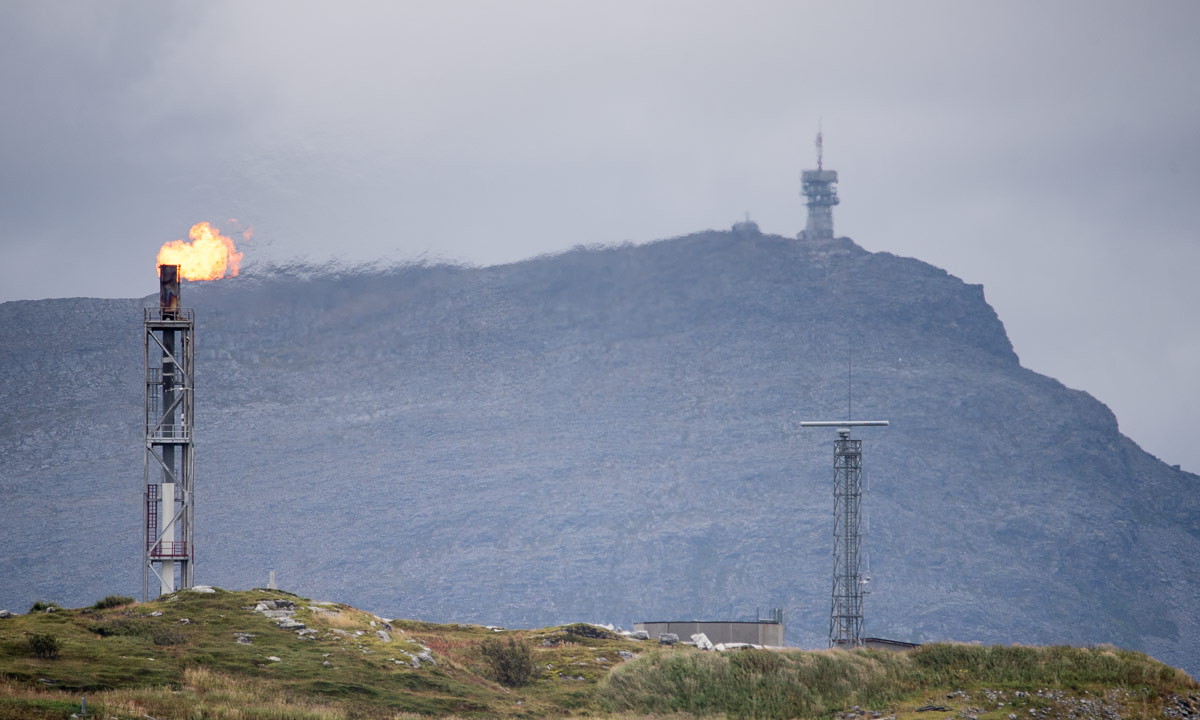
The terrain descended and gave view to a strange installation. Scaffoldings pointing up to the sky were erected randomly on that slope. Was is temples or other places of worship? Who build them? When? And why? Probably one never will find out.

Since I lost my food I was forced to continue my expedition. Time was precious. The land was bleak and barren. No trees, no bushes, nothing. Maybe some moss seeking shelter between the stone could survive under the eternal snow. For other plants this place is too hostile. 

The mountains became even higher and I got view on a small coastal village, probably abandoned ages ago. One wooden house lay nearby but it lacked a door and most of the walls.

I looked for walkable paths that would lead me further north. The more north I came the more glaciers covered the land.

It started to get dark but without food I did not dare to seek shelter. I was forced to go on and on without any rest. Amidst the mountains I spotted two indigenes. They sat on some kind of toboggan well clad in furs to keep them warm in the harsh sub-zero climate. I did not dare to disturb them and only managed to get a blurred photo as a proof of my observations.

According to my positional measurements the northern tipp of Tromsøya could not be far. I had survived until now. Would I make it to Nordspissen, the northern tip?

Alas – after more efforts and privations I managed to reach Nordspissen. I was grateful that fate allowed me to be the first human who reached this remote spot on foot. To my big surprise the legend was true: There is a mystic monument at Tromsøya’s northern tip and I can prove it:

But my efforts were in vain. I was too late! The last ship of the season just had passed by. Now I was forced to live here on this remote and solitary polar island for another year. But that’s daily routine for tough explorers like me.


A short and rainy Hurtigruten trip

This article is part of the series “2021-08: Northern Norway”.

After 2700 km by car we had arrived in Bjørnevatn near Kirkenes. From there it would be another 900 km back to Tromsø, my temporary home. So Annika and I had decided to go by ship and use the Hurtigruten for our journey west. Last Friday we went on board of the MS Vesterålen, the smallest and oldest ship of the current Hurtigruten fleet. I left it to be parked while Annika used the regular gangway. The ship departed round 12:30, round 35 hours later we arrived in Tromsø.

The weather was rainy, chilly, windy and although parts of the upper deck are well protected against wind and rain we often sat there alone. While it was quite rainy there were a lot of small holes in the clouds that let the sun peek through. Especially the light on the first day was very wonderful.

I just show some of the photos I made from the upper deck. All of them are made with a telephoto lens and focal lengths between 150 and 600 mm. To avoid blurred images because of the ship vibrations I hardly used a tripod but used ISO 800–1600. But now to the photos:

Fylkesvei 8100

This article is part of the series “2021-08: Northern Norway”.

There are places that are so fascinating, that you want to return there for a longer time. For me the road to Hamningberg is one of these places.

Originally Annika and I didn’t have the plan to visit Hamningberg. It’s a detour of 2×40 km just to see a former fishing village whose houses are now used as summer cottages. On the other side the road 8100 that leads there is closed in wintertime and we never had the chance before to drive there.

So right before Vardø we spontaneously decided to turn left into the road Fylkesvei 8100. We could turn if it was boring. Well, it wasn’t. We were both extremely fascinated by the roughness of the landscape and the many light moods because of the constantly changing weather

The photos are just some snapshots I made on our tour. Maybe I have time to return there some other time with more time for making photos.