Kungsleden ski tour: Sälka

This article is part of the series “2016-02: Ski tour on the Kungsleden”.

From the Singistugorna to the Sälkastugorna

23 February · 12 km · Link to map

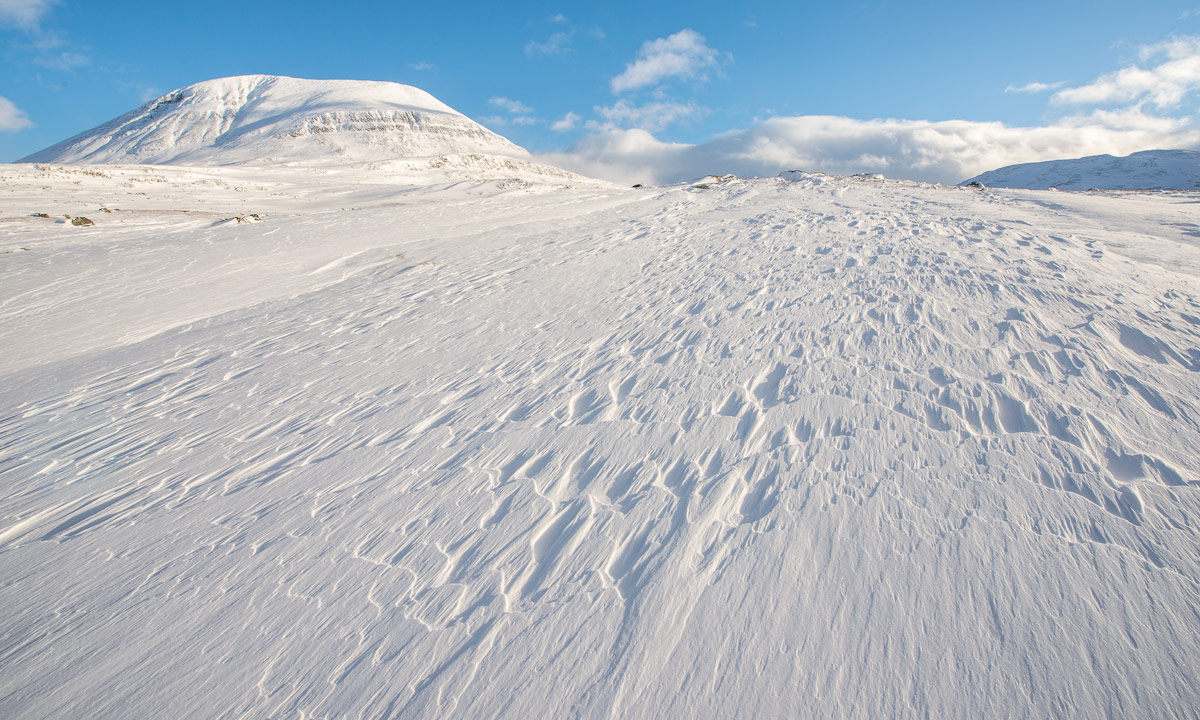
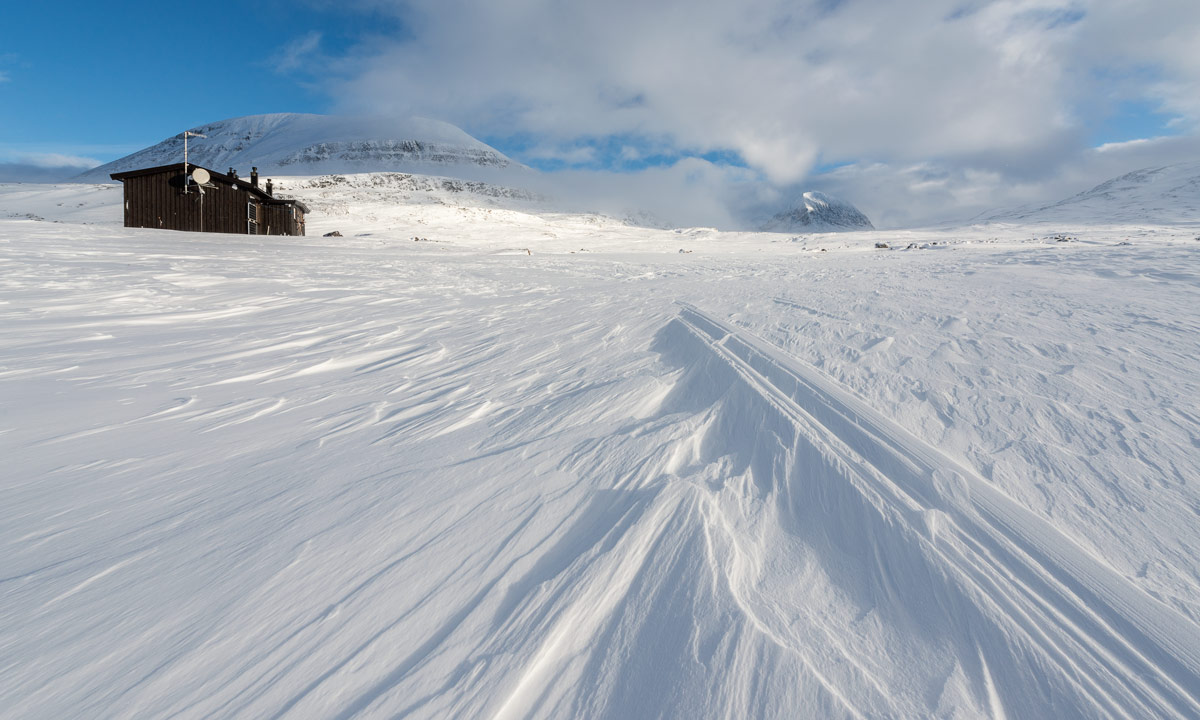
After I stayed in Singi for two days, I continued to Sälkastugorna (or short Sälka), the next mountain hut. The sky was overcast but the sight was good.

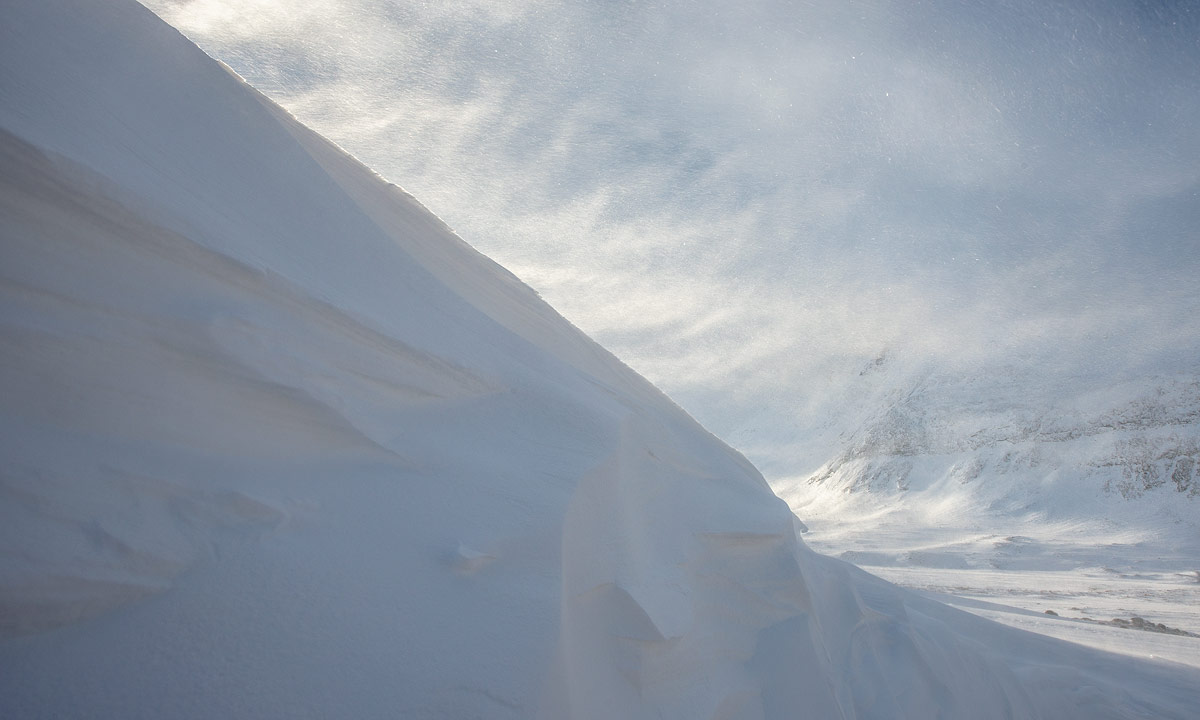
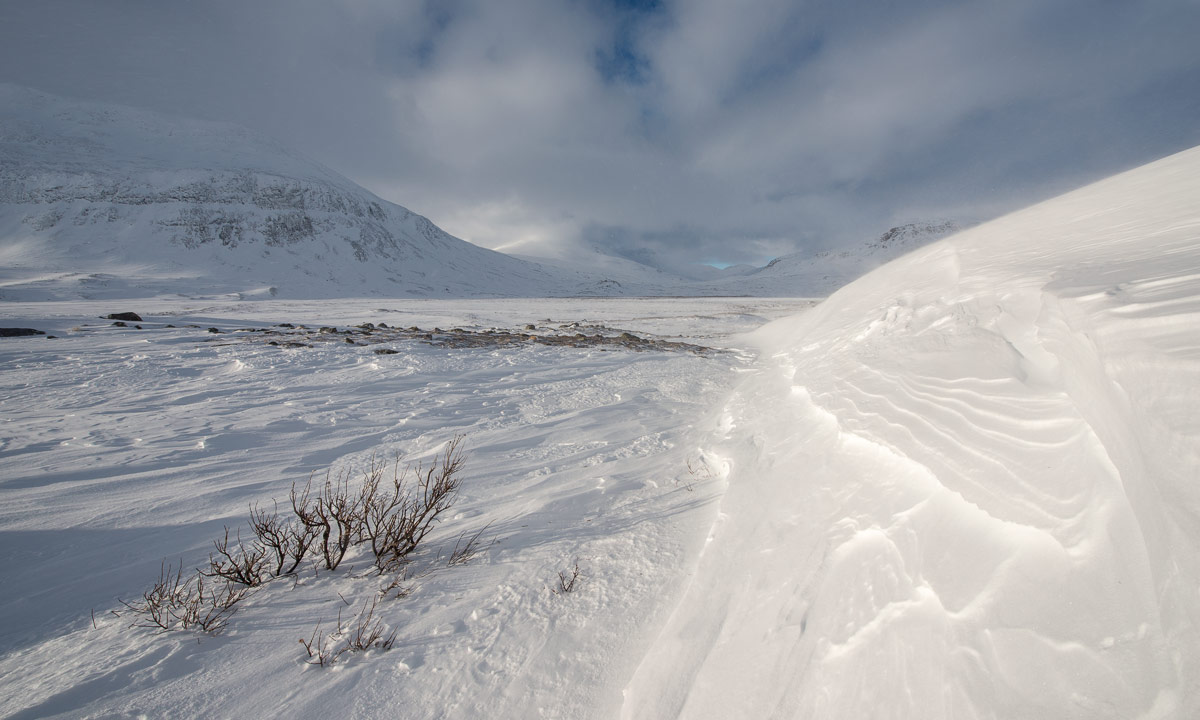
The first part took a bit of time, since there were some quite steep snowdrifts to cross, which is not so easy with the pulka always dragging down. After a while the clouds declined, it started to snow and the sight worsened a bit.

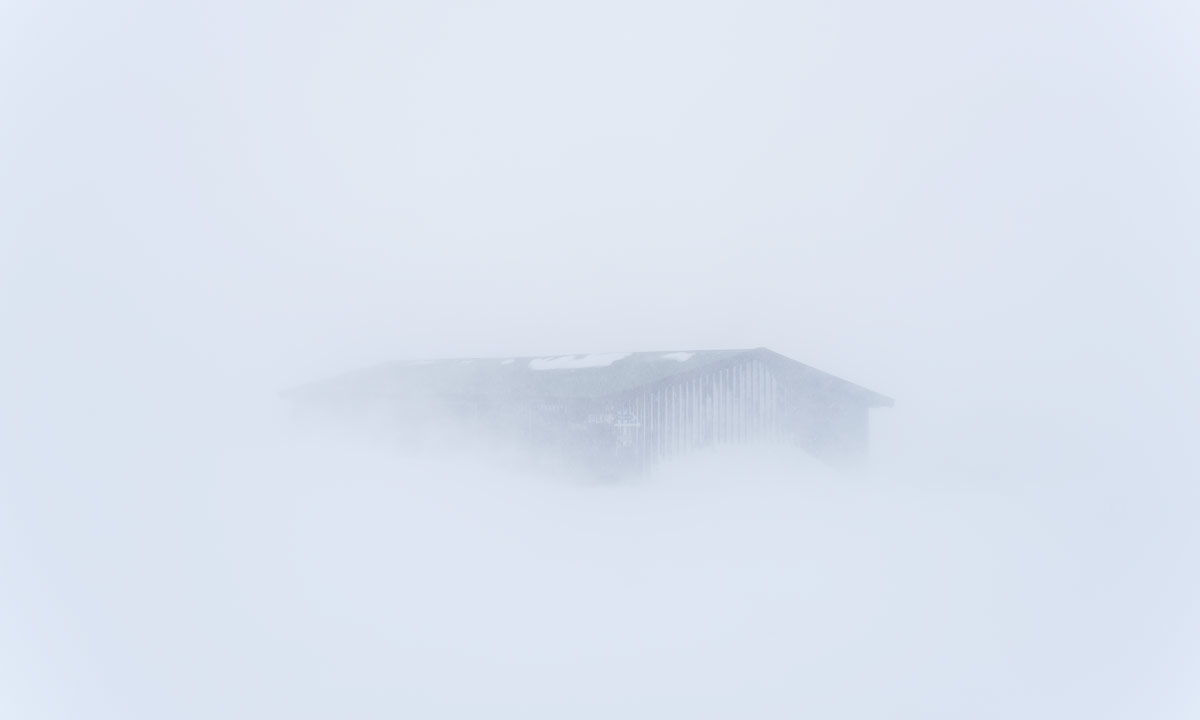
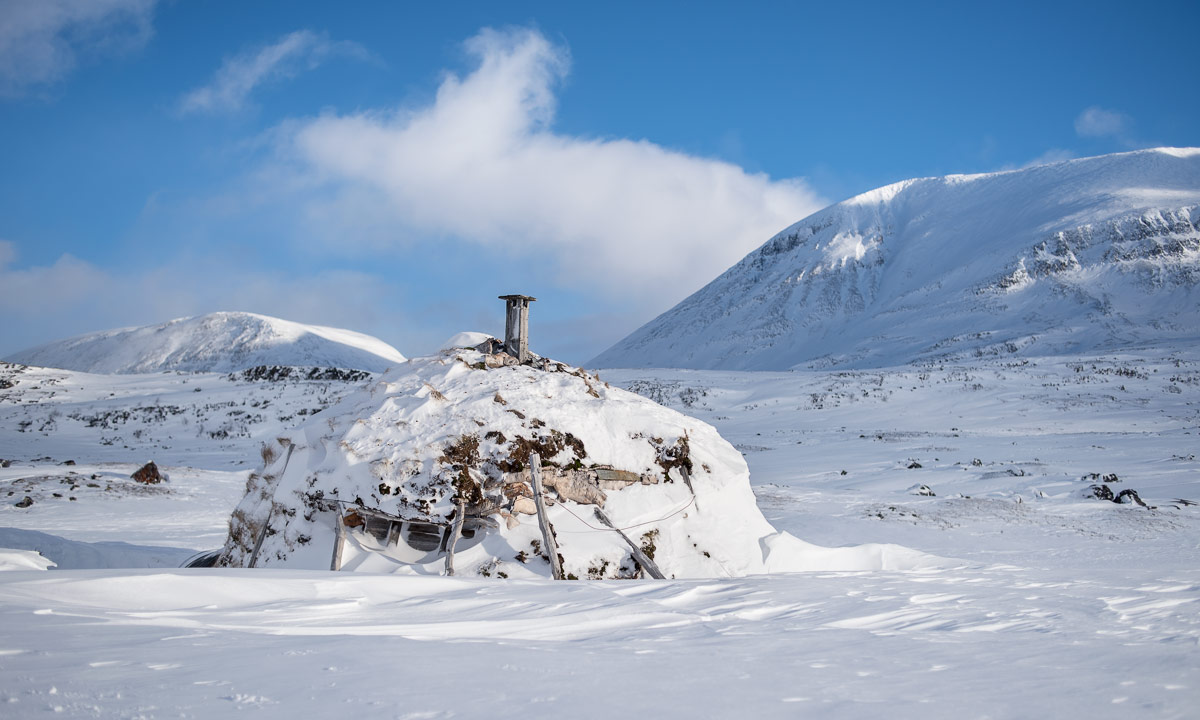
Soon the tiny hut Kuoperjåkka came into sight. You can rest in this hut and it even has a little oven, but only for emergency situations. I shovelled away the snow in front of the door, entered the hut and took a small break. Not that I already was tired after five kilometres, but it’s nice to sit there sheltered from snow and wind and look through the window – even if you hardly can see something. (Taking away the door of the toilet would take longer time as you can see on the second photo.)

After the break I continued the tour. Wind increased and I put on the fur rimmed hood. There was not much to see. When I looked down I could see the blue tips of my skis, when I looked up I could see some waymarks, perhaps some rocks or a tuft of grass. Looking down – looking up – the movements are repetitive, even meditative. Looking down – looking up – what’s that? Sälka is already in view. It’s not a long way from Singi to Sälka, just twelve kilometres.

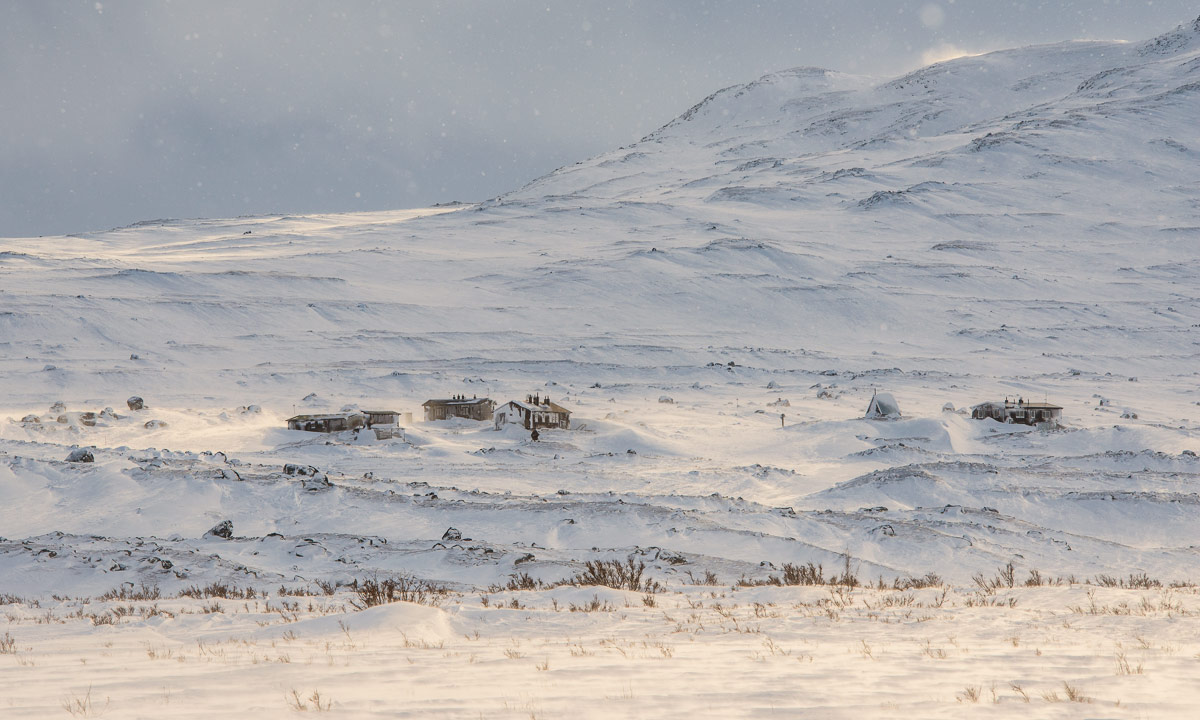
Arriving in Sälka was like a culture shock. In Singi I was the only guest, here I could see a bunch of pulkas standing outside and when I entered the kitchen of the open hut, it was stuffed with people! 18 people fit in this hut (plus two extra in a tiny locked room) and 18 people we were. 18 people firing the oven and drying their shoes … . Jungle climate! But I got my bed and a place to cook, that’s all you really need.

… and a sauna. It’s not essential to have a sauna, but it’s great, especially, when you can pour a bucket full with hot water over yourself feeling refreshed and clean again.

After the sauna I sat inside, prepared and ate my pasta and chatted with the other people, that came from Belgium, Germany and the US. The weather once again became bad. Wind became stormy and it started to snow more heavily. When people went to the utedass – the earth toilet, 200 meters away, they were clad like for an arctic expeditions: face masks, ski goggles, heavy mittens, headlamps – all for a walk to the toilet.

But as fast weather can worsen, it can improve as well. One hour later the snowfall stopped, the wind fell asleep, sky cleared up and the moon lightened the valley and the nearby mountains. It’s these contrasts I love!

A short day trip into the Stuor Reaiddavággi

24 February

The next day I made a short trip up into the Stuor Reaiddavággi. “vággi” is the sami name for valley and this valley leads to Nallo, another mountain hut that was still closed. You can sleep in closed huts, too, they always have an open emergency room, but you’re completely on your own. I didn’t plan to go to Nallo, even if it’s only 9 km.

(Today I think, I should have done it, since Nallo is one of the huts with the most beautiful location I know.)

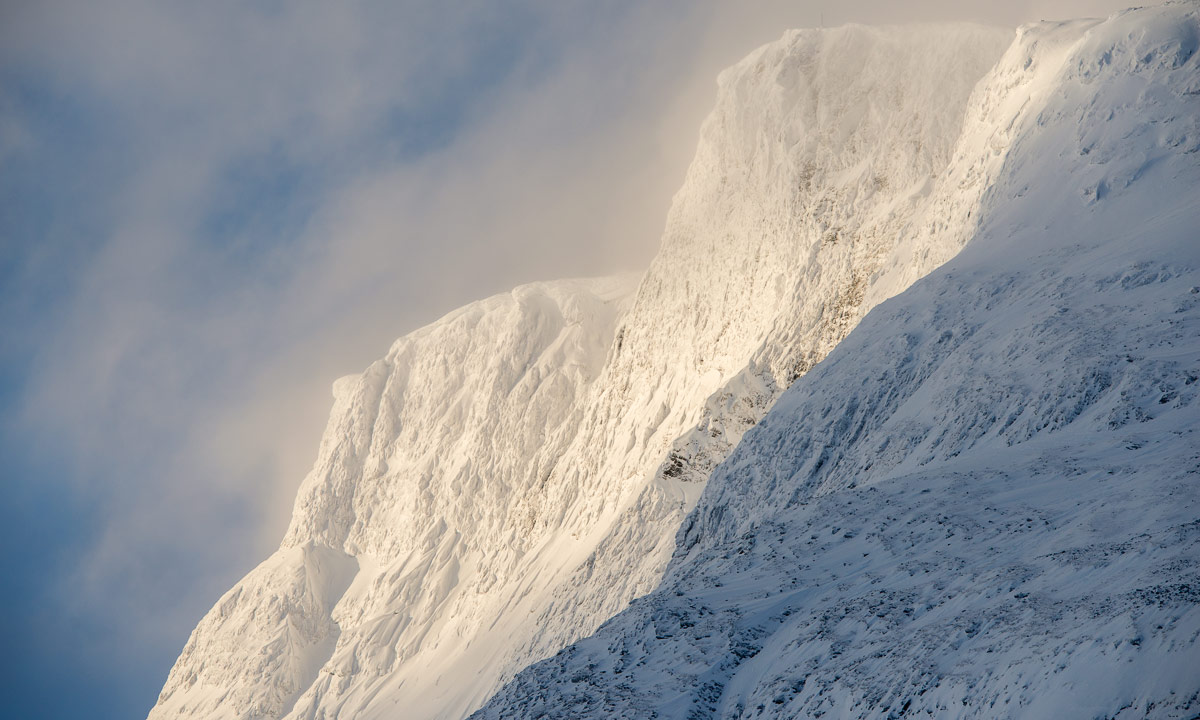
Anyway, I just went up – first to a ravine, then I climbed up the slope following the Stuor Reaiddavággi. The sky cleared up more and more and all mountain tops came into view. Sälka was miles away and I was alone by myself amid of this great mountainscape.

After a while and a short break with tea and raisins I returned “home” to the Sälkastugorna. The plan for the next day: Continuing my ski tour to Tjäktja.

The next article: Tjäktja >>

Kungsleden ski tour: Singi – from blizzard to clear sky

This article is part of the series “2016-02: Ski tour on the Kungsleden”.

Singi day #1 – 21. February

That’s me on the picture above. It’s 3:45 in the night. I can hear the storm shaking the cabin and howling in all chimneys. When I look out through another window (this one is completely covered with a layer of snow), I can see that it’s still snowing a lot. But it doesn’t help, I have to go to the loo. And since the toilet is a utedass – an earth closet round 50 meters away, I have to dress for it: The headlamp to find my way through the blizzard, the parka to stay warm and the ski goggles for more comfort when I go back against the snow storm.

Some hours later: The blizzard lasts the whole day. Sometimes you cannot see the other cabins standing 50 meters away – just whiteout. Most of the day I stay inside, either in “my” cabin, which I have completely for myself or I visit J., the stugvärd, in his cabin. But I got out to make some pictures (all made with a 35mm lens):

Singi day #2 – 22. February

Still the wind howled, still snowfall from the sky the next day, but I could see some stars shimmering through the clouds above. And after a short while the snowfall stopped and the overcast sky started to clear up. It’s really nice if you’re able to see something again:

I left the cabins for a short ski tour to the near sami village Goržževuoli. Still some snow crystals fell from the clouds above, still snow was drifting over the white ground, but when I looked back, I could see the sun illuminating this landscape with golden and almost magical colours.

After a while sky cleared up and the weather went “normal”. I took some pictures in the village, which is abandoned, at least in winter time. The buildings are a mixture of wooden houses and traditional sami buildings called kåta.

After I while I headed back over white and untouched snow. I love making the first tracks on fresh snow!

When I came back to Singi, wind increased again. The stugvärd told me, that Singi is quite exposed to wind. I crouched behind a two meter high snow drift to make a photo of the drifting snow. After that I had to dry my lens since the snow dust was everywhere.

The blizzard of the last day created snowdrifts up to three meter high and up to 60 meters long behind the lee side of the cabins.

If you are in a mountain hut, you’ll experience big contrasts: Storm or bright sky – inside or outside – day or night. The following two pictures show the same day:

I was quite busy with keeping the hut warm. It has wooden stoves, one for the kitchen, one for each sleeping room. It takes a lot of wood to keep such a cabin warm, especially when strong winds cool it down (and even accelerate the burning). In the morning I had temperatures round 0 °C and was glad about my warm down filled sleeping bag. The wood on the King’s trail comes in long logs. The stugvärd will cut it up to one meter long logs, the rest is up the the guests. The guests? That’s me! I guess I sawed and hacked wood four or five times to keep the fire running and – even more important – to leave enough wood for those that will come after me.

Later in the evening the full moon rose behind the snow covered mountain chain, surrounded by a halo. I just love standing out in the wintry mountains when the moon lights the scenery. Just beautiful.

The next article: Sälka >>

Kungsleden ski tour: From Nikkaluokta to Singi

This article is part of the series “2016-02: Ski tour on the Kungsleden”.

It was 2005 when I was asked by C. from Switzerland, if I wanted to join him on a ski tour on the Kungsleden – the King’s trail. That’s how I came to my first ski tour in the mountains of Swedish Lapland. More tours followed, but sometimes it was hard to find a tour mate. Same thing this year; that’s why I decided to do my first ski tour on my own.

Kungsleden would be ideal for that, since there’s infrastructure as mountain huts and I won’t be alone. Good to know, since even twisting an ankle could be a serious problem in winter if no one’s around. I wanted to start 19 February, the day, when the huts open.

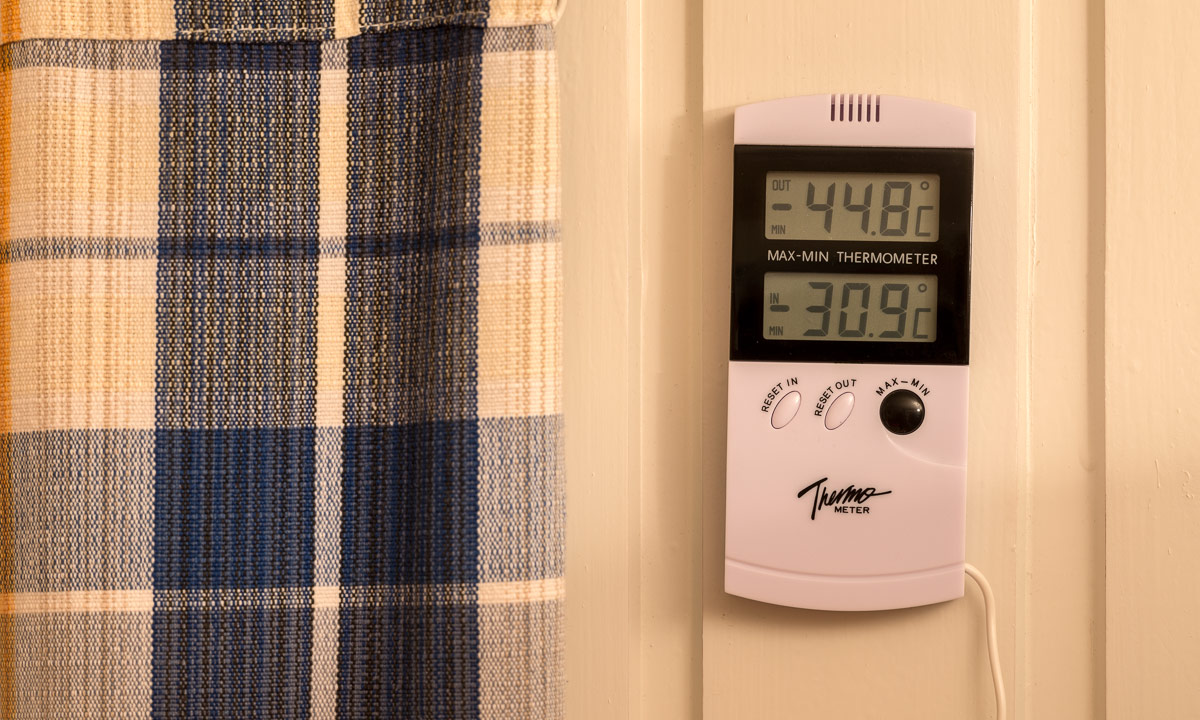
After a long trip I reached Nikkaluokta (many thanks to A. for the lift from Kiruna!) on the evening of the 17th I had one spare day in one of the cosy cabins of family Sarri. This place can be very cold and I had a look at the digital thermometer in the cabin: -44.8 °C minimum since the last reset – brr, that had been a cold day!

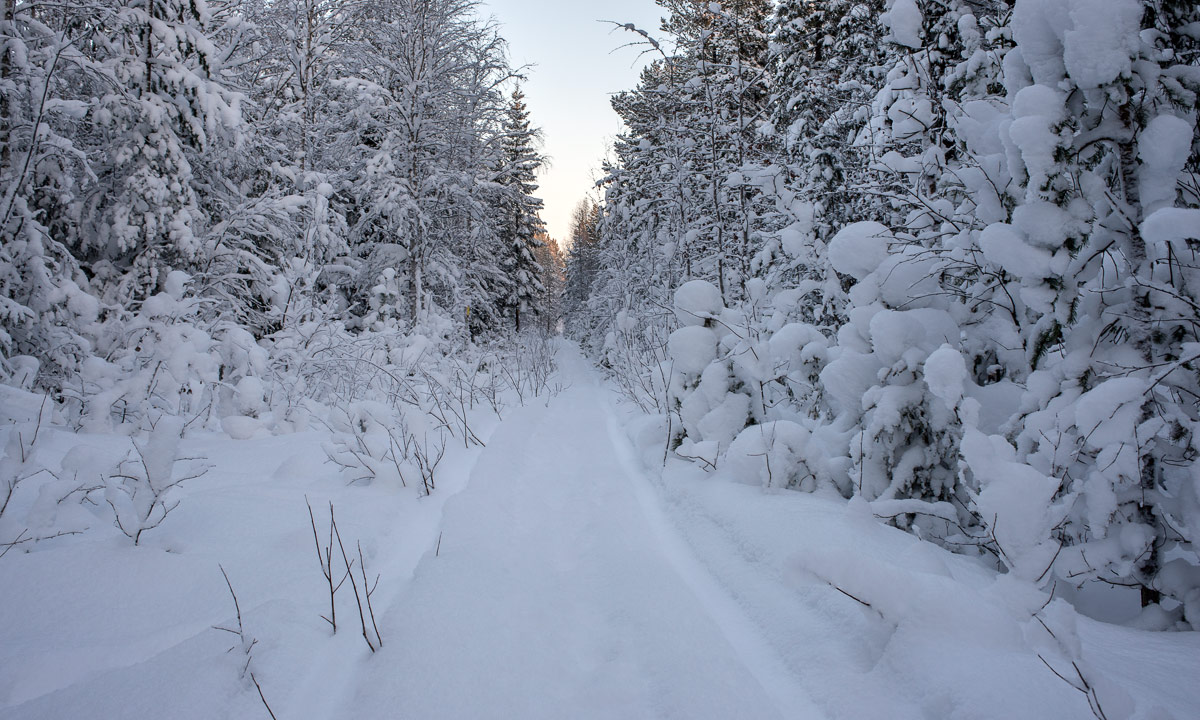
I climbed the small church hill and looked west. That’s were I’ll go the next day.

From Nikkaluokta to Kebnekaise Fjällstation

19 February · 19 km · Link to map

Time: 7:40, temperature -17 °C, weather: cloudy. Time to start the tour. I mount my skis, put the belt of the pulka (a sled for transportation) round my hips and after some gliding steps I see the first mark of the winter way to Kebnekaise.

It’s the only mark for a long time, the winter way to the Kebnekaise Fjällstation is not marked, neither on the map nor in real. But it’s easy to find the way, since many snowmobiles take this way and you only have to follow their tracks. Soon I’m at the place where the trail crosses the stream Čievrragorsa. In summer I used the chain bridge, In winter the snowmobile goes right over the frozen and snow covered stream. I can hear the sound of water running underneath the ice – a strange feeling.

After some kilometers I come to the lake Láddjujávri. Here you can eat waffles with cloudberries or burgers at “Lap Dånalds” and even take the boat over the lake to shorten your trip a bit. Well – in summer …

Hardly imaginable that I took a bath here six month ago on a hot summer day, when I was here with Annika. Not it’s winter, all is closed down, the boats lie on land and are covered with snow and I’m completely alone. Anyway it’s not too cold and I take a first rest on my tour. Without waffles, without a refreshing bath, but with the same beautiful view as in summer, since the sky starts to clear up and one mountain top after the other starts to get free from clouds, fogs and haze.

When I continue my tour over the ice of the frozen lake I soon can see the same mountain range as I did in summer. And it’s as beautiful as in summer, too.

After some kilometres the trail leaves the lake and continues through scattered birch forests and over frozen swamps, some of them covered with ice. The weather is fine and sky is of a clear blue with some clouds.

Another rest, this time on top of a rock, with hot tea, chocolate, and a bit of salami. What a beautiful day! I could sit here for hours, but I shouldn’t. I have to reach the huts of the Kebnekaise Fjällstation. I do reach them, but before that I have to work. The trail ascends and I have to make wide V-steps with my skis to be able to pull the pulka uphills. Finally I arrive. This mountain resort is quite huge, since Kebnekaise is the highest mountain in Sweden and very popular among hikers, skiers, and climbers. Anyway it is not opened yet beside of the cabin Jägarn (“the hunter”). Here I’ll stay overnight before I’ll continue to the Singistugorna the next day. Twice I climb on the small hill with the radio mast, first after sundown, then at half past six – where I see the first polar light of the tour.

From Kebnekaise Fjällstation to the Singistugorna

20 February · 14 km · Link to map

When I wake up sky is blue again and -17 °C. I take a short breakfast with muesli and prepare for leaving. That means: packing all things – doing the dishes – cleaning the kitchen and my bed room – checking that I have everything with me – putting on skis and pulka belt. Meanwhile the sky is overcast and it has started snowing. Weather can change quickly in the mountains.

After I have walked some kilometres it clears up a bit, just so much, that you can see some mountain tops shining through the hazy fog.

When I enter the narrow passage of the valley the mountain tops hide again, which is a pity. The mountains here are so beautiful.

There is not much snow in the mountains this winter. Parts of the marked winter way lead over stony passages with no snow at all. I have to go round these passages to avoid ruining my skis and pulka. Mostly I follow the snowmobile tracks, hoping that the locals know the best way.

This way leads over the frozen river, but sometimes it’s hard to see, since the snow under the overcast whitish-grey sky don’t show any contours. Wind increases, snow falls as well and the snow starts to drift in the increasing wind. In the narrow valley between the mountains Siŋŋičohhka and Liddubákti more snow lies on the ground which makes it easier to ski but worse to see.

That’s when you are really glad about the winter way marks: Red crosses set on long poles. Sadly plastic crosses are used nowadays. They are ugly, in my opinion harder to see and many of them are broken. But I’m glad to have them anyway. They do not only show you the way, they help you even in guessing whether it’s going up or down, which you cannot see, if visibility and sight are poor.

I always have compass and a good map with me on such tours. Anyway, if you cannot see any landmark these tools are of limited help if you do not count steps or know how fast you are on your skis. That’s when a GPS can be very handy. When I make another rest, longing for the mountain huts Singistugorna, the GPS revealed, that it’s only 970 meter to go. Easy!

Well, not really. The valley opens, wind increases and there are many rocks and snow-free parts on my way. I decide to circumnavigate a steeper passage and ski a bit to the right. To my big amazement I don’t go down but keep on level. Suddenly I feel part of the ground collapsing a bit and realise that I stand on the rim of a soft snow drift, about two meter high. It was absolutely impossible to see it. I’m lucky, that I didn’t fell down! I go back and circumnavigate my circumnavigation until I’m on the marked trail again. There I can see the cabins shining through the drifting and blowing snow. It takes some time to find a good way down to Singi but finally I arrive. Here the wind seems to be even stronger and the snow falls even more intense.

Stugvärd J. shows me my room, light fires in the ovens of the kitchen and my bed room and allows me to take my pulka inside since I’m the only guest. After doing some work he leaves and heads to his own cabin against hard wind and snow.

According to the forecast wind will increase even more and snow fall round 20 cm are expected. I’m glad, that I have time and plan to stay at least one other day in the Singistugorna, perhaps two.

The next article: Singi – from blizzard to clear sky >>

Back from a ski tour on the Kungsleden

This article is part of the series “2016-02: Ski tour on the Kungsleden”.

Hello, I’m back. Back from 13 days of travelling, ten and a half of them with skis on the Kungsleden in the Swedish mountains from Nikkaluokta to Abisko. You could do the tour in six to seven days, but why should I?

It will take some time until I went through the 1068 photos, that I did on my journey. I only will show the very first and the very last of them. What happened in between I will tell and show in the following days.

The light, the light, the amazing light

More and more it’s not the snow and ice that fascinates me by winter, or the coldness that tickles in my nose. It’s the light, the amazing light! It’s incredibly beautiful, but – at least for me – hardly photographable. Too delicate and subtle are the colours and shades.

I tried it anyway, when Annika’s and I made our ski tour to the island Bredskär today.

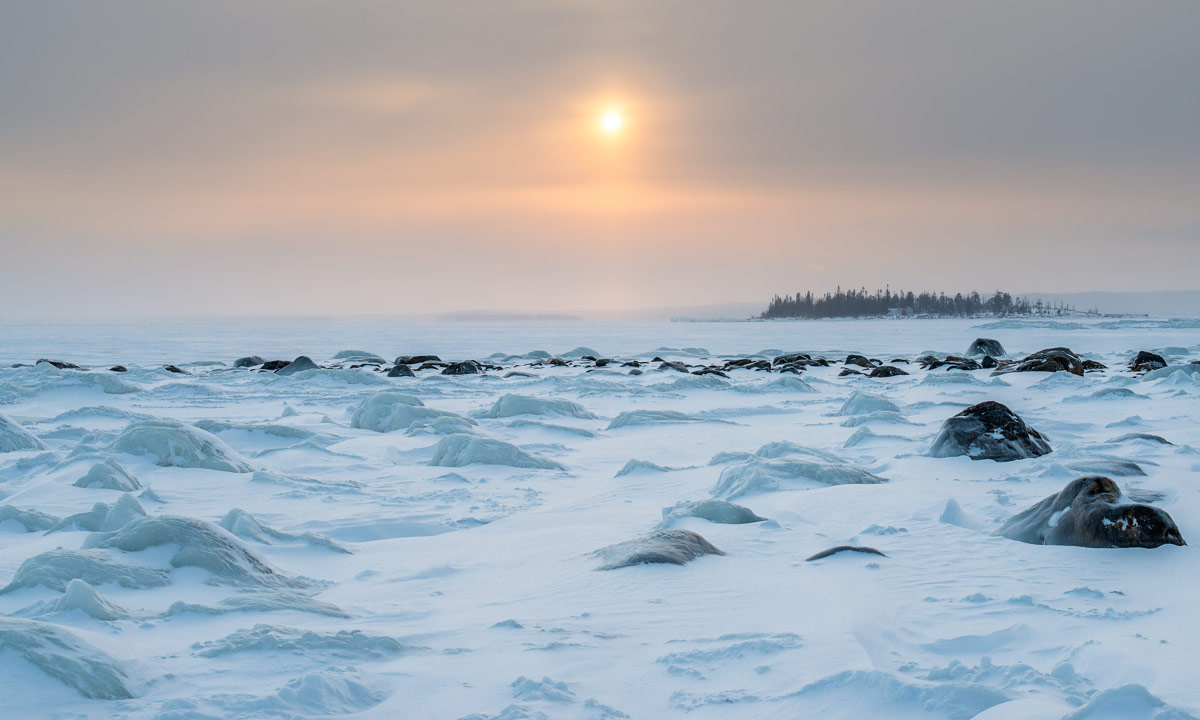
After a snow fall of 12 cm last night the sea ice was partly covered with snow and skiing was nice and easy. However, we changed our plan to go round the whole island Bredskär, since the ice on the outer side was much too soft and weak. I don’t want to get wet feet or legs, when it’s -17 °C. However a wonderful little ski tour because of the light, the amazing light!

Colourful frost and sea ice

Some people think that’s it’s just dark in Northern Sweden the whole winter. There’s no sun and – since it’s pitch black – there’re no colours at all. I hope you know better, otherwise have a look at these pictures.

Yesterday Annika and I went over the sea ice the first time this season. Our destination was the offshore island Storgrundet. It’s always special to go onto the Sea. We dared to cross the ice for three reasons:

  • It has been very cold the last days
  • Many tracks showed that people have already crossed the ice. By snowmobile, with skis, with ATVs or just by foot
  • B., who has been living at this coast for ages, knew how thick the ice was and that it’s safe

We went by foot, crossed the sea ice in a diagonal line until we came to the island Storgrundet. We crossed the island – it’s hardly 200 meters broad – and turned right to go round the southeastern part.

What should I say – it was just amazing since the changing light of the setting sun illuminated the whole landscape in wonderful colours – both intense and fragile. Here are some pictures – just a feeble attempt to catch these fantastic impressions.

I was so enthusiastic that I stood up quite early today to do the same small tour again, this time with skis. Partly the skis were helpful but on the uneven ice at the outer rim of the island it was harder to ski. Anyway, I got wonderful pre-sunrise light and finally a gorgeous sunrise that started to colorise all frost covered trees and ice – first a pale pink fading more and more to a warm orange. Again some pictures, this time taken with more time and a tripod.

Hunting the cold – day #2

This article is part of the series “2016-01: Hunting the cold”.

Yesterday I travelled to Pajala to search the cold. With a minimum of -39.6 °C i missed the -40 °C.

Day #2 I stood up quite early, took a short breakfast and drove again to Käymäjärvi, where I measured the coldest temperature yesterday. It seemed to be colder than last night and directly after I turned left into the small road to Käymäjärvi, the thermometer showed -40.3 °C. First time below -40 °C – yay! At 08:37, nine minutes later it showed -40.7 °C , which turned out to be the coldest temperature I measured this day.

I continued the road to the end. Here a couple of lonely wooden building stand beside the road, obviously uninhabited, at least in the winter.

But now it was time to pack the pulka – a transportation sledge – and mount the skis. I wanted to make a ski tour, at least a short one. I parked the car at the place where I saw the aurora the day before.

I filled the pulka with warm clothes, hot tea, a bit of food, the camera equipment and such. Then I dressed for skiing. Here it was -37 °C and I dressed carefully to stay warm and avoid frostbite.

One of the telescope tracking poles was not possible to fix. I tried a workaround with the result, that it broke after 5 meters. I’ll have to buy new ones.

First skiing was easy, even with only one ski pole. The snow on the frozen swamp was hard and it was easy to pull the pulka behind.

But then I entered the forest. Of course pulkas are not made for woodland and this forest was like a thicket of birches which sometimes bend down and build low hanging arcs.

I tried to turn left to find more open land (I was quite unprepared and hadn’t any map with me) and had to cross several small brooks. One of them was a bit larger, a bit deeper and I could here water floating under the ice. I had to unmount me skis and was quite nervous crossing the brook that I probably would jump over easily in summer but all went well.

I continued and wanted to make another photo, but not the camera. It didn’t work any longer. The D-800 just showed an ERR on the display, that was all. Now I was a bit of fed up: Only one ski pole in the midst of a thicket of birch trees and the camera not working. I turned and went back. This probably was one of the shortest ski tours ever.

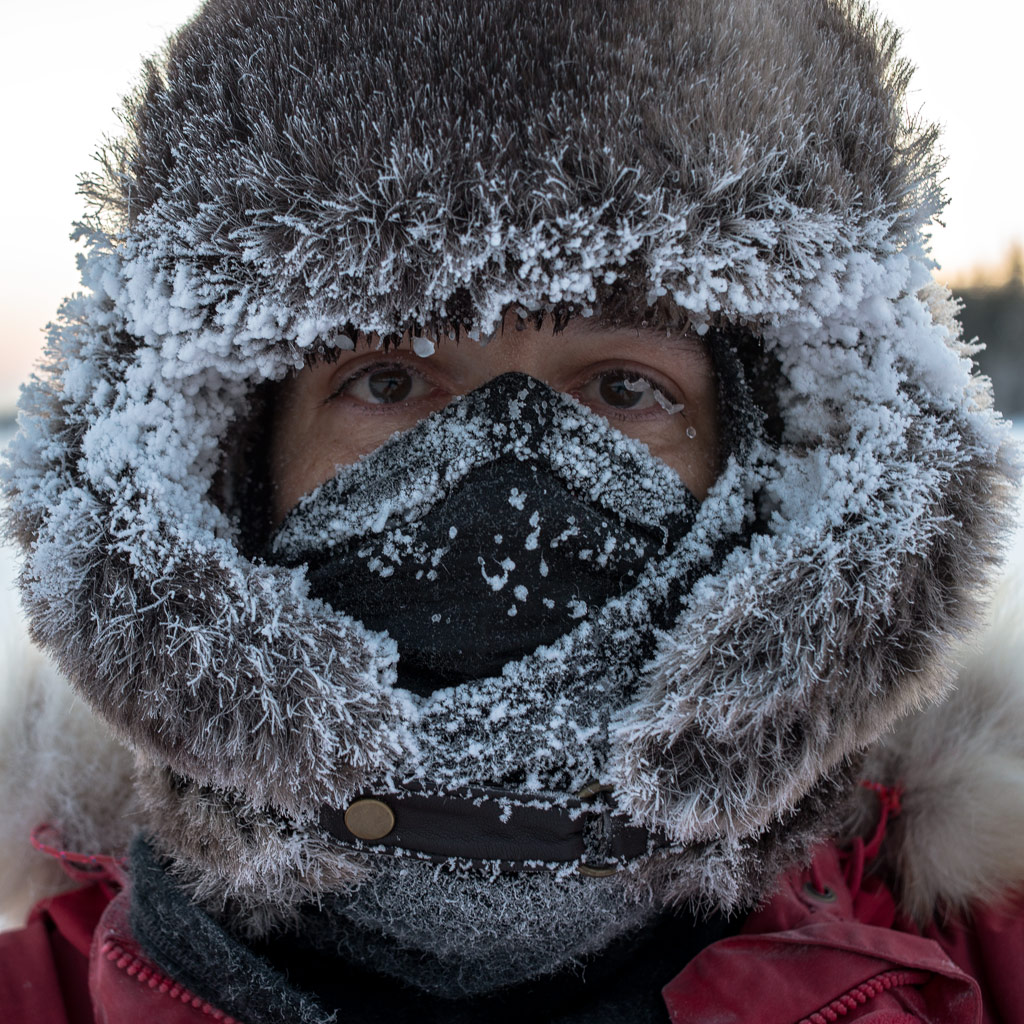
That’s what I looked like. The first photo is taken 10 minutes after beginning, the second right after the end of the tour. That was not easy: The Nikon D-800 was out of order, the iPhone is not made for cold temperatures and the batteries of my auxiliary camera were left in the car and didn’t work neither. But at last I found a battery that worked for the moment.

You see the fur cap? Some equipment that I have is really expensive, for example by Canada Goose down parka (not on the photos above). The fur cap however is from H&M and costed only 10 Euros. You can hardly call this professional equipment but it worked extremely well.

When you exhale in this cold the air flickers as it does over open fire. No surprise, the temperature difference is round 75 °C. When you inhale you should wear a buff or a scarf to protect your lungs. Remember the temperature difference?

I was so glad that the car copes with the cold. It was -36.9 °C outside and -35.1 °C inside when I started the car after the tour. It took only two seconds and the motor was running. Only changing gears is heavy as long the system is so cold.

On the way back temperatures dropped again below -40 °C. Time to many another selfie – a ridiculous one: The camera inside, holden by a long arm, me outside in front of the car. To my big relief the Nikon camera worked again. The motive: The temperature at the left, me outside with my parka at the right. It didn’t work as excepted. Where’s my face?!

Back in Pajala I admired the fragile birch trees covered with frost beside of the river Torneälven. In the background the clear sky with colours from pink to azure. It seemed to be even colder on the bridge that led over the river back into the city. I could feel the wind through my gloves and mittens and even the nose started to freeze together with the camera when taking photos! I closed my hood completely which looks a bit ridiculous, but I stayed warm.

I took my anemometer (A birthday present to myself) and measured the wind: 20 km/h. The temperature: -36 °C. That makes a wind chill of -51 °C! That’s what I call coldness!

I took a lunch and headed home since weather in this region should worsen, while the forecast for Skelleftehamn looked quite good. It was hardly warmer than -25 °C on the whole journey back home.

At 7 o’clock I arrived home. -28 °C outside – time for a hot bath!

Two months ago – first aid course in Solberget

Day 31 – 38

Today when I look outside the window, I realised that winter finally has left Skelleftehamn. The patch of snow that I stood upon ten days ago to view the Northern Lights has melted away and some trees start to show their first little leaf buds.

Well – it looked different when I was in Solberget in Swedish Lapland two months ago, where a first aid course of the “Outdoorschule Süd” took place. The week was filled with many actions – both course units indoors and outdoors and leisure, too. If you are one of the course participant you will realise, that I left out quite much.  That’s because I tried to keep the text very short – it’s more keyword style – and focus more on the photos.

Saturday

Arrival day: an incredible starry night with even a bit of faint Northern Lights

Sunday

Course unit outdoors, training recovery position (“Stabile Seitenlage”) – course unit indoors, training cardiopulmonary resuscitation (“Herz-Lungen-Wiederbelebung”) – and a beautiful coloured evening sky.

Monday

How to move injured people: a lot of teamwork is needed – frost patterns again – Lars, the Sámi, tells us about the reindeer herding

Tuesday

How to evacuate injured people from an observation tower – reindeer sledge ride. (No people were harmed)

Wednesday

Ski tour to Polcirceln, where we’ll stay to nights. I slept in my tent since the two cabins are really small.

Thursday

A misty morning – another “real life case”: hypothermia – a beautiful dusk. (No people were harmed)

Friday

Ski tour back to Solberget – another fantastic dinner, this time: salmon.

Saturday (again)

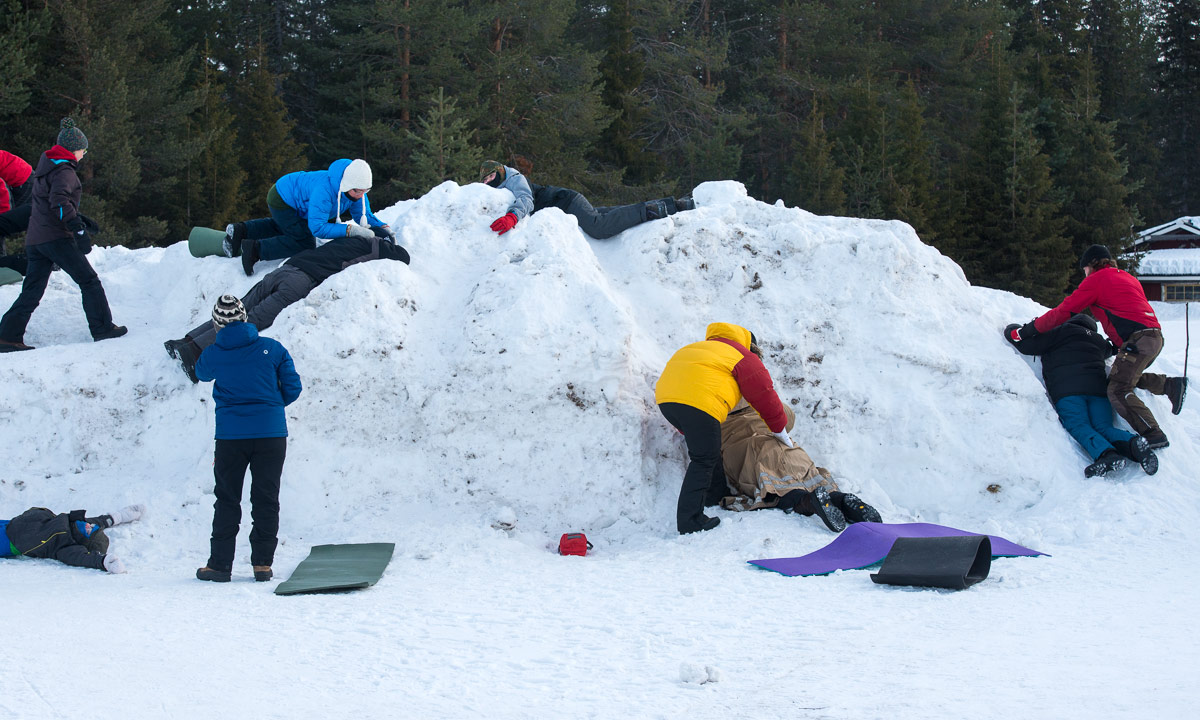
The last day – many serious studies as: How many people fit into the igloo (Answer: all!) or who wins the snowball fight

Thank you, Angela and Stefan from the “Outdoorschule Süd” for a great week!


Cross-country skiing in Äkäslompolo – part two

Last Friday I travelled to Kittilä in Finland, to make a one week holiday with Annika and and Medi, a friend of hers. I wrote already about the first days in “Cross-country skiing in Äkäslompolo – part one”.

Wednesday. We took the ski bus to Äkäsmylly and we were not the only ones. Some busses arrived at the parking place and spit out round hundred cross-country skiers, most of them dressed in skin-tight racing suits. And if the children were too small to stand on their own skis, they were pulled behind in a pulka sledge. That looked really snugly.

We didn’t like to start within a crowd and so we waited, until the most skiers had started. But we didn’t go very far. The Äkäsmylly Café is just round the corner and it’s really extremely cozy. An old man played traditional Finnish songs on his accordion and yes – they all were in moll. We peeked into the text books to sing along, but even if we knew the melody the Finnish language with its long and unfamiliar words gave us a hard time. But it was fun anyway!

Finally we broke away from the warm Café and started the tour. As the days before it snowed most of the day. I made less and less photos each day but today I had to make a break and leave the ski trail for this lonely tree in the snow fall. It took some time, because the snow didn’t bear the thin cross-country skis and I was up to my knees in snow.

I didn’t have to leave the comfortable ski trail for the next photo, a bridge over a completely snowed in brook.

We made our last stop in the Karilan Navettagalleria, the beautiful café and gallery that I already visited the day before.

Thursday. With 25 km our longest tour from Totovaara via Tammitupa, Karhunkota Hanguskurun and again Karilan Navettagalleria back to Äkäslompolo, and by the way my birthday tour.

I think, this is the first day where we neither used the private sauna in our lodge nor lit the fireplace after the ski tour. Instead we went to a bar nearby and listened again to the karaoke. It was just wonderful, listening to the singers – some men had really nice voices. People browsed the set lists to see what they could sing next and at least one pair was dancing to the karaoke songs all the time. Unfortunately some of the people got extremely drunk quite quickly. One of them was so intrusive and pushy that we left the bar soon. I guess that’s also part of the Finnish culture, just as karaoke.

Friday. A short but more demanding tour in the south-west with some nasty descents. I was glad that the trails were in good shape and hardly icy, although it was so warm. I didn’t make a single photo, because I started to get bored of the cloudy sky and the forest, that looked more or less alike everywhere. I enjoyed the week, but since I’m more in nature for the landscape than for the sports, a week was long enough for me and I started to long home a bit. And again I had back luck with the weather; the two weeks before were cold and sunny.

Saturday. Phew, that was early! We stood up at 4:45 local time (that’s 3:45 Central European Summer Time) and 5:35 I said good-bye to Annika and Medi that took the early bus to the airport. Then I drove home. After 425 km and six hours (some ways were in quite bad shape) I was home in Skelleftehamn again.

Addendum:

I hardly saw any animals when I was on the ski trails. That changed on my way back to Skelleftehamn: I saw a fox, a mountain hare, two reindeers, two squirrels and some black grouses, all from my car. I guess, animals are seen best when driving ;-)