Back home

This article is part of the series “2019-03: Ski tour Vindelfjällen”.

Back home from Mo i Rana. I drove the first half from Mo i Rana to Storuman, Annika the second half to Skelleftehamn including the power-parking into 20-25 cm deep fresh snow that had fallen since last night.

First we will buy some food for tomorrow’s breakfast, then it’s pizza time!

More about the ski tour in the Vindelfjäll will come. Stay tuned …

Last preparations

This article is part of the series “2019-03: Ski tour Vindelfjällen”.

Yesterday SkellefteåUmeå by car (130 km).
Today UmeåHemavan with Annika by car (400 km).
Tomorrow HemavanViterskalet with Annika (12 km). Not by car but by ski, start of our short ski tour on the Vindelfjäll.

Last preparations in Hemavan: repairing Annika’s backpack · packing backpack and pulka · Annika preparing the fur trim for her new Anorak · putting climbing skins under the skis for tomorrow we’ll have to ascend the Stoere Vaerie or Norra Storfjället.

I’ll be offline for some days. Travelogue will follow next week.

Old ice, new ice

Just one cold night with calm weather and temperatures round -11 °C was enough to freeze the coastal Baltic Sea after yesterday’s stormy weather. Between the thin and dark new ice are thick old ice floes, most of them grounded on rocks, because most free floating ice floes were blown away yesterday.

If you were there and looked really closely you would see the new ice floes moving up and down a bit. There are still not frozen together.

Last day of February – farewell sea ice

Yesterday I stood on the ice edge of Kågnäshällan. It was warm and felt like the end of April. And so it looked like, too, because large parts of the Bothnian Bay were free of ice. Only protected bays and shallow waters round the islands were still frozen.

It became colder and stormy in the night. It even snowed a millimetre.

When I got up this morning it was -4 °C and still quite gusty and stormy. At 8 o’clock I took the car to have a look at the ice conditions.

I passed the nearest bay Kallholmsfjärden, just 400 metres from my house. Some ice fishers were sitting on the ice, but only some hundred meters from open water. I however wanted to drive to Näsgrundet, one of my favourite places. Yesterday afternoon the sea east of this peninsula had been completely covered with a new ice shield that had been created one week ago. Today it was … well, different …

Gale-force wind gusts tugged at my hood. Waves splashed sea spray and tossed pieces of ice onto the ice walls in front of the coast. Ice floes floated to and fro, cracking, shaking, turning, breaking. Sometimes I could feel the vibration of another wave hitting the ice wall I was standing on. Some of the ice already had been squelched to slush. I cannot remember such an impressive view of the forces of the Baltic Sea in winter time. Farther away a ship was leaving the port, accompanied by a tug boat and the small icebreaker Baus.

I tried to make pictures of the say spray of the waves. Not easy …

Behind the curtains of spray waves came rolling and small and large ice floes pivoted and danced while going up and down.

After 45 minutes the Baus came back heading for the port.

Partly I was taking pictures, partly I was just enjoying the energy of the elements and listened to the different sounds. I tried to make some videos, but all you can hear is the swooshing wind at full volume.

After one and a half hours of photographing I left this scene and drove to the small boat harbour Tjuvkistan nearby. Here the ice uses to be safe to cross to the islands Norrskär and Bredskär until the end of March or even mid-April.

Well, not this year. Even here the ice layer was being destroyed by the waves. The northern wind blew the ice floes away, so they will not freeze together again, or perhaps in Finland.

When I returned home I passed the Kallholmsfjärden a second time. The ice fishers were gone – there was just no ice left to sit on and fish from.

So, the sea-ice-season is over, four to six weeks earlier than usual.

Last day of February – polar light

Just one hour ago: finally a polar light above Skelleftehamn that was more than a pale green arc. It was just a short intermezzo and when I had found a good place for photographing it already weakened. That’s normal. Many of the beautiful auroras do not last long. I got some shots anyway.

You see the open water on the last image? Well, that’s another story to tell.

Kågnäshällan – between land, ice and sea

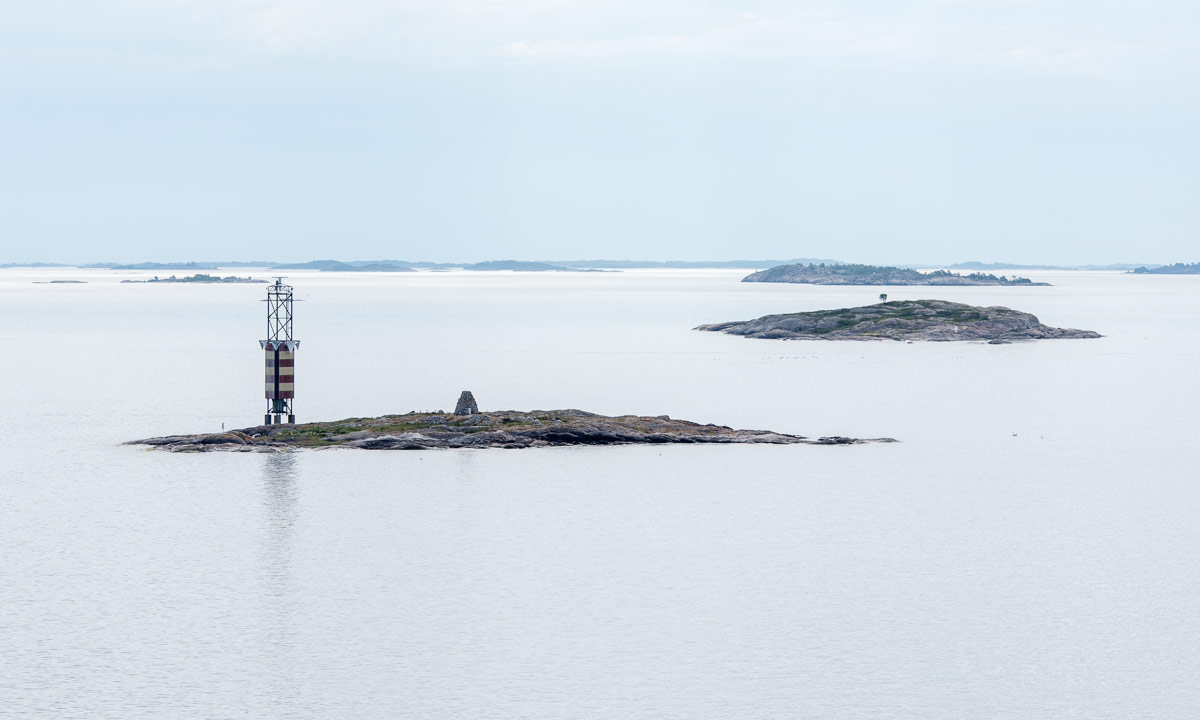
Kågnäshällan is a small island in the Baltic Sea with a lighthouse. The linear distance is only 7 km, but it’s 18 km by car. Since I cannot fly (and neither skies or kayak would do neither) I took the car this morning to Kågnäsudden, the cape nearby to take some photos on Kågnäshällan.

The sea is almost free of ice, only at the coast and between the islands there’s a thick layer of ice left. That makes the area quite amphibian. I took snowshoes and pulka for walking along the coast and for crossing the wet but safe ice between mainland and Kågnäshällan. Then I wanted to get near the ice edge and chose waterproof equipment. The waterproof Nikon AW-1 for taking photos and my red immersion suit to keep my warm and dry in the ice cold water. I felt like a bright red seal hunting for photos, not for fish.

Late April weather

It has been warm for days, it rained for hours and some puddles in Skelleftehamn look bigger than an average flat in Munich. This is probably the most awful weather I experienced in Sweden in February since I came here in 2010.

It’s however not the first year, where the February is much too warm for a longer period. It had happened several times before. The future will show if it is just normal weather variations or part of the ongoing climate shift.

Farewell winter

Yesterday afternoon: a snapshot of the coast. That’s how I like winter. Either a lot of snow or cold, crisp and sunny days at the coast.

This morning at 7 o’clock the weather was still fine. An almost cloudless blue sky at -19 °C. Would it be another beautiful winter day? Well …

Since days the weather services SMHI, Klart and yr had been predicting much warmer weather from today. Unfortunately they were right. At 8:00 the temperature already had risen to -9 °C, at 9:30 to -4 °C. In the afternoon some snowfall was predicted by SMHI. Instead of snow we got freezing rain for hours and soon black ice covered the roads and made them incredibly slippery. Even the snow-covered surface became extremely icy. The rain created an ice shield everywhere, for example on the southern windows of my winter garden.

Both SMHI, Klart and yr predict warm weather with plus degrees up to 8 °C for the rest of the month. Much too warm for February!

The rubber boots and the matching spikes are already at the door and probably will become standard equipment for days.

Farewell winter. I hope you come back with snow and coldness in March.

No kayaking today

Yesterday the Baltic Sea was open. Some ice floes drifted in the waves, the rest between mainland and the island Gåsören was open water. Just the photo from yesterday afternoon one more time:

When I saw the open see yesterday I thought about kayaking today. Temperatures below -15 °C were expected. What to wear beside of a dry suit? How many layers?

I started to dig out the door and gate of my garage to be able to get my kayak. That was hard work. The upper layer of the frozen snow that had slid from the roof was as hard as concrete. Even the avalanche shovel with the metal blade could be hug into the snow centimetre by centimetre. But finally I made it, my kayak was free.

Today at 7 o’clock the outdoor thermometer showed -18 °C. Again – what to wear on a kayak winter tour? Two layers of underwear? The winter anorak? The earflap cap made of thick polyester fur? Well, first let’s check the situation by the sea.

Oops …

The sea had been frozen overnight. A stripe of at least several hundred metres was covered with soft and thin ice, exactly that type of ice hardest to handle when sitting in a kayak.

Kayaking plans cancelled! Time for another photo.