Low water

Today the Bottenviken – the northernmost part of the Baltic Sea – got a level 2 warning because of very low water: circa 110 cm under the normal water level.

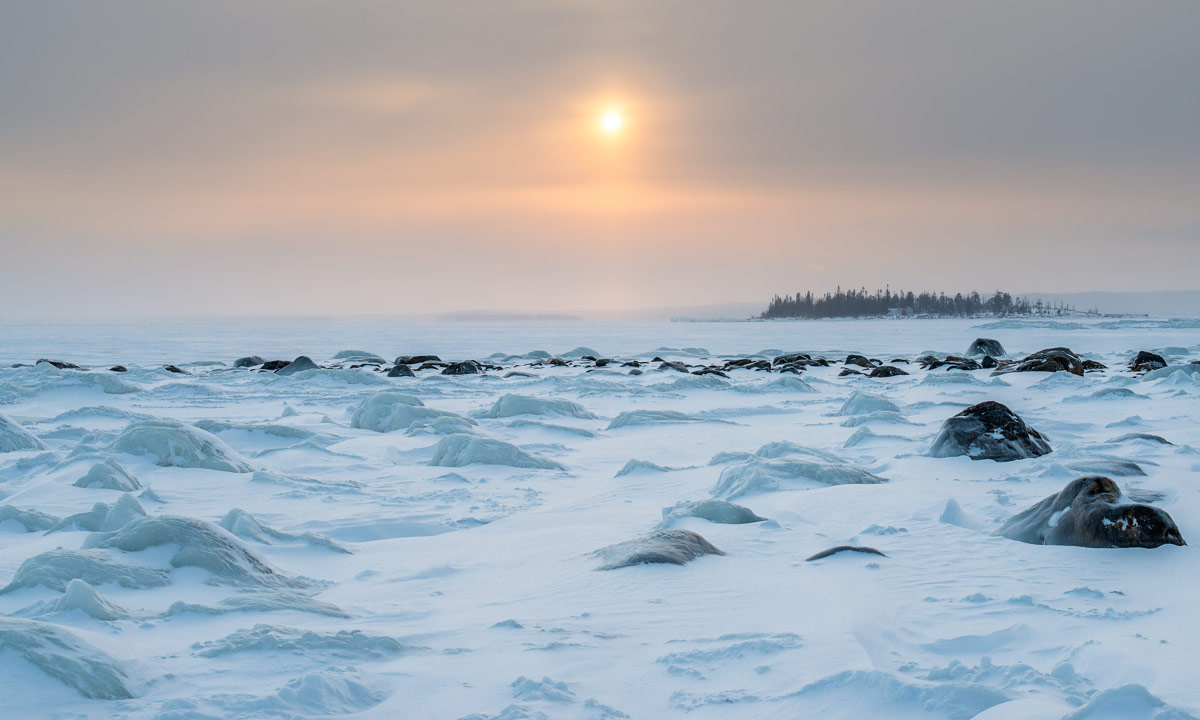
This morning I walked to the peninsula Näsgrundet. On the way I could see that parts of the bay Kallholmsfjärden where clear of ice, just as minor parts round Näsgrundet. This shows how fragile the ice layer is: 6 days ago the sea was open, 5 days ago large parts were frozen over. Today it looked like this:

I hope that the sea will freeze over so much, that I can make a ski tour to the island Gåsören as I did in March 2013. Or that the ice will break that I can take my kayak, asI did in March 2012.

Colourful frost and sea ice

Some people think that’s it’s just dark in Northern Sweden the whole winter. There’s no sun and – since it’s pitch black – there’re no colours at all. I hope you know better, otherwise have a look at these pictures.

Yesterday Annika and I went over the sea ice the first time this season. Our destination was the offshore island Storgrundet. It’s always special to go onto the Sea. We dared to cross the ice for three reasons:

  • It has been very cold the last days
  • Many tracks showed that people have already crossed the ice. By snowmobile, with skis, with ATVs or just by foot
  • B., who has been living at this coast for ages, knew how thick the ice was and that it’s safe

We went by foot, crossed the sea ice in a diagonal line until we came to the island Storgrundet. We crossed the island – it’s hardly 200 meters broad – and turned right to go round the southeastern part.

What should I say – it was just amazing since the changing light of the setting sun illuminated the whole landscape in wonderful colours – both intense and fragile. Here are some pictures – just a feeble attempt to catch these fantastic impressions.

I was so enthusiastic that I stood up quite early today to do the same small tour again, this time with skis. Partly the skis were helpful but on the uneven ice at the outer rim of the island it was harder to ski. Anyway, I got wonderful pre-sunrise light and finally a gorgeous sunrise that started to colorise all frost covered trees and ice – first a pale pink fading more and more to a warm orange. Again some pictures, this time taken with more time and a tripod.

The last kayak tour?

The evening I came home from my trip to Pajala I didn’t drive home directly but made a small detour to the pilot station. As expected the ice floes that I saw two days before already froze together and built a solid layer of ice. I took my flashlight and checked a more exposed place. To my surprise I could see open water and tiny waves rolling ashore. The whole water surface was steaming of sea smoke. I was quite keen to make a last kayak tour before even this part of the sea freezes over.

The next day: I was really tired and scrapped the plan of an early morning kayak tour. But at least I wanted to have a look. I took the car to the same place, got out, went to the shore and looked amazed and flabbergasted. Where was the water? That’s what it looked like:

The whole sea was ice covered. Not only near the shore but almost the whole way to the island Gåsören! Did I dream the evening before or is it possible, that such a large area freezes over in a single night? It was still -26 °C so who knows?

I told my story to the sjöfartsverket on Facebook and asked, if such could happen. They answered that it’s possible that larger areas freeze over in a single night. I guess it will take some time until I’ll canoe again on the Baltic Sea.

Hunting the cold – appendices

This article is part of the series “2016-01: Hunting the cold”.

Some tables for lovers of cold temperatures and numbers.

The journey

These are the coldest temperatures I found on my journey, starting with -17 °C in Skelleftehamn. From -35 °C on I use decimals.

Temperature Time Place
-17 °C Skelleftehamn
-18 °C 6 Jan, 08:09 km 2.4
-19 °C 6 Jan, 08:19 km 14.3
-20 °C 6 Jan, 08:25 km 20.0
-21 °C 6 Jan, 08:50 km 57.8
-23 °C 6 Jan, 09:24 km 72.0 (Jävre)
-24 °C 6 Jan, 09:52 km 115.3
-25 °C 6 Jan, 10:14 km 153.5
-26 °C 6 Jan, 10:22 km 168.4
-27 °C 6 Jan, 10:51 km 202.7
-28 °C 6 Jan, 10:55 km 209.1
-29 °C 6 Jan, 11:10 km 230.0
-30 °C 6 Jan, 11:12 km 232.3
-31 °C 6 Jan, 11:50 km 277.7
-32 °C 6 Jan, 11:51 km 279.9
-33 °C 6 Jan, 11:52 km 280.3
-34 °C 6 Jan, 12:09 km 304.0
-35.1 °C 6 Jan, 12:34 km 334.2
-36.9 °C 6 Jan, 12:39 km 334.5 (Pentäsjärvi junction)
-37.4 °C 6 Jan, 14:09
-37.5 °C 6 Jan, 14:17
-37.7 °C 6 Jan, 16:27
-38.9 °C 6 Jan, 16:30
-39.1 °C 6 Jan, 21:23 near Mukkakangas
-39.4 °C 6 Jan, 21:31 Käymäjärvi junction
-39.6 °C 6 Jan, 22:41 near Käymäjärvi
-40.3 °C 7 Jan, 08:28 road to Käymäjärvi
-40.4 °C 7 Jan, 08:33 road to Käymäjärvi
-40.7 °C 7 Jan, 08:37 road to Käymäjärvi

Some cold temperatures in my life

These are some days that were especially cold including some old records

Temperature Time Place Comment
-25 °C 2005-12-30 DE-Zugspitze Germanys highest peak
-32.0 °C 2012-02-04 SE-Skelleftehamn Coldest since I live here
-36.9 °C 2003-01-31 FIN-Meltosjärvi Coldest temperature display before this journey.
cold! 2009-02-19 SE Lapland ski tour with tent, approximately between -38 °C and -40 °C
-40.7 °C 2016-01-07 SE-Pajala New personal record

The coldest places that night

This table contains all temperature minimums lower than -40 °C and what was forecasted the day before. The -42.9 °C in Naimakka was the coldest temperature since 2001. (All data comes from smhi, the Swedish Meteorological and Hydrological Institute)

Place Forecasted minimum Measured minimum
Pajala -40.4 °C warmer
Esrange ? -40.3 °C
Vittangi ? -41.5 °C
Karesuando -34.7 °C -41.6 °C
Nattavaara -35.5 °C -42.3 °C
Nikkaluokta -32.3 °C -42.4 °C
Naimakka -32.8 °C -42.9 °C

Hunting the cold – day #2

This article is part of the series “2016-01: Hunting the cold”.

Yesterday I travelled to Pajala to search the cold. With a minimum of -39.6 °C i missed the -40 °C.

Day #2 I stood up quite early, took a short breakfast and drove again to Käymäjärvi, where I measured the coldest temperature yesterday. It seemed to be colder than last night and directly after I turned left into the small road to Käymäjärvi, the thermometer showed -40.3 °C. First time below -40 °C – yay! At 08:37, nine minutes later it showed -40.7 °C , which turned out to be the coldest temperature I measured this day.

I continued the road to the end. Here a couple of lonely wooden building stand beside the road, obviously uninhabited, at least in the winter.

But now it was time to pack the pulka – a transportation sledge – and mount the skis. I wanted to make a ski tour, at least a short one. I parked the car at the place where I saw the aurora the day before.

I filled the pulka with warm clothes, hot tea, a bit of food, the camera equipment and such. Then I dressed for skiing. Here it was -37 °C and I dressed carefully to stay warm and avoid frostbite.

One of the telescope tracking poles was not possible to fix. I tried a workaround with the result, that it broke after 5 meters. I’ll have to buy new ones.

First skiing was easy, even with only one ski pole. The snow on the frozen swamp was hard and it was easy to pull the pulka behind.

But then I entered the forest. Of course pulkas are not made for woodland and this forest was like a thicket of birches which sometimes bend down and build low hanging arcs.

I tried to turn left to find more open land (I was quite unprepared and hadn’t any map with me) and had to cross several small brooks. One of them was a bit larger, a bit deeper and I could here water floating under the ice. I had to unmount me skis and was quite nervous crossing the brook that I probably would jump over easily in summer but all went well.

I continued and wanted to make another photo, but not the camera. It didn’t work any longer. The D-800 just showed an ERR on the display, that was all. Now I was a bit of fed up: Only one ski pole in the midst of a thicket of birch trees and the camera not working. I turned and went back. This probably was one of the shortest ski tours ever.

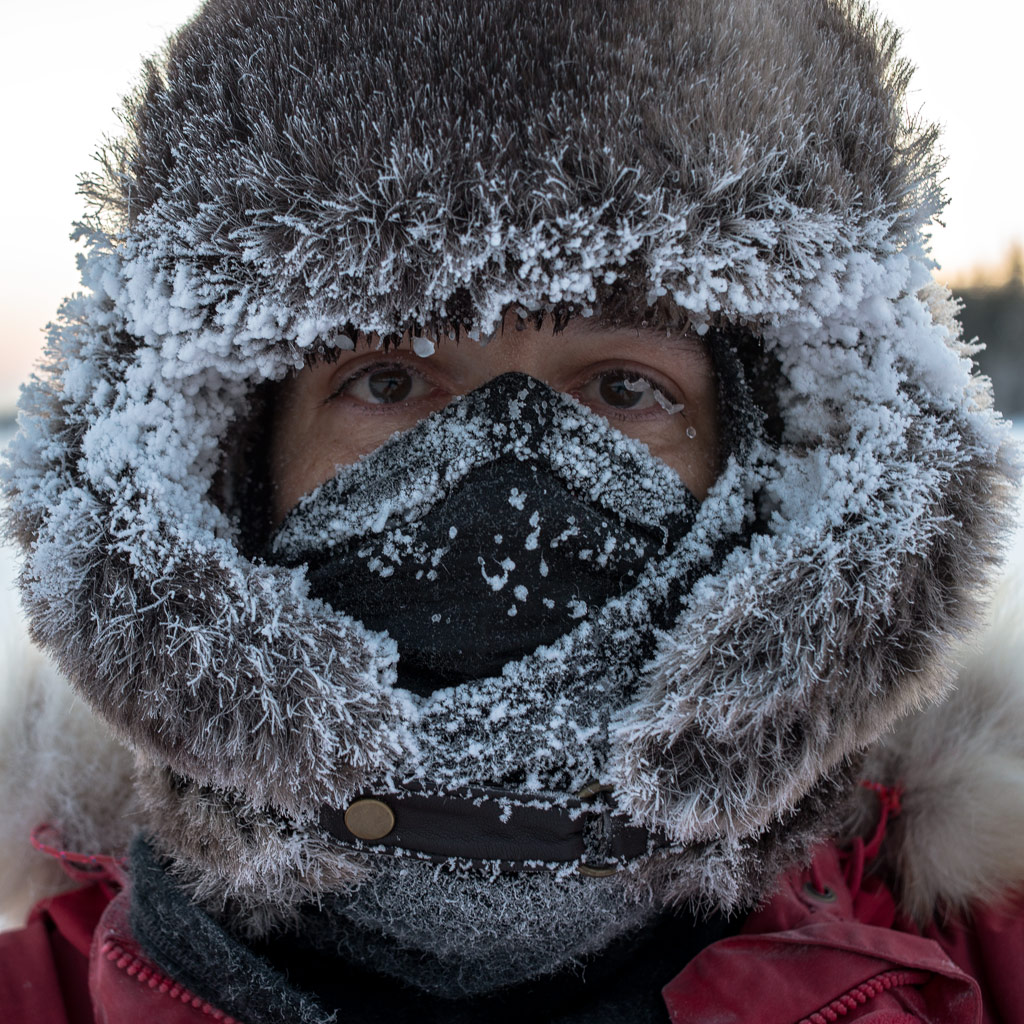
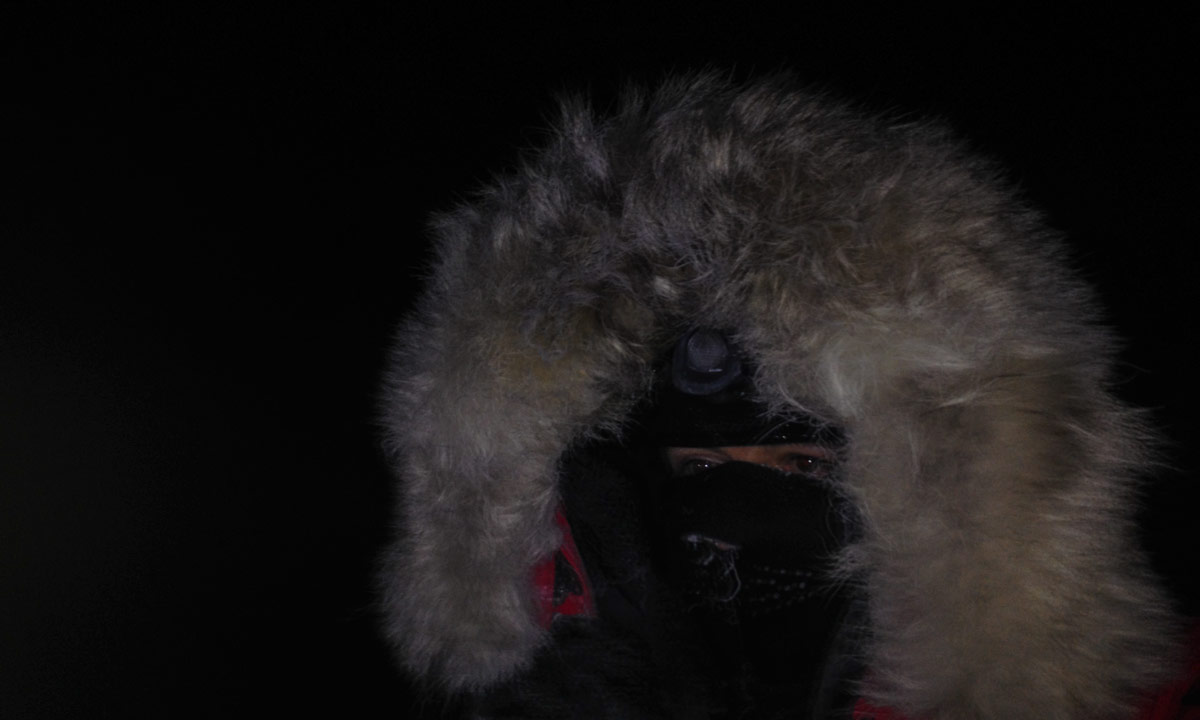
That’s what I looked like. The first photo is taken 10 minutes after beginning, the second right after the end of the tour. That was not easy: The Nikon D-800 was out of order, the iPhone is not made for cold temperatures and the batteries of my auxiliary camera were left in the car and didn’t work neither. But at last I found a battery that worked for the moment.

You see the fur cap? Some equipment that I have is really expensive, for example by Canada Goose down parka (not on the photos above). The fur cap however is from H&M and costed only 10 Euros. You can hardly call this professional equipment but it worked extremely well.

When you exhale in this cold the air flickers as it does over open fire. No surprise, the temperature difference is round 75 °C. When you inhale you should wear a buff or a scarf to protect your lungs. Remember the temperature difference?

I was so glad that the car copes with the cold. It was -36.9 °C outside and -35.1 °C inside when I started the car after the tour. It took only two seconds and the motor was running. Only changing gears is heavy as long the system is so cold.

On the way back temperatures dropped again below -40 °C. Time to many another selfie – a ridiculous one: The camera inside, holden by a long arm, me outside in front of the car. To my big relief the Nikon camera worked again. The motive: The temperature at the left, me outside with my parka at the right. It didn’t work as excepted. Where’s my face?!

Back in Pajala I admired the fragile birch trees covered with frost beside of the river Torneälven. In the background the clear sky with colours from pink to azure. It seemed to be even colder on the bridge that led over the river back into the city. I could feel the wind through my gloves and mittens and even the nose started to freeze together with the camera when taking photos! I closed my hood completely which looks a bit ridiculous, but I stayed warm.

I took my anemometer (A birthday present to myself) and measured the wind: 20 km/h. The temperature: -36 °C. That makes a wind chill of -51 °C! That’s what I call coldness!

I took a lunch and headed home since weather in this region should worsen, while the forecast for Skelleftehamn looked quite good. It was hardly warmer than -25 °C on the whole journey back home.

At 7 o’clock I arrived home. -28 °C outside – time for a hot bath!

Hunting the cold – day #1

This article is part of the series “2016-01: Hunting the cold”.

Two days ago it looked like that it could by quite cold in Northern Sweden yesterday and today. I checked several places and their weather forecasts and Pajala with a forecasted temperature of -40.4 °C won. That’s good news, since Pajala is only 350 km away. Nikkaluokta for example is one of the coldest places in Sweden, is 537 km away and it will take more than 6 hours to travel to (when conditions are good).

Yesterday – 6 Jan, 2016 – I packed kamera, very warm clothes and all you need for ski tours into my Saab and started the trip. In Skelleftehamn it was -17 °C, but already 20 km away the temperature dropped to -20 °C.

I made a stop in Jävre. I’ve passed this place several times and every time I planned a future stop. Well, future was yesterday. Jävre -23.3 °C.

I continued the trip and the temperature continued dropping. Round half past ten I could see the sun – it was bright red (the camera couldn’t catch this) and because of the higher latitude it was even lower above the horizon. -27 °C.

Now I continued driving to avoid arriving too late. Right after Svartbyn (E10) the thermometer dropped below -30 °C the first time. Round 40 km later I turned right. Here temperatures dropped below -33 °C. Near Pentäsjärvi – 25 km before Pajala – it got even colder: -36.9 °C. I probably experienced colder temperatures, but never saw such low numbers on a thermometer.

I found a quite low-priced room in the Hotell Smedjan but I continued driving around looking for nice (and cold!) places.

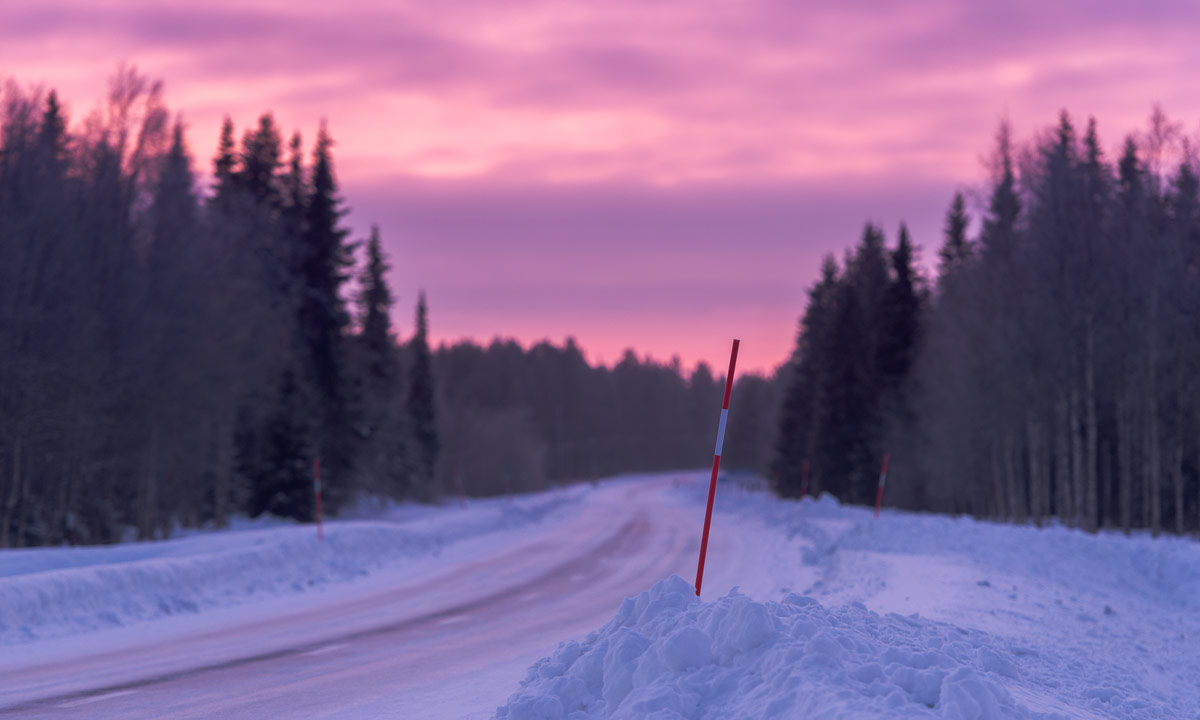
One of the most fascinating things in my opinion is the light in wintertime. Twilight may last hours or even the whole short morning, day, and evening and there are always soft pink colours in the sky. Just beautiful, but cold to take pictures of if you don’t have warm clothes. But when I have one thing, it’s cold weather equipment.

I looked for the airport, which is a bit out of town and quite tiny. It was closed. It’s the first airport I saw with an own parking place for reindeers. Good to know!

On my way back to Pajala I found a side road that headed to a small national park. I parked the car and walked the 700 meters to the cabin and the grill place in darkness. Of course it wasn’t pitch black, the snow and some thin clouds reflected the light of the city, giving enough light to see and walk. (The selfie is made with the iPhone which can take two photos until it will shut down because of the cold.

On the way back it was even colder: -38.8 °C. Now I got really hungry, drove back to the hotel and walked to the pizza restaurant. (Pizza and burger bars rule the Scandinavian north). Pajala by night:

Then I went home. I was glad that I have all I need for such a trip: A camera, food and a warm winter parka.

After a while I considered if I could catch the -40 °C now. It was warmer than expected, but let’s give it a try.

This time I took the road to Käymäjärvi (the name proofs, that Finland is not far away). Yes, here it was quite cold – below -39 °C. Between a swamp and the lake I stopped, since these low lands can be cold traps. I didn’t get lower temperatures but a view on the village and northern light (quite strong until I was ready to take pictures …)

On the way back to the main road I got my new personal cold record: -39.6 °C (sorry, no -40 °C)! When it’s really cold in Northern Sweden people take pictures of thermometers and show them in the internet. I will join this tradition. Voilà:

>>> read about day 2 of the journey >>>

Winter sea

-13 °C, clouds and wind – that was the weather this morning in Skelleftehamn.

I drove to the peninsula Näsgrundet which is quite exposed to the elements. Despite of the cold temperatures of the last days the sea is still open.

Beside of the dam, that connects Näsgrundet to the mainland, the water is smoother. It was still open yesterday, but covered with ice floes today. The floes raise and sag with the incoming waves, there are not frozen together yet.

A bit further, where I took the first image, the waves spray sea foam ashore and the rocky shore is covered with a thick layer of ice. Last year I took photos of the icicles, but this year the ice wall isn’t big enough yet.

You see the fog-like smoke above the sea water? That’s not the drifting snow, it’s sea smoke (a.k.a. frost smoke or steam fog). When it gets colder the vaporising water in the air will directly freeze to ice dust, forming this sea smoke.

I guess, larger parts of the coastal Baltic Sea will be frozen over in some days. You can see already the first thin and transparent ice crystals on the surface.

Lake-effect or not?

Postscript (5 January 0:00):
No, it’s no lake effect, just ordinary snowfall. More snow to come, but probably not much.


Skelleftehamn has a quite exposed location when it comes to snow. I experienced it several times, that quite huge amount fell it a short time.

The so called lake-effect snow occurs, when the Baltic sea is still open and winds blow onshore. Mostly it is very local and interestingly enough it is mostly ignored completely by the smhi, the Swedish weather service.

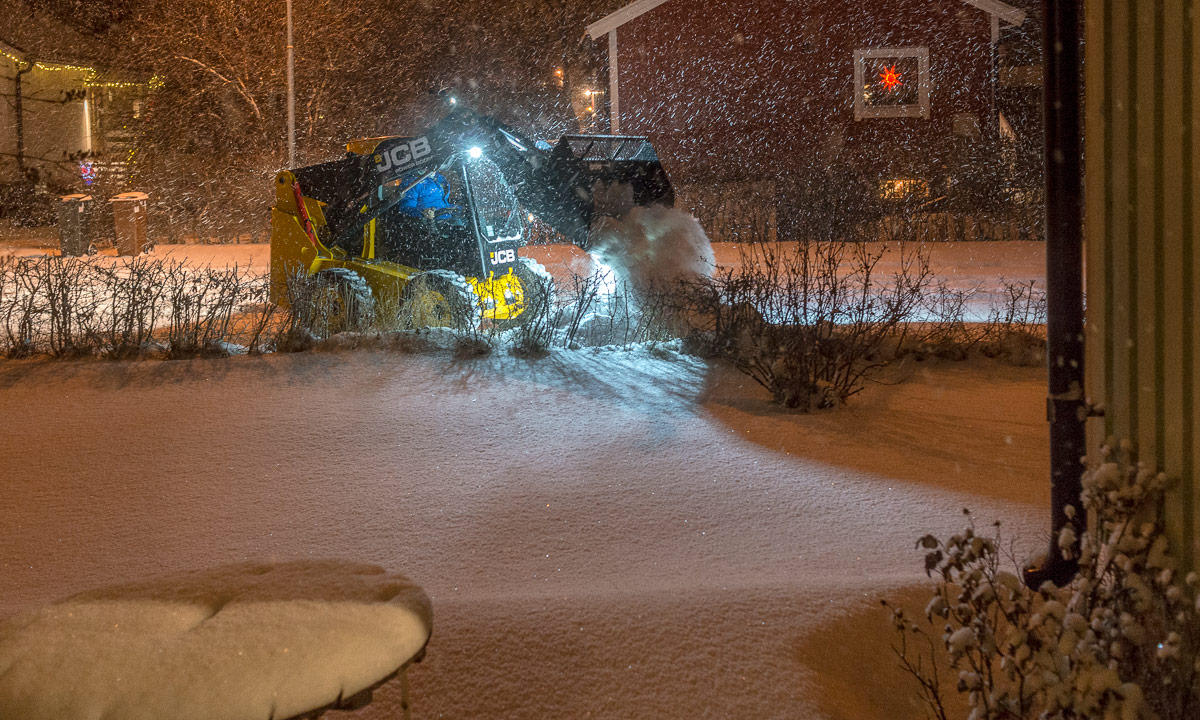
Today it started snowing round 13:00 and snow fall increased. Some neighbours have already started ploughing and on the road lie round about 15 new snow from today, mostly from the last hours.

In January 2014 came 70 to 80 snow within two days, December 2012 fell 83 cm snow within 24 hours. Even last winter came a lot of snow straight, but I wasn’t home.

I’m curious how much snow we will have tomorrow morning and when it will stop snowing. And finally it’s cold enough for the snow to stay with forecasted temperatures between -14 and -23 °C.

For certain I can make my first ski tour this winter, perhaps to Storgrundet, the nearest island.

Being honoured by winter

Perhaps the biggest change 2016 is that I quit my job and started my own company. As I wrote yesterday, today is the first day of my “new life”.

The main reason for the change was my increasing interest in photography during the last years. I didn’t make any specific plans yet, but one of the main focuses will be on winter photography. Snow and ice. That’s why I really felt honoured by the winter weather today. It felt like winter congratulating me to my decision:

Temperatures dropped from -8 °C to -13 °C, still dropping, it was quite windy and it snowed quite a lot, still snowing.

That’s how it looked like at the beach in Storgrundet:

I hope, a lot of snow will fall the next days, I’m longing for the first ski tour in Skelleftehamn and I guess, the kayak season is over.


South from Umeå I – Norrmjöle

Normally I head north, but not today. Annika and I were at the beach near Norrmjöle – 30 km south from Umeå, 150 km south from Skelleftehamn. The sea is still open beside of some pancake ice near the sandy beach.

Pancake ice occurs when a layer of solid ice is broken by wind and waves. The ice floes rotate and the edges are crushed by the other floes. That’s why this ice floes are always round and circular. Parts of the pancake ice on the photo was washed ashore (or left there by the flood).

Many rocks and stones near the shore were covered with a layer of ice – the nearer to the sea the thicker the ice. Sometimes the whole rocky beach was coated with ice and we had to go around to avoid slipping.

When I took the car back to Skelleftehamn it started to snow. First it was hard to drive since the snowless streets are so dark and the falling snow itself so bright. It’s like travelling faster than light through a cloud of stars. Fortunately the streets were covered with a thin fresh layer of snow after a time. That made the driving much easier.

Today we got 5 cm new snow in Skelleftehamn and it became colder. Looks like winter is coming next week with snow and temperatures down to -20 °C. I hope that it’s not too windy, that I can make a last trip by kayak before the sea freezes over.