The first frost


The first frost this autumn · temperature minimum last night: -3.9 °C · air temperature this morning: -2.5 °C
The first frost this autumn · temperature minimum last night: -3.9 °C · air temperature this morning: -2.5 °C
Two days ago was autumnal equinox, start of the astronomical autumn. Today I managed to be at the coast shortly before sunrise at 6:26. The sea was amazingly calm considering the wind of the last days, and the small cotton-wool clouds were coloured rose.

The sun rose over the island Flottgrundet and started to illuminate the rocky shore and the coloured trees.

The mushrooms sprout in the meadow next to the house of the pilot station. I lay down in the grass and made a photo from a small fly agaric covering the sun.

The morning was crisp which temperatures round 1 °C and for the first time I had to scrape ice from the windshield of my new car. While Skelleftehamn looks autumnal, other places as Hemavan or Kilpisjärvi have got the first snow these days. Even though I took my first winter bath already yesterday (water temperature 9.4 °C) it will be some time before winter comes to Skelleftehamn.
Time to collect some warm autumn colours and time for a strongly over-edited photo of the trees on a breakwater. It’s kitsch in some way, but I like it anyway.

When I saw the fog moving above the river Skellefteälven this morning I had to interrupt my drive to work to take some pictures. It was the coldest morning that I experienced here since last winter. Air temperatures were still above zero but the first ground frost was visible.


When it comes to seasons I like winter the most, but autumn is so beautiful, too.


It’s still quite warm in Skelleftehamn, hardly below 10 °C the last nights, but today it rained and some of the birch trees start casting off their leaves. Summer 2018 is history, autumn is coming.
After two weeks in Iceland Annika and I arrived in Skellefteå today. The first thing I saw after leaving the airport building was this front loader.

The banner fixed to the shovel says “Visst är det kul att skotta snö!”. In English this means: “Sure it’s fun to shovel snow (manually)!”
That’s an interesting welcome in the middle of September.
Bathing in the Baltic Sea is still fun but it starts getting chilly. Today water temperature was round 13 °C, that’s 5 °C less than two days ago. Maybe the strong gusty wind has been mixing the warmer surface water with colder water from the depth.
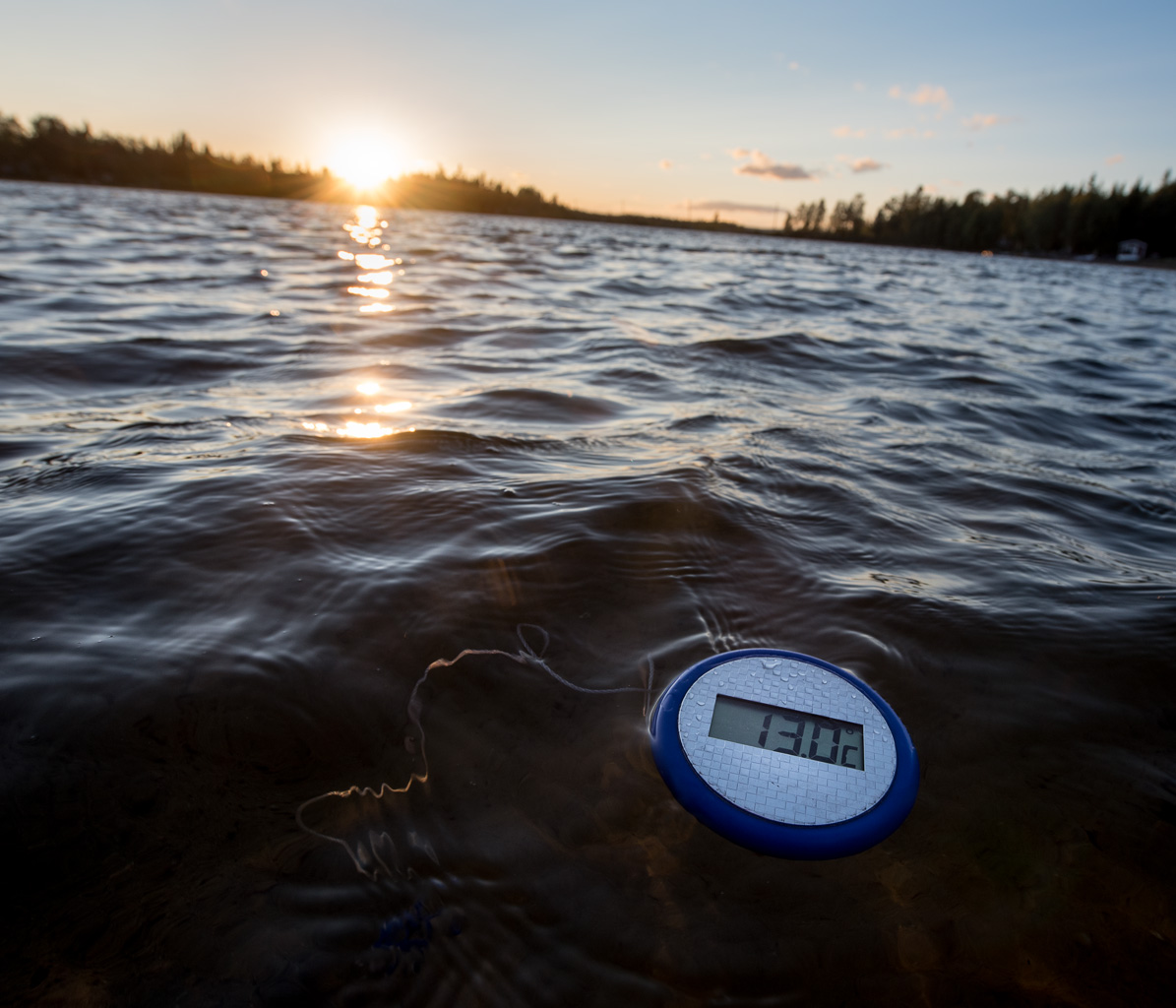
If the water temperature drops below 10 °C you can call it winter bath. I guess, that will not be long.
The July in Sweden was the hottest since 1756, when temperature measurements began. In Skellefteå it was extremely warm as well in July: 29 days had a maximum temperature above 20 °C, 19 days of them above 25 °C.
There is however a place of eternal winter in Skellefteå, just 3 km away from the centre.


Is it a glacier? Is the ice age coming back? No, of course not, this area is just Skellefteå’s snow dump. The last winter was long and snowy and more than 13000 trucks transported snow to this place until the end of April. This resulted in a snow pile of 25 meters in height – another record.
No wonder, that there is still a lot of snow left despite the warm summer. At the edge Tussilago was flowering as if it were spring. The snow was surprisingly clean, only grit and a bit of rubbish showed that I was near civilisation.


Call me stupid, but I had to touch the ground to feel the icy snow – yes, it was cold. It may be tempting to visit this place on a hot summer day, but that’s maybe not the best idea. For one the place is anything but beautiful and for another not without risk, because there could be invisible holes under the icy snow. I was extremely cautious while taking these pictures.
If you would ask me about the strangest place in Skellefteå in summer, the Skellefteå snow dump was definitely a candidate.
There are so many wonderful and special locations to stay overnight in Northern Scandinavia. Many of them are quite far away as e.g. Låktatjåkko (590 km) or Kjølnes Fyr (970 km). Others are quite near.
Two days ago Annika and I started a two-day journey to such a place, unknown to both of us. Already the journey was interesting, since you cannot reach the destination by land. We started in Umeå and drove to Norrfjärden, where we parked the car and waited for the 8 o’clock ferry to the island Holmön. This ferry is operated by the Trafikverket (Swedish Transport Administration) and free of charge.


We had four hours to explore this island, part of the island group Holmöarna, that have 75 year-round inhabitants. The small village Byviken, where we arrived has a boat museum and a small shop, that is open all year. We went for a walk and discovered a nice place: Bergudden. There’s a lighthouse and you can rent rooms, on request even in wintertime.


We arrived back in time to wait for the departure of our next vehicle: Holmöslupen.


Holmöslupen is a chalupa, an old cutter-like sail boat which is a reconstruction of an old boat type as commonly used 100 years ago. It takes up to 12 passengers and you are allowed (and asked) to help with e.g. hoisting the sails. Life vests available, sailing experience not needed. This boat would bring us to our final destination.


The wind was so weak, that we sailed only a part and mostly used the motor. Otherwise the trip (planned to take 40 to 60 minutes) would have taken several hours. We passed the islands Trappskär and Lill-Fjäderägg before we arrived at our travel destination Stora Fjäderägg, an island of 1.8 km × 1.3 km. Here’s a hostel driven by the STF (Swedish Tourist Association). The story of this hostel is worth to tell:
After people of the boat museum were done with the building the Holmöslupen they asked themselves what to do with such a fine and seaworthy ship. It was them who had the idea to install a hostel on the uninhabited island Stora Fjäderägg just to give the chalupa a purpose. That’s why there is a hostel on a desert island in the Northern Baltic Sea and a wooden boat that transport the guests.
Some images of the island:


There is electricity on the island, there is mobile internet and there is drinking water. The latter comes from a well and especially this year you have to be economical with it due to the long period of dryness. Luckily it rained some days ago and the rain barrels were filled to the brim. The rain water is used for washing oneself and for the dishes. The hostel has a fully equipped kitchen, but you have to bring all food with you.
Annika and I had decided for one of the all-time travel dinners: spaghetti with pesto and parmesan cheese. It was very warm but not too hot to sit outside. We enjoyed our meal and watched the barn swallow feeding its six children that begged for food with open beaks. They seemed to be almost grown-up and hardly fitted into the small nest any more.

We were told, that there are many seals round Stora Fjäderägg and where to find them. Together with Annika I doubtfully followed the tiny path through the heath – I’ve never seen a single seal in the Swedish Baltic Sea since I moved here eight years ago. The ground became rocky and we had a view of the sea. First I saw a black spot on top of a grey spot. A seal on a rock? Then we saw round black spots floating back and forth – definitely seals, I never heard of swimming rocks … . I used a small tree for cover and creeped nearer. The back spot was a seal too and other seals were lying along a headland a bit farther away.
I took the camera, ducked and tried to creep nearer to a large boulder to hide behind. The seal however saw me and *splash* jumped into the water and dived away. I waited behind the rock and I was lucky. After some minutes a seal approached the same rock and crawled onto it. I was so near that I could hear the flippers splashing.


After having taken these photos I returned to Annika and the seal – seeing me – dived again. This rock kept empty for the next time but along the headland more and more seals appeared and seemed to cover the rocks completely. Next time I’ll definitely will take my huge tele photo lens with me.

We both sat there for a while – on a big rock, both listening and watching. The sun had already set, zillions of small insects hummed and buzzed around and we watched the many grey seals, at least 40 of them. Finally we decided to walk back as long it was light. Some of the small paths are not easy to walk on. On our way back I stopped because I saw something moving. It was a young hare. No, it was two of them. No, even more.
Three young hares were hopping around, eating a bit of grass and completely ignoring us. I was able to get close to three meters and still they didn’t seem to be frightened at all. I increased the ISO of my camera to 3200 and took some photos of these cute furry animals. (Don’t ask me what they do in photo 3 and 4, I’m not a hare expert.)


When we arrived at the hostel nightfall had intensified. Frog hopped around everywhere and the blue hour invited for taking more pictures. I however was tired and only took a photo of the old lighthouse before going to bed.

The next day: After a nice outside breakfast Annika and I took another walk over the island. Stora Fjäderägg has a lot of historical places, anything between the not-so-old lighthouse and ancient heaps of stones only readable for archeologists. Here are some of them:


Again it was warm or even hot at midday. Passing the lighthouse we returned to the hostel longing for water to drink.

Apropos lighthouse: We were ten people on the island that had stayed overnight: The host family (3), Annika and I (2), a family from Örnsköldsvik (4) and a man that had bought that old lighthouse. He showed Annika and me around and told us about his plans to renovate the lighthouse and to build a flat into it. A great project that probably will take some years, because it’s just a summer project.


We already had packed our backpacks and cleaned our rooms, now we were ready to go back to the small harbour waiting for the Holmöslupen. This time we were lucky, we could use both mainsail and foresail to sail back to Holmön.


Step by step we came back to civilisation: Holmön – the grocery shop (ice cream!) – the ferry to the mainland – the parked car – driving the E4 to Umeå – a Thai restaurant – home at Annika.
Conclusion: Absolutely worth it! I’m sure it wasn’t the last time, that Annika and I travelled to this very special place.
More info:
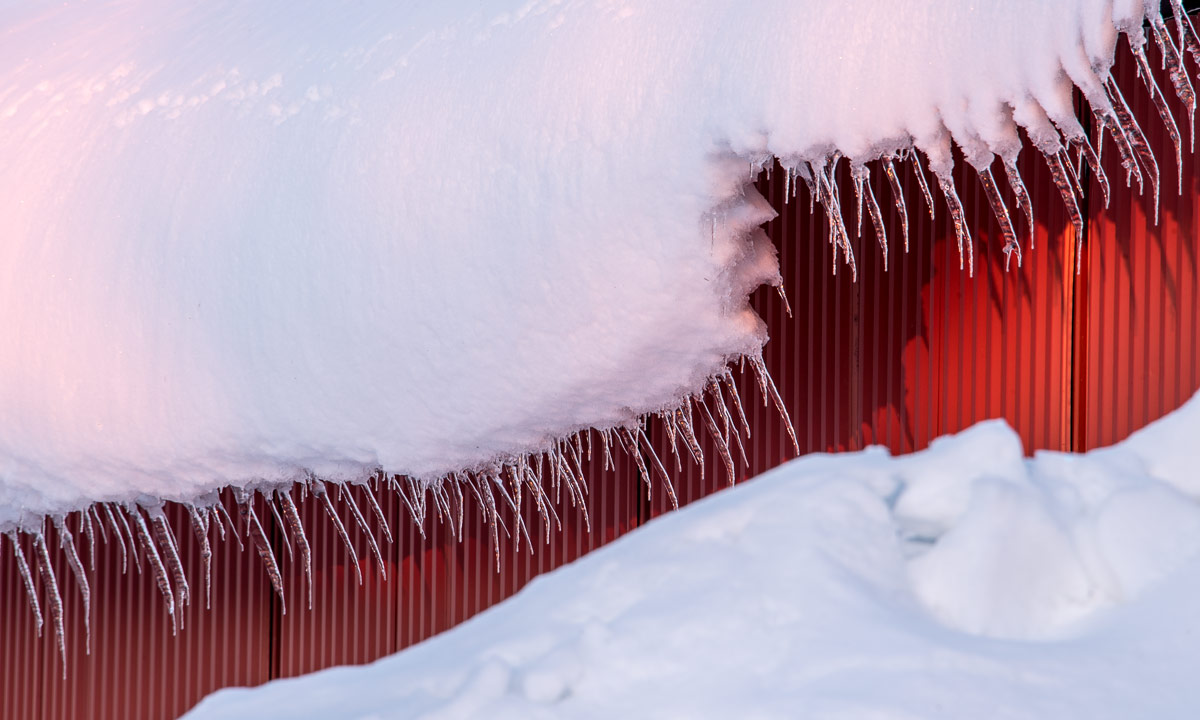
The weather of the last weeks has been hot, mostly too hot for me. Even today’s thunderstorm and heavy rain showers didn’t manage to cool down the temperatures below 20 °C. I’m really longing for cooler weather. Since I cannot change the weather itself I can only provide some winter photos from the archives. Voilà: