Three bicycle tours on Gotland – Wednesday

This article is part of the series “2018-05: Gotland”.

A bicycle tour in seven scenes

1. To Ihre by bus

It’s Wednesday. As yesterday we’ve planned a bicycle tour, this time north from Visby again. Today we want to try to take the bus and cycle back. We have to get up early, the bus leaves at 7:55. As we hoped, the bus driver will transport our bikes. The way however is a bit unexpected: Two bus drivers lift the heavy bikes on a transport rack attached to the back of the bus. It doesn’t look very stable. The bus driver however observes the back camera to check the bikes and it works, we arrive in Ihre without any problems.

2. The beach at Irevik

This stone beach is one of the beaches, where you can find fossils, e.g. Rugosa. There are so many fossils that I find them though hardly looking. (I found fossils however on almost every beach in Gotland.) As a child I collected fossils and it would have been almost impossible to remove my from these beaches. Now I love to look at the white swans as well, but I have many stones in my pockets.

3. Lickershamn

Probably the highlight of the day: Lickershamn, a cute old fishing town where you can buy both smoked fish and ice cream (a good combination if not eaten simultaneously!). We sit outside, it is warm as if it were summer and we enjoy the smoked salmon pieces and the shrimp salad.

4. Raukar near Lickershamn

We saw them already on the way to the sea: The raukar near Lickershamn. A rauk or sea stack is a steep rock formation formed by wave erosion. Due to the post-glacial rebound these rauks are quite far away from the Baltic Sea that formed them.

5. Lickershamn fornborg

Quite near there lies a fornborg, an ancient refuge castle. If you are not into archeology it’s hard to find the leftovers from the iron age in the forest. So I decided to take a picture of the blue flowers that bloomed everywhere in the light pine forest.

6. Ungemiss gård

We pass a farm, now café and art atelier, too. A chicken comes closer curiously. We however want to reach the Krusmyntagården before the kitchen closes and do not take a longer break.

7. Krusmyntagården

We’ve been there two days ago; Krusmyntagården is a wonderful place with great food, even though Annika and I do not fall in love with the saffron pancakes, a speciality from Gotland. It’s really nice to sit outside, have an ice cream, a lemonade and relaxing.

Extra: Brissund bathing place

Next stop: the near sandy beach in Brissund. The water feels much colder than the day before and is hardly more than knee deep. Refreshing however since the air is so warm.

After the bath we head home, first along the main road, then along the beach promenade, then through the old town. The dinner (taken on the roof terrace of our apartment): green asparagus with ham and potatoes.

First impressions of Visby, Gotland

This article is part of the series “2018-05: Gotland”.

And now to something completely different after all that snow and ice.

Yesterday Annika and I took the plane. First to Stockholm Arlanda and then to Gotland – Swedens largest island –  where we’ll stay in the Visby – Gotland’s main town – for a week.

Some first impressions from our yesterday’s walk through this wonderful medieval town:


Ice report 5 May 2018

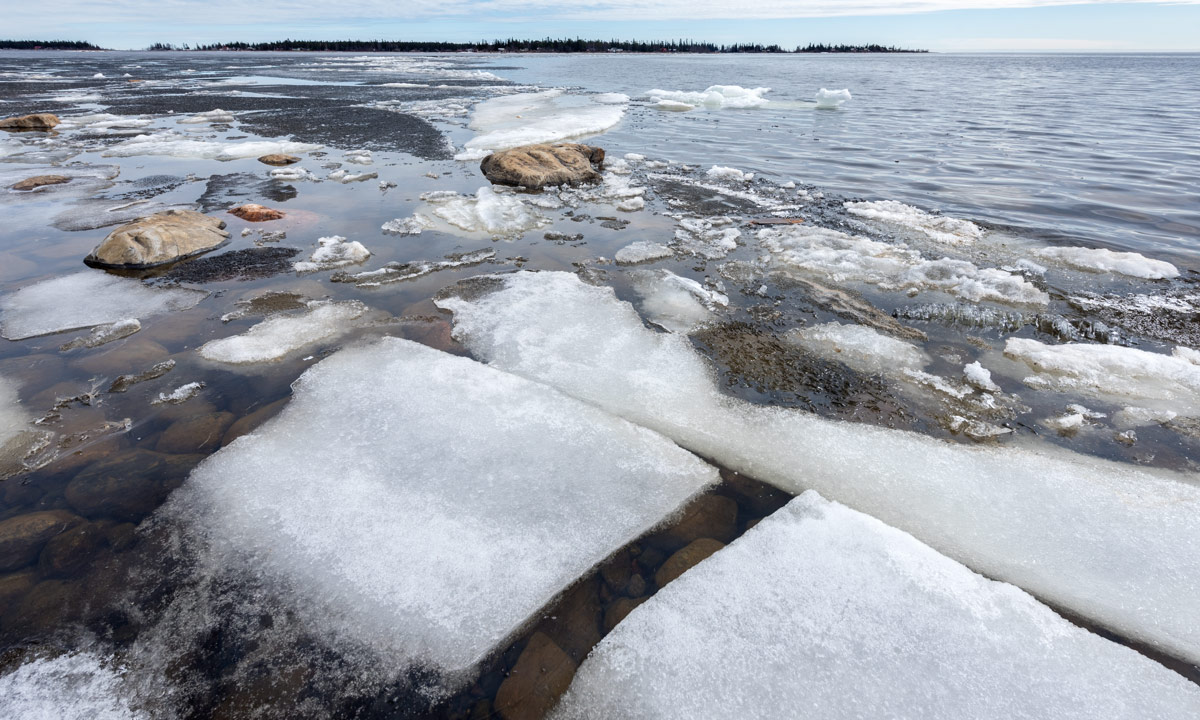
This morning I took the car to the lotsstation – the pilot station – on the peninsula Näsgrundet and took a closer look at the Baltic Sea. It was mostly free of ice, but the sheltered parts between mainland and the nearer islands were still covered with grey old ice. The rocky shore was partly covered with ice, too and some white ice floes floated on the ice cold water.

During the day it cleared up and the temperatures rose to 17 °C. Seven hours I returned to the same place. The floating ice I had photoed in the morning was gone by now. Had it melted or drifted away? I had to go to another more sheltered spot to be able to make probably my last ice photos in Skelleftehamn this season:

Why “the last snow” and “the last ice”? The reason is simple: Tomorrow Annika and I will fly to Gotland for a week. According to the weather forecast the next week should be warm and sunny, both in Skelleftehamn and on Gotland. I guess when I’m back, all snow and ice – beside of some huge manmade snow piles – has be melted away.

Then I’ll take a bath in the ice cold water and call it “spring bath”!

P.S.:

Snow report May 4 2018

Winter lovers in Skelleftehamn, you have to face it: winter is over and the snow is melting fast. Almost the entire property is free of snow. There is however some snow left round my house, so let’s check it out:

1. Next to the neighbours garage (45 cm)

There’s a pile of snow next to the garage. Anyway, that doesn’t really count. It’s remnants of a roof avalanche that slid down weeks ago.

2. Behind the garden hedge (33 cm)

There’s snow in the shadow of the garden hedge. Anyway, that doesn’t really count. That’s the place, where I had my personal snow dump.

3. On the garage driveway (47 cm)

There’s an icy pile of snow on the garage driveway. Anyway, that doesn’t really count. That’s the place, where my neighbour dumped the snow when he cleared the snow for me while I travelled around in February and March.

4. On the lawn (2 cm)

There’s a shallow spot of snow in the progress of melting. That snow does count as a matter of fact. No one moved snow to this place, it’s the last real remnant of the long winter 2017/18.

Incidentally, the last photo reminds me of Dr. Seuss’ children book The Cat in the Hat.

This will probably will be the last article about snow for a longer while. I probably won’t find any snow in June, July, or August. Or what do you think?

Valborgsmässoafton 2018

30 April

Valborgsmässoafton is the last day of April. On this days many people set fire to big bonfires, partly as an event being celebrated with friends, partly for burning last years gardening rubbish (and more …).

This year I was invited by A. and M. who I’d got to know exactly eight years ago on another valborgsmässoafton. They are among my oldest friends in Sweden and I’m very happy that they exist. Their stuga – or summer cottage – is located in Bygdeträsk south of Skellefteå.

This time I come from Umeå, where I spent the weekend. I try to avoid the larger roads and prefer the small gravel roads. Mostly they are in good conditions, only some parts are quite muddy and have deep ruts in the clayey ground. Less and less snow can be seem, but there’s still snow left.

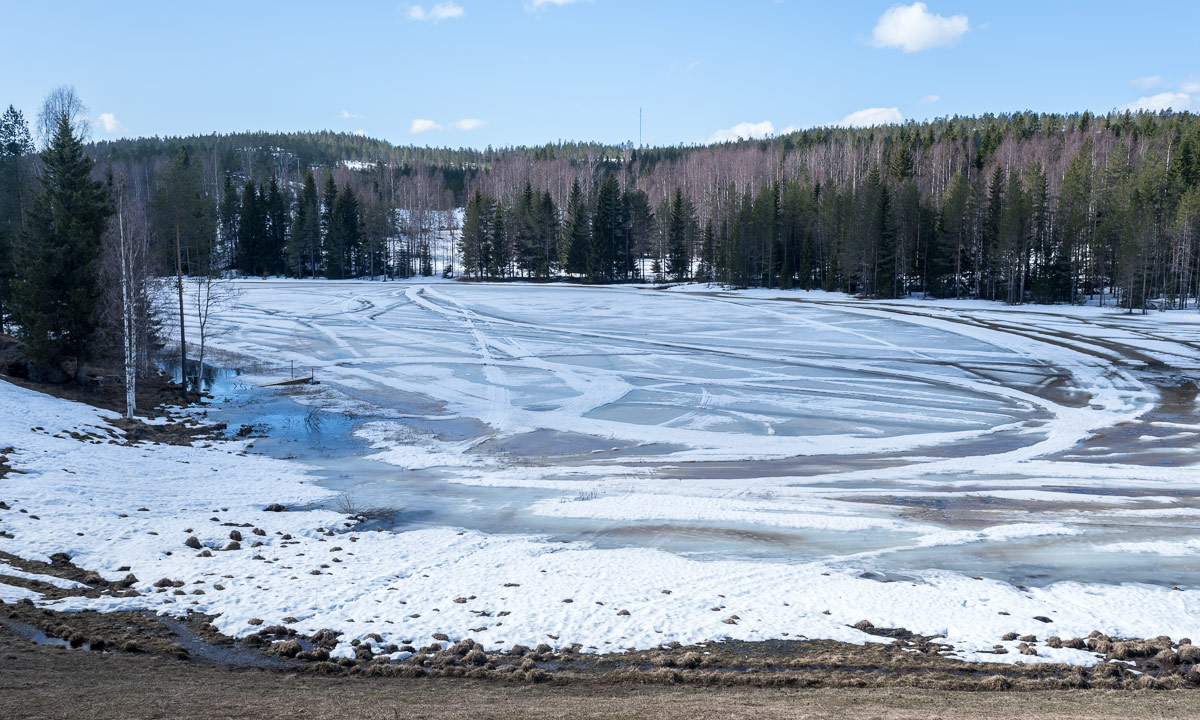
There is still ice on the lakes as well, but it looks soft and grey and near the shore there are more and more open patches. You can still see the snowmobile tracks, a vague reminder of the winter.

Some hours later: I’ve arrived in Bygdeträsk and with the help of A. I manage to park my car without getting stuck in the soft clay of the property (which happened to a craftsman recently). The other guests have arrived, too and – of course – the bonfire is burning!

But what about the hot tub? Wouldn’t it be nice to take a hot bath outside later in the evening? That of course needs some preparations. While M. cautiously tries to split the thick ice block in the hot tub with an axe I put on chest waders to wade a bit into the lake with a long hose attached to the water pump. First I thought I had to chop away ice, but near the shore the lake is just filled with knee-deep slush. Soon the pump starts to fill the hot tub with ice cold water heated by the wood stove.

To make a long story short: it will take eight hours until the water is hot enough for a relaxing bath and I will have fallen fast asleep when the only two people still being awake will start their bath.

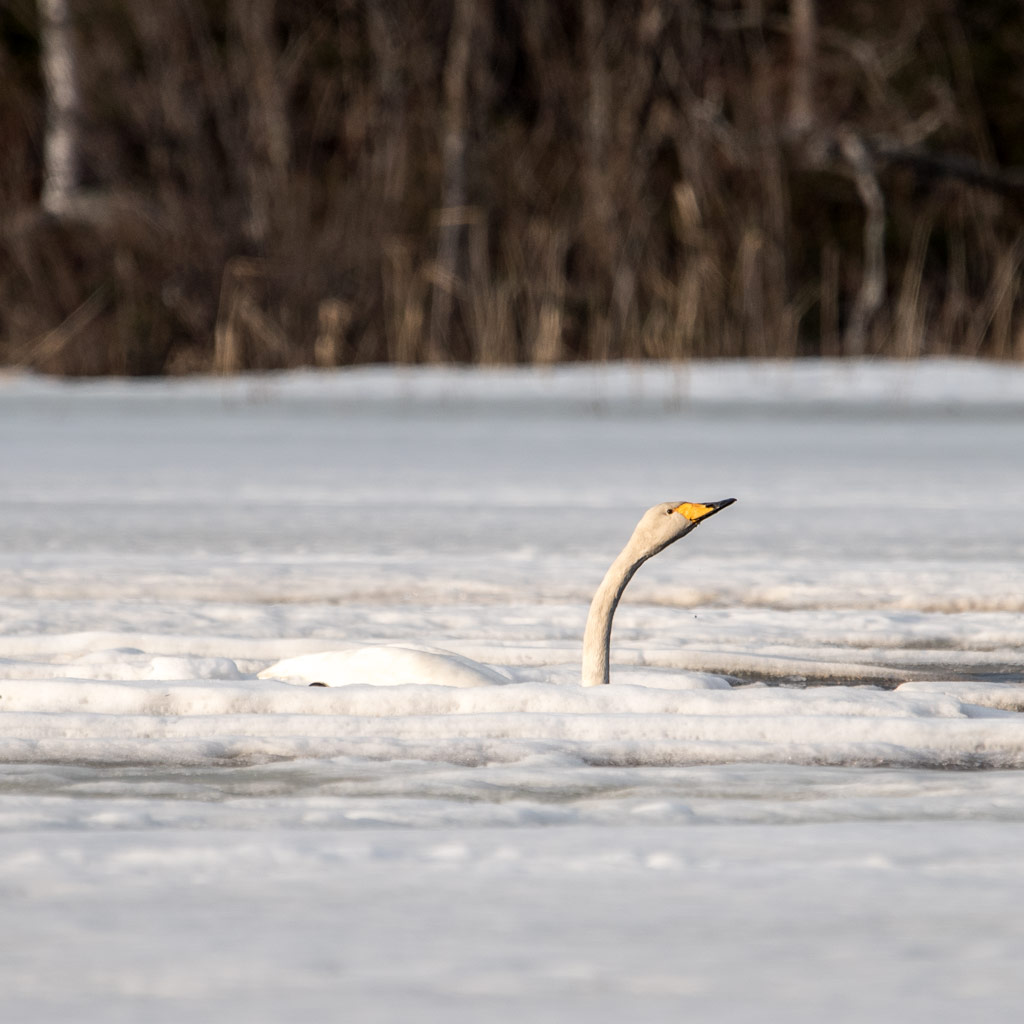
Anyway, there are other things to do as e.g. watching the whooper swans on the ice and in the water.

Then there is a lot of eating (M. is a great cook and grandmaster of barbecuing) and talking and playing games. Every half an hour someone goes out, adds wood to the oven and checks the water temperature, that sloooowly increases. I become more and more tired but I want to have a bath. At 1 o’clock in the night however I give up. I’m just too tired! I pump up my camping mat in the workshop, unroll the sleeping bag and soon I’m fast asleep.

1 May 2018

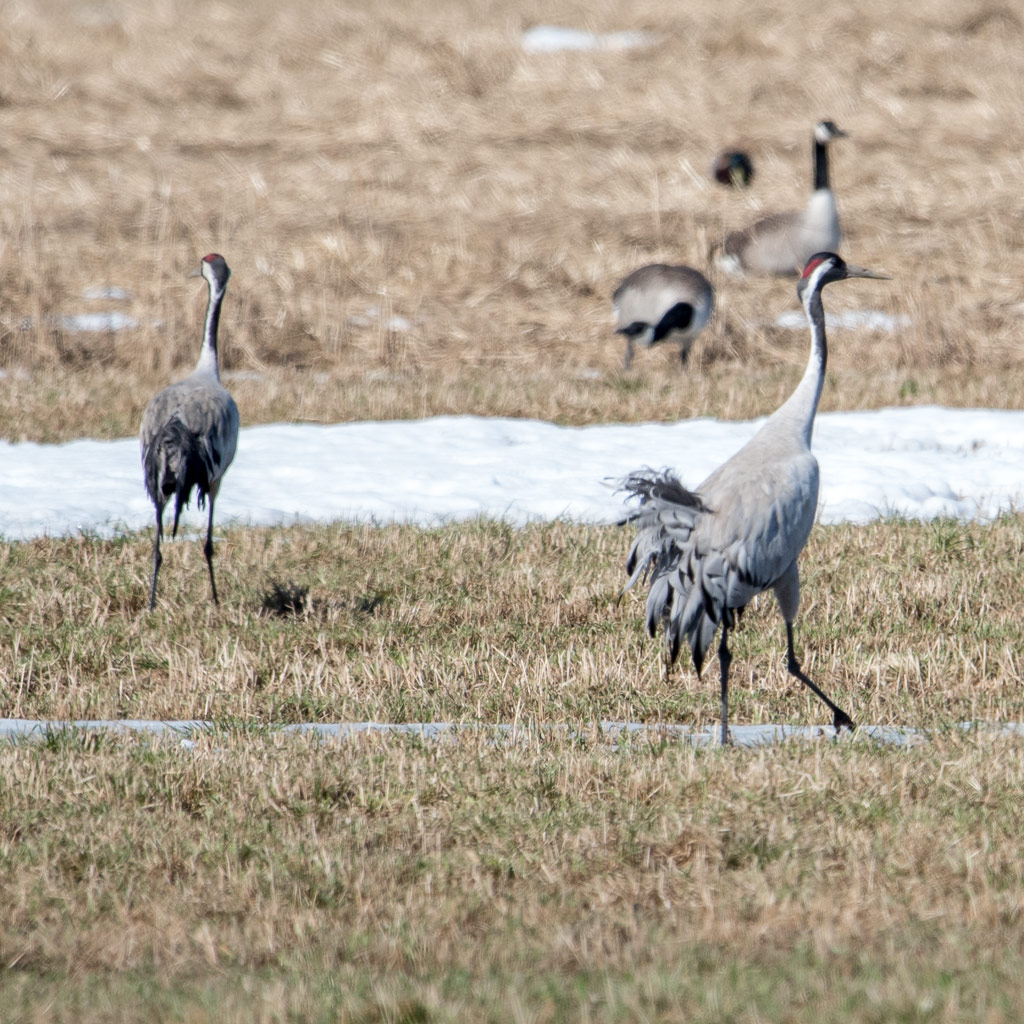
After a late breakfast I say thank you and goodbye to the others, jump into the car and head home, again with many detours. I see some cranes, some reindeers and a black grouse (called orre in Swedish) that flies away before I can slow down the car for taking a picture.

Many gravel paths lead through forests. Left and right are old walls of snow that the sun has not melted yet. Leftovers from last winter’s snow clearing.

Again some patches are rutted, some are wet and muddy but no problem, until …

Luckily I see this obstacle in time and manage to drive around this hole in the street. (My car is the red one in the background.) One of the rare opportunities where I’m glad to have a car with all wheel drive.

One hour later I’m home again and I hardly can believe my eyes. Five days ago my backyard was still covered with 30 centimetres of snow, now the snow on the lawn is almost gone and beside of some small white patches brown grass is everywhere! Even though I’ve been living in Sweden for eight years I’m astonished again how fast snow melts in springtime.

Two hours later heavy raining is pouring down. Hej då, vinter!

Spring birds and spring flowers

Two days ago I took the car to Umeå, 130 km south from Skellefteå. Last time I was there in January and it was winter. This time it was springtime. Nevertheless, more than half of the ground was still snow covered in Skelleftehamn and Bureå. But while I was driving southwards the scenery slowly changed. More and more snow free meadows and grasslands showed up. The grass is still brown and huge water puddles cover the lower parts.

In Lövånger I saw a lot of birds on the meadows and made a short stop to photo some of them. No great shots but it shows some of the most common migratory birds that already had arrived here.

(click on the images to see the bird’s names in English, Swedish, and German.)

South from Lövånger there was hardly any snow left, it remained only in ditches, in the shadow of forests and on some northern slopes – everywhere where there’s less sun. Still the landscape looked a bit dull, for nor the birches neither the other plants had got leaves.

Some hours later. Annika has ended her working day and we walk along the river Umeälven, which is free of ice. Only some small ice floes drift on the surface that mirrors the blue sky.

On the other side of the way along the river there’s a southwards slope. And here many spring flowers, not only tussilago are blooming. I counted six different flower types on the walk into the center of Umeå. Here they come:

(again, click on the images to see the flower names. Hopefully there are correct)

The ice weakens

At time I use to wake up quite early, today even at 5:30. Probably it’s the sunlight that wakes me up despite of the black curtains and the closed window blinds. I felt well rested, got up and as many times before I took the car to the peninsula Näsgrundet to have a look at the Baltic Sea. The weather was nice (clear sky, -2 °C) and I was curious about the ice situation.

Already from the car I could see that the ice still extended to the horizon and the island Gåsören. The old ice looked greyish and many half-frozen puddles with meltwater were seen everywhere. The ice on land however was free of melting water and therefore still white.

The ice covering the water had started to get the first big holes. They seemed to be only next to the coast so I guess you still could cross the ice to Gåsören, but I wouldn’t dare anymore.

They are still some wintry motives left but it’s quite visible that snow and ice finally are coming to an end.

I took a last look to Gåsören and made a photo with my telephoto lens. Yes, no open water in sight yet! I skied to Gåsören twice this winter. I guess the next visit will be by kayak!

And otherwise?

  • more and more birds have been arriving, among others northern lapwings and curlews (if I’m right)
  • the roof of my house has been completely free of snow for two days now
  • more tussilago is blooming, but the clay-like soil is sometimes so muddy, that you can easily sink to the top of your rubber boots with one single step
  • still 30 cm of snow in my backyard – I measured right now –  but it’s melting rapidly and the ground round the fence and beside of the garage is already free of snow
  • the ice fishermen have been sitting, crouching or lying on the ice on every single day for the last weeks – yesterday even in the cold rain. They know, that saison is over soon

Although it sometimes hardly looks like it …

Tussilago 2018

It has become a personal tradition over the last years: Every spring I look for the first blooming coltsfoot, in Swedish tussilago in Skelleftehamn. Even though I already saw some in Skellefteå, it wasn’t before today that I spotted the first tussilago here. It grew on the foot of a muddy southern slope and the blossom was not open yet. No wonder at temperatures of just 2 °C and occasional sleet.


Holes in the ice

Today a neighbour told me, that it’s still safe to go over the ice to the near Baltic islands Norrskär and Bredskär. He said however, that there was so much water on the ice that even my rubber could be too short to stay dry.

An hour later at the coast: I let my eyes wander over the frozen surface of the Baltic Sea. Still there was ice everywhere but it looked old, wet, grey and bleak.

There was water on the ice but less than excepted. But I saw something different: Two holes in the ice. Quite near the coast and apparently very deep.

I definitely don’t want to break into the ice without dry suit. These holes are a sure sign for me that the ice-crossing season is over. Anyway, it’s 21 April and all the other years I’ve been living in Skelleftehamn at least parts of the Baltic Sea were already free of ice at this time of the year. This years it will take some more days or weeks until the ice disappears.

Incidentally I saw not only wet ice today but something else: The first tussilago!

The first rain for ages

This morning I was awakened by a strange noise. The noise of dripping water.

First I thought of the smelting snow on the roof but that noise sounded differently. More like many tiny drops of water everywhere. Like precipitation of liquified snow, what do you call it …?

Ah yes, “rain”. It is called rain.

Of course I still know the word for rain but it was a long time ago that I experienced it, at least at home. I tried to remember the last rainfalls I witnessed.

  • 2 March (Domen between Vardø and Kiberg) – a short and light rain shower (temperature: -6 °C!)
  • 1 March (between Varangerbotn and Vadsø) – plus temperatures and rainy weather.

But before that? I even search the January and February articles of my own blog in for the word “rain” but only to find the words “train” and “terrain”.

But last year then?

  • 29 or 30 December (Bremen) – that’s Northern Germany, far away in the south. That doesn’t count.
  • 20 December (Skelleftehamn) – that’s the last rain at home I remember.

Exactly four months ago! The rest was snow. That’s the winter how I like it!

Since I consider blog articles without images as boring, I added an upside down image of Skellefteå today.