Eternal winter in Skellefteå

The July in Sweden was the hottest since 1756, when temperature measurements began. In Skellefteå it was extremely warm as well in July: 29 days had a maximum temperature above 20 °C, 19 days of them above 25 °C.

There is however a place of eternal winter in Skellefteå, just 3 km away from the centre.

Is it a glacier? Is the ice age coming back? No, of course not, this area is just Skellefteå’s snow dump. The last winter was long and snowy and more than 13000 trucks transported snow to this place until the end of April. This resulted in a snow pile of 25 meters in height – another record.

No wonder, that there is still a lot of snow left despite the warm summer. At the edge Tussilago was flowering as if it were spring. The snow was surprisingly clean, only grit and a bit of rubbish showed that I was near civilisation.

Call me stupid, but I had to touch the ground to feel the icy snow – yes, it was cold. It may be tempting to visit this place on a hot summer day, but that’s maybe not the best idea. For one the place is anything but beautiful and for another not without risk, because there could be invisible holes under the icy snow. I was extremely cautious while taking these pictures.

If you would ask me about the strangest place in Skellefteå in summer, the Skellefteå snow dump was definitely a candidate.

Links

From the #archives: winter season

The weather of the last weeks has been hot, mostly too hot for me. Even today’s thunderstorm and heavy rain showers didn’t manage to cool down the temperatures below 20 °C. I’m really longing for cooler weather. Since I cannot change the weather itself I can only provide some winter photos from the archives. Voilà:

Ice report 5 May 2018

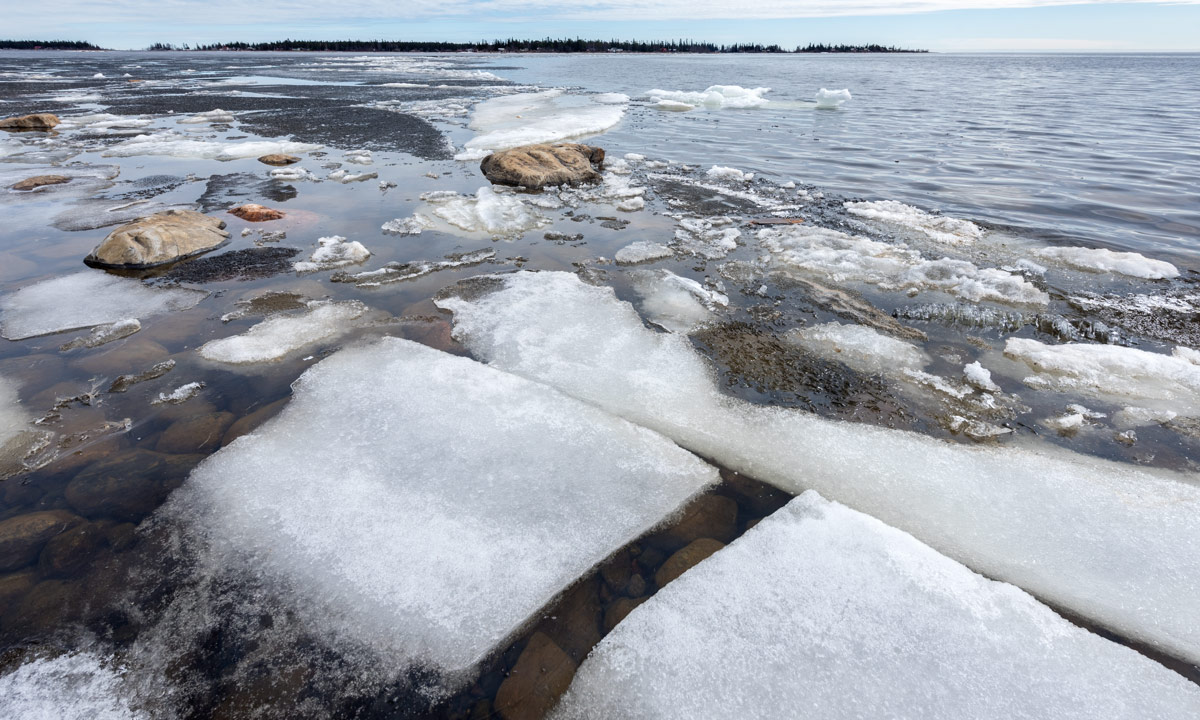
This morning I took the car to the lotsstation – the pilot station – on the peninsula Näsgrundet and took a closer look at the Baltic Sea. It was mostly free of ice, but the sheltered parts between mainland and the nearer islands were still covered with grey old ice. The rocky shore was partly covered with ice, too and some white ice floes floated on the ice cold water.

During the day it cleared up and the temperatures rose to 17 °C. Seven hours I returned to the same place. The floating ice I had photoed in the morning was gone by now. Had it melted or drifted away? I had to go to another more sheltered spot to be able to make probably my last ice photos in Skelleftehamn this season:

Why “the last snow” and “the last ice”? The reason is simple: Tomorrow Annika and I will fly to Gotland for a week. According to the weather forecast the next week should be warm and sunny, both in Skelleftehamn and on Gotland. I guess when I’m back, all snow and ice – beside of some huge manmade snow piles – has be melted away.

Then I’ll take a bath in the ice cold water and call it “spring bath”!

P.S.:

Spring birds and spring flowers

Two days ago I took the car to Umeå, 130 km south from Skellefteå. Last time I was there in January and it was winter. This time it was springtime. Nevertheless, more than half of the ground was still snow covered in Skelleftehamn and Bureå. But while I was driving southwards the scenery slowly changed. More and more snow free meadows and grasslands showed up. The grass is still brown and huge water puddles cover the lower parts.

In Lövånger I saw a lot of birds on the meadows and made a short stop to photo some of them. No great shots but it shows some of the most common migratory birds that already had arrived here.

(click on the images to see the bird’s names in English, Swedish, and German.)

South from Lövånger there was hardly any snow left, it remained only in ditches, in the shadow of forests and on some northern slopes – everywhere where there’s less sun. Still the landscape looked a bit dull, for nor the birches neither the other plants had got leaves.

Some hours later. Annika has ended her working day and we walk along the river Umeälven, which is free of ice. Only some small ice floes drift on the surface that mirrors the blue sky.

On the other side of the way along the river there’s a southwards slope. And here many spring flowers, not only tussilago are blooming. I counted six different flower types on the walk into the center of Umeå. Here they come:

(again, click on the images to see the flower names. Hopefully there are correct)

The ice weakens

At time I use to wake up quite early, today even at 5:30. Probably it’s the sunlight that wakes me up despite of the black curtains and the closed window blinds. I felt well rested, got up and as many times before I took the car to the peninsula Näsgrundet to have a look at the Baltic Sea. The weather was nice (clear sky, -2 °C) and I was curious about the ice situation.

Already from the car I could see that the ice still extended to the horizon and the island Gåsören. The old ice looked greyish and many half-frozen puddles with meltwater were seen everywhere. The ice on land however was free of melting water and therefore still white.

The ice covering the water had started to get the first big holes. They seemed to be only next to the coast so I guess you still could cross the ice to Gåsören, but I wouldn’t dare anymore.

They are still some wintry motives left but it’s quite visible that snow and ice finally are coming to an end.

I took a last look to Gåsören and made a photo with my telephoto lens. Yes, no open water in sight yet! I skied to Gåsören twice this winter. I guess the next visit will be by kayak!

And otherwise?

  • more and more birds have been arriving, among others northern lapwings and curlews (if I’m right)
  • the roof of my house has been completely free of snow for two days now
  • more tussilago is blooming, but the clay-like soil is sometimes so muddy, that you can easily sink to the top of your rubber boots with one single step
  • still 30 cm of snow in my backyard – I measured right now –  but it’s melting rapidly and the ground round the fence and beside of the garage is already free of snow
  • the ice fishermen have been sitting, crouching or lying on the ice on every single day for the last weeks – yesterday even in the cold rain. They know, that saison is over soon

Although it sometimes hardly looks like it …

Ice fishing in Skelleftehamn

Still going on: ice fishing on the bay Kallholmsfjärden in Skelleftehamn. Sometimes the positions of the ice fishermen look to me like modern dance-theatre.


Holes in the ice

Today a neighbour told me, that it’s still safe to go over the ice to the near Baltic islands Norrskär and Bredskär. He said however, that there was so much water on the ice that even my rubber could be too short to stay dry.

An hour later at the coast: I let my eyes wander over the frozen surface of the Baltic Sea. Still there was ice everywhere but it looked old, wet, grey and bleak.

There was water on the ice but less than excepted. But I saw something different: Two holes in the ice. Quite near the coast and apparently very deep.

I definitely don’t want to break into the ice without dry suit. These holes are a sure sign for me that the ice-crossing season is over. Anyway, it’s 21 April and all the other years I’ve been living in Skelleftehamn at least parts of the Baltic Sea were already free of ice at this time of the year. This years it will take some more days or weeks until the ice disappears.

Incidentally I saw not only wet ice today but something else: The first tussilago!

Breaking the spring ice

This morning I saw not only the ice fishermen, but also the icebreaker Baus clearing the ice in the port of Skellefteå in Skelleftehamn. In the afternoon I remembered, that I had come into contact with K., one of the crew members on Facebook some weeks ago. I had asked if it was possible to go with the Baus to take photos sometime. K. had answered that I should just go there and ask the people. And so I did today.

I met a guy who works on the icebreaker and learned that it’s hard to make some kind of appointment. In winter no one knows exactly, when ships will arrive or depart due to the weather and the ice conditions and therefore neither when the Baus would start. But they would actually leave in twenty minutes to clear the ice for the ship Ice Star and I was allowed to join …

Sixteen minutes later I was at the dock again, this time with better clothes and my camera equipment that I got from home. How good that I live so close.

I was allowed to enter the Baus and say hello to the captain on the bridge.

He welcomed me, showed me some of the controls to steer the boat and allowed me just to go round everywhere to take photos. I didn’t want to disturb him, because he had to focus on his work and my plan was to make photos, not to interview the crew. At first I went up onto the top deck.

The water was completely covered with crushed ice. Some of the ice floes were at least half a metre thick. Slowly the Baus departed from the dock and I went down to the bottom deck to be closer to the icy sea.

While the Baus was slowly moving back and forth I went on every possible deck. I really enjoyed that freedom that you never can have on bigger ships as e.g. the Hurtigruten ships.

After some time of waiting and some time of moving around the way was clear for the Ice Star. Slowly it departed and followed the cleared channels between the solid ice where it with increasing speed left “Skellefteå Hamn”, the port of Skellefteå in Skelleftehamn.

While my eyes followed the Ice Star I spotted something blue at the horizon. Water! Somewhere behind the island Gåsören the ice had started to break and now open water covered the Baltic Sea behind Gåsören. Maybe the next paddle tour is closer than I think.

The Baus already had started to turn around (the previous photo shows the funnel at the rear) and return to the dock. I enjoyed watching the different types of ice.

Until now, the trip was extremely calm, now it started to get more rumbling, because Baus now went through packed ice – crushed ice that had frozen together and now was split into large irregular chunks. Great channel-like cracks developed in the ice, which soon closed again.

After some more minutes the Baus arrived and after thanking the captain for the opportunity to follow I left the icebreaker. The whole trip took less than 90 minutes, but felt much longer. I’ve been living in Skelleftehamn for almost eight years and it was a great experience to see my place of residence from a completely new perspective.

Thanks a lot, crew of icebreaker Baus!

Seeing the blue open water was a welcome spring sign. I saw two others today:

The first butterfly of the season, a small tortoiseshell that fluttered around the top deck of the Baus and (perhaps less romantic) the first teenager in shorts in front of ICA, the grocery store. I’m still waiting however for the first wild spring flower in Skelleftehamn.

Period of fine weather

I guess, this week has been the ice fisher’s delight. Nightly temperatures between round -8 °C (good for the ice), afternoon temperatures round +8 °C, hardly any wind and no clouds hiding the sun (good for oneself).

It’s really hard for me to focus on my work when weather is as nice as it has been the last weeks. I would prefer having holidays in the mountains enjoying the fabulous late winter weather. I guess however that there are times when I have to earn money, too …

Already at 8 o’clock I saw five ice fishers standing, sitting or lying on the ice with their tiny plastic fishing rods. Although it was -6 °C it was warm in the sun. In the background the icebreaker Baus circuited around to break the ice for the next ship to come.

I knelt on the ice to make the photos above and heard it cracking. Was it thin ice? Not at all, it is still thick and safe. I guess it was the waves caused by the Baus that made the ice swing and crack. A strange experience. Good to now however that the water is quite shallow where I went.

But now I have to continue my work …
Addendum

I didn’t work much more today, sometimes there are spontaneous opportunities to seize  …